
Air Resistance Rowers Buying Guide for Beginner Cardio Routines
A beginner needs more than a rower and a long program list. Before buying, decide how you want the first lesson delivered, how you will enter a selected workout and what will help you choose the next session. This guide separates those tasks using documented learning resources and preparation choices.
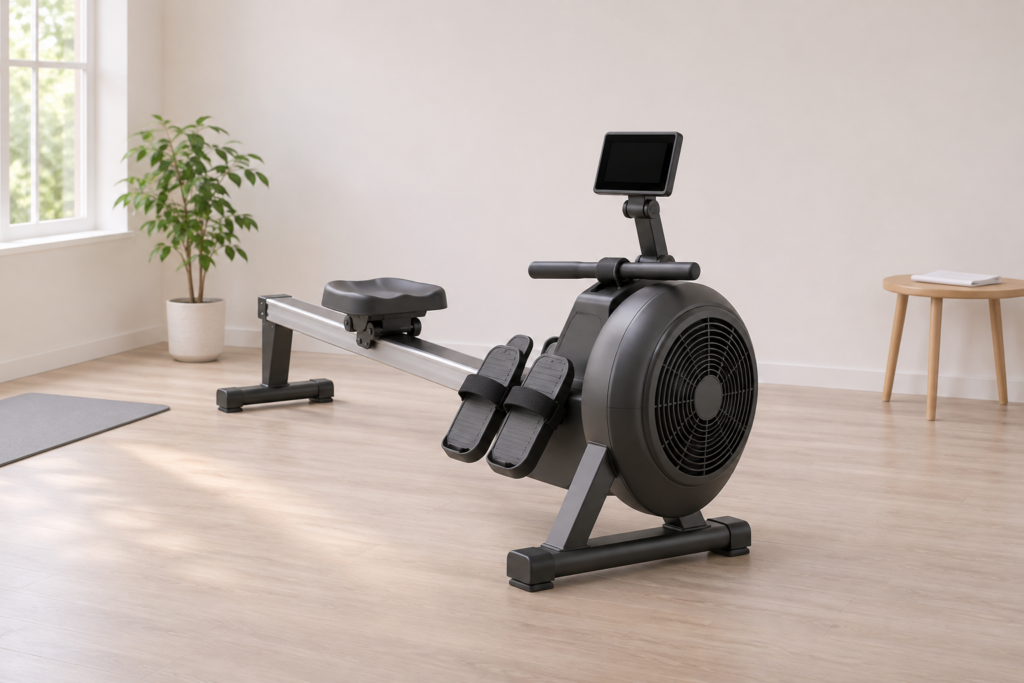
Buying framework
Set two requirements before shopping
Give the learning arrangement the same attention as the machine.
Choose how instructions should arrive: Decide whether you want to consult a lesson yourself or hear it spoken. Name the format you would actually use rather than counting available programs.
Decide what you will enter yourself: State whether preparing a session on the monitor is acceptable. Keep that requirement separate from who chooses the workout: a supplied idea can still leave setup work for you.
Who this is for
Which uncertainty matters most?
Two beginners can need different kinds of help.
You want spoken first-lesson cues: Prioritize an actual beginner recording, accepting playback preparation rather than choosing by the size of an audio library.
You want the next idea supplied: If choosing what to do next is the sticking point, give that task priority. A preferred lesson format alone does not settle how you will select later sessions.
What to pay attention to
Three choices that do different jobs
Each alternative leaves you with a different task.
From lesson to ready session
Receiving instructions and entering the chosen workout are separate jobs.
Preparing to return
Decide who will choose what comes next.
Written lesson or recorded coaching: After basic technique familiarization, Concept2's official China-region English First Workouts page pairs written Workout 1 with the recorded Row Basics 1 lesson. Text suits someone wanting to consult instructions at their own pace, giving up spoken coaching. The recording suits someone wanting spoken cues, accepting its pace and smartphone podcast playback preparation. Neither format supplies individual live correction.
Manual entry or single-tap setup: Concept2 documents manual PM5 entry of its selected Workout of the Day (WOD), or single-tap setup through ErgData. Manual entry suits someone avoiding app preparation but retains monitor setup. Single-tap entry suits someone declining re-entry, accepting app preparation.
Published sequence or a daily idea: Couch to Consistency supplies a six-week format sequence for new Concept2 users. It suits someone wanting an ordered introduction, accepting its varied setup tasks. Choosing the current WOD instead suits someone wanting a supplied daily idea, accepting changing content rather than a fixed format order. The sequence itself includes WOD days; these approaches can overlap.
Avoid these traps
Read the button legend before following a sequence
The letters describe positions, not labels to search for.
Misreading A–E: For its manual route, the WOD page maps A to the top right gray button, B to the next, continuing through E. Misreading that legend can send you through the wrong menu.
Decision guidance
Apply two requirements to one arrangement
A partial match should not decide the purchase.
Daily suggestion, without manual re-entry: The RowErg PM5 with ErgData on a compatible iOS/Android device over Bluetooth is the documented setup. It meets both requirements through single-tap WOD entry. Manual entry fails the second requirement. Accept preparing that device and connection and receiving a changing daily suggestion.
Ownership & compatibility
Keep technique practice available
Familiarity need not end deliberate practice.
Retain the drills: Concept2 breaks the rowing stroke into parts in its drills and identifies them as warm-up reminders for experienced rowers too. Keep that resource available as you gain experience, rather than treating the first lesson as your last technique task.
FAQ
Three remaining resource questions
These details can change what you expect from the material.
Will this podcast series keep releasing new lessons?
How do I identify a rower episode?
Does WOD supply my personal pace target?
Readiness check
Buy the learning arrangement you will prepare
The machine name alone is not your first-session plan.
Research note: This is manufacturer desk research from one documented Concept2 learning ecosystem, using training pages and authored episode metadata. The written lesson uses an official regional English page. Audio playback, hands-on usability and fitness outcomes were not tested; these examples explain preparation choices rather than prescribe an exercise schedule.
Make the first session concrete: Before committing, identify the exact lesson, the equipment you will use to consult it and the person or tool entering the workout. Choose when those preparations are acceptable to you.
Reading Shortcuts
Jump to the preparation question you need.
Decision Reminders
Keep the purchase tied to the work you accept.
- Separate the tasks: Choosing a session and entering it are different decisions.
- Name the complete arrangement: Keep the actual lesson and preparation tools with the candidate you evaluate.
Lists
Find candidate learning arrangements.
- Filter by the task: Look for the instruction format and session-entry work you are willing to use.
Have candidates already? Use a Comparison to examine the complete arrangements.
Compare
Decide between known finalists.
- Compare the remaining work: Put the learning material and session preparation of each finalist side by side.
Still finding candidates? Start with Lists to build a shortlist.