
At-Home Nail Systems Buying Guide for Quick Touch-Ups
Shopping for a nail system for quick touch-ups becomes clearer after defining the touch-up finish: repair a small chip or worn edge without creating a bulky, mismatched patch. The touch-up decision is about repeatable usefulness, not collecting elements or copying an idealized showcase.
For a nail system for quick touch-ups, build the touch-up shortlist around shade match, coat thickness, dry or cure speed, precision, compatibility, and portable cleanup. Next, repair one representative chip, allow the layer to set fully, and inspect the join in normal light. A suitable touch-up choice should work for the touch-up routine and earn its place through seen touch-up performance.
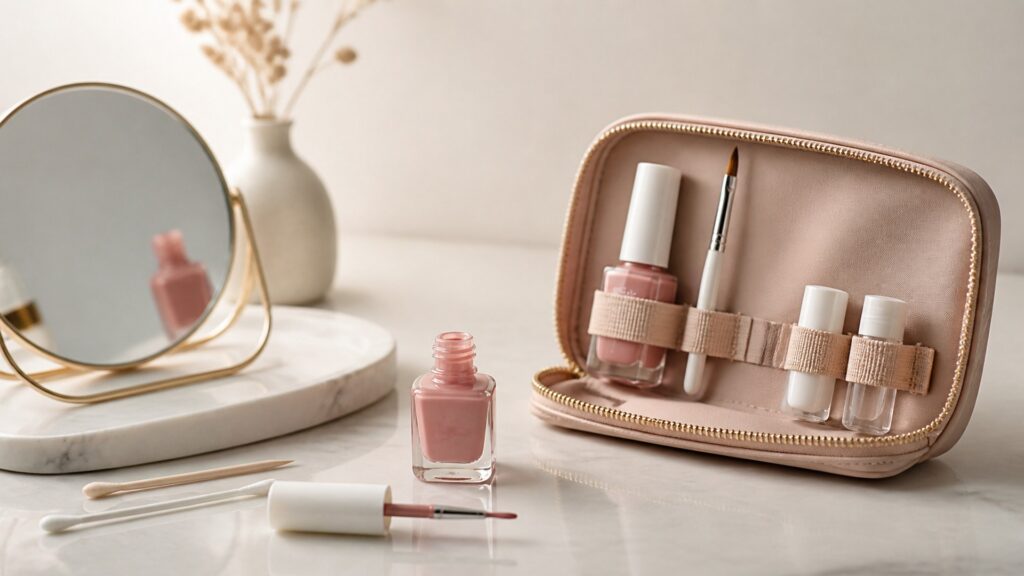
Set the brief
Define the result before comparing formats: At-Home Nail Systems Buying Guide for Quick Touch-Ups
Begin with one concrete touch-up brief for a nail system for quick touch-ups: repair a small chip or worn edge without creating a bulky, mismatched patch.
Practical focus: Begin with one concrete touch-up brief for a nail system for quick touch-ups: repair a small chip or worn edge without creating a bulky, mismatched patch.
Fair boundary: Review shade match, coat thickness, dry or cure speed, precision, compatibility, and portable cleanup; each detail should help predict whether a nail system for quick touch-ups performs beyond a polished showcase.
Decision cue: Document the touch-up rejection line for a nail system for quick touch-ups before touch-up shopping, especially mixing incompatible chemistries, sealing over lifted gel, touching uncured material, or rushing incomplete cure.
Match the routine
Let skill, time, and preferences narrow the field: At-Home Nail Systems Buying Guide for Quick Touch-Ups
Who benefits from a nail system for quick touch-ups depends on skill, on hand time, and this desired outcome: repair a small chip or worn edge without creating a bulky, mismatched patch.
Practical focus: Who benefits from a nail system for quick touch-ups depends on skill, on hand time, and this desired outcome: repair a small chip or worn edge without creating a bulky, mismatched patch.
Fair boundary: A person seeking repair a small chip or worn edge without creating a bulky, mismatched patch may prefer simple touch-up control, while an experienced touch-up buyer can explore finer differences in shade match, coat thickness, dry or cure speed, precision, compatibility, and portable cleanup.
Decision cue: Place a nail system for quick touch-ups beside what is already owned. The most capable justification is straightforward: the repair looks acceptable and holds until a proper manicure can be done.
Read useful details
Translate specifications into real application behavior: At-Home Nail Systems Buying Guide for Quick Touch-Ups
Read the specifications for a nail system for quick touch-ups as useful clues. Concentrate on shade match, coat thickness, dry or cure speed, precision, compatibility, and portable cleanup.
First-use evidence
On the first encounter with a nail system for quick touch-ups, note setup, touch-up control, and whether it can repair a small chip or worn edge without creating a bulky, mismatched patch without unnecessary redoing.
Repeated-use evidence
Later sessions with a nail system for quick touch-ups should reveal touch-up wear, touch-up cleanup demands, and whether the repair looks acceptable and holds until a proper manicure can be done.
What predicts results: Read the specifications for a nail system for quick touch-ups as useful clues. Concentrate on shade match, coat thickness, dry or cure speed, precision, compatibility, and portable cleanup.
How to verify it: Because packaging cannot demonstrate repair a small chip or worn edge without creating a bulky, mismatched patch, handling this real-world check: repair one representative chip, allow the layer to set fully, and inspect the join in normal light.
What to ignore: Prioritize elements supporting a touch-up routine that cleans the damaged area, applies the smallest compatible amount, and allows a complete set; decorative additions do not establish touch-up value for a nail system for quick touch-ups.
Avoid false signals
Separate product limits from testing errors: At-Home Nail Systems Buying Guide for Quick Touch-Ups
An easy showcase may flatter a nail system for quick touch-ups; a revealing check is to repair one representative chip, allow the layer to set fully, and inspect the join in normal light.
Practical focus: An easy showcase may flatter a nail system for quick touch-ups; a revealing check is to repair one representative chip, allow the layer to set fully, and inspect the join in normal light.
Fair boundary: While evaluating whether you can repair a small chip or worn edge without creating a bulky, mismatched patch, hold touch-up preparation and neighboring products steady enough to identify the cause of each touch-up change.
Decision cue: Stop using a nail system for quick touch-ups when you encounter mixing incompatible chemistries, sealing over lifted gel, touching uncured material, or rushing incomplete cure. More pressure, heat, touch-up pigment, or touch-up repetition can compound a mismatch.
Choose with evidence
Decide whether to buy, upgrade, or wait: At-Home Nail Systems Buying Guide for Quick Touch-Ups
Buying a nail system for quick touch-ups makes sense after the touch-up evidence shows that the repair looks acceptable and holds until a proper manicure can be done, while also delivering this touch-up goal: repair a small chip or worn edge without creating a bulky, mismatched patch.
Practical focus: Buying a nail system for quick touch-ups makes sense after the touch-up evidence shows that the repair looks acceptable and holds until a proper manicure can be done, while also delivering this touch-up goal: repair a small chip or worn edge without creating a bulky, mismatched patch.
Fair boundary: A premium a nail system for quick touch-ups earns consideration only if improvements in shade match, coat thickness, dry or cure speed, precision, compatibility, and portable cleanup solve a touch-up weakness that appeared during realistic touch-up testing.
Decision cue: Postpone checkout if no touch-up candidate predictably helps you repair a small chip or worn edge without creating a bulky, mismatched patch, especially while the surrounding touch-up routine is still changing.
Plan daily use
Account for cleaning, storage, and replacement: At-Home Nail Systems Buying Guide for Quick Touch-Ups
Maintain a nail system for quick touch-ups according to its design: clean contact areas, close packaging securely, and retire worn parts.
Practical focus: Maintain a nail system for quick touch-ups according to its design: clean contact areas, close packaging securely, and retire worn parts.
Fair boundary: Storage for a nail system for quick touch-ups should protect the qualities involved in shade match, coat thickness, dry or cure speed, precision, compatibility, and portable cleanup. Follow the maker's hygiene, shelf-life, battery, or electrical instructions.
Decision cue: Because the touch-up routine cleans the damaged area, applies the smallest compatible amount, and allows a complete set, ownership should remain manageable. If a nail system for quick touch-ups creates excessive touch-up cleanup, its advertised touch-up convenience is questionable.
Practical questions
Resolve common concerns before checkout: At-Home Nail Systems Buying Guide for Quick Touch-Ups
These answers turn common touch-up questions about a nail system for quick touch-ups into a safer, more revealing wear-test.
What should I compare first when choosing a nail system for quick touch-ups?
How should I test a nail system for quick touch-ups fairly?
When is a premium version of a nail system for quick touch-ups worth considering?
Make the final call
Select the option that fits the real routine: At-Home Nail Systems Buying Guide for Quick Touch-Ups
Return to the touch-up brief for a nail system for quick touch-ups: repair a small chip or worn edge without creating a bulky, mismatched patch. Reject a contender that works only in unusually favorable touch-up circumstances.
Practical focus: Return to the touch-up brief for a nail system for quick touch-ups: repair a small chip or worn edge without creating a bulky, mismatched patch. Reject a contender that works only in unusually favorable touch-up circumstances.
Fair boundary: The final a nail system for quick touch-ups should suit the real touch-up schedule, behave predictably, and steer clear of mixing incompatible chemistries, sealing over lifted gel, touching uncured material, or rushing incomplete cure.
Decision cue: State the reason plainly: the repair looks acceptable and holds until a proper manicure can be done. If the wear-test cannot suit that touch-up claim, wait before purchasing a nail system for quick touch-ups.
Reading Shortcuts
Move directly to the quick touch-ups decision stage you need.
Decision Reminders
Keep the evidence for quick touch-ups visible while comparing.
- Role: The at-home nail system serves the named task.
- Proof: The trial observes controlled preparation, even application, complete curing or drying, predictable removal, and intact surrounding skin.
- Care: Clean compatible tools, close chemicals, follow curing and removal directions, and store components securely.
Glossary Snippets
Useful language for comparing at-home nail systems.
When a Top 10 List Helps
Use rankings to discover credible at-home nail systems, then screen them for quick touch-ups.
- The format is undecided: A broad list reveals plausible forms and price levels.
- A shortlist is needed: Rankings narrow discovery but do not replace fit testing.
Have finalists already? Open the comparison section.
When a Direct Comparison Helps
Compare finalists after establishing their suitability for quick touch-ups.
- Two candidates remain: Side-by-side evidence exposes meaningful tradeoffs.
- An upgrade is uncertain: Compare whether added cost corrects the original weakness.
Still exploring? Start with the Top 10 section.