
Athletic Socks Buying Guide: How to Choose the Right One
Athletic socks are part of the fit inside your sports shoes. A plush pair can crowd a close shoe, while a thin pair may change how securely a roomier shoe holds the foot. Heel shape, toe construction and cuff coverage therefore deserve attention before a favorite fiber or a large multipack.
Start with the shoes and movements you already use, then compare the sock’s actual padding map and knit. Material names can help describe a pair, but they do not tell you its thickness, retention or feel when worn. This guide turns those details into a practical first purchase, with room to choose different constructions when your activities or footwear require them.
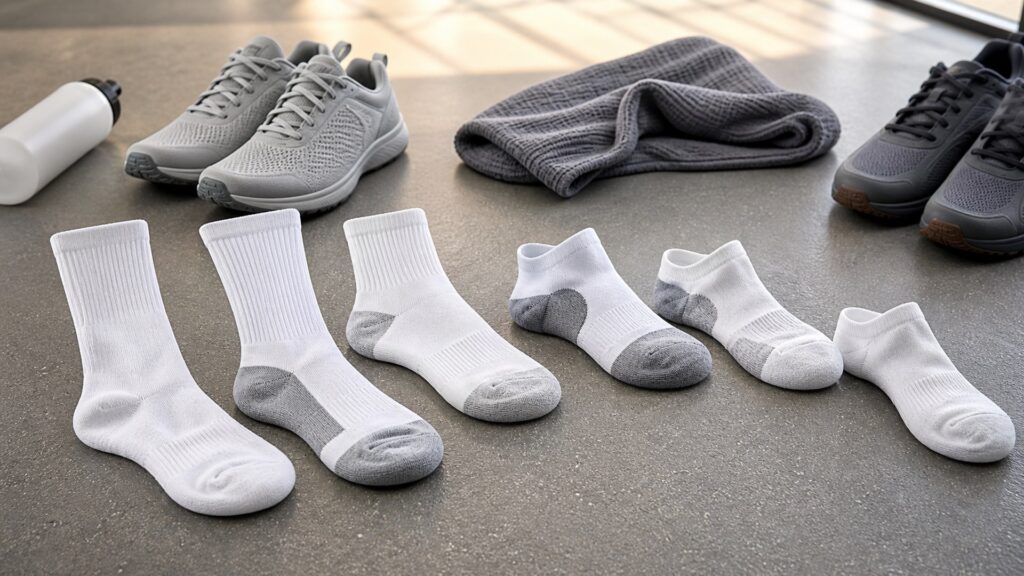
Buying framework
Choose the sock inside the shoe
The useful unit of comparison is the sock and footwear together. A pair that feels appealing in your hand still needs to fit during movement.
Start with a known shoe: Use the footwear intended for the activity when checking a candidate pair. Toe room, heel hold and upper pressure can change with sock thickness; do not judge fit barefoot or assume a successful casual-shoe trial transfers to sports footwear.
Locate the heel and excess fabric: Match the maker’s size chart, then check where the shaped heel sits. A displaced pocket or surplus fabric around the toes is a fit problem to resolve before adding pairs, not an inconvenience that a premium material automatically fixes.
Choose padding by location: Look for where raised loops appear underfoot, at the heel or elsewhere. Selective cushioning can retain a relatively thin upper; a broad cushion label does not establish either full-foot thickness or how much room the pair takes in your shoe.
Use height to manage shoe contact: Pick coverage that stays where needed around the collar. A heel tab or taller cuff can serve different contact preferences, but the lowest visible sock is not automatically the best fit and a high cuff does not prove clinical support.
Buy a trial pair before a rotation: Check permitted try-on and return conditions, then evaluate the construction before stocking up. Once the shoe combination works, additional pairs become a quantity decision rather than an expensive attempt to make an unsuitable design useful.
Who this is for
Which footwear or movement changes the choice?
Activity names are starting clues rather than complete specifications. Actual shoe space and the way fabric stays positioned are more informative.
Close-fitting running or cycling footwear: Begin by checking a low-bulk construction in the existing shoe. Thicker cushioning may consume space you do not have; retain the amount of padding that leaves toes free and avoids uncomfortable upper pressure rather than choosing softness alone.
Roomier shoes with a preference for cushioning: A targeted or fuller padded pair may supply the feel you want if the shoe accommodates it. Check heel placement and toe fabric as well as underfoot plushness; filling space should not depend on wrinkles or a wrongly sized sock.
Court and multidirectional activity: Use representative lateral movements to inspect heel retention, toe fabric and cuff position. An arch band or shaped knit can contribute to retention, but its presence does not guarantee that every foot will stay comfortably settled during changes of direction.
One pair across several sports shoes: Trial the candidate in each shoe you expect it to serve. A versatile sock is useful when those combinations work; differing internal volume may justify a second construction instead of demanding that one thickness solve all footwear.
Buyers curious about toe socks: Individual compartments add a different contact arrangement and more donning work. Check toe length and shoe room, including material between toes. Choose them because the trial suits your preference, without assuming separate compartments guarantee freedom from rubbing.
What to pay attention to
Inspect contact construction and occupied space
Read the knit as a physical design rather than a collection of performance adjectives. The relevant details are where material sits and how it fits.
Foot contact and shoe space
Inspect size, heel pocket, toe join and occupied volume in the actual footwear. Padding must fit that space as well as feel appealing.
Knit construction and coverage
Read padding zones, retention, cuff height and care as linked construction choices. Material composition alone leaves those details unresolved.
Size chart and heel pocket: Use the specific brand’s mapping from foot or shoe size, including its advice at boundaries. Letter sizes are not standardized across every maker; inspect whether the heel pocket lands correctly instead of carrying an old medium-size assumption into a new brand.
Padding distribution: Distinguish flat-knit areas from raised terry-loop cushioning and locate the thicker zones. Compare that map with shoe space and your preferred contact feel; adding loops underneath the foot is a different construction choice from padding the whole upper.
Toe join and shaping: Look at the seam, toe box and any left/right shaping. Seamless or low-profile claims still need an actual fit check; excess length or a join pressed against the toes can matter more than the wording on the package.
Arch band and cuff retention: Inspect how the elastic knit settles around the midfoot and opening. It should retain position without uncomfortable constriction. Ordinary sport-sock retention features are not a substitute for a prescribed compression garment with a specified medical purpose.
Blend, knit and care together: Read fiber composition alongside thickness, stretch and the exact wash label. A fiber percentage alone cannot establish how the completed sock handles moisture or fits; construction and your shoe environment remain part of that assessment.
Avoid these traps
Avoid shortcuts that conceal poor fit
Price and material slogans can distract from the shoe combination. Correct these assumptions before buying several pairs.
Equating more padding with a better purchase: Extra material can crowd a shoe and alter its fit even if it feels soft underfoot. Choose the padding your footwear accommodates rather than expecting the most cushioned option to be the most useful for every activity.
Buying solely by fiber percentage: Composition leaves out knit density, cushioning placement and elastic retention. Compare the finished construction and care requirements; a high proportion of a preferred fiber is not a guarantee of dry feet, durability or comfortable fit.
Ignoring the brand’s size boundaries: A familiar letter size may map to a different range elsewhere. Start with the maker’s chart and inspect heel and toe position; do not shrink a wrongly sized pair deliberately as a substitute for selecting a suitable size.
Treating an arch band as medical compression: A sport sock’s elastic band can help retain fabric but does not establish a prescribed pressure or treatment role. Keep that purchase purpose separate rather than interpreting ordinary support wording as clinical approval.
Decision guidance
Select construction around the proven shoe fit
Use fit to narrow the options, then choose the contact feel and coverage you prefer. Each construction gives something up as well as adding a feature.
For limited shoe room, start with a thin knit: A lower-bulk pair leaves more of the shoe’s internal space available, at the cost of a less padded feel. Confirm heel hold as well as toe room; thinness is a useful option rather than an automatic remedy for an unsuitable shoe.
For localized padding, choose a targeted map: Select cushioning at the areas where you want it while checking the rest of the knit remains compatible with the upper. You gain chosen padded contact and accept added volume at those zones; verify the actual layout rather than just the cushion name.
For a roomier shoe, trial fuller cushioning: A more padded pair can suit your preferred feel if it fits without folds or pressure. It occupies more space and may have different drying requirements, so buy around the actual shoe and care routine rather than using it to repair an incorrect shoe fit.
For a different toe arrangement, compare a toe sock directly: Separate compartments can be a worthwhile preference when sizing and shoe room work. You accept extra donning and material between toes; compare the experience with a conventional pair before replacing the whole sock drawer.
Ownership & compatibility
Keep fit and construction useful after purchase
Care follows the exact pair’s label. Watch for changes in position and fabric rather than replacing socks on a fixed calendar.
Use the maker’s washing and drying directions: Blends and constructions can have different care limits. Follow the selected pair’s instructions for temperature, drying and additives; do not apply another brand’s routine merely because both products contain wool or synthetic yarn.
Inspect heel and toe wear: Check thinning, holes and rough joins at regular contact areas. If damage repeatedly occurs in one location, inspect the shoe combination as well as the sock; buying a thicker duplicate may not address the source of the wear.
Recheck retention after laundering: Notice whether the cuff, arch knit or heel position still stays settled in the shoe. A pair that stretches, bunches or constricts differently deserves a new fit assessment before you add more of the same construction.
Keep shaped pairs together: Where a design uses left/right shaping or toe compartments, preserve the matching arrangement when sorting laundry. Organization makes the intended construction easier to use; it is not a reason to ignore a damaged member of the pair.
FAQ
Questions about sizing and construction claims
Resolve the details that broad sock labels leave unanswered. Apply the selected maker’s instructions to the actual footwear.
Does a seamless toe mean I cannot feel any fabric there?
Must sports socks have different left and right shapes?
Can a no-show sock work with a higher shoe collar?
Are ordinary athletic socks medical compression socks?
Should I always size down when between ranges?
Are toe socks harder to put on?
Can I wear the same model in casual and sports shoes?
Do antimicrobial claims mean the pair needs no washing?
When should I replace a pair that still looks intact?
Bottom line
Make the first purchase a fit decision
Choose one suitable construction before committing to quantity. Material and style preferences come after the shoe combination works.
Set the activity and actual shoe: Use the intended footwear and representative movement. Reject uncomfortable toe fabric or pressure before comparing performance claims.
Check size and heel location: Apply the brand’s chart and confirm the shaped areas land correctly. Do not treat a familiar letter size as universal across makers.
Pick the padding and coverage: Choose a map and cuff height with a clear job in that shoe. Accept the added bulk or reduced padded feel attached to that choice.
Confirm care, then build the rotation: Use a proven pair and a feasible wash routine as the basis for buying more. A large pack is useful only after the individual construction earns its place.
Reading Shortcuts
Begin with shoe fit, then choose a construction and practical rotation.
Decision Reminders
Use these checks before stocking up.
- Shoe room: Judge thickness inside the intended footwear.
- Heel placement: Match the chart and shaped pocket.
- Trial pair: Prove the construction before buying quantity.
Glossary Snippets
Terms describing where sock material sits.
When to Use a Top 10 Review
Browse socks after identifying shoe space and desired cushioning.
- Inspect the padding map: Compare actual thick and thin areas.
- Check intended coverage: Match cuff height to shoe contact.
Already down to 2-3 options? A Comparison is usually faster than reading broad buying advice.
When to Use a Comparison
Try finalists in the same footwear rather than comparing package slogans.
- Compare occupied space: Inspect toe room and upper pressure.
- Compare ongoing care: Read the exact blend’s washing instructions.
Still exploring? Start with a Top 10 to identify the right category first.