
Autos Buying Guide for First-Time Buyers
A first vehicle purchase combines four decisions that are easy to blur together: what transportation you need, what the vehicle is worth, whether its condition is acceptable, and how much the financing costs. Keep those decisions separate. A written list of trips, passengers, parking limits, and must-have equipment prevents a monthly-payment discussion from quietly expanding the purchase.
Preparation also makes it easier to leave a bad deal. Compare loan offers, request itemized out-the-door prices, quote insurance, verify the VIN, and arrange an independent inspection for a used vehicle. Then read every document before signing. This guide explains the terms, evidence, and walk-away signals that help a first-time buyer stay in control.
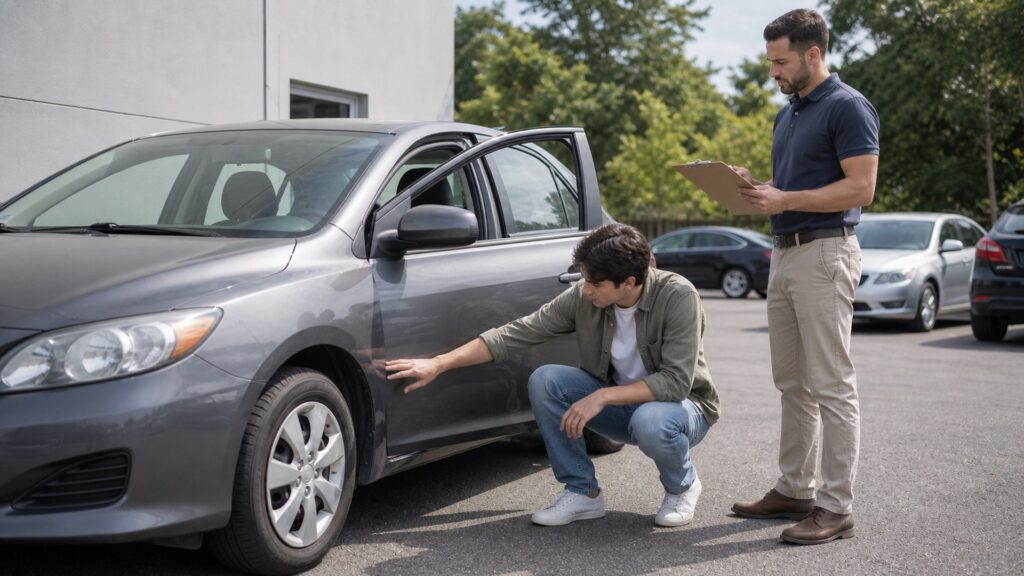
Buying framework
Control the process before entering the showroom
First-time buyers gain leverage by separating vehicle choice, financing, condition verification, and paperwork into distinct decisions. Prepare each one before a seller combines them into a single monthly number.
Write nonnegotiables: List passenger count, commute distance, parking dimensions, cargo, weather, and two or three essential features so inventory cannot redefine what you need.
Arrange financing comparisons: Check credit, seek offers from multiple lenders, and compare APR, term, amount financed, finance charge, and total payments before discussing dealer financing.
Request written prices: Ask for itemized out-the-door quotes that identify taxes, registration, documentation charges, installed accessories, and optional products, then compare identical assumptions.
Verify the actual vehicle: Match the VIN on the vehicle and documents, check recalls and history, inspect used condition independently, and confirm every promised repair or warranty term in writing.
Read before signing: Review the purchase order and loan disclosures without rushing; numbers, add-ons, vehicle identity, and cancellation terms should match the agreement you intended to make.
Who this is for
First purchases start from different constraints
The same beginner advice does not fit every buyer. Financing, mechanical risk tolerance, charging access, and how soon transportation is needed should shape the search.
Predictable-cost shoppers: A new or well-supported recent vehicle may justify a higher price when warranty coverage, known history, and reduced near-term repair uncertainty protect a tight schedule.
Value-focused used buyers: Older vehicles can lower acquisition cost, but the budget must include an independent inspection, overdue maintenance, tires, registration, and a repair reserve after purchase.
Credit-building borrowers: Prioritize an affordable amount financed and short sustainable term, compare outside loan offers, avoid unnecessary add-ons, and do not use a stretched payment to reach a costlier vehicle.
Apartment or street parkers: Compact dimensions, visibility, insurance, theft exposure, winter starting, and dependable public fueling may matter more than electric range or equipment that assumes private charging.
What to pay attention to
Learn the numbers that change the deal
Vehicle specifications and finance disclosures answer different risks. Verify both the machine and the contract rather than allowing one appealing result to excuse weakness in the other.
Vehicle Evidence & Condition
The VIN, inspection, records, ratings, equipment, and physical wear establish what is being purchased.
Transaction & Ongoing Cost
Written price, credit terms, insurance, energy, registration, and maintenance establish what it will consume.
Out-the-door total: This written figure should combine the agreed vehicle price with taxes and required fees while itemizing accessories or protection products you can accept or reject.
APR and term: APR expresses credit cost, while term determines how long interest accrues; lowering a payment by extending months can increase total expense and negative-equity risk.
VIN-linked history: Confirm title branding, odometer consistency, reported events, recalls, and service evidence for the same identification number, while remembering that databases can contain gaps.
Mechanical condition: An independent technician can evaluate leaks, warning codes, structural repairs, brakes, tires, suspension, cooling, and impending maintenance that a brief drive will not quantify.
Safety configuration: Check NHTSA and IIHS results by model year and build details, then verify the trim includes the headlights and crash-avoidance hardware represented in those evaluations.
Operating inputs: Insurance quotes, EPA energy estimates, fuel grade, charging access, tire size, registration, and scheduled service turn an affordable purchase into a realistic monthly plan.
Avoid these traps
Common first-purchase pressure points
A rushed deal often becomes confusing because several prices and products move at once. Slow the process and return every change to a written total.
Negotiating only the payment: A seller can lower the monthly figure by extending the term or increasing the down payment, so keep vehicle price, loan terms, and optional products visible separately.
Skipping outside loan offers: Dealer financing may be competitive, but without another approval you cannot judge the rate or terms; compare like-for-like offers before choosing the lender.
Treating certification as a substitute: A certified program may add inspection standards or warranty coverage, yet it does not eliminate the need to read exclusions, review history, and assess current condition independently.
Assuming every sale has a cooling-off period: Federal law does not create a universal three-day vehicle return right; ask for the seller's policy, state rules, and any cancellation option in writing before signing.
Accepting bundled add-ons: Service contracts, protection packages, etching, and other products should have separate prices and terms; decline anything not understood, wanted, and affordable on its own merits.
Decision guidance
Choose the lowest-risk path that meets the need
Your first vehicle should protect mobility and cash flow. Select a path only after the purchase, financing, and first-year ownership budget all remain comfortable.
If downtime would threaten work: Favor a well-documented newer vehicle with strong reliability evidence, accessible service, and warranty terms you understand, even if that means fewer cosmetic or technology upgrades.
If cash price is the main constraint: Target simpler used vehicles with broad parts and service availability, then reserve enough for inspection, registration, fluids, tires, and the first unexpected repair.
If the loan is stretching: Reduce purchase price, increase the down payment without exhausting emergency savings, seek a better rate, or postpone; a longer term does not make an expensive vehicle cheaper.
If electric driving interests you: Confirm dependable home, workplace, or local charging, realistic cold-weather and highway range, insurance, and battery warranty before valuing low energy cost or instant acceleration.
If seller answers keep changing: Pause the transaction and leave with copies of every quote; inconsistent VIN details, new fees, blocked inspection, or unwritten promises are reasons to choose another vehicle or seller.
Ownership & compatibility
Build a stable first year
Delivery begins a record-keeping and maintenance routine. A modest reserve and organized documents prevent ordinary service from becoming a credit-card emergency.
Fund predictable service: Set aside money for scheduled maintenance, registration, inspections, tires, brakes, and deductibles before allocating the entire transportation budget to the loan payment.
Create the vehicle file: Keep the purchase order, title or lien records, insurance, warranty, Buyers Guide, manuals, inspection report, receipts, and recall work together for service and eventual resale.
Protect coverage: Understand required insurance, lender rules, deductibles, exclusions, and claim procedures; shop again periodically, but never allow coverage to lapse on a financed vehicle.
Watch equity and condition: Track loan balance against market value, address warning lights promptly, follow tire-pressure and fluid checks, and avoid rolling unpaid debt into the next purchase.
FAQ
First-time buyer questions
Use these answers to close gaps before signing.
Should I get preapproved before visiting a dealer?
What is an out-the-door price?
How long should my auto loan be?
Do I need an independent used-car inspection?
Can I return a car within three days?
What should I check during a test drive?
How much should I budget beyond the payment?
Are dealer add-ons always optional?
What documents should match the VIN?
Bottom line
A first purchase should remain understandable
The safest process keeps the vehicle, loan, condition, and optional products visible as separate choices. Written limits and independent evidence matter more than completing the deal today.
Set limits: Define needs, cash, payment, term, and reserve.
Verify independently: Check VIN, safety, history, condition, and insurance.
Leave when unclear: Do not sign around missing or changing facts.
Reading Shortcuts
Jump to the part that matches your current decision.
Decision Reminders
Keep these checks beside your shortlist.
- Get outside financing: Create a rate benchmark.
- Request written totals: Compare identical assumptions.
- Match every VIN: Documents must identify one vehicle.
- Inspect used condition: Certification is not independence.
- Quote insurance: Check before signing.
- Keep a repair reserve: Protect the first year.
Glossary Snippets
Useful terms you may encounter while shopping.
When to Use a Top 10 Review
Use a ranked list after defining your budget, body style, and must-have equipment.
- Broaden the field: Survey credible candidates.
- See tradeoffs: Compare strengths quickly.
- Build a shortlist: Choose test-drive targets.
- Check availability: Confirm current trims.
Already down to 2–3 options? A Comparison is usually the faster next step.
When to Use a Comparison
Use a head-to-head review once two or three vehicles satisfy your nonnegotiables.
- Match configurations: Compare equivalent trims.
- Trace equipment: Locate key features.
- Price ownership: Estimate recurring costs.
- Plan the drive: Test unresolved differences.
Still exploring? Start with a Top 10 to build a shortlist first.