
Autos Buying Guide for Safety-Conscious Drivers
Vehicle safety is a collection of systems, not a single badge. Crashworthiness describes how structure and restraints protect occupants; crash avoidance covers braking, pedestrian detection, headlights, visibility, tires, and driver support. Ratings may apply to a particular model year, build period, lamp, or equipment package, so the exact configuration matters more than a broad reputation.
The driver must also be able to use the protection. A poorly positioned seat, blocked sightline, confusing alert, difficult child-seat anchor, or harsh intervention can weaken an otherwise strong specification. Compare independent tests, verify installed equipment, check the VIN for recalls, and drive the controls in realistic conditions. This guide organizes those tasks without claiming that technology removes the driver's responsibility.
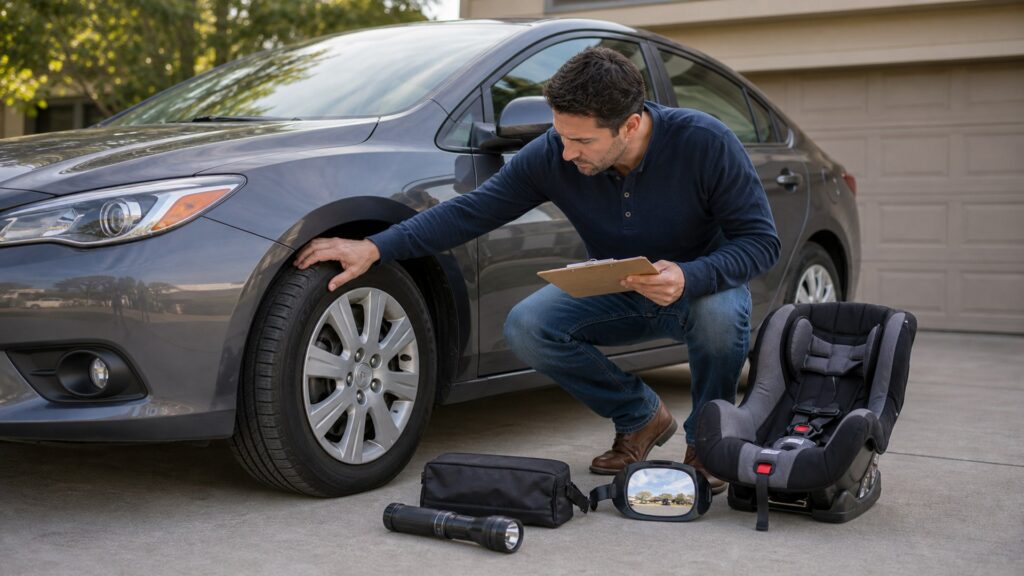
Buying framework
Build a layered safety case
Protection, avoidance, and usability answer different questions. Review each layer independently.
Start with crashworthiness: Compare frontal, side, roof or rollover-related results within the testing program's stated limits, paying attention to model year, body style, and build-date qualifications.
Then examine avoidance: Review tested automatic braking, pedestrian response, lane support, and headlight performance instead of treating equipment presence as proof of effectiveness.
Fit every occupant: Confirm seat-belt geometry, head-restraint position, airbag clearance, child-restraint installation, rear-seat access, and comfortable driving posture for the people who will use the vehicle.
Evaluate the human interface: Alerts should be noticeable without being startling, controls should be easy to find, and intervention should remain predictable enough that drivers understand what the vehicle is doing.
Close the maintenance loop: Tires, brakes, lamps, cameras, sensors, software, recalls, and windshield repairs need ongoing attention because neglected hardware can degrade prevention systems.
Who this is for
Safety priorities change with exposure
Choose evidence relevant to who rides, where the vehicle travels, and which crashes or visibility problems are plausible. Let safety priorities change with exposure shape the comparison.
Families with child restraints: Emphasize rear-seat crash protection, LATCH and tether usability, belt access, door openings, rear visibility, occupant reminders, and safe cargo placement.
Night and rural drivers: Headlight reach and glare, pedestrian and animal visibility, high-beam control, windshield clearing, tire condition, and stable emergency response deserve extra weight.
Urban vulnerable-road-user exposure: Pedestrian and cyclist detection, low-speed visibility, camera coverage, manageable vehicle size, predictable braking, and mirror design affect crowded-street risk.
Older or mobility-limited drivers: Easy entry, clear displays, low control effort, physical visibility, seat-belt access, comfortable posture, and assistance that does not demand complicated menu navigation matter.
What to pay attention to
Read safety results at the correct level
Awards are useful starting points. The underlying test and configuration details make them actionable.
Crash Protection & Restraints
Crashworthiness, seating position, belts, child-restraint hardware, structure, and rollover performance.
Avoidance & Driver Interface
Braking, pedestrian detection, headlights, visibility, tires, alerts, controls, and intervention behavior.
Crash-test scope: NHTSA and IIHS use different tests and rating systems; read the individual results, comparison limits, body style, weight class, and applicable build dates.
Automatic emergency braking: Confirm whether evaluation covers vehicles, pedestrians, motorcycles, daytime, or darkness and whether the tested hardware is standard on the chosen trim.
Headlight performance: Beam reach, curve illumination, glare, and trim-specific lamp type influence nighttime risk; a vehicle can score well elsewhere while using weak headlights.
Restraint usability: Accessible buckles, well-positioned belts, adjustable head restraints, clearly marked top tethers, and uncomplicated lower anchors make correct everyday use more likely.
Visibility and cameras: Measure direct sightlines around pillars, mirrors, hood, and rear body, then assess camera clarity, cleaning, nighttime performance, and warning coverage.
Tires and braking hardware: Correct size, load rating, cold pressure, tread, seasonal compound, brake condition, and stability calibration establish the grip available to every electronic system.
Avoid these traps
Safety shortcuts that hide gaps
A strong result in one category cannot substitute for missing evidence elsewhere. Read beneath the summary.
Treating star counts as universal: Ratings come from defined tests and comparison rules; use them as evidence for those conditions rather than a guarantee across every crash.
Counting driver-assistance features: Two vehicles can list the same technology while detection, braking, alerts, speed range, and standard equipment differ substantially.
Ignoring headlight trims: Optional or redesigned lamps may receive different evaluations, so identify the exact headlight fitted to the vehicle rather than assuming one model-wide result.
Assuming larger always means safer: Size and mass affect crash interaction, yet visibility, rollover resistance, braking, pedestrian risk, and compatibility with the driver still require model-specific review.
Skipping recall verification: A model reputation cannot show whether a particular VIN has an unrepaired safety campaign; check the vehicle and confirm completion records.
Decision guidance
Choose the strongest complete safety profile
Reject candidates with an unresolved weakness relevant to your exposure. Do not trade essential fit for optional technology.
If crash protection leads: Prioritize strong current crashworthiness results in the relevant class, proper seating position, effective restraints, and a cabin that fits every occupant.
If night driving is frequent: Select tested headlights, clear forward sightlines, intuitive beam controls, effective windshield clearing, and verified nighttime pedestrian-braking performance where available.
If children ride regularly: Favor usable LATCH and tether hardware, comfortable adult access, rear-seat belt fit, unobstructed restraint installation, and cargo containment behind occupied rows.
If assistance reduces workload: Drive the exact system on familiar roads, checking alert timing, steering pressure, braking smoothness, visibility limits, and how quickly normal control can be resumed.
If shopping used: Choose a sound structure and correct tires, inspect repairs independently, verify airbags and warning lamps, check the VIN, and confirm required recall remedies.
Ownership & compatibility
Keep safety systems effective
A rating describes tested condition, not permanent condition. Maintenance preserves the hardware behind it.
Maintain tires and brakes: Use placard pressure, inspect tread and damage, rotate correctly, replace compatible tires, and address pulling, vibration, or braking changes promptly.
Protect cameras and sensors: Keep lenses, radar areas, lamps, and glass clean; after collision, windshield, alignment, or suspension work, follow manufacturer calibration procedures.
Respond to recalls: Register ownership, check the VIN periodically, follow interim instructions, arrange the remedy, and retain documentation that the campaign was completed.
Review settings after updates: Software or service can change assistance behavior; confirm preferred alerts and understand new limitations before relying on familiar responses.
FAQ
Vehicle safety questions
Use these answers to interpret ratings and equipment accurately.
Are NHTSA and IIHS ratings the same?
Can I compare crash ratings across vehicle sizes?
Does automatic emergency braking prevent every crash?
Why do headlight ratings vary by trim?
What makes LATCH easy to use?
Are driver-assistance systems worth paying for?
How do tires affect vehicle safety?
What should I check on a used vehicle?
How often should I check for recalls?
Bottom line
Demand evidence across every safety layer
A safety-focused vehicle protects occupants, helps avoid crashes, and remains understandable to its driver. Verify the exact configuration.
Read individual tests: Look below the overall award.
Fit the occupants: Confirm belts, restraints, posture, and sightlines.
Maintain the hardware: Keep tires, sensors, lamps, and recalls current.
Reading Shortcuts
Move directly to the decision you need to resolve.
Decision Reminders
Use these checks while narrowing the field.
- Check model year: Tests are configuration-specific.
- Identify the lamps: Headlights can vary.
- Install restraints: Hardware must fit.
- Drive the alerts: Behavior matters.
- Inspect tire grip: Electronics depend on it.
- Search the VIN: Complete open recalls.
Glossary Snippets
Terms that appear in listings, labels, and service information.
When to Use a Top 10 Review
Use rankings after requirements and exclusions are clear.
- Scan candidates: Find credible options.
- Compare strengths: See major tradeoffs.
- Build a shortlist: Choose what to inspect.
- Check availability: Confirm current offerings.
Already down to 2–3 options? A Comparison is usually the faster next step.
When to Use a Comparison
Compare directly when only a few candidates remain.
- Align versions: Compare equivalent configurations.
- Trace differences: Locate meaningful distinctions.
- Price the outcome: Include continuing costs.
- Verify uncertainty: Inspect unresolved details.
Still exploring? Start with a Top 10 to build a shortlist first.