
Autos Buying Guide for Value and Long-Term Ownership
Long-term value is the cost of useful transportation across the years you expect to keep a vehicle. Purchase price matters, but depreciation, interest, insurance, fuel or electricity, scheduled service, tires, repairs, registration, and downtime can reorder a comparison. Begin with a holding period and realistic annual mileage, then identify the duties the vehicle must still perform near the end of that period.
Durability cannot be reduced to a brand reputation. The exact powertrain, wheel package, maintenance history, climate, repair complexity, and local parts or labor support shape the ownership experience. A strong candidate has documented care, manageable recurring costs, and enough adaptability to avoid premature replacement. This guide builds that case without promising a resale value or a failure-free future.
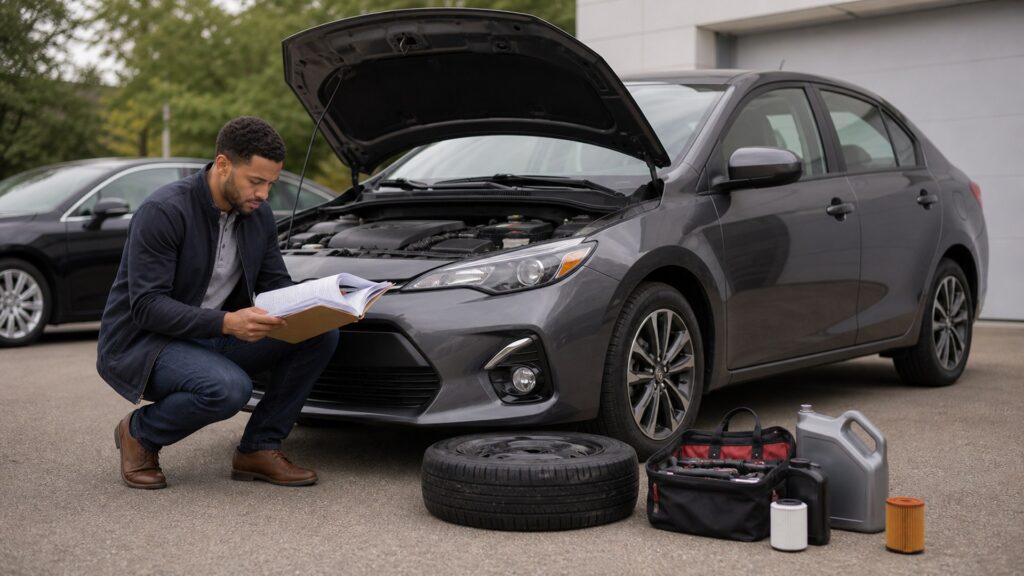
Buying framework
Define value across a holding period
Value is a timeline, not a sticker discount. Set the years, miles, and exit conditions first.
Choose the ownership horizon: A three-year lease-like cycle, eight-year family hold, and fifteen-year low-mileage plan expose different depreciation, warranty, maintenance, and repair risks.
Model the whole cash flow: Include down payment, taxes, fees, interest, insurance, registration, energy, service, wear items, repairs, and expected sale proceeds without hiding costs inside one payment.
Preserve an emergency reserve: Do not direct every available dollar to purchase; older vehicles and complex systems need liquid funds for tires, deductibles, diagnostics, and unexpected downtime.
Check service infrastructure: Confirm nearby expertise, diagnostic access, parts lead times, tire availability, warranty facilities, and transportation during repair before choosing an uncommon configuration.
Buy enough future usefulness: Allow for plausible passenger, cargo, commute, accessibility, and climate changes, but avoid paying years of consumption for speculative capacity.
Who this is for
Ownership plans change the value equation
Mileage, cash flow, repair tolerance, and household change matter more than a universal resale ranking. Choose the closest pattern.
High-mileage keepers: Prioritize seat durability, efficient cruising, common wear items, service access, corrosion resistance, and maintenance records because use accumulates quickly.
Low-mileage long holders: Age-related rubber, fluids, batteries, corrosion, and electronics may matter before mileage intervals; garage conditions and periodic exercise deserve attention.
Frequent replacement buyers: Early depreciation, loan balance, condition standards, accident history, and transferable warranty can dominate operating savings over a short cycle.
Budget repair planners: A simpler used vehicle with broad parts and independent-shop familiarity can be valuable when purchase savings leave a genuine maintenance reserve.
What to pay attention to
Ownership specifications behind the price
Read intervals, sizes, and contract details before estimating cost. A familiar model can hide an expensive configuration.
Durability & Service Burden
Maintenance intervals, wear items, repair access, parts supply, complexity, and documented condition.
Capital & Operating Cost
Depreciation, financing, insurance, registration, energy, taxes, warranty, and resale flexibility.
Maintenance schedule: Compare time- and mileage-based services, severe-use definitions, fluid specifications, major interval work, and whether access makes routine labor unusually expensive.
Tire and brake configuration: Large staggered tires, uncommon load ratings, performance compounds, heavy curb weight, and regenerative braking can change replacement price and wear patterns.
Warranty scope: Read duration, mileage, exclusions, deductibles, transfer rules, required records, covered labor, battery provisions, corrosion terms, and the administrator's claims process.
Insurance inputs: Obtain quotes for the exact trim because repair materials, sensors, performance, theft patterns, driver profile, location, and lender requirements affect premiums.
Energy requirement: Use official consumption with annual mileage and local prices, including premium fuel, charging losses, public fees, climate, load, and declining efficiency from poor maintenance.
Repair and parts ecosystem: Consider independent-shop familiarity, scan-tool access, remanufactured options, salvage supply, shipping delays, calibration needs, and whether common assemblies are serviceable separately.
Avoid these traps
Value calculations that omit the expensive years
A cheap purchase can become costly when timing and condition are ignored. Model when the bills arrive.
Using resale percentage alone: A higher retained percentage can still mean more dollars lost on an expensive vehicle; compare actual depreciation and the utility received during ownership.
Extending the loan to improve payment: Longer terms increase interest and can keep debt above market value, limiting the ability to sell when needs or repair economics change.
Assuming warranty equals maintenance: Warranties address defined defects, not every fluid, tire, brake, alignment, damage, or wear expense; read exclusions and budget routine work separately.
Ignoring configuration-specific costs: One trim may require larger tires, premium fuel, specialty dampers, more sensors, or limited parts even when the model name has an economical reputation.
Deferring small maintenance: Skipped fluids, leaks, alignment, pressure, and warning lights can create larger failures while erasing the documentation a later buyer or warranty administrator needs.
Decision guidance
Choose the ownership path that protects flexibility
Balance purchase age, condition, and complexity against cash reserve and service access. Avoid a plan that requires perfect forecasts.
If you will keep it many years: Favor proven serviceability, comfortable ergonomics, useful future packaging, common consumables, corrosion protection, and records that establish a sound starting condition.
If annual mileage is high: Pay more attention to energy consumption, seat durability, tire cost, long service intervals, highway wear, and rapid access to maintenance appointments.
If cash flow is tight: Reduce vehicle price and complexity before extending debt, but preserve inspection and repair funds rather than buying the cheapest unverified example.
If technology complexity concerns you: Investigate calibration, module replacement, battery cooling, software support, sensor glass, and independent repair options instead of rejecting or accepting technology as one category.
If needs may change soon: Choose a shorter financial commitment and strong broad-market usability; speculative resale value should not compensate for being locked into the wrong vehicle.
Ownership & compatibility
Create records that retain options
Maintenance records support diagnosis, warranty claims, and resale. Condition management begins at purchase.
Establish a baseline: For used vehicles, inspect and document fluids, tires, brakes, battery, filters, leaks, recalls, keys, tools, and upcoming interval work immediately.
Follow time as well as miles: Coolant, brake fluid, rubber, batteries, corrosion protection, and some lubricants can age even when the odometer advances slowly.
Review costs annually: Update insurance, registration, energy, maintenance, market value, and loan balance, distinguishing normal wear from a pattern that changes the keep-or-replace decision.
Protect saleability: Repair safety defects, keep the cabin and body sound, save invoices, retain original equipment when practical, and disclose known condition accurately at exit.
FAQ
Long-term ownership questions
Use these answers to test the years after purchase.
How should I calculate total ownership cost?
Is the vehicle with best resale always cheapest?
Should I buy new for long-term ownership?
How long should an auto loan last?
Do aftermarket parts void a vehicle warranty?
What records should I keep?
Are extended service contracts good value?
When is an expensive repair worth doing?
How do I avoid negative equity?
Bottom line
Value survives more than the purchase
A durable choice fits future use, leaves money for care, and remains serviceable when the warranty ends. Model the years honestly.
Set the horizon: Choose years, miles, and likely exit.
Price every phase: Include ownership, repair, and financing timing.
Preserve options: Maintain records, condition, and manageable debt.
Reading Shortcuts
Move directly to the decision you need to resolve.
Decision Reminders
Use these checks while narrowing the field.
- Compare dollar depreciation: Percentages can mislead.
- Preserve repair cash: Do not spend every dollar.
- Quote the exact trim: Insurance varies.
- Read maintenance timing: Age and mileage matter.
- Check parts access: Downtime has value.
- Track loan balance: Protect exit flexibility.
Glossary Snippets
Terms that appear in listings, labels, and service information.
When to Use a Top 10 Review
Use rankings after requirements and exclusions are clear.
- Scan candidates: Find credible options.
- Compare strengths: See major tradeoffs.
- Build a shortlist: Choose what to inspect.
- Check availability: Confirm current offerings.
Already down to 2–3 options? A Comparison is usually the faster next step.
When to Use a Comparison
Compare directly when only a few candidates remain.
- Align versions: Compare equivalent configurations.
- Trace differences: Locate meaningful distinctions.
- Price the outcome: Include continuing costs.
- Verify uncertainty: Inspect unresolved details.
Still exploring? Start with a Top 10 to build a shortlist first.