
Autos Buying Guide for Winter Driving
Winter capability begins where the vehicle touches the road. Tires determine much of the available braking, cornering, and acceleration grip, while clearance determines whether packed or deep snow reaches the underbody. Driven wheels matter, but they cannot restore traction that the tire compound and tread do not provide. Start with the roads that remain unplowed longest and the temperatures that define a difficult morning.
Visibility and energy are the second half of the decision. Defrosting speed, washer capacity, headlight performance, cold starting, cabin heat, and reduced electric range can decide whether the trip remains practical. Compare these functions on the exact trim, then budget for winter tires, pressure checks, corrosion control, and emergency supplies before paying for cosmetic off-road cues.
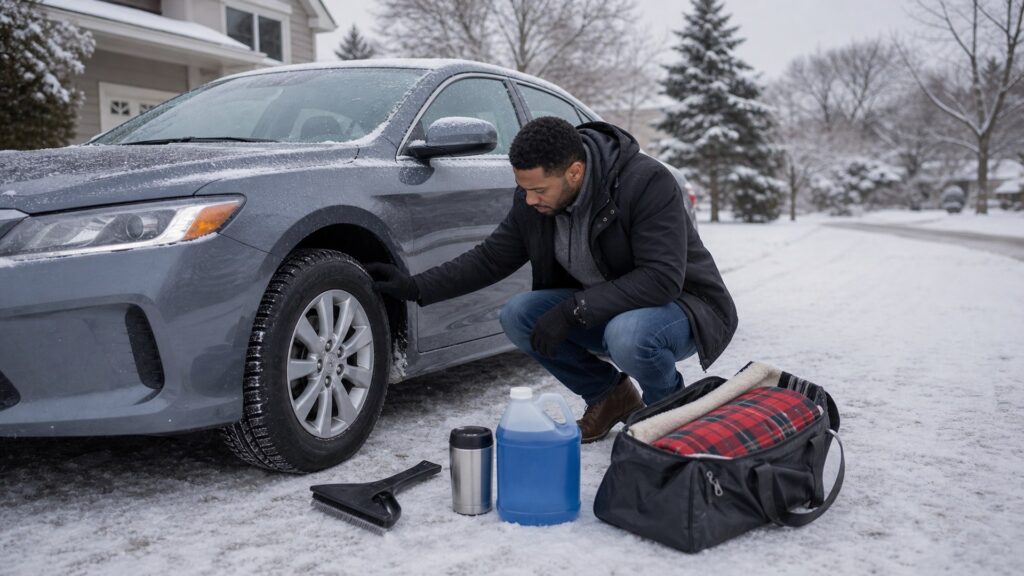
Buying framework
Build winter capability from the tires upward
Snow performance is a system. Start with grip, sight, and reserve rather than a drivetrain badge.
Name the worst road: Separate wet cold, packed snow, deep snow, steep driveways, ice, and untreated rural routes because each condition creates a different traction and clearance problem.
Specify the tire plan: Confirm available winter-tire sizes, load and speed ratings, storage, seasonal installation, and whether the vehicle permits chains or requires special low-clearance devices.
Evaluate every phase of control: Acceleration may feel reassuring while braking and turning remain limited, so compare tire grip, stability behavior, pedal modulation, steering feedback, and stopping confidence.
Test visibility restoration: Time front and rear defrosting, inspect mirror and camera contamination, operate washers and wipers, and assess headlight performance in falling snow or dark wet roads.
Keep energy in reserve: Cold starts, cabin heat, window clearing, idling, detours, and slow traffic consume fuel or battery; plan more margin than a mild-weather commute requires.
Who this is for
Winter conditions create distinct needs
A cleared urban route differs from an exposed mountain road. Match hardware to treatment, grade, depth, and consequence.
Plowed-city drivers: Quality winter tires, predictable front-wheel drive, effective defrosting, compact dimensions, and easy curbside maneuvering may matter more than added clearance.
Snowbelt commuters: Frequent accumulation rewards dedicated winter rubber, stable control calibration, useful clearance, heated touch points, robust washers, and reliable cold starts.
Mountain travelers: Grades, chain controls, deep snow, falling rock, and long gaps between help require verified device clearance, engine braking behavior, energy reserve, and recovery preparation.
Cold-climate EV owners: Home charging, battery thermal management, preconditioning, heat-pump behavior, winter range, and charger reliability determine convenience when temperatures remain low.
What to pay attention to
Winter specifications that deserve verification
Look past the feature label. Operation, clearance, and the exact tire package determine usefulness.
Traction & Winter Control
Tires, braking, stability systems, clearance, steering feedback, and snow-chain provisions.
Cold-Weather Visibility & Energy
Defrosting, lighting, washers, heating, cold starts, range loss, and emergency support.
Tire fitment range: A common narrower winter size with adequate sidewall can improve availability and snow performance, but it must meet manufacturer load, speed, diameter, and wheel-clearance requirements.
Ground clearance: Measure the lowest vulnerable points and consider wheelbase; a published body clearance does not guarantee that long underbody panels or air dams avoid packed snow.
Drivetrain calibration: All-wheel drive should engage predictably without abrupt intervention, while selectable modes must remain understandable and stability control should support rather than mask available grip.
Defrost and washer performance: Strong airflow, heated mirrors, wiper parking heat, protected nozzles, and a large accessible reservoir reduce time spent driving through partially cleared glass.
Cold energy behavior: Compare starting battery capacity and access on combustion vehicles; for EVs, examine preconditioning, cabin-heating demand, winter range evidence, and cold charging limits.
Chain compatibility: Owner-manual restrictions may vary by axle, tire size, device type, and speed, so verify permitted hardware before entering jurisdictions or roads where traction devices are required.
Avoid these traps
Winter myths that reduce control
A vehicle can accelerate confidently and still stop poorly. Judge the whole traction system.
Buying all-wheel drive instead of tires: Sending power to more wheels can improve launch, but braking and cornering still depend on tire-road grip; inappropriate tires remain the limiting component.
Using tire-sidewall pressure: The sidewall shows a tire limit, not the vehicle recommendation; use the cold pressure on the door placard or owner manual and recheck as temperature drops.
Choosing clearance by appearance: Black cladding and tall styling do not reveal the lowest mechanical or aerodynamic parts, approach angles, wheelbase breakover, or vulnerability to frozen ruts.
Assuming cameras stay useful: Snow, salt, and spray can obscure lenses and sensors within minutes, so physical sightlines, mirrors, washers, wipers, and cleaning access remain essential.
Planning EV range from summer: Cabin heating, cold battery chemistry, snow resistance, winter tires, and highway speed can reduce usable distance and charging performance; model the difficult season.
Decision guidance
Select for the roads that remain untreated
Begin with tires and visibility. Add driven wheels or clearance only when a documented route condition needs them.
If roads are regularly plowed: A front-wheel-drive car on appropriate winter tires may provide strong control, lower cost, and easier parking without the weight of all-wheel drive.
If grades and frequent snow combine: All-wheel drive with dedicated winter tires can improve uphill progress, but verify downhill control, clearance, chain rules, and safe stopping behavior.
If snow depth is the obstacle: Choose measured clearance, protected underbody components, short vulnerable overhangs, recovery points, and tires suited to the surface rather than oversized wheels.
If extreme cold dominates: Prioritize dependable starting or battery conditioning, rapid cabin and glass heating, accessible charging or fuel, durable door seals, and easy emergency entry.
If storms are exceptional: Winter tires and a travel-delay plan may be wiser than owning a larger vehicle year-round; staying off the road can remain the safest response.
Ownership & compatibility
Maintain winter readiness
Cold and road treatment expose neglected systems quickly. Inspect throughout the season, not only before the first storm.
Check tires while cold: Measure placard pressure monthly and before trips, inspect tread and damage, rotate as required, and keep the seasonal set labeled and stored away from heat or sunlight.
Protect visibility supplies: Use season-appropriate washer fluid, replace worn blades, clear all lamps and sensors, and remove roof snow that could slide or blow into traffic.
Control corrosion: Rinse salt from wheel wells and underbody when conditions permit, clear drain paths, inspect coatings and brake components, and repair paint chips before rust spreads.
Refresh emergency equipment: Carry clothing, traction aids, light, power, scraper, shovel, and communication support appropriate to the route, checking batteries, food, medication, and expiration dates.
FAQ
Winter vehicle questions
Settle these issues before temperatures and road treatment change.
Is all-wheel drive enough for snow?
When should I choose winter tires?
Should winter tires go on all four wheels?
Does a heavier vehicle stop better on ice?
How much ground clearance do I need?
Why does tire pressure fall in cold weather?
How much EV range should I reserve in winter?
What visibility features matter most?
What belongs in a winter emergency kit?
Bottom line
Grip and visibility outrank winter image
A winter-ready vehicle stops, turns, clears its glass, and preserves energy on the worst regular road. Build that system deliberately.
Choose tires first: Match compound and tread to recurring conditions.
Restore sight quickly: Verify heat, washers, wipers, mirrors, and lamps.
Carry reserve: Allow energy, clearance, time, and recovery margin.
Reading Shortcuts
Move directly to the decision you need to resolve.
Decision Reminders
Use these checks while narrowing the field.
- Use placard pressure: Check tires cold.
- Verify chain rules: Read the exact manual.
- Clean every lens: Salt hides cameras.
- Allow winter range: Preserve detour margin.
- Rinse road salt: Protect the underbody.
- Delay unsafe travel: Capability has limits.
Glossary Snippets
Terms that appear in listings, labels, and service information.
When to Use a Top 10 Review
Use rankings after requirements and exclusions are clear.
- Scan candidates: Find credible options.
- Compare strengths: See major tradeoffs.
- Build a shortlist: Choose what to inspect.
- Check availability: Confirm current offerings.
Already down to 2–3 options? A Comparison is usually the faster next step.
When to Use a Comparison
Compare directly when only a few candidates remain.
- Align versions: Compare equivalent configurations.
- Trace differences: Locate meaningful distinctions.
- Price the outcome: Include continuing costs.
- Verify uncertainty: Inspect unresolved details.
Still exploring? Start with a Top 10 to build a shortlist first.