
Band Saws Buying Guide for Beginners
Band saws occupy a unique space in the workshop, spanning light-duty craft work to demanding resawing and curved cutting tasks. Their apparent simplicity can obscure meaningful differences in size, capacity, power delivery, and control, all of which influence how effectively the tool performs across materials and applications. Selecting the right configuration requires understanding how these variables interact rather than relying on surface-level specifications.
This guide clarifies the structural elements, performance characteristics, and setup considerations that define band saw capability. It outlines key terminology, explains tradeoffs between capacity and precision, and identifies the factors that shape usability and long-term reliability. By the end, readers will have a clear framework for evaluating options and aligning machine characteristics with their intended use.
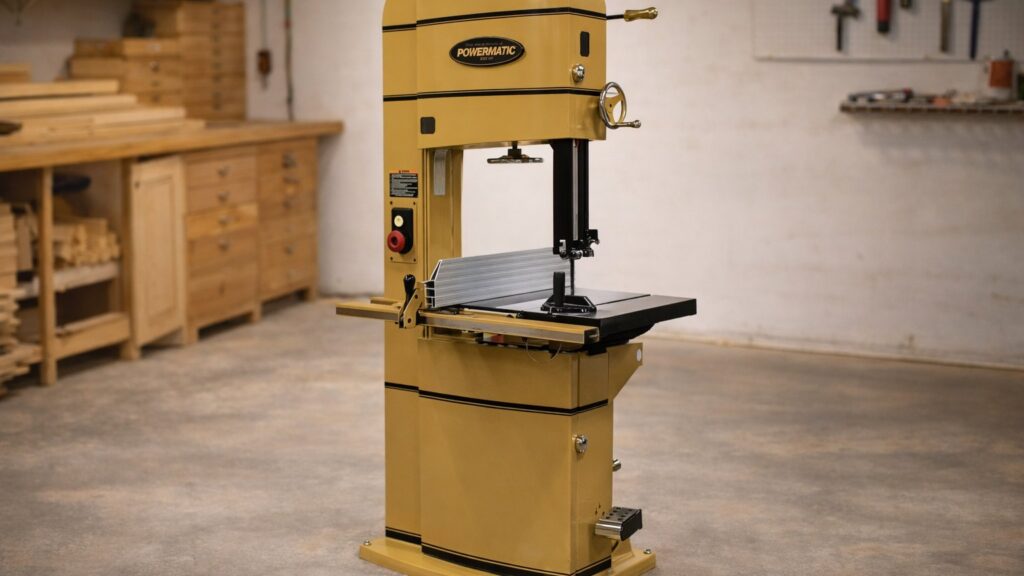
Buying framework
How to think about buying a band saw
Most band saws are capable of basic cutting tasks, but meaningful differences appear in capacity, control, adjustability, and how well the machine supports the kind of work you plan to do repeatedly. Use this framework to identify the factors that shape everyday usability before narrowing the field any further.
Capacity shapes capability: Throat depth and resaw height determine what the saw can physically handle, so your choice should reflect the size of the stock and the range of cuts you expect to make most often.
Stability affects accuracy: A rigid frame, well-supported table, and controlled blade path help the saw track predictably, which becomes especially important when following curves or cutting thicker material.
Power should match the work: Lighter-duty use places different demands on a machine than frequent resawing or dense hardwood cutting. More power is useful when workloads increase, but it matters most when paired with good setup and blade selection.
Adjustment quality matters long term: Blade tracking, guide adjustment, tensioning, and fence alignment influence how easy the saw is to set correctly and keep consistent over time. Small setup frustrations tend to become larger ownership issues.
Fit the saw to the workshop: Footprint, mobility, dust collection access, and working height all shape how practical the machine will be in daily use. A band saw should suit both your projects and the space it needs to operate safely and comfortably.
Who this is for
Pick the band saw that matches how you actually work
The right band saw depends on the type of work you do, how often you use it, and the space it operates in. Use these profiles to align capacity, control, and setup complexity with how your projects actually unfold.
Homeowners & light DIY: typically working in shared spaces or small shops on occasional projects like basic curves, trim pieces, or light resawing. Prioritize compact footprint, straightforward setup, and stable tracking. What matters most is ease of use and predictable control without frequent adjustments.
Weekend woodworking projects: building furniture, shelves, or small cabinetry with regular use sessions. Prioritize consistent tracking, a stable table surface, and enough capacity for thicker stock. What matters most is a saw that maintains accuracy over longer sessions without constant recalibration.
Detail-focused work (curves, shaping, fine cuts): working on intricate cuts where control and precision are critical. Prioritize blade stability, guide adjustment, and smooth feed control. What matters most is how predictably the saw follows a line rather than raw cutting power.
Heavier material and resawing: regularly cutting thicker boards or working with dense hardwoods in a dedicated workshop. Prioritize greater resaw capacity, frame rigidity, and sufficient motor strength. What matters most is sustained performance under load without compromising tracking accuracy.
Space-conscious workshops: operating in garages or limited areas where mobility and storage matter alongside performance. Prioritize manageable footprint, base stability, and dust collection access. What matters most is how well the saw integrates into the space without disrupting workflow.
What to pay attention to
Which band saw specs actually matter
Spec sheets can make band saws appear similar, but key differences show up in how the machine tracks, cuts, and handles material over time. These are the specifications that influence real-world performance — and the ones that have less impact than they seem at first glance.
Specs that affect feel
Tracking stability, vibration control, guide adjustment, and table support determine how predictable and controlled each cut feels.
Specs that affect capability
Throat depth, resaw height, motor output, and frame rigidity determine what sizes and types of material the saw can handle consistently.
Blade tracking stability: Smooth, consistent tracking keeps cuts predictable and reduces drift, especially during curves or longer resaw passes.
Vibration and frame rigidity: A stable frame minimizes vibration, which directly improves cut accuracy and reduces user fatigue over time.
Guide adjustment and support: Well-designed blade guides and easy adjustments help maintain control near the cut, particularly when switching between blade types.
Throat depth and resaw capacity: These measurements define the physical limits of what the saw can cut, shaping both project scale and material handling.
Motor behavior under load: Consistent power delivery matters more than peak output, especially when cutting thicker stock or denser materials.
Often overhyped: maximum horsepower claims, nominal wheel size alone, and isolated spec numbers that don’t reflect setup quality or real cutting conditions.
Avoid these traps
Common mistakes people make when buying a band saw
Most dissatisfaction with a band saw comes from mismatching the machine to the work it will actually handle. These are the most common mistakes we see—and how to avoid them before you buy.
Focusing on size without considering use: Larger saws can seem more capable, but they also require more space, setup effort, and adjustment. If the added capacity doesn’t match your typical work, it often goes unused while complicating everyday tasks.
Assuming power solves cutting issues: More motor output does not automatically improve cut quality if tracking, guides, and setup are not well aligned. In practice, control and tuning have a greater impact on accuracy than raw power alone.
Overlooking setup and adjustment quality: Machines that are difficult to tune can lead to inconsistent cuts and ongoing frustration. Ease of adjustment and repeatable setup matter more over time than initial specifications.
Ignoring space and workflow constraints: A band saw that fits physically may still disrupt how you move material or manage dust. Practical integration into the workspace often determines how frequently the tool is used.
Expecting one setup to handle all tasks: Different cuts often require different blade types and adjustments. Treating the saw as a fixed setup can limit performance and lead to disappointing results across varied projects.
Relying on headline specs alone: Published measurements and ratings do not reflect how a saw behaves once installed and tuned. Real-world performance depends on stability, alignment, and how well the components work together.
Decision guidance
Which type of band saw is right for you
The right band saw depends more on how you cut and how often you use it than on headline specifications. Use this to match capacity, control, and footprint to your actual workload—not occasional edge cases.
Choose a smaller, space-conscious saw if: your work centers on light projects, curved cuts, and occasional use in a shared or compact workspace. These setups are easier to position, adjust, and live with day to day, especially when maneuverability and storage matter. They typically favor control and convenience over maximum cutting capacity.
Choose a larger, higher-capacity saw if: you regularly work with thicker stock, wider boards, or denser materials that require consistent performance under load. Increased throat depth and resaw height expand what’s possible, but they come with greater space demands and setup expectations. This approach fits dedicated workshop environments with steady workloads.
If you’re on the fence: prioritize the saw that feels easier to control and maintain in your typical setup. A machine that tracks predictably and adjusts without friction will usually deliver better long-term results than one chosen mainly for occasional capacity needs.
Match the saw to your 80% tasks: most use centers on moderate cuts, shaping, and general material breakdown rather than maximum resawing. Selecting for those frequent tasks leads to a more consistent and comfortable experience, with fewer compromises in everyday work.
When a band saw isn’t the best tool: if your primary work involves straight cuts in sheet goods or repetitive crosscuts, other tools designed for linear cutting may be more efficient. A band saw complements these tools but is most effective when its strengths—controlled curves and resawing—are central to the work.
Ownership & compatibility
What you’re really buying into long term
A band saw isn’t just a one-time purchase. Long-term value comes from maintenance requirements, parts availability, blade compatibility, and how well the machine fits into your workflow as your projects evolve.
Blade compatibility and availability: Band saw performance depends heavily on blade choice, so access to common lengths and widths matters. Machines that use widely available blade sizes make replacements and experimentation with different cuts easier over time.
Setup consistency and adjustment access: Regular adjustments for tracking, tension, and guides are part of ownership. Designs that allow clear access and repeatable settings reduce friction and make it easier to maintain consistent results.
Parts, wear items, and serviceability: Tires, guides, bearings, and belts will eventually need attention. Availability of replacement parts and straightforward service access influence how long the saw remains practical to keep in use.
Workspace integration and dust handling: Dust collection connections, footprint, and mobility all affect how the saw fits into daily workflow. A machine that integrates cleanly into your space is more likely to be used consistently and safely.
Long-term ownership factors: Maintenance time, blade replacement frequency, and occasional part servicing become the primary ongoing costs. Over time, ease of upkeep and reliable operation matter more than initial specifications.
FAQ
Band saw buying guide FAQ
Quick answers to the questions people ask most when choosing a band saw—focused on real use, not spec-sheet assumptions.
Do I need a larger band saw, or is a smaller one enough?
What does throat depth actually affect?
How important is motor power for a band saw?
What blade should I use?
How difficult is band saw setup and maintenance?
Can a band saw replace other saws?
What causes a band saw to drift off the cut line?
What features actually matter day to day?
How long should a band saw last?
Bottom line
The simplest way to pick the right band saw
Most band saws can handle basic cuts. The right one is the saw that feels stable, predictable, and well-matched to the size and type of work you do most often.
If you want the easiest ownership experience: choose a saw that fits your space, uses common blade sizes, and allows straightforward adjustments so setup and maintenance stay manageable over time.
If control and accuracy matter most: prioritize smooth tracking, low vibration, and easy guide adjustment, since these factors shape how predictable each cut feels.
If you work with thicker or denser material: step up in capacity and power to maintain consistent cutting, but avoid oversizing if those tasks are occasional.
If your projects are smaller or space is limited: a more compact saw often delivers better day-to-day usability, with easier positioning and less workflow disruption.
Final check: think about the cuts you make most often and the space you work in. Choose the saw that handles those tasks comfortably and consistently, and it will serve you better over time.
Reading Shortcuts
Jump to the sections that matter most for choosing the right band saw.
Decision Reminders
A quick checklist before you commit to a band saw setup.
- Choose stability over size alone: a rigid frame and smooth tracking matter more to cut quality than maximum capacity.
- Match capacity to your real projects: larger throat and resaw height help with bigger stock but add space and setup demands.
- Blade choice shapes performance: the right width and tooth pattern often make a bigger difference than machine specs.
- Prioritize easy adjustment: accessible tracking, tension, and guides reduce frustration and keep cuts consistent.
- Plan for workflow fit: footprint, dust collection, and material handling affect how often the saw is actually used.
- Don’t rely on headline specs: horsepower and size numbers matter less than setup quality and real-world control.
Glossary Snippets
Quick translations for the terms that confuse buyers most.
When to Use a Top 10 Review
If you want the fastest shortlist, this is the format that gets you to a confident pick.
- You’re narrowing options quickly: A ranked list helps translate features into practical use without digging through full guides.
- You want a structured starting point: Categories like Best Overall or Best for Beginners organize choices by typical use cases.
- You’re comparing different capability levels: It shows how compact, mid-size, and larger saws fit different workloads and spaces.
- You need a quick shortlist: It highlights a manageable group to explore further rather than evaluating every option individually.
Already down to 2–3 models? A Comparison is usually faster than reading full reviews.
When to Use a Comparison
Best when you’re choosing between specific models and want the clearest tradeoffs.
- You’re down to 2–3 finalists: side-by-side differences in capacity, stability, and setup are easier to evaluate.
- You care about real-world control: tracking behavior, vibration, and adjustment feel become clearer in direct comparisons.
- You want a winner by category: cut accuracy, ease of setup, workflow fit, and long-term usability are broken out clearly.
- You need the fastest decision: a Comparison condenses tradeoffs into a clear choice once your shortlist is set.
Still exploring? Start with a Top 10 to find the right “type” of band saw first.