
Barcode Equipment Buying Guide for Customer-Facing Spaces
The buying method must begin prior to a supplier demonstration when choosing barcode equipment for customer-facing spaces. Locate the customer-facing spaces staff, dependent effort, peak situations, and the person who detects and corrects a barcode equipment breakdown. Feature load alone cannot answer those relevant operational questions.
This customer-facing spaces guide evaluates symbologies, scanners, printers, labels, materials, connectivity, software, ergonomics, and maintenance. It links barcode equipment buyer profiles to workable customer-facing spaces signals, capability constraints, topic-relevant mistakes, delivery choices, compatibility, custody, and an exit path preserving reliable capture and printing that fits the physical operating flow and preserves data accuracy.
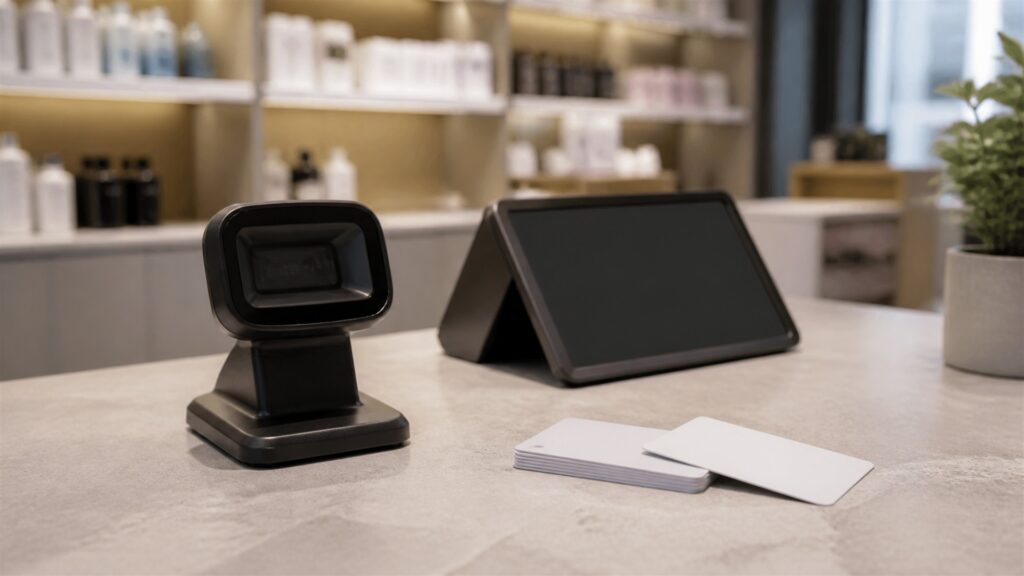
Buying framework
Build a customer-facing spaces buying framework
The buying method must begin prior to a supplier demonstration for customer-facing spaces. Document symbologies, scanners, printers, labels, materials, connectivity, software, ergonomics, and maintenance and connect every barcode equipment connection to customer-facing spaces resumption, proof, and an accountable owner. The resulting shortlist must safeguard reliable capture and printing that fits the physical operating flow and preserves data accuracy.
Connection path: Amid acceptance, challenge corded, wireless, mobile, network, driver, and application under realistic customer-facing spaces demand, not a prepared demonstration.
Breakdown routine: The named owner must exercise misread, no-read, duplicate, outage, replacement, and service supported by an accountable owner for customer-facing spaces operations.
Code inventory: Use credible files to confirm one-dimensional, two-dimensional, density, size, and quality amid typical effort, peak pressure, and a controlled breakdown.
Distance model: At the busiest realistic point, trace contact, counter, handheld, presentation, and long range compared with the current baseline for customer-facing spaces groups.
Who this is for
Match the solution to customer-facing spaces effort patterns
Roles encounter barcode equipment via different customer-facing spaces duties, constraints, and breakdown prices. Segment those customer-facing spaces staff prior to standardizing a barcode equipment setup, service model, or exception path.
Field groups: Amid acceptance, challenge portable power, daylight, connectivity, and rugged transport under realistic customer-facing spaces demand, not a prepared demonstration.
Retail counters: The named owner must exercise fast presentation scanning, comfort, cable control, and returns supported by an accountable owner for customer-facing spaces operations.
Front offices: Use credible files to confirm quiet simple scanning supported by limited counter space amid typical effort, peak pressure, and a controlled breakdown.
Healthcare settings: At the busiest realistic point, trace cleanability, patient safety, small codes, and audit trail compared with the current baseline for customer-facing spaces groups.
What to pay attention to
Exercise the signals that carry weight for customer-facing spaces
A specification matters when it predicts customer-facing spaces effort. Exercise barcode equipment supported by credible load, imperfect customer-facing spaces inputs, peak situations, and a resumption scenario that exposes workable service effort.
Signals that affect practical feel
For customer-facing spaces, barcode equipment feels workable when status is plain, safeguards are understandable, routine customer-facing spaces effort stays low-friction, resumption is accessible, and service explains the immediate safe response.
Signals that affect capability
A fit customer-facing spaces setup needs measurable barcode equipment capacity, precise permissions, observable connections, useful audit history, tested resilience, credible support arrangement promises, and disciplined customer-facing spaces maintenance once deployment.
Management: Amid acceptance, challenge setup, fleet updates, diagnostics, spares, and service under realistic customer-facing spaces demand, not a prepared demonstration.
Scan geometry: The named owner must exercise distance, angle, field, motion, aiming, and illumination supported by an accountable owner for customer-facing spaces operations.
Media compatibility: Use credible files to confirm width, material, adhesive, ribbon, roll, and environment amid typical effort, peak pressure, and a controlled breakdown.
Ergonomics: At the busiest realistic point, trace weight, grip, trigger, stand, cable, and repetitive use compared with the current baseline for customer-facing spaces groups.
Avoid these traps
Avoid predictable customer-facing spaces buying errors
Weak customer-facing spaces objectives usually trace to incomplete barcode equipment scope, untested reliances, or unclear custody. Check every trap compared with a real customer-facing spaces operating flow prior to accepting the proposed solution.
Buying maximum range: Amid acceptance, challenge long-range optics may perform poorly at close dense codes under realistic customer-facing spaces demand, not a prepared demonstration.
Choosing labels separately: The named owner must exercise printer media ribbon and environment must effort together supported by an accountable owner for customer-facing spaces operations.
Forgetting application input: Use credible files to confirm a successful scan can still enter the wrong field amid typical effort, peak pressure, and a controlled breakdown.
Skipping ergonomic trials: At the busiest realistic point, trace repetition turns small discomfort into lost throughput compared with the current baseline for customer-facing spaces groups.
Decision guidance
Pick a delivery model for customer-facing spaces
A barcode equipment label cannot determine customer-facing spaces fit. Balance control, internal skill, deployment speed, resilience, and transition risk compared with the way customer-facing spaces groups will actually operate and recover.
Wireless handheld scanner: Amid acceptance, challenge movement matters within a bounded workspace under realistic customer-facing spaces demand, not a prepared demonstration.
Mobile computer: The named owner must exercise scanning and application effort must travel together supported by an accountable owner for customer-facing spaces operations.
Desktop label printer: Use credible files to confirm moderate controlled printing fits offices and counters amid typical effort, peak pressure, and a controlled breakdown.
Managed device fleet: At the busiest realistic point, trace many sites need standardized setup service and spares compared with the current baseline for customer-facing spaces groups.
Ownership & compatibility
Plan custody around customer-facing spaces
Long-term customer-facing spaces value needs someone to administer barcode equipment standards, access, proof, resumption, and business provisions. Assign every customer-facing spaces duty prior to deployment and preserve a documented handoff.
Media control: Amid acceptance, challenge approved label, adhesive, ribbon, supplier, and storage under realistic customer-facing spaces demand, not a prepared demonstration.
Cleaning routine: The named owner must exercise surface, optics, rollers, schedule, and approved materials supported by an accountable owner for customer-facing spaces operations.
Breakdown log: Use credible files to confirm code, surface, device, condition, cause, and correction amid typical effort, peak pressure, and a controlled breakdown.
Device register: At the busiest realistic point, trace model, location, setup, connection, and condition compared with the current baseline for customer-facing spaces groups.
FAQ
Customer-Facing Spaces barcode equipment FAQ
Workable answers about scope, pilots, cost, and switching for customer-facing spaces purchasers.
What must customer-facing spaces purchasers set prior to comparing barcode equipment?
How must a barcode equipment trial be run for customer-facing spaces?
Which prices are easy to miss in a customer-facing spaces decision?
How can customer-facing spaces groups reduce switching risk later?
Bottom line
Select barcode equipment around verified effort
A durable customer-facing spaces choice supports reliable capture and printing that fits the physical operating flow and preserves data accuracy. It also keeps customer-facing spaces management, barcode equipment resumption, continuing cost, and the eventual exit visible to named owners.
Distance model: Amid acceptance, challenge contact, counter, handheld, presentation, and long range under realistic customer-facing spaces demand, not a prepared demonstration.
Connection path: The named owner must exercise corded, wireless, mobile, network, driver, and application supported by an accountable owner for customer-facing spaces operations.
Breakdown routine: Use credible files to confirm misread, no-read, duplicate, outage, replacement, and service amid typical effort, peak pressure, and a controlled breakdown.
Code inventory: At the busiest realistic point, trace one-dimensional, two-dimensional, density, size, and quality compared with the current baseline for customer-facing spaces groups.
Reading Shortcuts
Jump to the customer-facing spaces decisions that most affect record quality, compliance work, and ownership effort.
Decision Reminders
Before selecting software for customer-facing spaces.
- Start with evidence: A customer-facing spaces purchase needs a measured baseline.
- Exercise failure: Recovery behavior reveals hidden operating work.
- Name every owner: Access, support, and change need accountability.
Glossary Snippets
Useful terms for customer-facing spaces accounting decisions.
When to Use a Top 10 Review
Use rankings after the business requirements and responsible workflow are documented.
- You need a market shortlist: A Top 10 can organize barcode equipment options for customer-facing spaces.
- Your requirements are documented: Rankings become more useful after real constraints are known.
Already comparing finalists? A Comparison can expose direct tradeoffs.
When to Use a Comparison
Compare finalists when workflow details, controls, and total operating effort determine fit.
- Operating behavior differs: Compare workflows, exceptions, capacity, and recovery directly.
- Ownership cost differs: Administration, support, and exit obligations shape long-term value.
Need a broader shortlist first? Start with a Top 10.