
Beauty Products Buying Guide for Beginners
A beginner does not need a miniature version of an expert’s cabinet. The useful starting point is a short sequence with obvious jobs: remove what needs removing, add comfortable moisture, wash and condition hair as required, care for the body, and use only the color products that feel approachable.
The buying criteria should reduce the cost of learning. Controlled dispensers, buildable coverage, clear directions, manageable set time, and straightforward removal make technique easier to repeat. This guide treats each new purchase as one experiment, so texture, shade, comfort, or routine conflicts can be understood before another variable enters the picture.
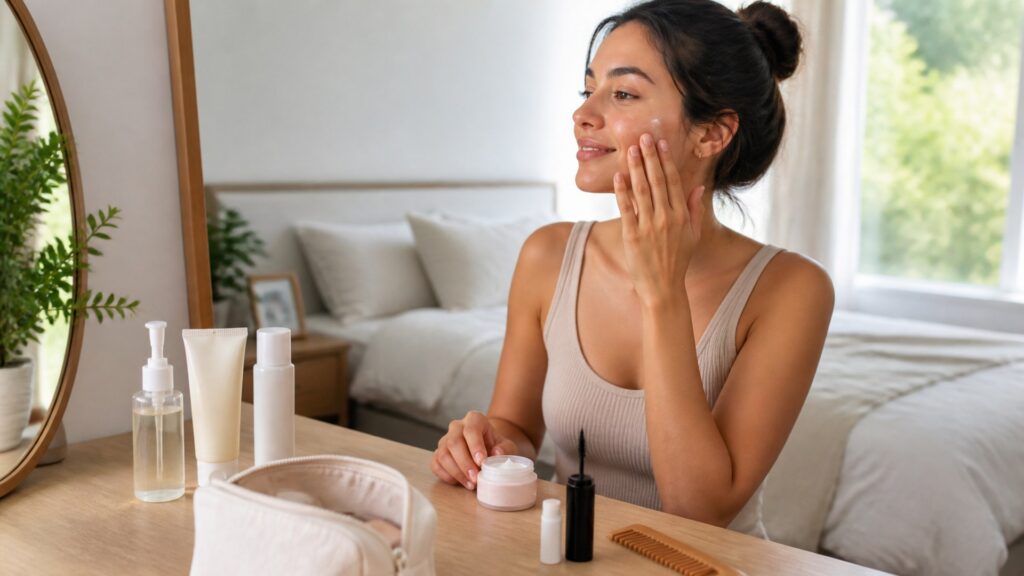
Buying framework
Build a routine that teaches you something
The first framework is intentionally lean: define the core jobs, use controllable packaging, and protect your ability to identify what works.
Start with four routine jobs: Cover cleansing, moisture, hair washing, and any desired color step before adding treatments or specialist tools.
Choose forgiving delivery: Controlled pumps, squeeze tubes, sticks, and pressed powders are usually easier to dose than open jars, loose pigments, or fast-drying liquids.
Introduce one variable: Keep the rest of the routine stable while learning a new cleanser, leave-on, base product, or styler so problems remain traceable.
Buy for current technique: Select products that work with the time, brushes, and application skill you have now rather than an imagined advanced routine.
Who this is for
Choose the kind of beginner you are
Beginners differ in goals and prior habits. Match the purchase to the learning task rather than to a generic starter checklist.
The absolute starter: You want a morning and evening sequence that can be remembered without notes. Prioritize clear label directions, easy rinsing, and comfortable finishes.
The makeup-curious beginner: You are learning complexion or color placement. Begin with sheer or buildable coverage and formats that allow correction before they set.
The routine restarter: You owned many products but used them inconsistently. Rebuild around a few finished bottles and add only after the sequence survives busy weeks.
The gift-supported learner: Someone else may be helping you shop. Define application area, shade needs, scent preference, and existing steps before accepting a prebuilt set.
What to pay attention to
Look for formats that tolerate learning
Ease of use is measurable through dosing, blending, rinsing, finish, and instructions—not through vague claims that a product is beginner-friendly.
Learning Curve & Forgiveness
How easy dosing, spreading, blending, rinsing, and correction are for a first-time user.
Routine Role & Expansion Path
Whether each item has one clear job and leaves room for deliberate additions later.
Dose control: A pump or narrow opening helps repeat roughly the same amount, while wide jars and droppers demand more judgment and cleaner handling.
Set time and blend window: Fast-setting stains and bases reward practiced technique; a longer blend window lets beginners soften edges and correct uneven placement.
Rinse behavior: A cleanser or shampoo should remove as directed without requiring repeated aggressive washing; watch for persistent film or difficult removal.
Finish visibility: Sheer, satin, or softly luminous results often reveal small application errors less sharply than opaque matte layers, though preference still controls.
Instruction quality: Useful labels identify where, how often, and how to apply the product. Vague promises should not substitute for usable directions.
Avoid these traps
Avoid making the first routine harder
Complexity often enters through intensity, removal, and oversized kits rather than through the product category itself.
Buying the entire trend: A viral multi-step sequence may contain several products solving the same job. Learn one category before duplicating it.
Starting with maximum intensity: High coverage, strong hold, deep pigment, or several treatment steps can make technique and tolerance problems harder to separate.
Ignoring removal: Long-wear makeup and heavy styling products may require a compatible removal step. The routine is incomplete if application is easy but cleanup is not.
Choosing sets by item count: A large kit can contain unsuitable shades, redundant textures, or unfamiliar tools. Value comes from usable roles, not the number of pieces.
Decision guidance
Take the next step only when it has a job
These branches translate uncertainty into a concrete next purchase or a deliberate pause.
If you want the smallest routine: Choose one cleanser, one appropriate moisturizer, basic shampoo and conditioner as needed, body cleansing, and only the color products you will actually wear.
If blending feels intimidating: Favor sheer, buildable sticks, creams, or pressed formats with enough working time, then add precision products after placement becomes predictable.
If reactions or conflicts are hard to trace: Stop adding products, return to the last comfortable simple routine, and follow label directions when reintroducing one item at a time.
If a product requires unfamiliar tools: Include the brush, sponge, sharpener, cleaning method, or removal product in the purchase decision rather than discovering that dependency later.
Ownership & compatibility
Maintain a small, understandable collection
A short routine still needs opening-date awareness, clean tools, and realistic replacement habits.
Keep a first-open log: Write the opening date on products and follow labeled use-period and storage information; beginners often lose track when several purchases arrive together.
Clean the few tools you keep: A small brush and sponge collection is easier to wash, dry, and inspect than a large kit with unclear roles.
Finish before expanding: Emptying a suitable cleanser, lotion, or shampoo teaches more about preferred texture and quantity than rotating through several partly used alternatives.
FAQ
Beginner questions before checkout
The remaining decisions concern starter size, tools, scent, shade, and when shopping is no longer the right response.
What beauty products should a complete beginner buy first?
Should a beginner start with skincare or makeup?
Are multiuse products better for beginners?
How long should I try one new product before adding another?
Do beginners need beauty tools?
Is a starter kit a good value?
Should I choose fragrance-free products as a beginner?
How can I avoid buying the wrong foundation shade?
When is professional advice more useful than another purchase?
Bottom line
Start small enough to learn
A beginner’s best purchase creates a stable baseline and makes the next decision more informed.
Keep the first sequence short: A routine you can remember and repeat provides better information than a crowded shelf.
Favor controllable formats: Dose control, blend time, clear directions, and easy removal reduce the cost of learning.
Expand from evidence: Add a product only when ordinary use reveals a specific missing role, finish, or tool.
Reading Shortcuts
Navigate beginner routine design and learning curve.
Decision Reminders
Keep the final screen concise.
- Role: Define start with four routine jobs first.
- Use conditions: Model the absolute starter.
- First specification: Prioritize dose control.
- Second specification: Check set time and blend window separately.
- Decision branch: Apply if you want the smallest routine selectively.
- After opening: Plan keep a first-open log.
Glossary Snippets
Terms for dose control.
When to Use a Top 10 Review
Rank after screening dose control.
- Defined role: Filter by start with four routine jobs.
- Angle fit: Require genuine beginner routine design and learning curve fit.
- Format filter: Screen dose control.
- Ownership screen: Check keep a first-open log.
Already down to 2-3 options? A Comparison is usually the faster next step.
When to Use a Comparison
Compare only equivalent finalists.
- Equivalent role: Match start with four routine jobs.
- Visible tradeoff: Contrast set time and blend window.
- User match: Model the absolute starter.
- Ongoing burden: Compare clean the few tools you keep.
Still exploring? Start with a Top 10 to build a shortlist first.