
Beauty Products Buying Guide for Oily Skin
Oily skin does not make every rich texture wrong or every matte product right. Shine can come from sebum, a dewy sunscreen, a heavy moisturizer, or a complexion film breaking down. Those sources demand different changes, and a stronger cleanser cannot solve all of them.
The useful buying approach follows the wear cycle. It checks rinse behavior and comfort, keeps hydration separate from surface oil, tests how sunscreen and makeup films interact, and concentrates powder or primer where shine appears. The goal is controlled, flexible wear—not an aggressively stripped face under five competing matte layers.
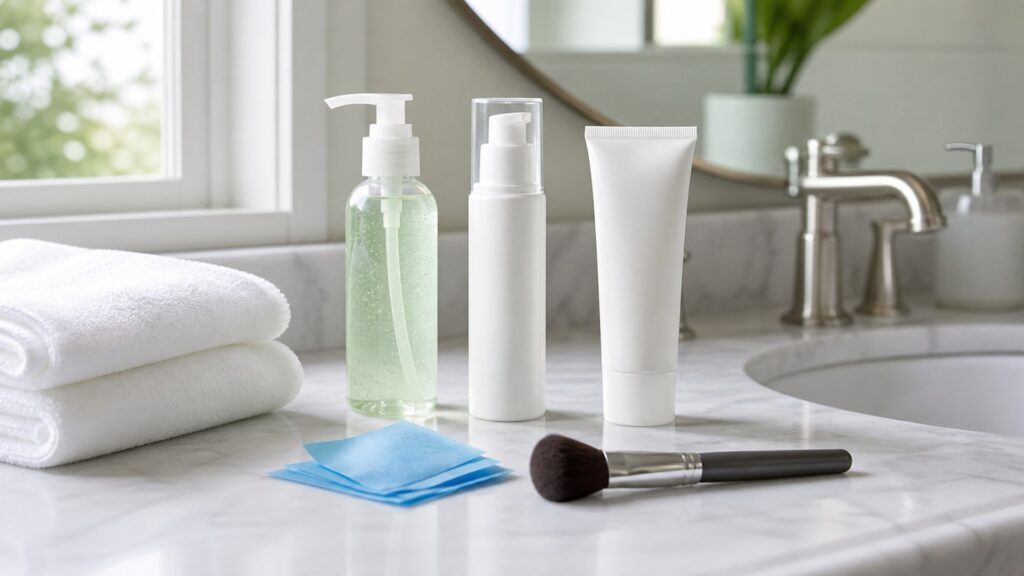
Buying framework
Manage oil without flattening the routine
The framework distinguishes oil, residue, hydration, and cosmetic breakdown before selecting products.
Separate oil from residue: Decide whether shine comes from sebum, a rich skincare layer, sunscreen finish, or makeup breakdown before buying a stronger cleanser.
Maintain a light moisture step: Oily skin can still feel tight or dehydrated; choose a comfortable lotion or gel-cream rather than assuming moisturizer must disappear.
Control zones, not the whole face: Primer, powder, and blotting can be concentrated on the forehead, nose, or chin while drier areas receive less matte product.
Judge the full wear cycle: Observe application, oil breakthrough, separation, transfer, touch-up, and removal. A perfect first-hour matte finish may not be the best all-day system.
Who this is for
Locate where shine disrupts use
These profiles describe real wear patterns rather than assuming all oily skin behaves identically.
The midday-shine worker: Your base looks acceptable in the morning but becomes shiny at the center. Prioritize zone placement, blotting behavior, and easy touch-ups.
The oily-but-tight cleanser user: Skin feels stripped after washing yet shine returns. Compare rinse behavior and frequency before escalating foam or adding abrasive exfoliation.
The sunscreen-and-makeup layerer: Several films sit beneath foundation. Test set time and compatibility so pilling or separation is not misread as oiliness alone.
The minimal makeup wearer: You mainly want comfortable skincare and reduced glare. A light moisturizer, suitable sunscreen, and blotting may matter more than primer-plus-powder complexity.
What to pay attention to
Read products as a connected film system
Cleanser targets, moisturizer vehicles, primer placement, base resistance, and powder buildup determine practical performance.
Cleansing & Hydration Balance
How removal, rinse behavior, moisturizer weight, and frequency affect comfort without promising to change oil production.
Film Wear & Shine Control
How primer, base, powder, sunscreen, and blotting interact as sebum appears during wear.
Cleanser removal target: Choose according to sunscreen, makeup, sweat, and styling residue present; stronger sensory degreasing is not automatically more appropriate.
Moisturizer vehicle: Gel-creams and light lotions can add comfortable hydration with less surface weight, while richer textures may be reserved for dry zones.
Primer placement: A gripping or mattifying primer should be tested where makeup moves, not applied automatically over areas that already look dry or textured.
Foundation resistance: Watch for patchy separation, pigment pooling, transfer, and darkening as oil appears. Long-wear language does not guarantee compatible wear over your skincare.
Powder pickup and build: Finely controlled powder allows thin setting and later touch-up; heavy initial layers can cake when more oil and powder accumulate.
Avoid these traps
Avoid the stripping-and-powder cycle
The most common disappointments come from excessive removal and too many matte layers, not from a lack of products.
Chasing a squeaky-clean feel: Aggressive washing can create tightness without solving the reason makeup separates. Clean for the actual residue and evaluate after-feel.
Skipping every moisturizer: Removing the moisture step can make sunscreen and makeup harder to spread and may leave oily skin uncomfortable despite surface shine.
Stacking matte on matte: Mattifying skincare, sunscreen, primer, foundation, and powder can produce a brittle layer that breaks apart rather than wearing cleanly.
Powdering over oil repeatedly: Adding powder without blotting can create thick, uneven buildup. Lift surface oil first, then use the smallest touch-up needed.
Decision guidance
Choose the intervention that fits the failure
Match the correction to bare-skin shine, base separation, localized oil, or a concern that needs professional assessment.
If bare skin becomes shiny: Choose a cleanser and light moisturizer by comfort, then use blotting or targeted powder if visual shine remains the main concern.
If foundation separates: Test fewer underlayers, allow each to set, and compare base films over the same skincare before assuming heavier powder will fix the issue.
If only the center gets oily: Mattify the T-zone and leave cheek or eye areas with a more flexible finish; one global formula need not control every zone.
If oiliness is sudden or accompanied by symptoms: Do not diagnose the cause through products. Seek appropriate professional advice when a new or concerning change falls outside ordinary cosmetic preference.
Ownership & compatibility
Maintain tools that meet oil every day
Blotters, brushes, puffs, and seasonal shifts affect performance after the purchase.
Keep blotting tools clean: Use fresh papers or clean washable tools and avoid repeatedly pressing a contaminated applicator into powder or onto skin.
Wash oil-exposed applicators: Foundation brushes, sponges, and powder puffs collect sebum and product; clean and fully dry them according to their materials.
Reassess by season: Heat, humidity, indoor climate, and sunscreen changes can alter shine and film wear, so adjust placement before replacing every product.
FAQ
Oily-skin questions beyond the matte label
These answers clarify moisturizer, foam, noncomedogenic claims, powder, patchiness, dry zones, and professional boundaries.
Does oily skin need moisturizer?
Is foaming cleanser always best for oily skin?
What does noncomedogenic mean?
Should oily skin use oil-free makeup?
Is powder or blotting better for midday shine?
Why does foundation look patchy on oily skin?
Can oily skin still have dry patches?
Do mattifying products reduce oil production?
When should oiliness be discussed with a clinician?
Bottom line
Control shine with placement and evidence
A successful oily-skin routine controls the location and timing of shine while preserving comfortable wear.
Identify the source of shine: Separate sebum from rich layers, sunscreen finish, or base breakdown before changing cleanser.
Use targeted control: Light moisture, zone-specific primer, blotting, and thin powder offer more flexibility than an all-over matte stack.
Evaluate hours, not minutes: The best system applies, wears, touches up, and removes cleanly across a real day.
Reading Shortcuts
Navigate oil management across cleansing, moisturizing, sunscreen, and makeup.
Decision Reminders
Keep the final screen concise.
- Role: Define separate oil from residue first.
- Use conditions: Model the midday-shine worker.
- First specification: Prioritize cleanser removal target.
- Second specification: Check moisturizer vehicle separately.
- Decision branch: Apply if bare skin becomes shiny selectively.
- After opening: Plan keep blotting tools clean.
Glossary Snippets
Terms for cleanser removal target.
When to Use a Top 10 Review
Rank after screening cleanser removal target.
- Defined role: Filter by separate oil from residue.
- Angle fit: Require genuine oil management across cleansing, moisturizing, sunscreen, and makeup fit.
- Format filter: Screen cleanser removal target.
- Ownership screen: Check keep blotting tools clean.
Already down to 2-3 options? A Comparison is usually the faster next step.
When to Use a Comparison
Compare only equivalent finalists.
- Equivalent role: Match separate oil from residue.
- Visible tradeoff: Contrast moisturizer vehicle.
- User match: Model the midday-shine worker.
- Ongoing burden: Compare wash oil-exposed applicators.
Still exploring? Start with a Top 10 to build a shortlist first.