
Beauty Products Buying Guide for Professional Results
Professional-looking beauty results are usually a control problem, not a prestige problem. Even foundation depends on undertone, pigment load, lighting, tool density, and blend time; polished hair depends on sectioning, airflow, heat control, attachment, and a clean finish.
This guide evaluates products as parts of a process. It favors adjustable formulas over maximum intensity, matches applicator geometry to the task, and treats sanitation and reset procedures as specifications. It does not claim that consumer products replace professional training, licensing, or regulated practices when services are performed on others.
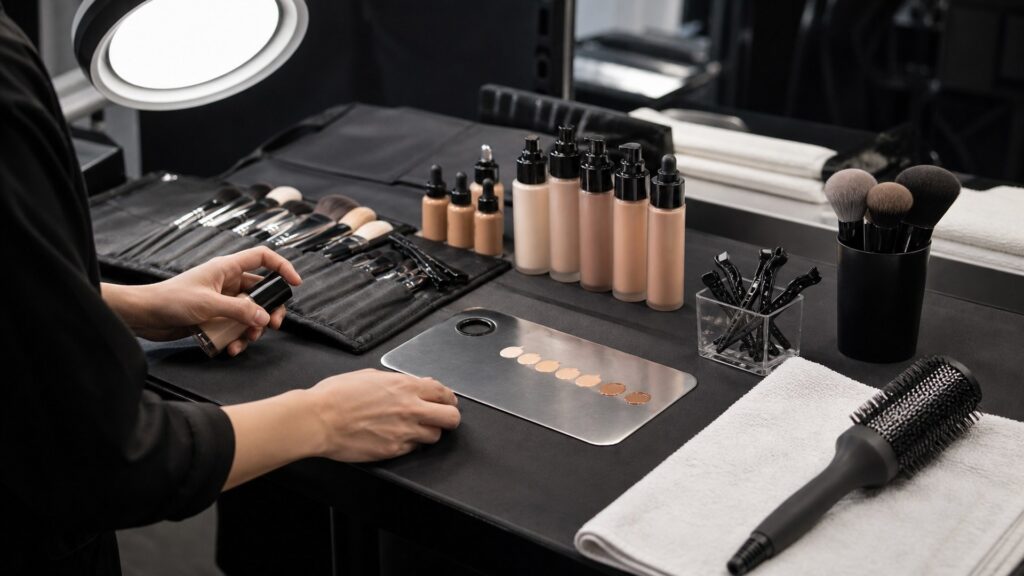
Buying framework
Turn the desired finish into controllable steps
Define the finish, correction margin, tool, and cleanup before selecting products.
Define the finish precisely: Specify smooth blowout, diffused base, crisp liner, controlled shine, or another visible target before choosing products.
Buy adjustability: Buildable pigment, workable set time, variable hold, and controllable heat leave room for correction.
Pair formula with tool: Brush density, sponge porosity, comb spacing, barrel size, and plate width change how the same product applies.
Design a clean reset: Professional-looking work requires clean tools, tidy dispensers, organized shades, and a repeatable sequence between uses.
Who this is for
Identify the working environment
Precision makeup, polished hair, camera work, and services create different technical demands.
The precision makeup user: You value even base, deliberate edges, and calibrated color; lighting, undertone, brush shape, and blend window govern selection.
The polished hair finisher: You need sectioning, controlled heat, appropriate hold, and tools matched to length and texture—not simply maximum temperature.
The content creator: Camera and lighting expose flashback, uneven blending, flyaways, and shine differently from mirrors; test in the intended capture conditions.
The service-minded organizer: You may work on others. Sanitation, single-use items, decanting, shade range, and local professional requirements take priority.
What to pay attention to
Measure adjustability, tools, and hygiene
Pigment, set time, geometry, heat control, and sanitation access translate directly into execution.
Formula Control & Calibration
How pigment, hold, set time, shade, and sectioning affect precision.
Tools, Light & Sanitation
How applicator geometry, lighting, clean handling, and reset procedures affect repeatability.
Pigment and build: High pigment shortens the path to opacity but reduces correction margin; buildable color supports gradual calibration.
Set and working time: Fast-set products preserve sharp work but punish hesitation; longer blend windows suit gradients and diffused edges.
Tool geometry: Taper, density, surface area, and edge shape determine placement precision and diffusion.
Heat and airflow control: Multiple settings and suitable attachments allow hair tools to match section size and finish without treating maximum heat as quality.
Sanitation access: Washable materials, replaceable disposables, pump dispensing, and decant-friendly packaging support cleaner workflows.
Avoid these traps
Do not confuse intensity with expertise
Prestige, maximum intensity, flattering light, and accessory thinking are unreliable shortcuts.
Buying prestige instead of control: Price does not reveal shade accuracy, set time, tool fit, sanitation, or the ability to correct an application.
Using maximum intensity: The strongest pigment, hold, or heat can reduce flexibility and magnify small technique errors.
Testing under flattering light: Poor task lighting hides undertone mismatch and uneven blending that daylight or cameras reveal.
Treating tools as accessories: A mismatched brush, sponge, comb, or attachment can prevent a suitable formula from producing its intended finish.
Decision guidance
Choose the control system for the result
These branches connect the desired result to precision, speed, capture conditions, or professional requirements.
If precision matters most: Choose smaller controlled tools, calibrated pigment, stable task lighting, and formulas with a workable correction window.
If speed matters most: Use organized products with repeatable pumps, clear sectioning, and reliable set times rather than adding more categories.
If results will be photographed: Test shade, powder, shine, and hair detail under the actual lights and camera before the important use.
If working on other people: Follow applicable licensing, sanitation, and product-safety requirements; a consumer guide cannot replace professional protocols.
Ownership & compatibility
Protect repeatability between uses
Cleaning, labeling, and tool retirement preserve both hygiene and technical control.
Create a cleaning schedule: Separate quick between-use sanitation from deeper washing and drying appropriate to each tool material.
Label decanted products: Preserve identity, batch or opening information, and directions; never create an unlabeled mystery container for convenience.
Retire compromised tools: Frayed brush heads, cracked palettes, damaged cords, chipped plates, and porous items that cannot be cleaned undermine control and hygiene.
FAQ
Questions behind polished execution
These answers address price, pigment, brushes, light, heat, decanting, sanitation, photography, and hiring help.
Do expensive beauty products create more professional results?
Is highly pigmented makeup always better?
What brushes are essential for polished makeup?
How important is lighting for makeup application?
Do professional hair results require maximum heat?
Can I decant products into a professional palette?
How should beauty tools be sanitized?
How can I make makeup look better in photographs?
When should I hire a professional instead of buying more products?
Bottom line
Professional-looking results come from control
The final purchase should increase precision, correction, and repeatability—not simply add a luxury signal.
Specify the finish: Professional-looking is meaningful only when the visible target is clear.
Purchase control: Adjustable pigment, set time, heat, and tool geometry create room for repeatable technique.
Reset cleanly: Lighting, organization, sanitation, and tool condition protect every later result.
Reading Shortcuts
Navigate professional-looking results through control and process.
Decision Reminders
Keep the final screen concise.
- Role: Define define the finish precisely first.
- Use conditions: Model the precision makeup user.
- First specification: Prioritize pigment and build.
- Second specification: Check set and working time separately.
- Decision branch: Apply if precision matters most selectively.
- After opening: Plan create a cleaning schedule.
Glossary Snippets
Terms for pigment and build.
When to Use a Top 10 Review
Rank after screening pigment and build.
- Defined role: Filter by define the finish precisely.
- Angle fit: Require genuine professional-looking results through control and process fit.
- Format filter: Screen pigment and build.
- Ownership screen: Check create a cleaning schedule.
Already down to 2-3 options? A Comparison is usually the faster next step.
When to Use a Comparison
Compare only equivalent finalists.
- Equivalent role: Match define the finish precisely.
- Visible tradeoff: Contrast set and working time.
- User match: Model the precision makeup user.
- Ongoing burden: Compare label decanted products.
Still exploring? Start with a Top 10 to build a shortlist first.