Best AI Tools for Architectural Model Makers (Top 10 Picks)

We evaluated AI tools for architectural model makers across early massing, layout generation, site feasibility, model-based visualization, text-to-3D support, presentation quality, downstream handoff, usability, value, buyer sentiment, and current availability. The best picks speed up design exploration without pretending that AI replaces model craft, professional review, or fabrication judgment.

By: Review Streets Research Lab
Updated: June 8, 2026
Approx. 12-14 min read
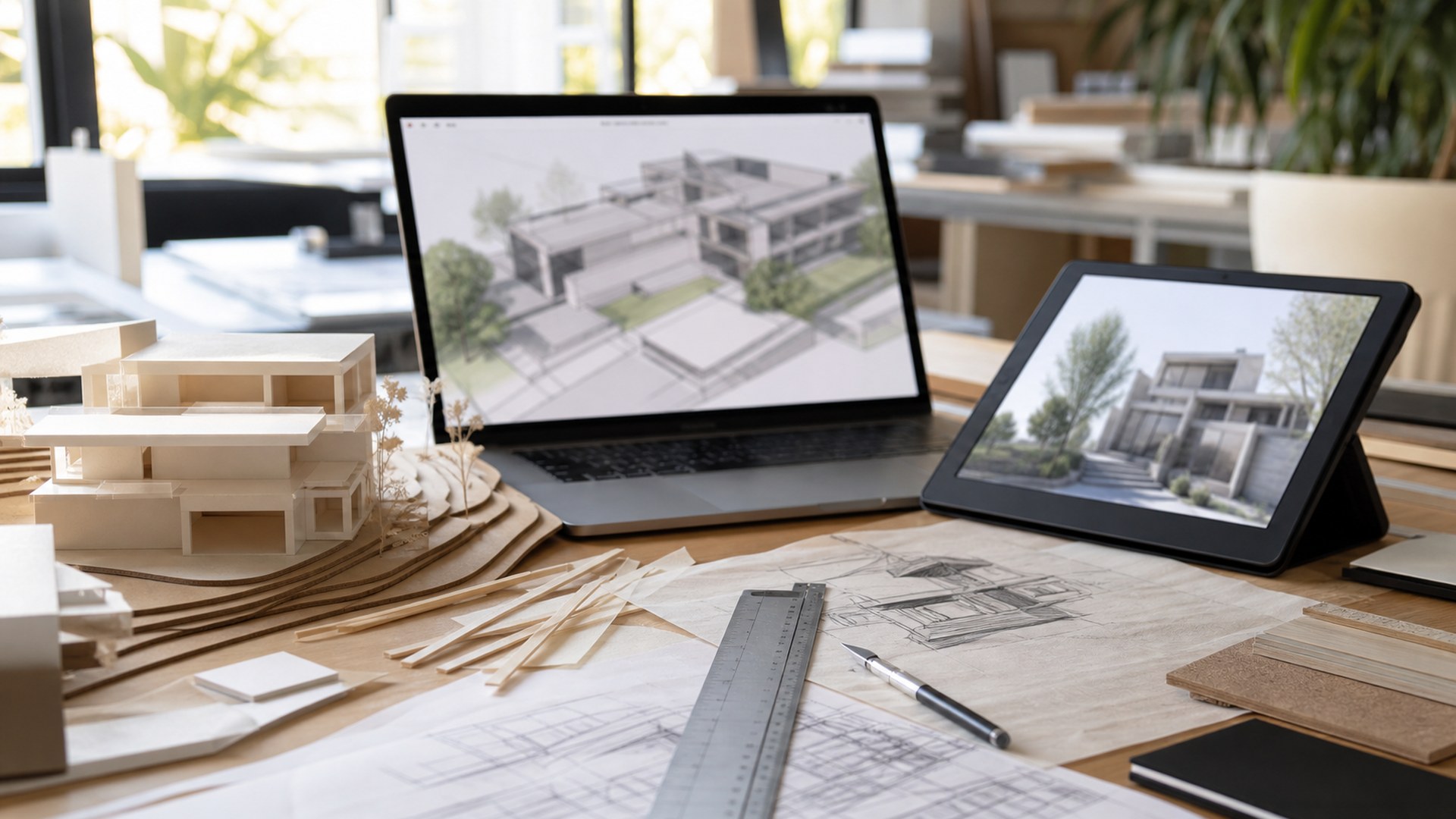
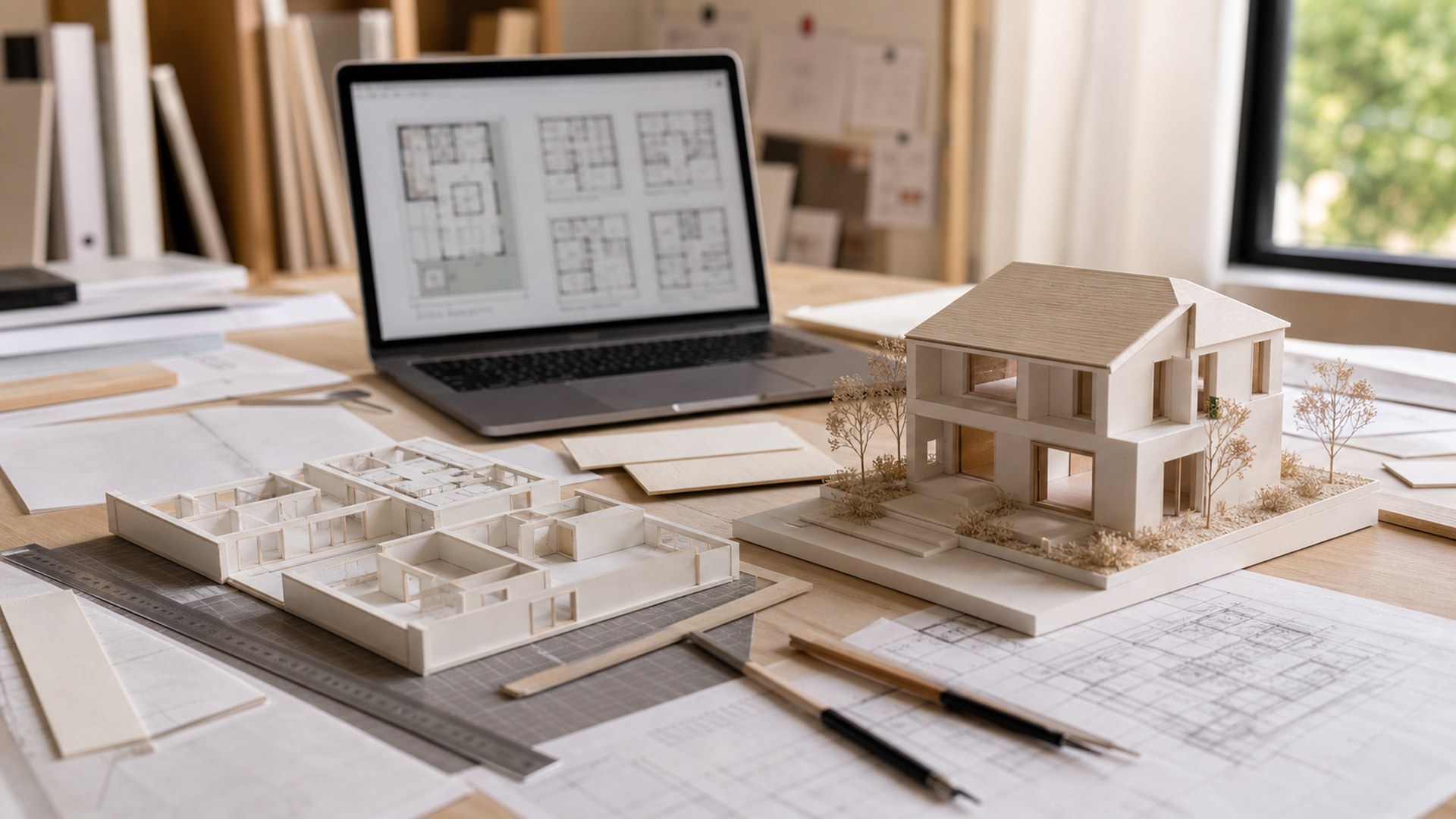
Architectural model making studio using AI tools for massing layouts visualization and 3D model components

Best AI Tools for Architectural Model Makers (Top 10 Picks) - Top 10 Picks

Our editorial picks ranked by performance, build quality, features, usability, ergonomics, value, support, and everyday fit. Tap any image to expand, or jump to full reviews for deeper ownership notes.

Autodesk Forma AI architectural model making tool shown in a photorealistic studio model workflow
#1 Best Overall for AI-Driven Architectural Model Planning Score: 9.6 / 10

Autodesk Forma

A cloud-based early-stage design platform with AI-powered site, massing, environmental analysis, and presentation workflows for architectural teams.

Primary Use: Early-stage building designBest Fit: Site, massing, and context studiesDeployment: Cloud platformNotable Strength: AI-powered analysis

Pros

  • Strong architecture-specific fit
  • Useful AI analysis and massing workflows
  • Connects well with Autodesk AEC tools

Cons

  • Best for early design rather than detailed physical model fabrication
  • Subscription value depends on Autodesk ecosystem use
  • Less suited to small one-off hobby projects

Best For

  • Architecture studios
  • Site and massing studies
  • Teams moving concepts toward Revit
EvolveLAB Veras AI architectural model making tool shown in a photorealistic studio model workflow
#2 Best AI Visualizer for Model-Based Design Iteration Score: 9.4 / 10

EvolveLAB Veras

An AI visualization tool that plugs into Revit, SketchUp, Rhino, Vectorworks, Archicad, and Forma while preserving model-guided creative control.

Primary Use: AI visualizationBest Fit: Model-guided renderingDeployment: Web and design-app pluginsNotable Strength: Geometry-aware image generation

Pros

  • Excellent architecture plug-in support
  • Geometry control helps preserve model intent
  • Useful for materials and mood studies

Cons

  • Primarily visual rather than fabrication-ready
  • Requires a host workflow for best results
  • Teams still need production modeling tools

Best For

  • Architectural visualization
  • Material and atmosphere studies
  • Client-ready model iterations
SketchUp Diffusion AI architectural model making tool shown in a photorealistic studio model workflow
#3 Best AI Concept Tool for SketchUp Model Makers Score: 9.2 / 10

SketchUp Diffusion

A SketchUp-integrated generative AI feature for turning active 3D views into fast concept visuals and design directions.

Primary Use: AI image generation from SketchUp viewsBest Fit: Concept renderingDeployment: SketchUp desktop, iPad, and webNotable Strength: Low-friction ideation

Pros

  • Natural fit for SketchUp-heavy model workflows
  • Fast concept variation from existing views
  • Accessible to smaller design teams

Cons

  • Not a standalone 3D generator
  • Output quality depends on prompt and view setup
  • Less powerful for technical analysis

Best For

  • SketchUp users
  • Fast client visuals
  • Early massing and material direction
Finch AI architectural model making tool shown in a photorealistic studio model workflow
#4 Best Generative Layout Tool for Early Architectural Options Score: 9.0 / 10

Finch

A generative design platform for exploring building layouts, constraints, and design options earlier in the architectural process.

Primary Use: Generative architectural designBest Fit: Layout explorationDeployment: Cloud/software workflowNotable Strength: Option generation

Pros

  • Strong architecture-specific generative design fit
  • Good for testing alternatives
  • Useful before committing to detailed models

Cons

  • Not a physical model fabrication tool
  • Best value depends on project type
  • Requires design judgment to interpret options

Best For

  • Early layout studies
  • Option generation
  • Architecture teams testing constraints
TestFit AI architectural model making tool shown in a photorealistic studio model workflow
#5 Best AI Site Planning Tool for Feasibility Models Score: 8.9 / 10

TestFit

A real estate feasibility and site-planning platform that uses AI-generated plans, editable constraints, 3D context, and export workflows.

Primary Use: AI site planningBest Fit: Feasibility and massingDeployment: Cloud platformNotable Strength: Editable AI-generated plans

Pros

  • Excellent for feasibility and site planning
  • Fast editable AI-generated plans
  • Exports help downstream design work

Cons

  • More site-feasibility focused than model-shop focused
  • Not ideal for every building typology
  • Enterprise buying path may be more involved

Best For

  • Feasibility massing
  • Developer and architect teams
  • Site-plan comparison
Hypar AI architectural model making tool shown in a photorealistic studio model workflow
#6 Best Computational Planning Tool for Revit Handoff Score: 8.8 / 10

Hypar

A space-planning and computational design platform for creating precise 3D options and transitioning projects toward Revit.

Primary Use: Space planning and 3D optionsBest Fit: Program-driven layoutsDeployment: Cloud platformNotable Strength: Revit transition

Pros

  • Good for precise 3D design options
  • Useful Revit handoff
  • Strong fit for planning-heavy teams

Cons

  • Less visual polish than dedicated rendering tools
  • Requires process alignment
  • Not aimed at casual model makers

Best For

  • Space planning
  • Program studies
  • Teams moving options into Revit
Maket AI architectural model making tool shown in a photorealistic studio model workflow
#7 Best AI Floor Plan Generator for Residential Concepts Score: 8.6 / 10

Maket

A generative AI architecture tool for exploring residential floor plans, layouts, and early home-design directions.

Primary Use: AI floor-plan generationBest Fit: Residential conceptsDeployment: Web platformNotable Strength: Accessible layout ideation

Pros

  • Accessible generative floor-plan workflow
  • Good for residential idea exploration
  • Useful before professional refinement

Cons

  • Residential focus limits broad architecture fit
  • Not a construction-document replacement
  • Needs professional review

Best For

  • Residential concept models
  • Home-layout exploration
  • Early client conversations
Meshy AI architectural model making tool shown in a photorealistic studio model workflow
#8 Best AI 3D Generator for Concept Maquettes Score: 8.5 / 10

Meshy

A text-to-3D and image-to-3D generator for quickly producing rough objects, site elements, furnishings, and presentation-model components.

Primary Use: AI 3D model generationBest Fit: Concept assetsDeployment: Cloud platformNotable Strength: Text and image to 3D

Pros

  • Fast text and image-to-3D generation
  • Useful export formats
  • Helpful for concept objects and accessories

Cons

  • Generated geometry still needs cleanup
  • Not reliable for precise architectural dimensions
  • Quality varies by prompt and subject

Best For

  • Concept maquettes
  • Small 3D assets
  • Fast visual props inside models
Tripo AI AI architectural model making tool shown in a photorealistic studio model workflow
#9 Best Quick Text-to-3D Alternative Score: 8.3 / 10

Tripo AI

An accessible AI 3D workspace for generating models from text, images, and sketches, with export paths for downstream tools.

Primary Use: Text and image to 3DBest Fit: Fast concept formsDeployment: Cloud platformNotable Strength: Speed and accessibility

Pros

  • Very approachable generation workflow
  • Good for quick 3D options
  • Useful for sketch and image inputs

Cons

  • Needs refinement for architecture precision
  • Not a BIM or CAD tool
  • Commercial terms should be checked by plan

Best For

  • Fast concept objects
  • Reference-to-3D studies
  • Early presentation assets
Midjourney AI architectural model making tool shown in a photorealistic studio model workflow
#10 Best AI Moodboard Tool for Architectural Model Direction Score: 8.1 / 10

Midjourney

A leading AI image generator for moodboards, atmosphere studies, client-facing concept directions, and finish inspiration.

Primary Use: AI image generationBest Fit: Concept visualsDeployment: Cloud serviceNotable Strength: Visual range

Pros

  • Excellent visual exploration
  • Fast style and atmosphere options
  • Useful for client moodboards

Cons

  • Not a 3D, CAD, or BIM tool
  • Requires translation into buildable models
  • Can overpromise if used without design discipline

Best For

  • Moodboards
  • Atmosphere studies
  • Early visual direction

Methodology

How We Tested

Our ranking favors real, currently available tools that support architectural model-making workflows: AI-assisted planning, model-guided rendering, generative layouts, feasibility studies, concept maquettes, and visual direction. We weighted architecture fit, output usefulness, reliability, learning curve, ecosystem maturity, commercial availability, and how well each product helps a team move from concept to a modelable direction.

Our Evaluation Framework

We compared each product through a consistent editorial framework: core performance, build quality, features, usability, ergonomics, value, warranty/support, and fit for the intended buyer.

What We Prioritized

Performance and core function carried the most weight, followed by reliability, usability, value, and long-term ownership fit.

How to Read the Scores

A higher score means a stronger overall mix of capability, execution, owner experience, and value for the product's intended buyer.

Side-by-Side Comparisons

Quickly narrow your shortlist. Use this first, then jump to full reviews for your finalists.

#ModelBest ForPlatformFootprintFeelWhy It Won
1 Autodesk FormaBest Overall for AI-Driven Architectural Model Planning Overall architectural model planning AEC cloud design platform Concept to design handoff Professional It has the strongest mix of architecture-specific AI, workflow maturity, and downstream design credibility.
2 EvolveLAB VerasBest AI Visualizer for Model-Based Design Iteration AI visualization from existing models AI rendering app Model to presentation Creative It lets teams explore style, material, and mood while staying tied to real design-authoring models.
3 SketchUp DiffusionBest AI Concept Tool for SketchUp Model Makers SketchUp concept iteration SketchUp AI feature Model view to visual concept Accessible It brings AI ideation directly into one of the most common architectural modeling tools.
4 FinchBest Generative Layout Tool for Early Architectural Options Layout alternatives Generative design tool Early design Exploratory It helps teams evaluate more viable planning directions before committing model-making time.
5 TestFitBest AI Site Planning Tool for Feasibility Models Feasibility models Real estate feasibility platform Site planning to design handoff Decision-oriented It turns site constraints into fast planning options that model makers can communicate visually.
6 HyparBest Computational Planning Tool for Revit Handoff Computational planning Space planning app Requirements to Revit Structured It supports accurate option-making when program and handoff matter as much as visual style.
7 MaketBest AI Floor Plan Generator for Residential Concepts Residential layouts Generative architecture tool Idea to early plan Approachable It makes early residential layout exploration fast enough to support concept models and client discussion.
8 MeshyBest AI 3D Generator for Concept Maquettes AI 3D concept assets AI 3D generator Ideation to rough model Fast It helps create supporting 3D forms quickly, especially when the asset is conceptual rather than dimension-critical.
9 Tripo AIBest Quick Text-to-3D Alternative Quick 3D alternatives AI 3D workspace Concept generation Simple It gives model makers another fast route from prompt or reference image to rough 3D form.
10 MidjourneyBest AI Moodboard Tool for Architectural Model Direction Moodboards AI image generator Early concepting Expressive It is still one of the fastest ways to explore visual language before model-making begins.

#1 - Autodesk Forma

Best Overall for AI-Driven Architectural Model Planning
Best For
Overall architectural model planning
Platform
AEC cloud design platform
Footprint
Concept to design handoff
Feel
Professional
Why it wonIt has the strongest mix of architecture-specific AI, workflow maturity, and downstream design credibility.

#2 - EvolveLAB Veras

Best AI Visualizer for Model-Based Design Iteration
Best For
AI visualization from existing models
Platform
AI rendering app
Footprint
Model to presentation
Feel
Creative
Why it wonIt lets teams explore style, material, and mood while staying tied to real design-authoring models.

#3 - SketchUp Diffusion

Best AI Concept Tool for SketchUp Model Makers
Best For
SketchUp concept iteration
Platform
SketchUp AI feature
Footprint
Model view to visual concept
Feel
Accessible
Why it wonIt brings AI ideation directly into one of the most common architectural modeling tools.

#4 - Finch

Best Generative Layout Tool for Early Architectural Options
Best For
Layout alternatives
Platform
Generative design tool
Footprint
Early design
Feel
Exploratory
Why it wonIt helps teams evaluate more viable planning directions before committing model-making time.

#5 - TestFit

Best AI Site Planning Tool for Feasibility Models
Best For
Feasibility models
Platform
Real estate feasibility platform
Footprint
Site planning to design handoff
Feel
Decision-oriented
Why it wonIt turns site constraints into fast planning options that model makers can communicate visually.

#6 - Hypar

Best Computational Planning Tool for Revit Handoff
Best For
Computational planning
Platform
Space planning app
Footprint
Requirements to Revit
Feel
Structured
Why it wonIt supports accurate option-making when program and handoff matter as much as visual style.

#7 - Maket

Best AI Floor Plan Generator for Residential Concepts
Best For
Residential layouts
Platform
Generative architecture tool
Footprint
Idea to early plan
Feel
Approachable
Why it wonIt makes early residential layout exploration fast enough to support concept models and client discussion.

#8 - Meshy

Best AI 3D Generator for Concept Maquettes
Best For
AI 3D concept assets
Platform
AI 3D generator
Footprint
Ideation to rough model
Feel
Fast
Why it wonIt helps create supporting 3D forms quickly, especially when the asset is conceptual rather than dimension-critical.

#9 - Tripo AI

Best Quick Text-to-3D Alternative
Best For
Quick 3D alternatives
Platform
AI 3D workspace
Footprint
Concept generation
Feel
Simple
Why it wonIt gives model makers another fast route from prompt or reference image to rough 3D form.

#10 - Midjourney

Best AI Moodboard Tool for Architectural Model Direction
Best For
Moodboards
Platform
AI image generator
Footprint
Early concepting
Feel
Expressive
Why it wonIt is still one of the fastest ways to explore visual language before model-making begins.

FAQ: Ai Tools For Architectural Model Makers

Quick answers to common questions before choosing from this Top 10 list.

In-Depth Reviews: What These Picks Are Really Like to Use

These full reviews expand on the Top 10 cards with a deeper look at strengths, tradeoffs, ownership fit, and ideal buyers.

60-second takeReal-use breakdownWho it's for
#1 Best Overall for AI-Driven Architectural Model PlanningScore: 9.6 / 10

Autodesk Forma

A cloud-based early-stage design platform with AI-powered site, massing, environmental analysis, and presentation workflows for architectural teams.

Compare Specs

What It's Great At

  • Strong architecture-specific fit
  • Useful AI analysis and massing workflows
  • Connects well with Autodesk AEC tools

Watch-Outs

  • Best for early design rather than detailed physical model fabrication
  • Subscription value depends on Autodesk ecosystem use
  • Less suited to small one-off hobby projects

Ideal Buyer

  • Architecture studios
  • Site and massing studies
  • Teams moving concepts toward Revit
The Real-World Verdict

Autodesk Forma ranks first because architectural model makers rarely need AI in isolation. They need faster ways to shape the building idea, test context, understand environmental constraints, and give the physical or digital model a defensible basis.

Practical Ownership Notes

Forma is strongest at the front end: massing options, contextual studies, quick analysis, and clear presentation boards. That makes it valuable before a team commits to hand-built scale models, laser-cut assemblies, foam mockups, or detailed BIM work.

Where It Fits in the Top 10

It is not a replacement for craft, physical detailing, or final fabrication drawings. But for professional model-making teams tied to architectural practices, Forma is the best overall AI-assisted starting point.

#2 Best AI Visualizer for Model-Based Design IterationScore: 9.4 / 10

EvolveLAB Veras

An AI visualization tool that plugs into Revit, SketchUp, Rhino, Vectorworks, Archicad, and Forma while preserving model-guided creative control.

Compare Specs

What It's Great At

  • Excellent architecture plug-in support
  • Geometry control helps preserve model intent
  • Useful for materials and mood studies

Watch-Outs

  • Primarily visual rather than fabrication-ready
  • Requires a host workflow for best results
  • Teams still need production modeling tools

Ideal Buyer

  • Architectural visualization
  • Material and atmosphere studies
  • Client-ready model iterations
The Real-World Verdict

Veras is one of the most useful AI tools for architectural model makers who already work in Revit, SketchUp, Rhino, Vectorworks, Archicad, or Forma. Its value is the balance between creative AI rendering and respect for existing model geometry.

Practical Ownership Notes

That matters because architectural model makers often need to show alternatives without losing the actual massing, openings, proportions, or spatial logic of the project. Veras helps turn a working model into visual options for material direction, lighting, landscape mood, and presentation tone.

Where It Fits in the Top 10

The output is not a build file, and it should not be treated as one. Veras is best used to accelerate design communication before the physical model, BIM model, or CAD package is refined.

#3 Best AI Concept Tool for SketchUp Model MakersScore: 9.2 / 10

SketchUp Diffusion

A SketchUp-integrated generative AI feature for turning active 3D views into fast concept visuals and design directions.

Compare Specs

What It's Great At

  • Natural fit for SketchUp-heavy model workflows
  • Fast concept variation from existing views
  • Accessible to smaller design teams

Watch-Outs

  • Not a standalone 3D generator
  • Output quality depends on prompt and view setup
  • Less powerful for technical analysis

Ideal Buyer

  • SketchUp users
  • Fast client visuals
  • Early massing and material direction
The Real-World Verdict

SketchUp Diffusion ranks high because SketchUp remains a common language for architectural massing, presentation models, and model-shop coordination. Putting AI concept generation inside that environment reduces friction for teams that already block out buildings in SketchUp.

Practical Ownership Notes

The tool is especially helpful when a model maker needs to test facade mood, landscape context, lighting, material language, or client-facing atmosphere without rebuilding the model in a separate visualization package.

Where It Fits in the Top 10

It is not the tool for precise fabrication files. Its strength is quick visual exploration from a real model view, which makes it a practical bridge between rough massing and presentation direction.

#4 Best Generative Layout Tool for Early Architectural OptionsScore: 9.0 / 10

Finch

A generative design platform for exploring building layouts, constraints, and design options earlier in the architectural process.

Compare Specs

What It's Great At

  • Strong architecture-specific generative design fit
  • Good for testing alternatives
  • Useful before committing to detailed models

Watch-Outs

  • Not a physical model fabrication tool
  • Best value depends on project type
  • Requires design judgment to interpret options

Ideal Buyer

  • Early layout studies
  • Option generation
  • Architecture teams testing constraints
The Real-World Verdict

Finch is a strong pick for model makers working upstream of a finished design. If the team is still deciding layout logic, program mix, or early building organization, generative optioning can save time before a physical model locks in the wrong premise.

Practical Ownership Notes

Its fit is strongest for architectural teams that need to compare alternatives, communicate tradeoffs, and move from loose requirements to a modelable direction. That can make the later model-making phase more focused and less reactive.

Where It Fits in the Top 10

Finch is not meant to replace detailed model craft or final documentation. It earns its place because better early options lead to better models.

#5 Best AI Site Planning Tool for Feasibility ModelsScore: 8.9 / 10

TestFit

A real estate feasibility and site-planning platform that uses AI-generated plans, editable constraints, 3D context, and export workflows.

Compare Specs

What It's Great At

  • Excellent for feasibility and site planning
  • Fast editable AI-generated plans
  • Exports help downstream design work

Watch-Outs

  • More site-feasibility focused than model-shop focused
  • Not ideal for every building typology
  • Enterprise buying path may be more involved

Ideal Buyer

  • Feasibility massing
  • Developer and architect teams
  • Site-plan comparison
The Real-World Verdict

TestFit is the most practical pick when the architectural model is tied to feasibility, density, parking, circulation, or early development decisions. Its AI-generated plans and editable site constraints help teams test whether a concept works before making it beautiful.

Practical Ownership Notes

For model makers, the value is clarity. A physical or digital model can communicate a site strategy more convincingly when the layout has already been tested against real-world constraints and project metrics.

Where It Fits in the Top 10

This is not a sculptural design tool. It is a decision tool for early planning, and that makes it a smart fit for feasibility-driven architectural models.

#6 Best Computational Planning Tool for Revit HandoffScore: 8.8 / 10

Hypar

A space-planning and computational design platform for creating precise 3D options and transitioning projects toward Revit.

Compare Specs

What It's Great At

  • Good for precise 3D design options
  • Useful Revit handoff
  • Strong fit for planning-heavy teams

Watch-Outs

  • Less visual polish than dedicated rendering tools
  • Requires process alignment
  • Not aimed at casual model makers

Ideal Buyer

  • Space planning
  • Program studies
  • Teams moving options into Revit
The Real-World Verdict

Hypar is a useful tool for architectural model makers who need options that are more structured than mood images. It helps turn building requirements into precise 3D planning directions that can continue into Revit instead of being redrawn from scratch.

Practical Ownership Notes

That is valuable when the model-making work supports program validation, stakeholder discussion, or early project coordination. The faster a team can test planning logic, the faster it can decide what model deserves refinement.

Where It Fits in the Top 10

Hypar is not the flashiest visual tool on this list. Its strength is disciplined option generation and design handoff.

#7 Best AI Floor Plan Generator for Residential ConceptsScore: 8.6 / 10

Maket

A generative AI architecture tool for exploring residential floor plans, layouts, and early home-design directions.

Compare Specs

What It's Great At

  • Accessible generative floor-plan workflow
  • Good for residential idea exploration
  • Useful before professional refinement

Watch-Outs

  • Residential focus limits broad architecture fit
  • Not a construction-document replacement
  • Needs professional review

Ideal Buyer

  • Residential concept models
  • Home-layout exploration
  • Early client conversations
The Real-World Verdict

Maket earns a place because not every architectural model-making workflow starts inside a large firm. Residential builders, homeowners, small studios, and early-stage design teams often need a quick way to explore layouts before paying for deeper design development.

Practical Ownership Notes

The tool is best used for early concepts and client conversation. It can help generate residential directions that a model maker can later translate into massing, interior flow, or presentation pieces.

Where It Fits in the Top 10

The boundary is important: Maket is not a substitute for licensed architectural review, code compliance, structural judgment, or construction documents. For early residential model ideas, though, it is useful and available.

#8 Best AI 3D Generator for Concept MaquettesScore: 8.5 / 10

Meshy

A text-to-3D and image-to-3D generator for quickly producing rough objects, site elements, furnishings, and presentation-model components.

Compare Specs

What It's Great At

  • Fast text and image-to-3D generation
  • Useful export formats
  • Helpful for concept objects and accessories

Watch-Outs

  • Generated geometry still needs cleanup
  • Not reliable for precise architectural dimensions
  • Quality varies by prompt and subject

Ideal Buyer

  • Concept maquettes
  • Small 3D assets
  • Fast visual props inside models
The Real-World Verdict

Meshy is the strongest pure AI 3D generator in this roundup for architectural model makers. It can help create quick context objects, study maquettes, facade ornaments, furniture placeholders, landscape features, or sculptural elements that support a larger model.

Practical Ownership Notes

The value is speed, not precision. A generated mesh still needs checking, cleanup, scaling, and sometimes retopology before it belongs in a serious fabrication workflow.

Where It Fits in the Top 10

For teams that understand that limitation, Meshy can turn early references into editable 3D starting points quickly enough to keep model-making moving.

#9 Best Quick Text-to-3D AlternativeScore: 8.3 / 10

Tripo AI

An accessible AI 3D workspace for generating models from text, images, and sketches, with export paths for downstream tools.

Compare Specs

What It's Great At

  • Very approachable generation workflow
  • Good for quick 3D options
  • Useful for sketch and image inputs

Watch-Outs

  • Needs refinement for architecture precision
  • Not a BIM or CAD tool
  • Commercial terms should be checked by plan

Ideal Buyer

  • Fast concept objects
  • Reference-to-3D studies
  • Early presentation assets
The Real-World Verdict

Tripo AI is a strong alternate AI 3D generator for teams that want fast model ideas from prompts, images, or sketches. It can support the early stages of presentation models where form exploration matters more than exact construction logic.

Practical Ownership Notes

Architectural model makers should treat it as a source of rough assets and inspiration rather than a direct path to final dimensional components. That makes it useful for context, decorative details, and early visual prototypes.

Where It Fits in the Top 10

It ranks slightly below Meshy here because the architectural workflow fit is narrower, but it remains a legitimate current-generation tool worth testing.

#10 Best AI Moodboard Tool for Architectural Model DirectionScore: 8.1 / 10

Midjourney

A leading AI image generator for moodboards, atmosphere studies, client-facing concept directions, and finish inspiration.

Compare Specs

What It's Great At

  • Excellent visual exploration
  • Fast style and atmosphere options
  • Useful for client moodboards

Watch-Outs

  • Not a 3D, CAD, or BIM tool
  • Requires translation into buildable models
  • Can overpromise if used without design discipline

Ideal Buyer

  • Moodboards
  • Atmosphere studies
  • Early visual direction
The Real-World Verdict

Midjourney is useful for architectural model makers when the team needs mood, style, atmosphere, precedent direction, or a quick visual language before the model is developed. It can produce rich reference imagery that helps clients react earlier.

Practical Ownership Notes

Its limitation is obvious but important: a Midjourney image is not a model. It does not solve scale, circulation, construction, site constraints, or fabrication detail.

Where It Fits in the Top 10

Used carefully, Midjourney can sharpen the brief and reduce wasted model-making time. Used as a substitute for design development, it creates confusion.

Key Takeaways

  • Autodesk Forma is our best overall for ai-driven architectural model planning pick.
  • EvolveLAB Veras is our best ai visualizer for model-based design iteration pick.
  • SketchUp Diffusion is our best ai concept tool for sketchup model makers pick.
  • Finch is our best generative layout tool for early architectural options pick.
  • TestFit is our best ai site planning tool for feasibility models pick.

Top Picks

Tap a pick to jump to the full review, or compare specs.

Best Overall for AI-Driven Architectural Model PlanningAutodesk Forma ->

Best AI Visualizer for Model-Based Design IterationEvolveLAB Veras ->

Best AI Concept Tool for SketchUp Model MakersSketchUp Diffusion ->

Jump to Comparison

Useful Evaluation Steps

  • Test each finalist with a real model-making brief, target scale, site context, and presentation need.
  • Check whether outputs can move into your existing SketchUp, Revit, Rhino, CAD, rendering, or fabrication workflow.
  • Confirm licensing, export formats, collaboration controls, commercial-use terms, and professional review requirements.