Best AI Tools for Museum Exhibit Designers (Top 10 Picks)

We evaluated AI tools for museum exhibit designers across the real work of exhibition planning: visitor journeys, interpretive writing, moodboards, spatial visualization, immersive media, interactive prototypes, audio guides, stakeholder reviews, and practical team adoption.

By: Review Streets Research Lab
Updated: June 9, 2026
Approx. 12-14 min read
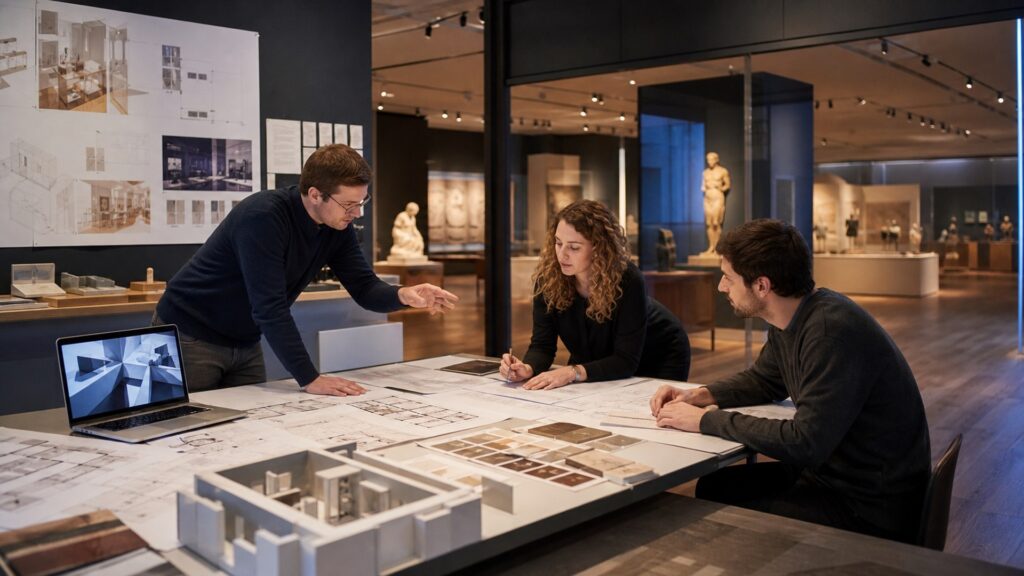
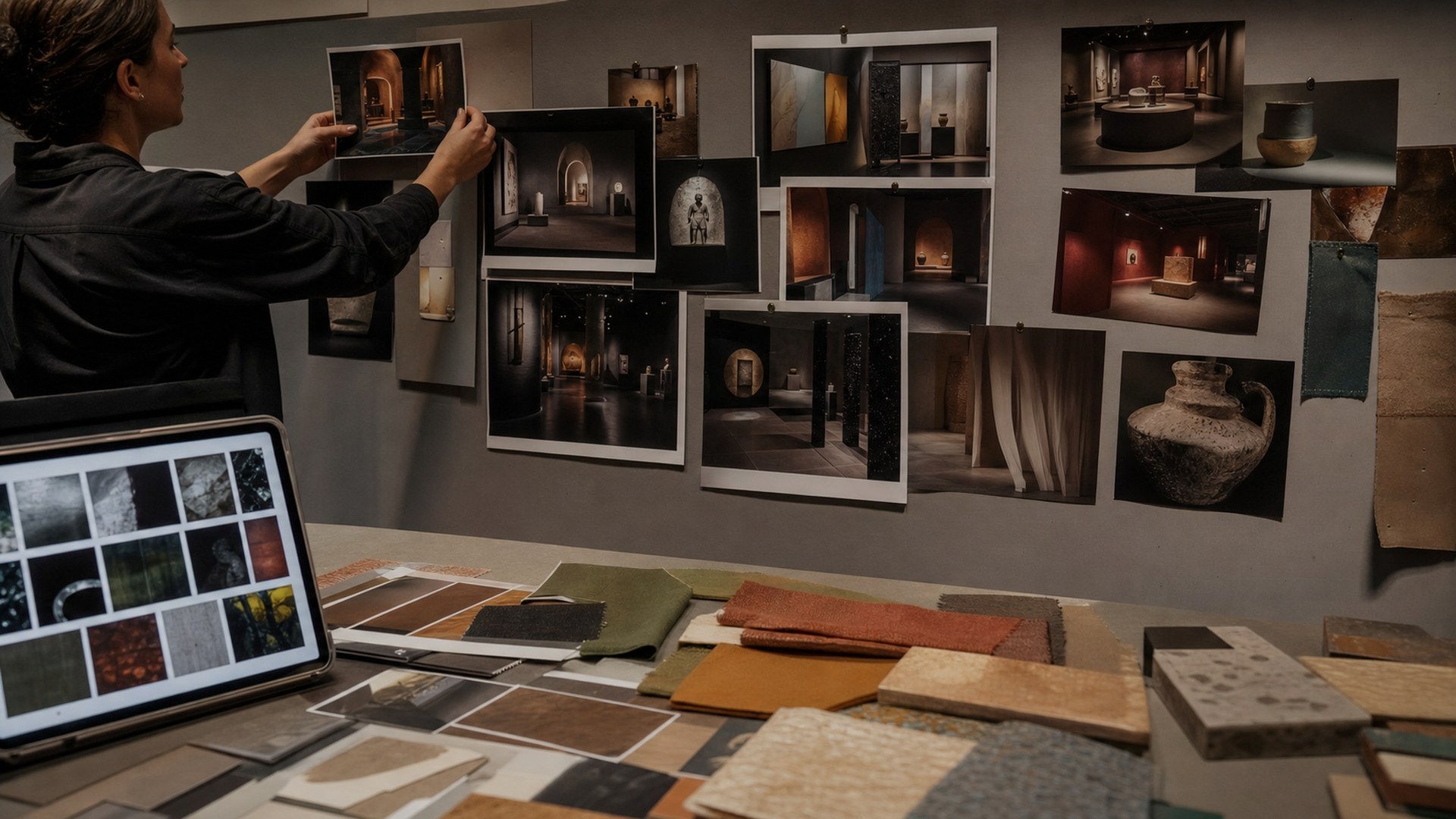
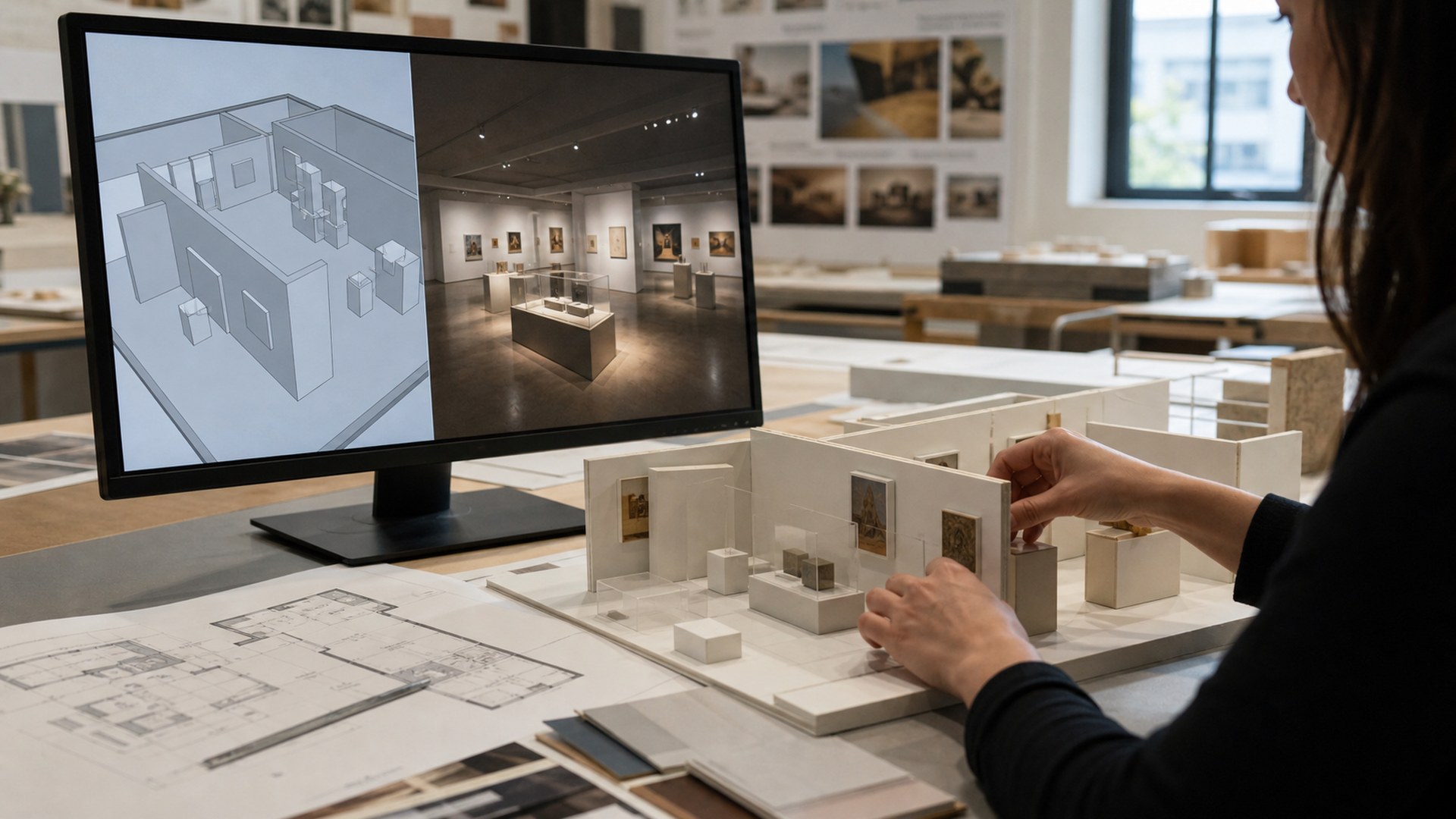
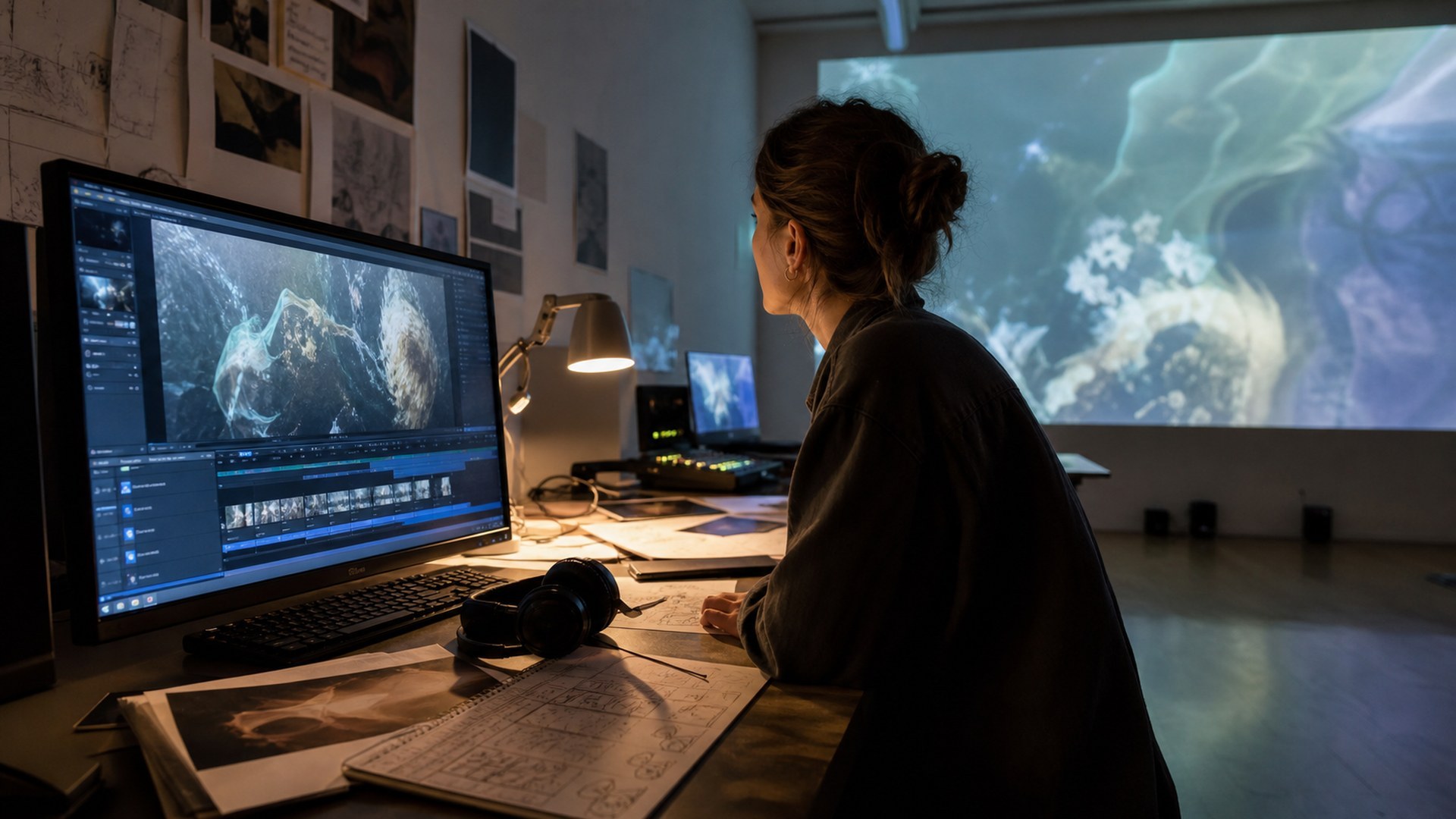
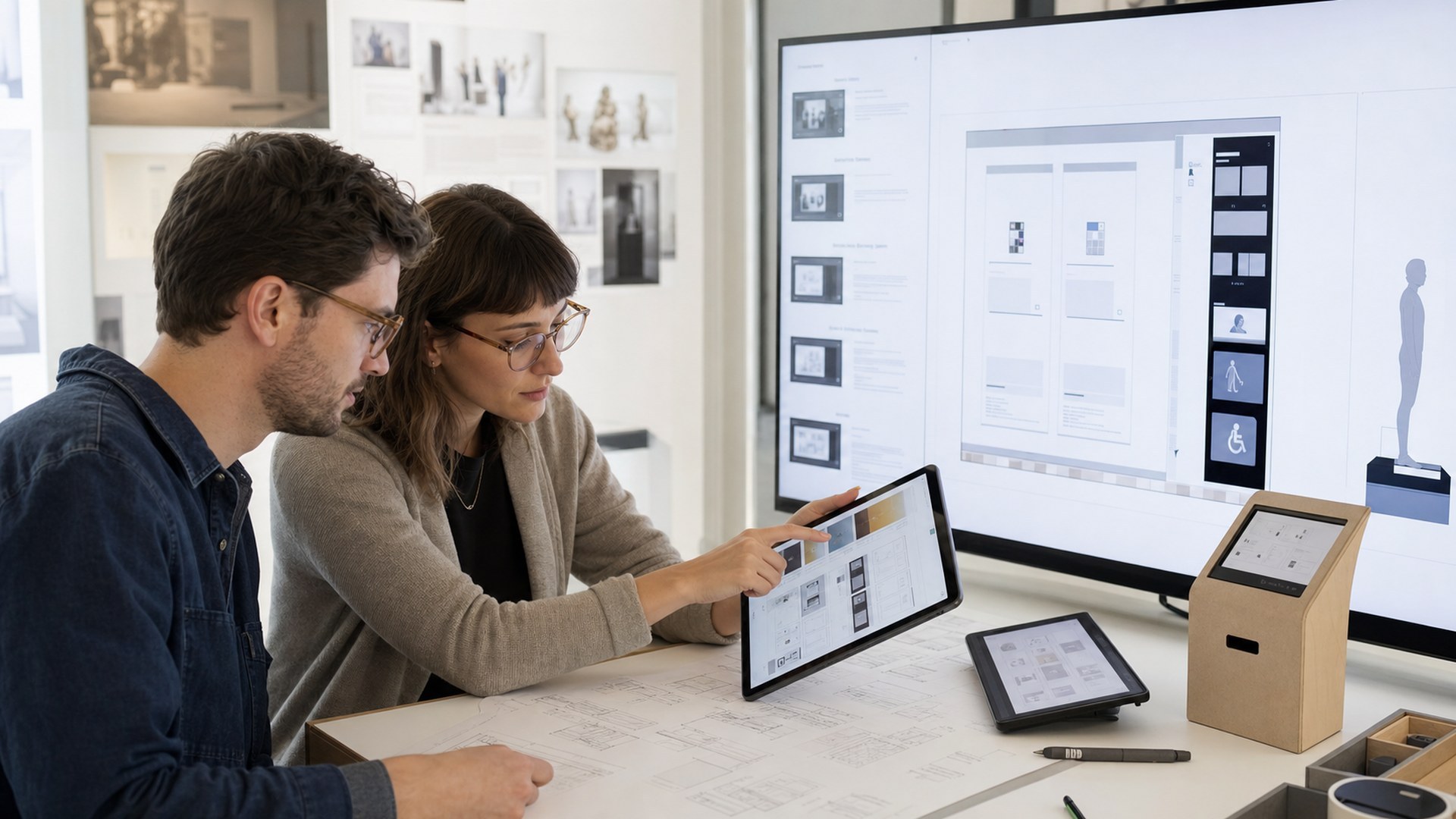
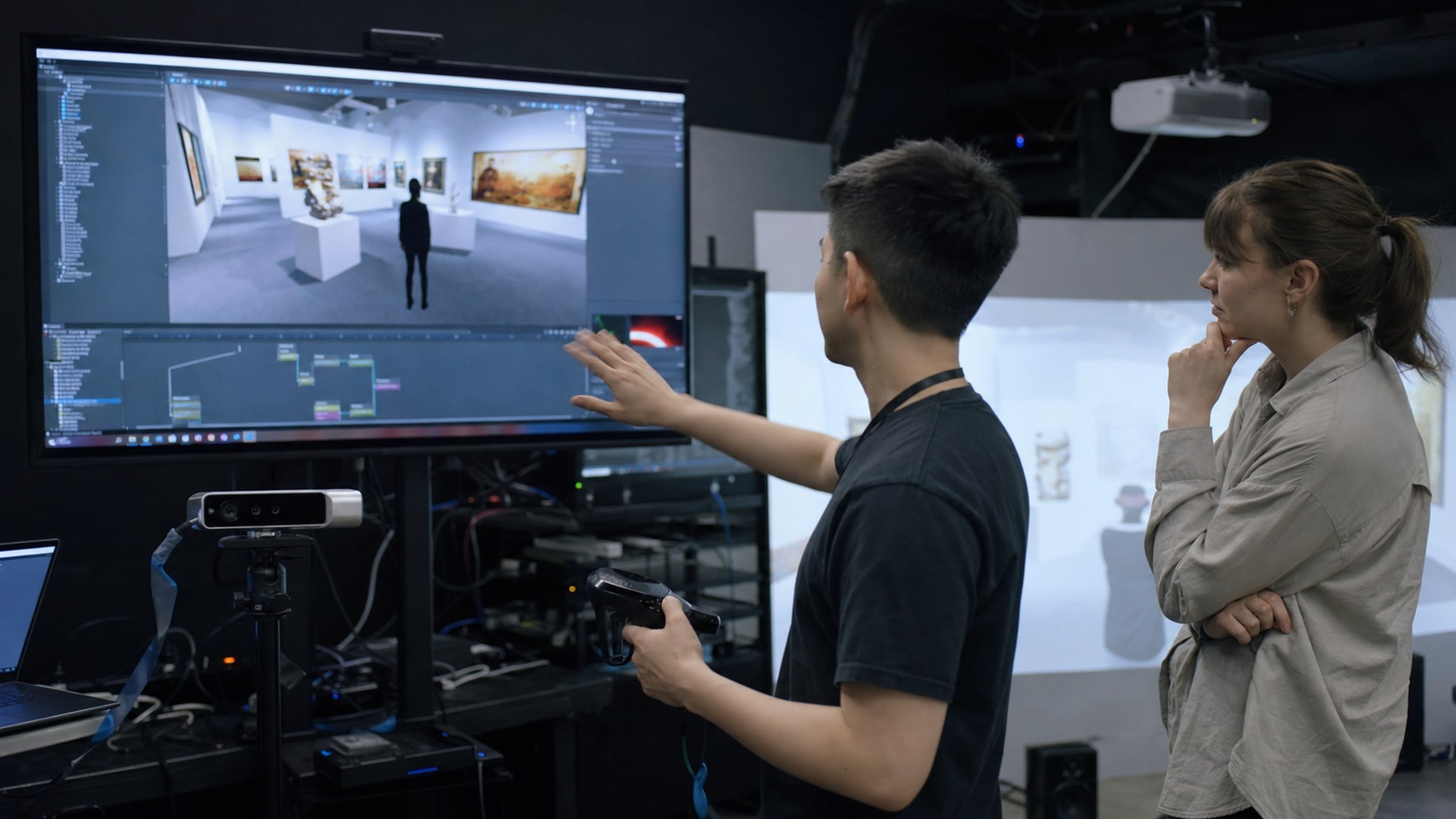
AI-assisted museum exhibit design workflow with gallery planning, immersive media, and visitor experience concepts

Best AI Tools for Museum Exhibit Designers (Top 10 Picks) - Top 10 Picks

Our editorial picks ranked by performance, build quality, features, usability, ergonomics, value, support, and everyday fit. Tap any image to expand, or jump to full reviews for deeper ownership notes.

ChatGPT AI tool concept image for museum exhibit design workflows
#1 Best Overall AI Exhibit Planning Tool Score: 9.7 / 10

ChatGPT

A flexible AI workspace for exhibit briefs, interpretive labels, visitor journey planning, scripts, image ideation, stakeholder summaries, and production checklists.

Primary Use: Planning and content AIBest Fit: Concept to label copyDeployment: Web, app, team plansStrength: Flexible reasoning

Pros

  • Excellent for exhibit narratives and labels
  • Strong multimodal brainstorming
  • Useful from brief to stakeholder review

Cons

  • Needs curatorial fact checking
  • Image and text outputs require human art direction
  • Team governance depends on plan and setup

Best For

  • Interpretive planning
  • Exhibit scripts
  • Cross-functional concept development
Adobe Firefly AI tool concept image for museum exhibit design workflows
#2 Best Commercial-Safe Visual AI for Exhibits Score: 9.5 / 10

Adobe Firefly

Adobe's generative AI suite for creating, extending, and editing exhibit graphics, environmental visuals, campaign assets, and presentation imagery inside creative workflows.

Primary Use: Generative creative productionBest Fit: Brand and exhibit visualsDeployment: Web and Adobe appsStrength: Creative workflow fit

Pros

  • Strong fit for Adobe production teams
  • Good commercial-use positioning
  • Useful for graphics and visual variations

Cons

  • Not a spatial design or fabrication tool
  • Best value inside Adobe workflows
  • Brand and rights review still matter

Best For

  • Exhibit graphics
  • Client-safe visual ideation
  • Campaign and panel art
Midjourney AI tool concept image for museum exhibit design workflows
#3 Best AI Moodboard Tool for Exhibit Atmosphere Score: 9.3 / 10

Midjourney

A high-quality image generation tool for visual territories, atmosphere studies, spatial moods, speculative galleries, and cinematic exhibit concept boards.

Primary Use: Image generationBest Fit: Mood and concept artDeployment: Web platformStrength: Visual quality

Pros

  • Exceptional art direction and moodboards
  • Fast visual exploration
  • Strong for atmosphere and style range

Cons

  • Not ideal for precise layouts or readable panel copy
  • Requires careful prompting
  • Final usage needs rights review

Best For

  • Moodboards
  • Atmospheric concept art
  • Early creative directions
SketchUp AI Render AI tool concept image for museum exhibit design workflows
#4 Best AI Render Tool for Exhibit Spaces Score: 9.1 / 10

SketchUp AI Render

SketchUp's AI Render turns an active model viewport plus prompts and styles into fast concept images for gallery layouts, interactives, cases, and scenic treatments.

Primary Use: Model-to-image AI renderBest Fit: Spatial concept visualizationDeployment: SketchUp featureStrength: Geometry-aware ideation

Pros

  • Uses existing SketchUp geometry
  • Good for fast spatial visualization
  • Helpful bridge from model to mood

Cons

  • Requires a SketchUp subscription and model
  • Outputs are concept images
  • Detailed render control is limited

Best For

  • Gallery massing
  • Casework concepts
  • SketchUp-based exhibit teams
Runway AI tool concept image for museum exhibit design workflows
#5 Best AI Video Tool for Immersive Exhibit Media Score: 9.0 / 10

Runway

A generative video and media platform for motion studies, ambient projection tests, interactive-story prototypes, edit iterations, and exhibit marketing clips.

Primary Use: Generative videoBest Fit: Immersive media prototypesDeployment: Cloud platformStrength: Motion ideation

Pros

  • Strong motion and video generation
  • Useful for projection concepts
  • Good for rapid media prototypes

Cons

  • Final museum media still needs production review
  • Continuity can vary by prompt
  • Costs can rise with experimentation

Best For

  • Projection studies
  • Immersive video
  • Motion-based storytelling
Figma AI AI tool concept image for museum exhibit design workflows
#6 Best AI Tool for Interactive Exhibit Prototypes Score: 8.8 / 10

Figma AI

Figma's AI features help teams draft screens, refine interface copy, search design systems, and prototype kiosk, mobile, and interactive exhibit experiences.

Primary Use: Interface design AIBest Fit: Digital exhibit prototypesDeployment: Cloud design platformStrength: Collaborative UX

Pros

  • Excellent collaboration workflow
  • Good for kiosk and mobile prototypes
  • Strong design-system fit

Cons

  • Not a fabrication or 3D environment tool
  • Requires interface design judgment
  • Complex interactives need development

Best For

  • Kiosks
  • Touchscreens
  • Visitor app prototypes
Matterport AI tool concept image for museum exhibit design workflows
#7 Best AI Spatial Capture Tool for Existing Galleries Score: 8.7 / 10

Matterport

Matterport combines 3D capture and AI-powered property intelligence to document existing spaces, share digital twins, and support remote exhibit planning.

Primary Use: Spatial capture and AI insightsBest Fit: Existing spacesDeployment: Capture plus cloud platformStrength: Digital twin context

Pros

  • Great for real-space documentation
  • Useful remote review workflow
  • Helps teams understand existing galleries

Cons

  • Requires capture workflow or compatible scans
  • Not a concept-art generator
  • Detailed design work happens elsewhere

Best For

  • Existing gallery scans
  • Remote planning
  • Site surveys
ElevenLabs AI tool concept image for museum exhibit design workflows
#8 Best AI Voice Tool for Audio Guides Score: 8.6 / 10

ElevenLabs

An AI voice and audio platform for narration drafts, multilingual guide concepts, accessibility audio, character voices, sound effects, and voice-agent experiments.

Primary Use: AI voice and audioBest Fit: Exhibit narrationDeployment: Web and APIStrength: Lifelike speech

Pros

  • High-quality voice generation
  • Strong multilingual support
  • Useful for audio-guide prototyping

Cons

  • Final public audio needs rights and voice review
  • Sensitive historical content needs extra care
  • Pricing depends on volume

Best For

  • Audio guides
  • Narration tests
  • Multilingual interpretation
Canva AI AI tool concept image for museum exhibit design workflows
#9 Best Value AI Design Tool for Small Museum Teams Score: 8.5 / 10

Canva AI

Canva's AI design tools help smaller teams create editable layouts, education materials, social graphics, presentations, event assets, and lightweight exhibit collateral.

Primary Use: AI-assisted designBest Fit: Fast collateralDeployment: Cloud design platformStrength: Ease of use

Pros

  • Easy for non-design specialists
  • Good template and layout workflow
  • Useful for education and marketing materials

Cons

  • Less precise than pro design suites
  • Template-heavy output needs art direction
  • Not for final exhibit fabrication files

Best For

  • Small museum teams
  • Education collateral
  • Stakeholder decks
Unity AI AI tool concept image for museum exhibit design workflows
#10 Best AI Assistant for Interactive Installation Prototyping Score: 8.4 / 10

Unity AI

Unity's AI tools assist real-time 3D teams with in-editor workflows, asset support, project context, and early prototypes for interactive museum installations.

Primary Use: Real-time 3D workflow AIBest Fit: Interactive installationsDeployment: Unity editor and cloudStrength: Project-aware assistance

Pros

  • Strong fit for real-time 3D teams
  • Useful inside Unity workflows
  • Good for interactive installation experiments

Cons

  • Requires Unity expertise
  • Still beta-oriented in places
  • Not useful for teams without real-time projects

Best For

  • Interactive media
  • Real-time prototypes
  • Creative technology teams

Methodology

How We Tested

Our rankings weigh category fit, output quality, reliability, workflow integration, production usefulness, learning curve, availability, value, and how well each tool supports the mixed creative, curatorial, educational, and technical work behind modern museum exhibits.

Our Evaluation Framework

We compared each product through a consistent editorial framework: core performance, build quality, features, usability, ergonomics, value, warranty/support, and fit for the intended buyer.

What We Prioritized

Performance and core function carried the most weight, followed by reliability, usability, value, and long-term ownership fit.

How to Read the Scores

A higher score means a stronger overall mix of capability, execution, owner experience, and value for the product's intended buyer.

Side-by-Side Comparisons

Quickly narrow your shortlist. Use this first, then jump to full reviews for your finalists.

#ModelBest ForPlatformFootprintFeelWhy It Won
1 ChatGPTBest Overall AI Exhibit Planning Tool Full exhibit concepting General AI assistant Briefs, labels, images, scripts Versatile It helps designers connect story, audience, layout, and production constraints in one workspace.
2 Adobe FireflyBest Commercial-Safe Visual AI for Exhibits Polished visual assets Creative AI suite Graphics, images, video, edits Production-minded It keeps generative visuals close to the Adobe tools many exhibit teams already use for final art.
3 MidjourneyBest AI Moodboard Tool for Exhibit Atmosphere Atmospheric concepts Image AI Prompt to visual territory Cinematic It is excellent when a team needs to see the emotional world of an exhibit before building it.
4 SketchUp AI RenderBest AI Render Tool for Exhibit Spaces 3D model visualization SketchUp AI feature Viewport to styled render Practical It starts from real exhibit geometry instead of asking designers to imagine the whole space from text.
5 RunwayBest AI Video Tool for Immersive Exhibit Media Moving image concepts AI video studio Prompt or image to video Cinematic It lets exhibit teams test motion language before commissioning a full media production pipeline.
6 Figma AIBest AI Tool for Interactive Exhibit Prototypes Interactive UX Design and prototype tool Screens, flows, copy, handoff Collaborative It helps exhibit teams prototype visitor-facing digital moments before engineering begins.
7 MatterportBest AI Spatial Capture Tool for Existing Galleries Real gallery context 3D capture platform Space scan to digital twin Survey-minded It gives exhibit teams a shared record of rooms, adjacencies, and conditions before design decisions harden.
8 ElevenLabsBest AI Voice Tool for Audio Guides Audio interpretation Voice AI platform Text to speech and agents Expressive It helps teams prototype how an exhibit sounds, not only how it looks.
9 Canva AIBest Value AI Design Tool for Small Museum Teams Accessible design production AI design suite Layouts, graphics, decks Approachable It gives smaller teams a practical way to make polished support materials without a large design department.
10 Unity AIBest AI Assistant for Interactive Installation Prototyping Real-time installation prototypes Game engine AI tools Editor assistant and generators Technical It is most useful when the exhibit includes real-time 3D, sensors, games, or interactive environments.

#1 - ChatGPT

Best Overall AI Exhibit Planning Tool
Best For
Full exhibit concepting
Platform
General AI assistant
Footprint
Briefs, labels, images, scripts
Feel
Versatile
Why it wonIt helps designers connect story, audience, layout, and production constraints in one workspace.

#2 - Adobe Firefly

Best Commercial-Safe Visual AI for Exhibits
Best For
Polished visual assets
Platform
Creative AI suite
Footprint
Graphics, images, video, edits
Feel
Production-minded
Why it wonIt keeps generative visuals close to the Adobe tools many exhibit teams already use for final art.

#3 - Midjourney

Best AI Moodboard Tool for Exhibit Atmosphere
Best For
Atmospheric concepts
Platform
Image AI
Footprint
Prompt to visual territory
Feel
Cinematic
Why it wonIt is excellent when a team needs to see the emotional world of an exhibit before building it.

#4 - SketchUp AI Render

Best AI Render Tool for Exhibit Spaces
Best For
3D model visualization
Platform
SketchUp AI feature
Footprint
Viewport to styled render
Feel
Practical
Why it wonIt starts from real exhibit geometry instead of asking designers to imagine the whole space from text.

#5 - Runway

Best AI Video Tool for Immersive Exhibit Media
Best For
Moving image concepts
Platform
AI video studio
Footprint
Prompt or image to video
Feel
Cinematic
Why it wonIt lets exhibit teams test motion language before commissioning a full media production pipeline.

#6 - Figma AI

Best AI Tool for Interactive Exhibit Prototypes
Best For
Interactive UX
Platform
Design and prototype tool
Footprint
Screens, flows, copy, handoff
Feel
Collaborative
Why it wonIt helps exhibit teams prototype visitor-facing digital moments before engineering begins.

#7 - Matterport

Best AI Spatial Capture Tool for Existing Galleries
Best For
Real gallery context
Platform
3D capture platform
Footprint
Space scan to digital twin
Feel
Survey-minded
Why it wonIt gives exhibit teams a shared record of rooms, adjacencies, and conditions before design decisions harden.

#8 - ElevenLabs

Best AI Voice Tool for Audio Guides
Best For
Audio interpretation
Platform
Voice AI platform
Footprint
Text to speech and agents
Feel
Expressive
Why it wonIt helps teams prototype how an exhibit sounds, not only how it looks.

#9 - Canva AI

Best Value AI Design Tool for Small Museum Teams
Best For
Accessible design production
Platform
AI design suite
Footprint
Layouts, graphics, decks
Feel
Approachable
Why it wonIt gives smaller teams a practical way to make polished support materials without a large design department.

#10 - Unity AI

Best AI Assistant for Interactive Installation Prototyping
Best For
Real-time installation prototypes
Platform
Game engine AI tools
Footprint
Editor assistant and generators
Feel
Technical
Why it wonIt is most useful when the exhibit includes real-time 3D, sensors, games, or interactive environments.

FAQ: Ai Tools For Museum Exhibit Designers

Quick answers to common questions before choosing from this Top 10 list.

In-Depth Reviews: What These Picks Are Really Like to Use

These full reviews expand on the Top 10 cards with a deeper look at strengths, tradeoffs, ownership fit, and ideal buyers.

60-second takeReal-use breakdownWho it's for
#1 Best Overall AI Exhibit Planning ToolScore: 9.7 / 10

ChatGPT

A flexible AI workspace for exhibit briefs, interpretive labels, visitor journey planning, scripts, image ideation, stakeholder summaries, and production checklists.

Compare Specs

What It's Great At

  • Excellent for exhibit narratives and labels
  • Strong multimodal brainstorming
  • Useful from brief to stakeholder review

Watch-Outs

  • Needs curatorial fact checking
  • Image and text outputs require human art direction
  • Team governance depends on plan and setup

Ideal Buyer

  • Interpretive planning
  • Exhibit scripts
  • Cross-functional concept development
The Real-World Verdict

ChatGPT earns the top spot because museum exhibit design is not just visual styling. Teams have to connect curatorial goals, visitor age ranges, accessibility, label hierarchy, object stories, donor language, education programs, fabrication limits, and stakeholder feedback.

Practical Ownership Notes

For that messy middle, ChatGPT is unusually useful. It can turn a curatorial brief into an exhibit narrative arc, draft object labels at multiple reading levels, create visitor journey options, pressure-test interactives, summarize meeting notes, and generate image prompts or visual direction for a design team.

Where It Fits in the Top 10

It should not replace curators, registrars, educators, conservators, or designers. Its best role is as a fast planning partner that helps teams explore directions, document decisions, and refine public-facing language before expert review.

#2 Best Commercial-Safe Visual AI for ExhibitsScore: 9.5 / 10

Adobe Firefly

Adobe's generative AI suite for creating, extending, and editing exhibit graphics, environmental visuals, campaign assets, and presentation imagery inside creative workflows.

Compare Specs

What It's Great At

  • Strong fit for Adobe production teams
  • Good commercial-use positioning
  • Useful for graphics and visual variations

Watch-Outs

  • Not a spatial design or fabrication tool
  • Best value inside Adobe workflows
  • Brand and rights review still matter

Ideal Buyer

  • Exhibit graphics
  • Client-safe visual ideation
  • Campaign and panel art
The Real-World Verdict

Adobe Firefly is the safest broad visual pick for exhibit designers who need concept imagery, graphic extensions, background treatments, promotional visuals, and early environmental art without leaving a professional creative ecosystem.

Practical Ownership Notes

The real value is workflow fit. A museum team can explore visual routes, adjust images, create style directions, and move assets toward Photoshop, Illustrator, Express, or other Adobe tools that already support review, production, and brand management.

Where It Fits in the Top 10

Firefly will not solve object mounts, lighting angles, millwork, fabrication tolerances, or code review. It is strongest in the branded visual layer where commercial-use confidence, design polish, and iteration speed matter.

#3 Best AI Moodboard Tool for Exhibit AtmosphereScore: 9.3 / 10

Midjourney

A high-quality image generation tool for visual territories, atmosphere studies, spatial moods, speculative galleries, and cinematic exhibit concept boards.

Compare Specs

What It's Great At

  • Exceptional art direction and moodboards
  • Fast visual exploration
  • Strong for atmosphere and style range

Watch-Outs

  • Not ideal for precise layouts or readable panel copy
  • Requires careful prompting
  • Final usage needs rights review

Ideal Buyer

  • Moodboards
  • Atmospheric concept art
  • Early creative directions
The Real-World Verdict

Midjourney is the best moodboard tool here because exhibit designers often need to persuade before details are fixed. A few strong visual territories can help a museum director, donor, curator, or fabrication partner understand the intended feeling of a gallery.

Practical Ownership Notes

It is especially useful for atmosphere studies: lighting mood, scenic texture, projection environments, color palettes, immersive entry moments, artifact staging, and visitor-scale compositions. That makes it a fast front-end tool for creative alignment.

Where It Fits in the Top 10

The tradeoff is control. Midjourney images can be beautiful but imprecise, so designers should use them as inspiration, not as final exhibit drawings, signage, or fabrication guidance.

#4 Best AI Render Tool for Exhibit SpacesScore: 9.1 / 10

SketchUp AI Render

SketchUp's AI Render turns an active model viewport plus prompts and styles into fast concept images for gallery layouts, interactives, cases, and scenic treatments.

Compare Specs

What It's Great At

  • Uses existing SketchUp geometry
  • Good for fast spatial visualization
  • Helpful bridge from model to mood

Watch-Outs

  • Requires a SketchUp subscription and model
  • Outputs are concept images
  • Detailed render control is limited

Ideal Buyer

  • Gallery massing
  • Casework concepts
  • SketchUp-based exhibit teams
The Real-World Verdict

SketchUp AI Render is a strong fit for exhibit teams that already block out galleries, walls, plinths, cases, theaters, kiosks, and circulation paths in SketchUp. The AI layer can make those rough layouts feel more legible to stakeholders.

Practical Ownership Notes

Because it uses an active model viewport, the output is tied to actual spatial thinking. Designers can test lighting mood, material direction, and visual atmosphere while keeping the underlying model available for layout discussion.

Where It Fits in the Top 10

The generated image is not a construction document. It is best used to make early SketchUp studies more persuasive before the team moves into render refinement, detailing, engineering, and shop drawings.

#5 Best AI Video Tool for Immersive Exhibit MediaScore: 9.0 / 10

Runway

A generative video and media platform for motion studies, ambient projection tests, interactive-story prototypes, edit iterations, and exhibit marketing clips.

Compare Specs

What It's Great At

  • Strong motion and video generation
  • Useful for projection concepts
  • Good for rapid media prototypes

Watch-Outs

  • Final museum media still needs production review
  • Continuity can vary by prompt
  • Costs can rise with experimentation

Ideal Buyer

  • Projection studies
  • Immersive video
  • Motion-based storytelling
The Real-World Verdict

Runway is the strongest video pick for museum exhibit designers working on immersive rooms, projection walls, attract loops, animated explainers, campaign clips, or speculative media moments.

Practical Ownership Notes

The practical use is prototyping. A designer can test whether a slow atmospheric loop, object transformation, timeline sequence, or environmental motion treatment supports the visitor experience before committing to expensive production.

Where It Fits in the Top 10

For final installation media, teams still need rights review, resolution planning, audio, playback specs, accessibility review, and curatorial approval. Runway is best used to find and communicate the motion direction quickly.

#6 Best AI Tool for Interactive Exhibit PrototypesScore: 8.8 / 10

Figma AI

Figma's AI features help teams draft screens, refine interface copy, search design systems, and prototype kiosk, mobile, and interactive exhibit experiences.

Compare Specs

What It's Great At

  • Excellent collaboration workflow
  • Good for kiosk and mobile prototypes
  • Strong design-system fit

Watch-Outs

  • Not a fabrication or 3D environment tool
  • Requires interface design judgment
  • Complex interactives need development

Ideal Buyer

  • Kiosks
  • Touchscreens
  • Visitor app prototypes
The Real-World Verdict

Figma AI is the best pick for the interactive layer of exhibit design: touchscreen kiosks, mobile companion experiences, donor interactives, collection browsers, games, wayfinding screens, and staff review prototypes.

Practical Ownership Notes

Its advantage is collaboration. Designers, educators, curators, developers, and clients can review flows, comment on screens, test language, and iterate before the experience becomes expensive to build.

Where It Fits in the Top 10

It does not replace creative technology development or hardware testing. The right use is to make the intended visitor experience concrete enough that teams can evaluate content, flow, accessibility, and handoff.

#7 Best AI Spatial Capture Tool for Existing GalleriesScore: 8.7 / 10

Matterport

Matterport combines 3D capture and AI-powered property intelligence to document existing spaces, share digital twins, and support remote exhibit planning.

Compare Specs

What It's Great At

  • Great for real-space documentation
  • Useful remote review workflow
  • Helps teams understand existing galleries

Watch-Outs

  • Requires capture workflow or compatible scans
  • Not a concept-art generator
  • Detailed design work happens elsewhere

Ideal Buyer

  • Existing gallery scans
  • Remote planning
  • Site surveys
The Real-World Verdict

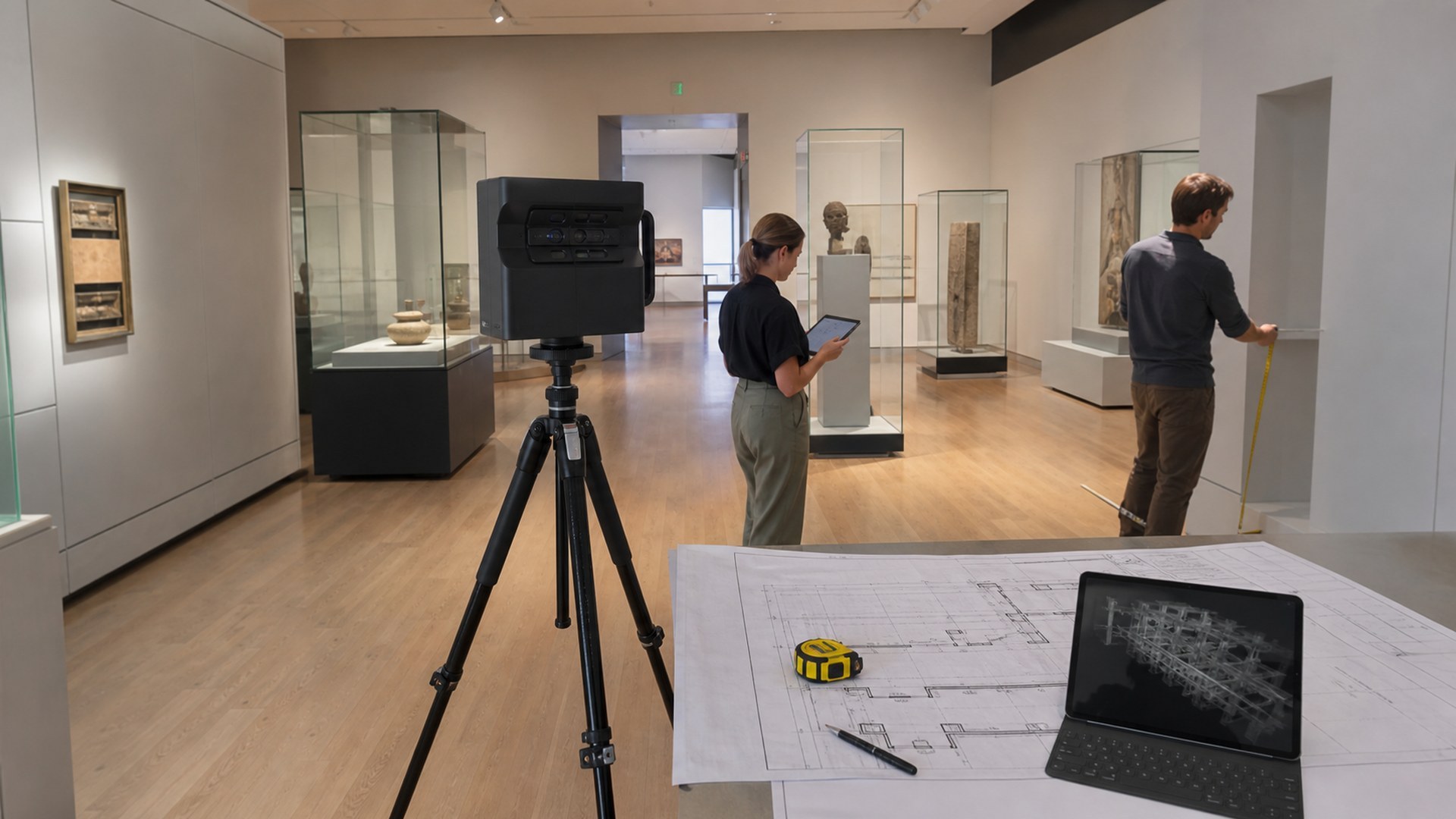
Matterport is valuable when the exhibit site already exists and the design team needs to understand it clearly. Galleries, historic rooms, temporary venues, storage-adjacent spaces, and traveling exhibit stops all benefit from a shared spatial reference.

Practical Ownership Notes

The platform's 3D capture and AI-powered property intelligence can support remote walkthroughs, measurements, documentation, marketing, planning, and space conversations before everyone is physically on site.

Where It Fits in the Top 10

It is not the tool for generating the final exhibit concept. Its strength is context: helping designers, fabricators, owners, and consultants work from the same spatial truth.

#8 Best AI Voice Tool for Audio GuidesScore: 8.6 / 10

ElevenLabs

An AI voice and audio platform for narration drafts, multilingual guide concepts, accessibility audio, character voices, sound effects, and voice-agent experiments.

Compare Specs

What It's Great At

  • High-quality voice generation
  • Strong multilingual support
  • Useful for audio-guide prototyping

Watch-Outs

  • Final public audio needs rights and voice review
  • Sensitive historical content needs extra care
  • Pricing depends on volume

Ideal Buyer

  • Audio guides
  • Narration tests
  • Multilingual interpretation
The Real-World Verdict

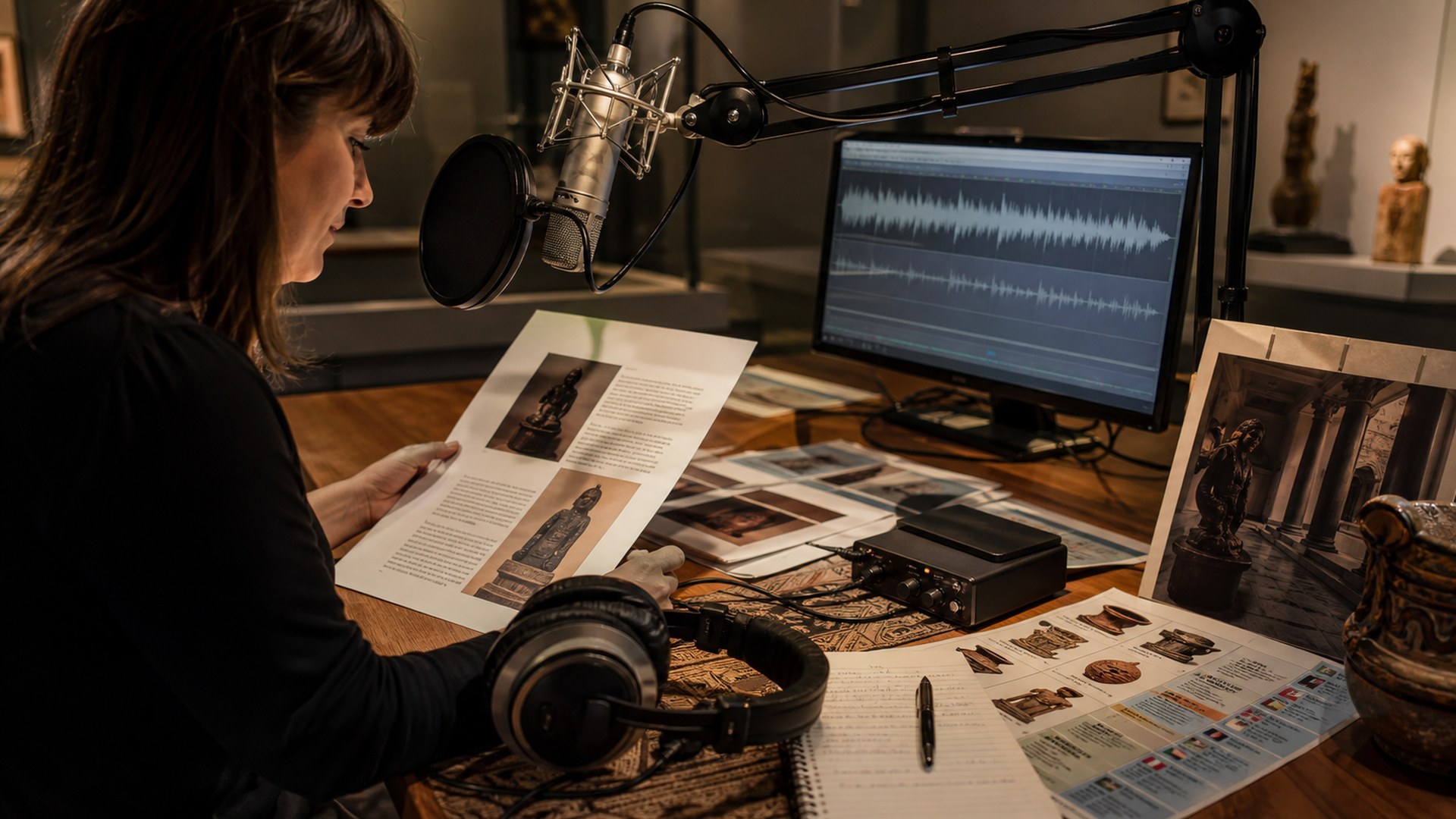
ElevenLabs fills a different but important gap for museum exhibit designers: audio. A gallery experience often includes narration, oral-history excerpts, accessibility tracks, language options, sound cues, or character-based interpretive moments.

Practical Ownership Notes

The platform can generate lifelike speech, test tone, explore multilingual versions, build voice-agent concepts, and help teams understand whether a script works when heard by a visitor rather than read on a page.

Where It Fits in the Top 10

Museums should be especially careful with consent, voice likeness, cultural context, and historically sensitive material. ElevenLabs is best for prototyping and approved production workflows with clear governance.

#9 Best Value AI Design Tool for Small Museum TeamsScore: 8.5 / 10

Canva AI

Canva's AI design tools help smaller teams create editable layouts, education materials, social graphics, presentations, event assets, and lightweight exhibit collateral.

Compare Specs

What It's Great At

  • Easy for non-design specialists
  • Good template and layout workflow
  • Useful for education and marketing materials

Watch-Outs

  • Less precise than pro design suites
  • Template-heavy output needs art direction
  • Not for final exhibit fabrication files

Ideal Buyer

  • Small museum teams
  • Education collateral
  • Stakeholder decks
The Real-World Verdict

Canva AI is the value pick because many museums do not have large design departments. Education teams, development staff, visitor services, and small exhibition teams still need decent-looking materials quickly.

Practical Ownership Notes

Its AI tools can generate editable layouts, graphics, presentation assets, social tiles, classroom materials, and event collateral inside an accessible editor. That makes it useful around the exhibit, even if it is not the main exhibit design platform.

Where It Fits in the Top 10

For final environmental graphics, donor walls, wayfinding systems, or fabrication-ready art, teams should move into professional design review. Canva AI is best for fast support materials and internal communication.

#10 Best AI Assistant for Interactive Installation PrototypingScore: 8.4 / 10

Unity AI

Unity's AI tools assist real-time 3D teams with in-editor workflows, asset support, project context, and early prototypes for interactive museum installations.

Compare Specs

What It's Great At

  • Strong fit for real-time 3D teams
  • Useful inside Unity workflows
  • Good for interactive installation experiments

Watch-Outs

  • Requires Unity expertise
  • Still beta-oriented in places
  • Not useful for teams without real-time projects

Ideal Buyer

  • Interactive media
  • Real-time prototypes
  • Creative technology teams
The Real-World Verdict

Unity AI is the specialist pick for museums building real-time interactives: gesture experiences, digital twins, educational games, projection-driven environments, AR previews, touchscreen 3D scenes, or sensor-based installations.

Practical Ownership Notes

Its value depends on already using Unity. For creative technology teams, in-editor AI assistance and workflow support can speed up experiments, help with project context, and reduce some repetitive setup while prototyping.

Where It Fits in the Top 10

Most exhibit teams will not need it for labels, graphics, or basic planning. It belongs in the toolkit when the museum experience becomes interactive software, not just a physical gallery.

Key Takeaways

  • ChatGPT is our best overall ai exhibit planning tool pick.
  • Adobe Firefly is our best commercial-safe visual ai for exhibits pick.
  • Midjourney is our best ai moodboard tool for exhibit atmosphere pick.
  • SketchUp AI Render is our best ai render tool for exhibit spaces pick.
  • Runway is our best ai video tool for immersive exhibit media pick.

Top Picks

Tap a pick to jump to the full review, or compare specs.

Best Overall AI Exhibit Planning ToolChatGPT ->

Best Commercial-Safe Visual AI for ExhibitsAdobe Firefly ->

Best AI Moodboard Tool for Exhibit AtmosphereMidjourney ->

Jump to Comparison

Quick Access

Jump directly to standout picks from this Top 10 list.

Some links may earn Review Streets a commission. Rankings remain editorially independent.

Helpful Exhibit Workflow Add-Ons

  • A curatorial review checklist for any AI-generated public label, script, or educational copy.
  • A rights and brand-use review step for all generated visual, audio, and video assets.
  • A shared asset board that separates inspiration imagery from approved production files.
  • A visitor accessibility checklist covering reading level, captions, audio, contrast, and language options.
  • A handoff template for moving concept visuals into CAD, fabrication, media production, or software development.