Best AI Tools for Scenic Fabrication (Top 10 Picks)

Scenic fabrication sits between creative development, physical build planning, client communication, and production deadlines. The best AI tools for this work are not only chatbots or image generators; they help teams turn a creative brief into stronger concepts, clearer scopes, faster visual options, and more organized shop handoffs.

By: Review Streets Research Lab
Updated: June 11, 2026
Approx. 12-14 min read
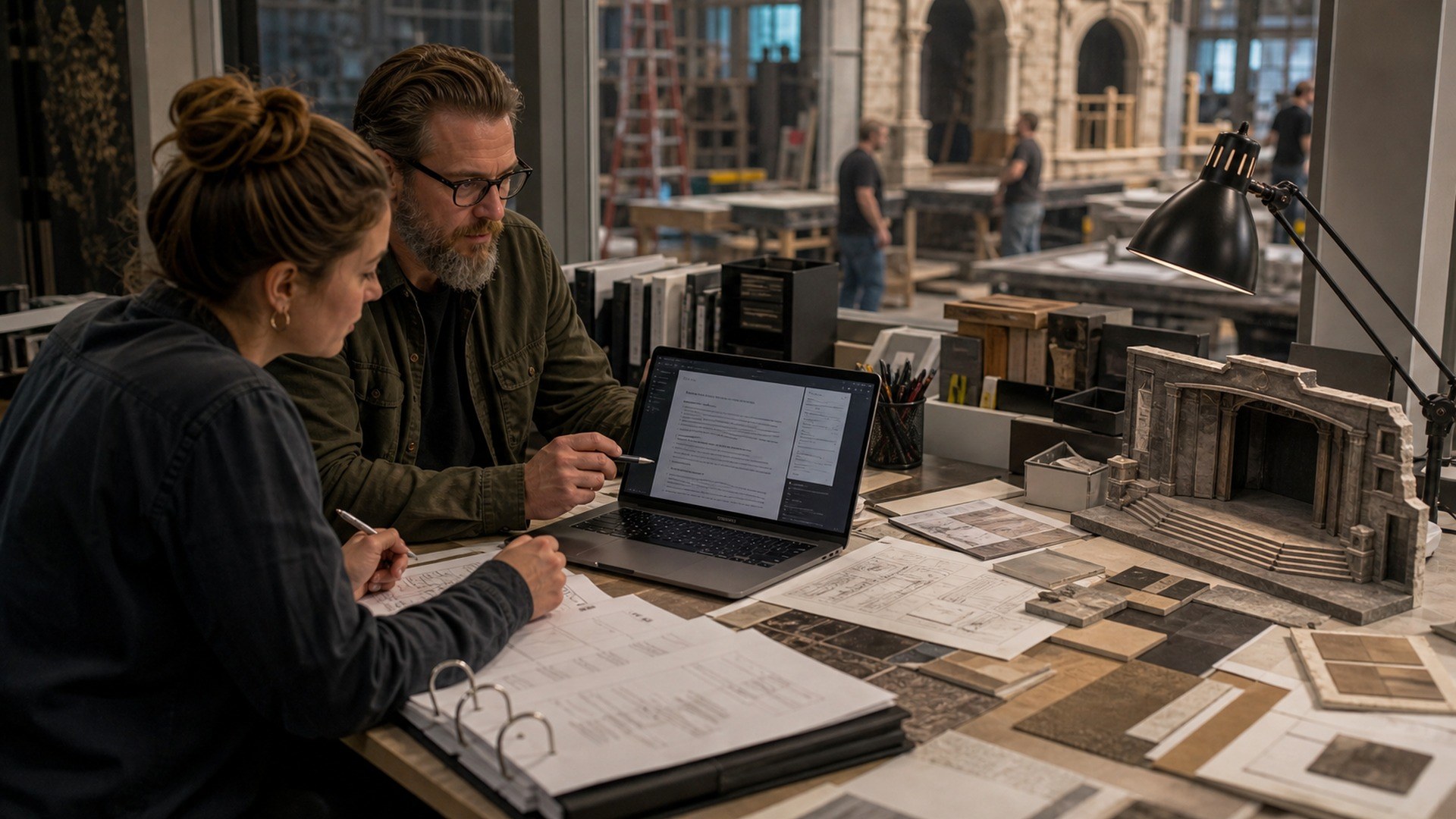
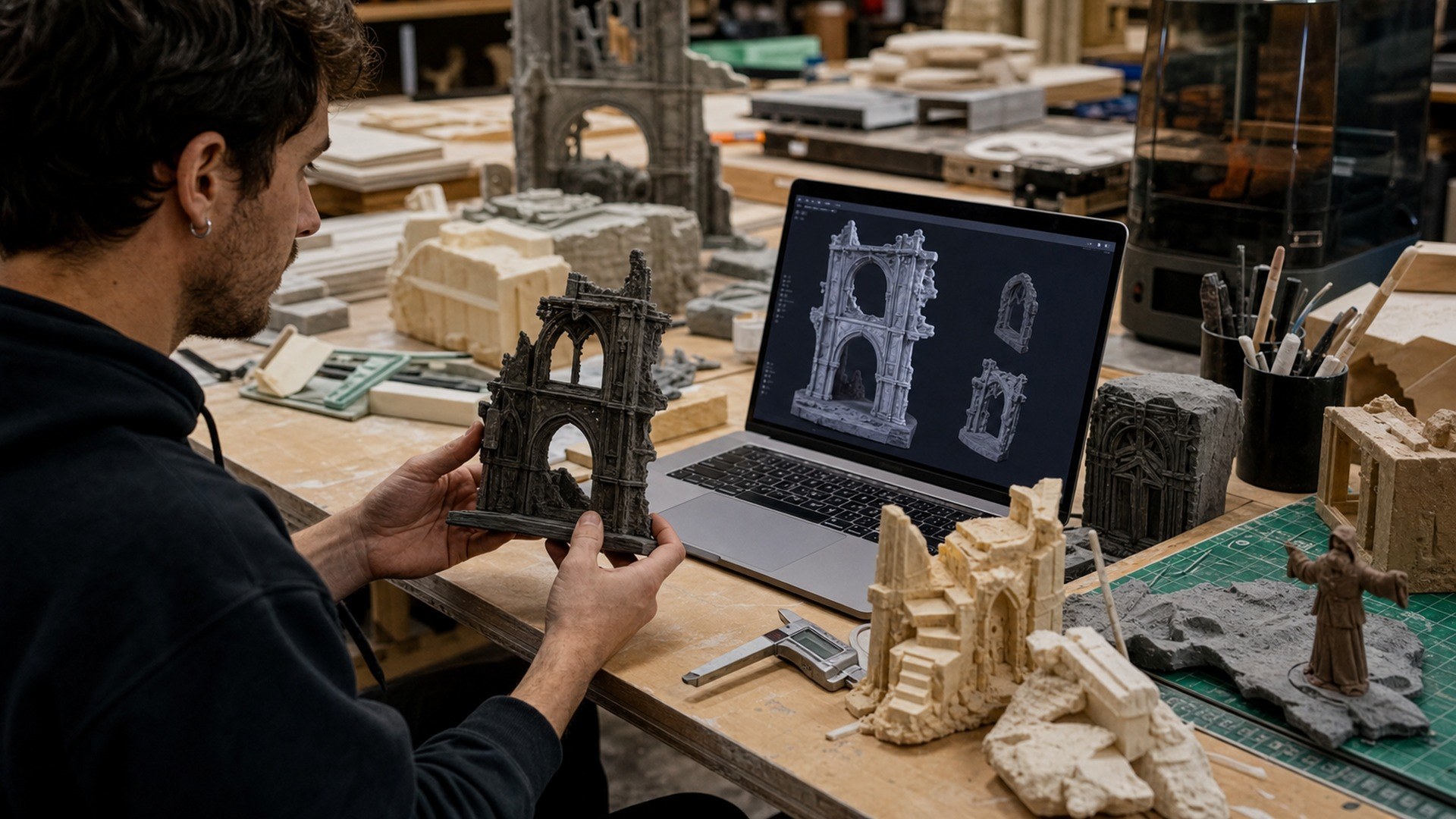
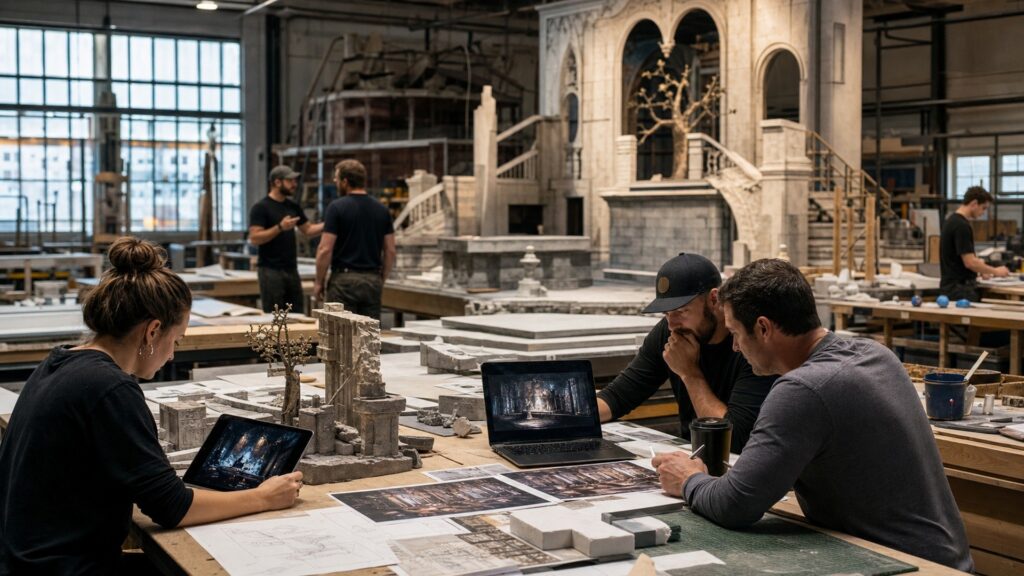
AI-assisted scenic fabrication planning with concept models, shop documents, and creative previews

Best AI Tools for Scenic Fabrication (Top 10 Picks) - Top 10 Picks

Our editorial picks ranked by performance, build quality, features, usability, ergonomics, value, support, and everyday fit. Tap any image to expand, or jump to full reviews for deeper ownership notes.

ChatGPT AI tool concept for scenic fabrication workflows
#1 Best Overall Scenic Fabrication Assistant Score: 9.7 / 10

ChatGPT

A versatile AI assistant for concept planning, build breakdowns, client copy, bid drafts, and fast problem solving across scenic fabrication work.

Primary Use: Planning and draftingBest Fit: Small to large teamsCreative Strength: Multimodal ideationAdmin Strength: Docs and summaries

Pros

  • Excellent general reasoning
  • Strong image and document workflows
  • Useful for bids, specs, and shop planning

Cons

  • Needs careful fact-checking
  • Not a CAD replacement
  • Team governance matters for client data

Best For

  • Scenic shops needing one flexible assistant
  • Project managers
  • Design-to-build planning
Claude AI tool concept for scenic fabrication workflows
#2 Best for Long Specs and Client Documents Score: 9.5 / 10

Claude

A polished writing and analysis assistant that excels at long briefs, proposal language, production notes, and careful revision passes.

Primary Use: Writing and analysisBest Fit: Office and production teamsCreative Strength: Brief interpretationAdmin Strength: Polished documents

Pros

  • Excellent long-form drafting
  • Clear tone control
  • Strong document analysis

Cons

  • Visual-generation workflow is narrower
  • Still requires technical review
  • Advanced plans add cost

Best For

  • Proposal writers
  • Production managers
  • Teams refining client-facing deliverables
Midjourney AI tool concept for scenic fabrication workflows
#3 Best Concept Art Generator Score: 9.4 / 10

Midjourney

A high-quality image generator for mood boards, scenic concepts, themed environments, materials, finishes, and fast visual exploration.

Primary Use: Concept imagesBest Fit: Visual developmentCreative Strength: Style and atmosphereAdmin Strength: Pitch support

Pros

  • Beautiful concept imagery
  • Fast style exploration
  • Strong mood-board value

Cons

  • Outputs need build translation
  • Rights review may be needed
  • Precision is limited for fabrication details

Best For

  • Creative directors
  • Scenic designers
  • Pitch decks and look development
Adobe Firefly AI tool concept for scenic fabrication workflows
#4 Best Commercial Creative Workflow Score: 9.2 / 10

Adobe Firefly

A creator-focused generative AI suite for image generation, edits, video, audio, and Adobe-native visual workflows.

Primary Use: Generative creative suiteBest Fit: Adobe teamsCreative Strength: Edits and imagesAdmin Strength: Brand-safe assets

Pros

  • Strong Adobe ecosystem fit
  • Creator-friendly rights posture
  • Useful image editing and generation

Cons

  • Best value inside Adobe workflows
  • Some outputs need refinement
  • Subscription complexity can add up

Best For

  • Adobe-based art departments
  • Marketing visuals
  • Commercially cautious teams
Runway AI tool concept for scenic fabrication workflows
#5 Best for Motion Mockups Score: 9.1 / 10

Runway

A leading AI video platform for turning scenic concepts into motion studies, walkthrough-style clips, and client presentation media.

Primary Use: AI videoBest Fit: Motion conceptsCreative Strength: Cinematic previewsAdmin Strength: Presentation media

Pros

  • Strong AI video generation
  • Good for client motion concepts
  • Useful creative controls

Cons

  • Not for technical fabrication drawings
  • Video costs can rise quickly
  • Physics still need human judgment

Best For

  • Experiential pitches
  • Animated scenic studies
  • Marketing and previsualization teams
Meshy AI tool concept for scenic fabrication workflows
#6 Best Text-to-3D Starting Point Score: 8.9 / 10

Meshy

An AI 3D model generator for creating rough prop, scenic, and environment assets from text or images for downstream refinement.

Primary Use: AI 3D modelsBest Fit: Prop and asset startsCreative Strength: Rapid meshesAdmin Strength: Asset iteration

Pros

  • Fast text and image to 3D
  • Useful export options
  • Good for rough prop blocking

Cons

  • Generated topology needs inspection
  • Not final production CAD
  • Quality varies by prompt

Best For

  • Prop ideation
  • 3D blocking
  • Teams moving concepts into model review
Tripo AI tool concept for scenic fabrication workflows
#7 Best Fast 3D Prop Ideation Score: 8.8 / 10

Tripo

A fast AI 3D generator for turning prompts or reference images into editable prop and environment model concepts.

Primary Use: AI 3D generationBest Fit: Concept modelsCreative Strength: Fast variationsAdmin Strength: Review-ready previews

Pros

  • Quick 2D-to-3D workflow
  • Good for idea volume
  • Helpful for prop exploration

Cons

  • Needs cleanup for production use
  • Not a replacement for CAD
  • Complex assemblies remain difficult

Best For

  • Prop designers
  • Theme environment studies
  • Fast model variation
Vizcom AI tool concept for scenic fabrication workflows
#8 Best Sketch-to-Render Tool Score: 8.7 / 10

Vizcom

An AI design visualization tool that turns sketches and rough forms into polished render directions for real-world product and object design.

Primary Use: Sketch renderingBest Fit: Object visualizationCreative Strength: Render polishAdmin Strength: Design reviews

Pros

  • Great sketch-to-render workflow
  • Useful for physical-object design
  • Helps preserve designer intent

Cons

  • More product-design than scenic-specific
  • Requires good input sketches
  • Still needs downstream modeling

Best For

  • Scenic object studies
  • Prop designers
  • Teams refining hand sketches
Krea AI tool concept for scenic fabrication workflows
#9 Best Rapid Visual Variation Suite Score: 8.6 / 10

Krea

A flexible creative AI suite for generating, editing, enhancing, and iterating images, videos, and 3D meshes quickly.

Primary Use: Creative generationBest Fit: Visual iterationCreative Strength: Images, video, 3DAdmin Strength: Option development

Pros

  • Fast image and video iteration
  • Useful enhancement tools
  • Broad creative surface

Cons

  • Less specialized for shop operations
  • Output quality varies by model
  • Teams need a consistent style process

Best For

  • Creative iteration
  • Mood-board expansion
  • Fast client option sets
Microsoft 365 Copilot AI tool concept for scenic fabrication workflows
#10 Best Office Workflow Add-On Score: 8.5 / 10

Microsoft 365 Copilot

An AI assistant inside Microsoft 365 for project email, Word scopes, Excel tracking, PowerPoint decks, meetings, and internal shop communication.

Primary Use: Office productivityBest Fit: Microsoft shopsCreative Strength: Deck supportAdmin Strength: Docs, email, meetings

Pros

  • Deep Microsoft 365 integration
  • Useful for office-heavy teams
  • Good meeting and document support

Cons

  • Less creative than visual AI tools
  • Best value requires Microsoft ecosystem
  • Tenant setup and permissions matter

Best For

  • Production offices
  • Teams using Word and Excel
  • Client communication workflows

Methodology

How We Tested

We ranked these AI tools for scenic fabrication by testing category fit across creative ideation, physical-object usefulness, document quality, visual output, workflow maturity, availability, reliability, buyer sentiment, and value for real production teams.

Our Evaluation Framework

We compared each product through a consistent editorial framework: core performance, build quality, features, usability, ergonomics, value, warranty/support, and fit for the intended buyer.

What We Prioritized

Performance and core function carried the most weight, followed by reliability, usability, value, and long-term ownership fit.

How to Read the Scores

A higher score means a stronger overall mix of capability, execution, owner experience, and value for the product's intended buyer.

Side-by-Side Comparisons

Quickly narrow your shortlist. Use this first, then jump to full reviews for your finalists.

#ModelBest ForPlatformFootprintFeelWhy It Won
1 ChatGPTBest Overall Scenic Fabrication Assistant Overall shop assistant Web, desktop, mobile, API Concept to admin Flexible It covers the broadest mix of scenic ideation, specs, proposals, and troubleshooting.
2 ClaudeBest for Long Specs and Client Documents Specs and proposals Web, apps, API Admin and editorial Careful Its long-context writing is excellent for scopes, handoffs, and client-ready review copy.
3 MidjourneyBest Concept Art Generator Concept art Web and Discord workflow Early design Expressive It remains one of the strongest tools for fast, compelling scenic-world ideation.
4 Adobe FireflyBest Commercial Creative Workflow Commercial visuals Web and Creative Cloud Design and marketing Integrated It is a practical choice when scenic visuals need to move through Photoshop, Illustrator, or client decks.
5 RunwayBest for Motion Mockups Motion previews Web creative suite Concept to presentation Cinematic It helps teams show how scenic environments may feel in motion, not only as still frames.
6 MeshyBest Text-to-3D Starting Point 3D asset starts Web 3D generator Concept to model Fast It gives scenic teams quick 3D forms that can be evaluated before manual modeling begins.
7 TripoBest Fast 3D Prop Ideation Fast prop ideation Web 3D generator Early 3D Immediate It is one of the simplest ways to create multiple 3D scenic-object directions quickly.
8 VizcomBest Sketch-to-Render Tool Sketch refinement Web design tool Sketch to render Designer-led It helps teams keep human drawing intent while improving render clarity for review.
9 KreaBest Rapid Visual Variation Suite Visual variation Web creative suite Concept exploration Fluid It is excellent when a scenic team needs many image directions and refinements quickly.
10 Microsoft 365 CopilotBest Office Workflow Add-On Office workflows Microsoft 365 Admin and communication Integrated It helps scenic teams manage the everyday documents and meetings around the build.

#1 - ChatGPT

Best Overall Scenic Fabrication Assistant
Best For
Overall shop assistant
Platform
Web, desktop, mobile, API
Footprint
Concept to admin
Feel
Flexible
Why it wonIt covers the broadest mix of scenic ideation, specs, proposals, and troubleshooting.

#2 - Claude

Best for Long Specs and Client Documents
Best For
Specs and proposals
Platform
Web, apps, API
Footprint
Admin and editorial
Feel
Careful
Why it wonIts long-context writing is excellent for scopes, handoffs, and client-ready review copy.

#3 - Midjourney

Best Concept Art Generator
Best For
Concept art
Platform
Web and Discord workflow
Footprint
Early design
Feel
Expressive
Why it wonIt remains one of the strongest tools for fast, compelling scenic-world ideation.

#4 - Adobe Firefly

Best Commercial Creative Workflow
Best For
Commercial visuals
Platform
Web and Creative Cloud
Footprint
Design and marketing
Feel
Integrated
Why it wonIt is a practical choice when scenic visuals need to move through Photoshop, Illustrator, or client decks.

#5 - Runway

Best for Motion Mockups
Best For
Motion previews
Platform
Web creative suite
Footprint
Concept to presentation
Feel
Cinematic
Why it wonIt helps teams show how scenic environments may feel in motion, not only as still frames.

#6 - Meshy

Best Text-to-3D Starting Point
Best For
3D asset starts
Platform
Web 3D generator
Footprint
Concept to model
Feel
Fast
Why it wonIt gives scenic teams quick 3D forms that can be evaluated before manual modeling begins.

#7 - Tripo

Best Fast 3D Prop Ideation
Best For
Fast prop ideation
Platform
Web 3D generator
Footprint
Early 3D
Feel
Immediate
Why it wonIt is one of the simplest ways to create multiple 3D scenic-object directions quickly.

#8 - Vizcom

Best Sketch-to-Render Tool
Best For
Sketch refinement
Platform
Web design tool
Footprint
Sketch to render
Feel
Designer-led
Why it wonIt helps teams keep human drawing intent while improving render clarity for review.

#9 - Krea

Best Rapid Visual Variation Suite
Best For
Visual variation
Platform
Web creative suite
Footprint
Concept exploration
Feel
Fluid
Why it wonIt is excellent when a scenic team needs many image directions and refinements quickly.

#10 - Microsoft 365 Copilot

Best Office Workflow Add-On
Best For
Office workflows
Platform
Microsoft 365
Footprint
Admin and communication
Feel
Integrated
Why it wonIt helps scenic teams manage the everyday documents and meetings around the build.

FAQ: Ai Tools For Scenic Fabrication

Quick answers to common questions before choosing from this Top 10 list.

In-Depth Reviews: What These Picks Are Really Like to Use

These full reviews expand on the Top 10 cards with a deeper look at strengths, tradeoffs, ownership fit, and ideal buyers.

60-second takeReal-use breakdownWho it's for
#1 Best Overall Scenic Fabrication AssistantScore: 9.7 / 10

ChatGPT

A versatile AI assistant for concept planning, build breakdowns, client copy, bid drafts, and fast problem solving across scenic fabrication work.

Compare Specs

What It's Great At

  • Excellent general reasoning
  • Strong image and document workflows
  • Useful for bids, specs, and shop planning

Watch-Outs

  • Needs careful fact-checking
  • Not a CAD replacement
  • Team governance matters for client data

Ideal Buyer

  • Scenic shops needing one flexible assistant
  • Project managers
  • Design-to-build planning
The Real-World Verdict

ChatGPT is the easiest first recommendation for scenic fabrication teams because it works across the whole messy arc of a project. It can help turn a creative brief into scope notes, generate build questions, draft client-facing explanations, summarize meeting notes, and stress-test a shop plan before material is ordered.

Practical Ownership Notes

For scenic work, the value is not just writing. Multimodal inputs let teams discuss reference images, sketches, and documents, while custom instructions and shared workflows can keep recurring shop language more consistent. It is also useful for translating between creative, estimating, and production teams.

Where It Fits in the Top 10

The limitation is that ChatGPT should not be treated as an unchecked source of engineering, code, or safety truth. It belongs beside experienced fabricators, not over them. Used that way, it is the strongest overall AI layer for scenic fabrication operations.

#2 Best for Long Specs and Client DocumentsScore: 9.5 / 10

Claude

A polished writing and analysis assistant that excels at long briefs, proposal language, production notes, and careful revision passes.

Compare Specs

What It's Great At

  • Excellent long-form drafting
  • Clear tone control
  • Strong document analysis

Watch-Outs

  • Visual-generation workflow is narrower
  • Still requires technical review
  • Advanced plans add cost

Ideal Buyer

  • Proposal writers
  • Production managers
  • Teams refining client-facing deliverables
The Real-World Verdict

Claude is a natural fit for scenic fabrication teams that live in long briefs, layered client comments, production notes, and revision-heavy documents. It is especially good at turning scattered project material into organized, readable language without making the output feel overly mechanical.

Practical Ownership Notes

Compared with more visual-first tools, Claude is stronger as the shop's editorial and analytical partner. Use it for estimating narratives, install plans, risk notes, change-order summaries, and the kind of careful client communication that keeps projects aligned.

Where It Fits in the Top 10

It is less of a direct rendering or 3D asset tool, so it pairs best with image, video, or CAD workflows. For the office side of scenic fabrication, it earns a high rank.

#3 Best Concept Art GeneratorScore: 9.4 / 10

Midjourney

A high-quality image generator for mood boards, scenic concepts, themed environments, materials, finishes, and fast visual exploration.

Compare Specs

What It's Great At

  • Beautiful concept imagery
  • Fast style exploration
  • Strong mood-board value

Watch-Outs

  • Outputs need build translation
  • Rights review may be needed
  • Precision is limited for fabrication details

Ideal Buyer

  • Creative directors
  • Scenic designers
  • Pitch decks and look development
The Real-World Verdict

Midjourney is the strongest pick when a scenic team needs visual momentum quickly. It can generate mood boards, material directions, themed environments, prop language, lighting ideas, and pitch visuals before the team spends time on more precise modeling.

Practical Ownership Notes

The best use is early exploration. Designers can generate several directions, choose the emotional target, then hand the winning ideas to artists, CAD teams, and fabricators who understand scale, joinery, code, durability, and budget.

Where It Fits in the Top 10

Midjourney should not be mistaken for construction documentation. Its power is in visual spark and client communication. For concept art, it is still one of the tools to beat.

#4 Best Commercial Creative WorkflowScore: 9.2 / 10

Adobe Firefly

A creator-focused generative AI suite for image generation, edits, video, audio, and Adobe-native visual workflows.

Compare Specs

What It's Great At

  • Strong Adobe ecosystem fit
  • Creator-friendly rights posture
  • Useful image editing and generation

Watch-Outs

  • Best value inside Adobe workflows
  • Some outputs need refinement
  • Subscription complexity can add up

Ideal Buyer

  • Adobe-based art departments
  • Marketing visuals
  • Commercially cautious teams
The Real-World Verdict

Adobe Firefly ranks high for scenic fabrication teams already working inside Creative Cloud. It is useful for fast image generation, generative edits, texture exploration, background variations, and presentation assets that need to stay close to established design tools.

Practical Ownership Notes

Its biggest advantage is workflow fit. Art departments can move from idea to edit to deck without rebuilding the asset pipeline around a separate tool. That matters when client presentations and marketing comps are due quickly.

Where It Fits in the Top 10

Firefly may not always produce the most dramatic standalone images, but its practical integration and creator-oriented positioning make it one of the safest choices for professional teams.

#5 Best for Motion MockupsScore: 9.1 / 10

Runway

A leading AI video platform for turning scenic concepts into motion studies, walkthrough-style clips, and client presentation media.

Compare Specs

What It's Great At

  • Strong AI video generation
  • Good for client motion concepts
  • Useful creative controls

Watch-Outs

  • Not for technical fabrication drawings
  • Video costs can rise quickly
  • Physics still need human judgment

Ideal Buyer

  • Experiential pitches
  • Animated scenic studies
  • Marketing and previsualization teams
The Real-World Verdict

Runway is the best pick here for motion. Scenic fabrication often has to sell an experience before the build exists, and short AI-generated clips can help communicate entrance reveals, themed set moments, lighting shifts, and atmosphere.

Practical Ownership Notes

The tool is strongest for previsualization and presentation, not shop documentation. A generated clip can create alignment with a client or creative director, but it still has to be translated into buildable materials, rigging, dimensions, and safety constraints.

Where It Fits in the Top 10

For teams pitching experiential spaces, immersive events, or scenic environments with movement, Runway is one of the most useful creative accelerators.

#6 Best Text-to-3D Starting PointScore: 8.9 / 10

Meshy

An AI 3D model generator for creating rough prop, scenic, and environment assets from text or images for downstream refinement.

Compare Specs

What It's Great At

  • Fast text and image to 3D
  • Useful export options
  • Good for rough prop blocking

Watch-Outs

  • Generated topology needs inspection
  • Not final production CAD
  • Quality varies by prompt

Ideal Buyer

  • Prop ideation
  • 3D blocking
  • Teams moving concepts into model review
The Real-World Verdict

Meshy is valuable when a scenic team needs a rough 3D starting point faster than a modeler can build from scratch. For props, decorative elements, themed objects, and environment studies, text-to-3D and image-to-3D can shorten the early exploration loop.

Practical Ownership Notes

The output still needs professional cleanup. Fabrication teams should inspect scale, topology, wall thickness, material assumptions, and manufacturability before treating any generated mesh as production-ready.

Where It Fits in the Top 10

As a starting point for visual and spatial conversation, Meshy is strong. It belongs in the middle of this list because it is useful, but only when paired with proper 3D and fabrication review.

#7 Best Fast 3D Prop IdeationScore: 8.8 / 10

Tripo

A fast AI 3D generator for turning prompts or reference images into editable prop and environment model concepts.

Compare Specs

What It's Great At

  • Quick 2D-to-3D workflow
  • Good for idea volume
  • Helpful for prop exploration

Watch-Outs

  • Needs cleanup for production use
  • Not a replacement for CAD
  • Complex assemblies remain difficult

Ideal Buyer

  • Prop designers
  • Theme environment studies
  • Fast model variation
The Real-World Verdict

Tripo is another strong 3D-generation choice, especially for teams that want quick props or scenic object directions from prompts and reference images. It can help designers compare forms before committing modeler time.

Practical Ownership Notes

The best workflow is to use Tripo for volume and speed, then move promising assets into professional 3D tools for cleanup, simplification, scaling, and build translation. It is a concept accelerator rather than a fabrication authority.

Where It Fits in the Top 10

For scenic fabrication, that still matters. A quick 3D object can clarify a creative direction more effectively than a written description or a flat mood-board image.

#8 Best Sketch-to-Render ToolScore: 8.7 / 10

Vizcom

An AI design visualization tool that turns sketches and rough forms into polished render directions for real-world product and object design.

Compare Specs

What It's Great At

  • Great sketch-to-render workflow
  • Useful for physical-object design
  • Helps preserve designer intent

Watch-Outs

  • More product-design than scenic-specific
  • Requires good input sketches
  • Still needs downstream modeling

Ideal Buyer

  • Scenic object studies
  • Prop designers
  • Teams refining hand sketches
The Real-World Verdict

Vizcom is especially relevant for scenic fabrication because many good ideas begin as quick sketches. Instead of replacing the designer, it helps turn rough marks, silhouettes, and form studies into more polished render directions.

Practical Ownership Notes

That makes it useful for props, kiosks, scenic pieces, display forms, themed objects, and fabrication-facing design reviews. The output can help a team decide which shape language deserves deeper modeling.

Where It Fits in the Top 10

It is not as broad as ChatGPT or as dramatic as Midjourney, but it sits closer to real-world object design. For sketch-driven scenic teams, it is a smart addition.

#9 Best Rapid Visual Variation SuiteScore: 8.6 / 10

Krea

A flexible creative AI suite for generating, editing, enhancing, and iterating images, videos, and 3D meshes quickly.

Compare Specs

What It's Great At

  • Fast image and video iteration
  • Useful enhancement tools
  • Broad creative surface

Watch-Outs

  • Less specialized for shop operations
  • Output quality varies by model
  • Teams need a consistent style process

Ideal Buyer

  • Creative iteration
  • Mood-board expansion
  • Fast client option sets
The Real-World Verdict

Krea earns a spot because scenic fabrication often needs fast visual variation: alternate finishes, color directions, environmental moods, and presentation options. Its broad image, video, enhancement, and 3D surface makes it useful for quick creative loops.

Practical Ownership Notes

The strongest use is iteration rather than final authority. A creative lead can explore directions rapidly, pick the most convincing options, then hand off to designers and fabricators for disciplined development.

Where It Fits in the Top 10

Krea is less focused on shop administration or technical fabrication than the top picks. But for visual range and speed, it is a helpful tool.

#10 Best Office Workflow Add-OnScore: 8.5 / 10

Microsoft 365 Copilot

An AI assistant inside Microsoft 365 for project email, Word scopes, Excel tracking, PowerPoint decks, meetings, and internal shop communication.

Compare Specs

What It's Great At

  • Deep Microsoft 365 integration
  • Useful for office-heavy teams
  • Good meeting and document support

Watch-Outs

  • Less creative than visual AI tools
  • Best value requires Microsoft ecosystem
  • Tenant setup and permissions matter

Ideal Buyer

  • Production offices
  • Teams using Word and Excel
  • Client communication workflows
The Real-World Verdict

Microsoft 365 Copilot is not the flashiest scenic fabrication tool, but many shops run on email, Word scopes, Excel trackers, Teams meetings, and PowerPoint decks. If that is the operating layer, Copilot can reduce friction where the office already works.

Practical Ownership Notes

It is useful for summarizing project threads, drafting scope language, building internal decks, cleaning up client updates, and making spreadsheets easier to inspect. That can matter as much as concept art on a deadline-driven project.

Where It Fits in the Top 10

Its creative capabilities are narrower than Midjourney, Firefly, Runway, or Krea. The reason it stays on the list is practical fit for production offices that need cleaner communication and fewer manual document passes.

Key Takeaways

  • ChatGPT is our best overall scenic fabrication assistant pick.
  • Claude is our best for long specs and client documents pick.
  • Midjourney is our best concept art generator pick.
  • Adobe Firefly is our best commercial creative workflow pick.
  • Runway is our best for motion mockups pick.

Top Picks

Tap a pick to jump to the full review, or compare specs.

Best Overall Scenic Fabrication AssistantChatGPT ->

Best for Long Specs and Client DocumentsClaude ->

Best Concept Art GeneratorMidjourney ->

Jump to Comparison

Quick Access

Jump directly to standout picks from this Top 10 list.

Some links may earn Review Streets a commission. Rankings remain editorially independent.

Helpful Workflow Add-Ons

  • A shared prompt library for scopes, build notes, material assumptions, and client revisions.
  • A review checklist for AI-generated dimensions, loads, code concerns, and fabrication feasibility.
  • A secure asset policy for client references, venue drawings, brand artwork, and unreleased designs.