Best AI Tools for Theme Park Designers (Top 10 Picks)

We evaluated AI tools for theme park designers across blue-sky concepting, themed land planning, attraction visualization, 3D form exploration, story sequencing, stakeholder presentation, fabrication handoff, usability, reliability, value, and current availability. The strongest picks help creative teams move from early idea to more testable guest experience without pretending that AI replaces design judgment, safety review, operations, engineering, or craft.

By: Review Streets Research Lab
Updated: June 9, 2026
Approx. 12-14 min read
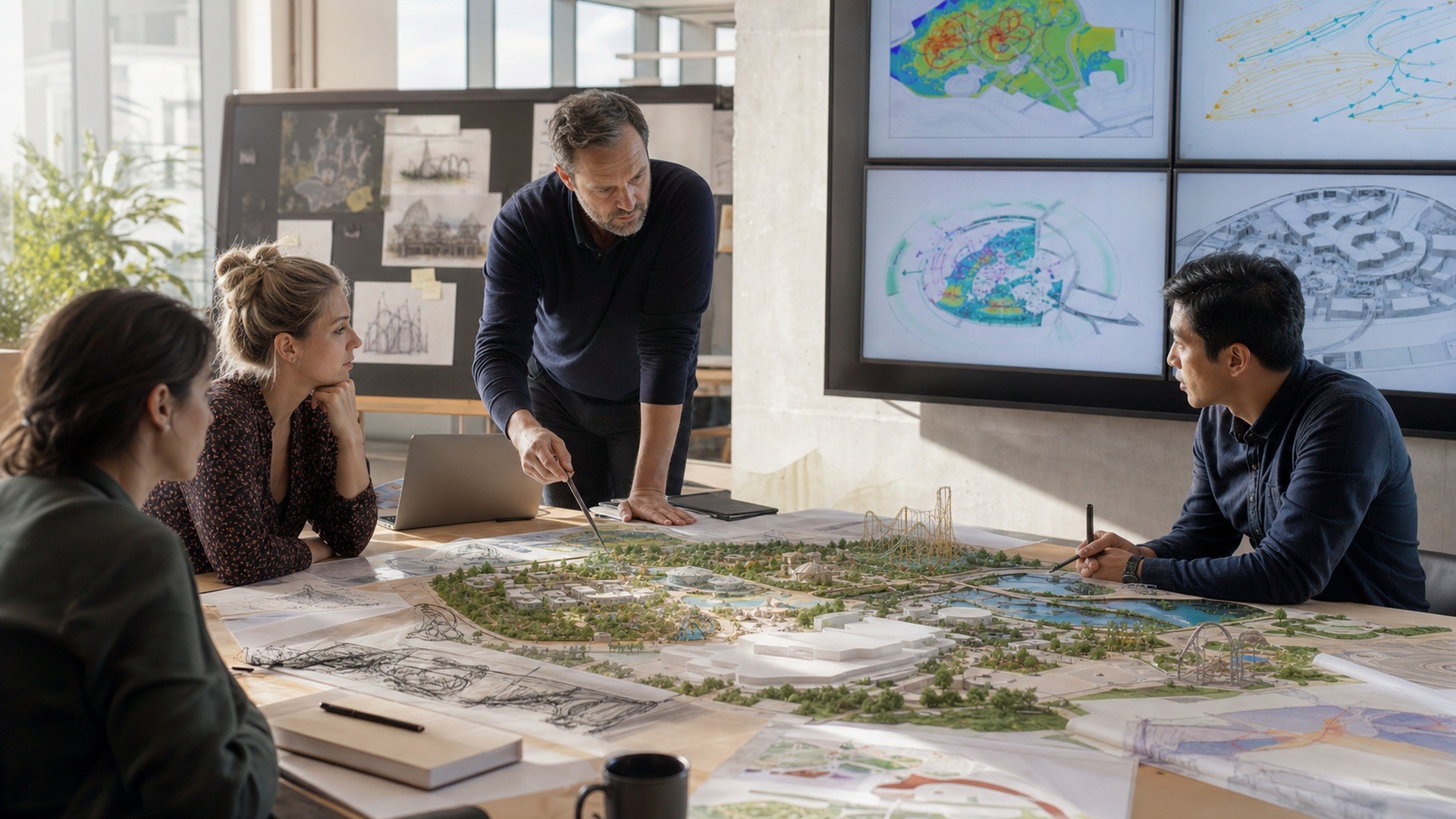
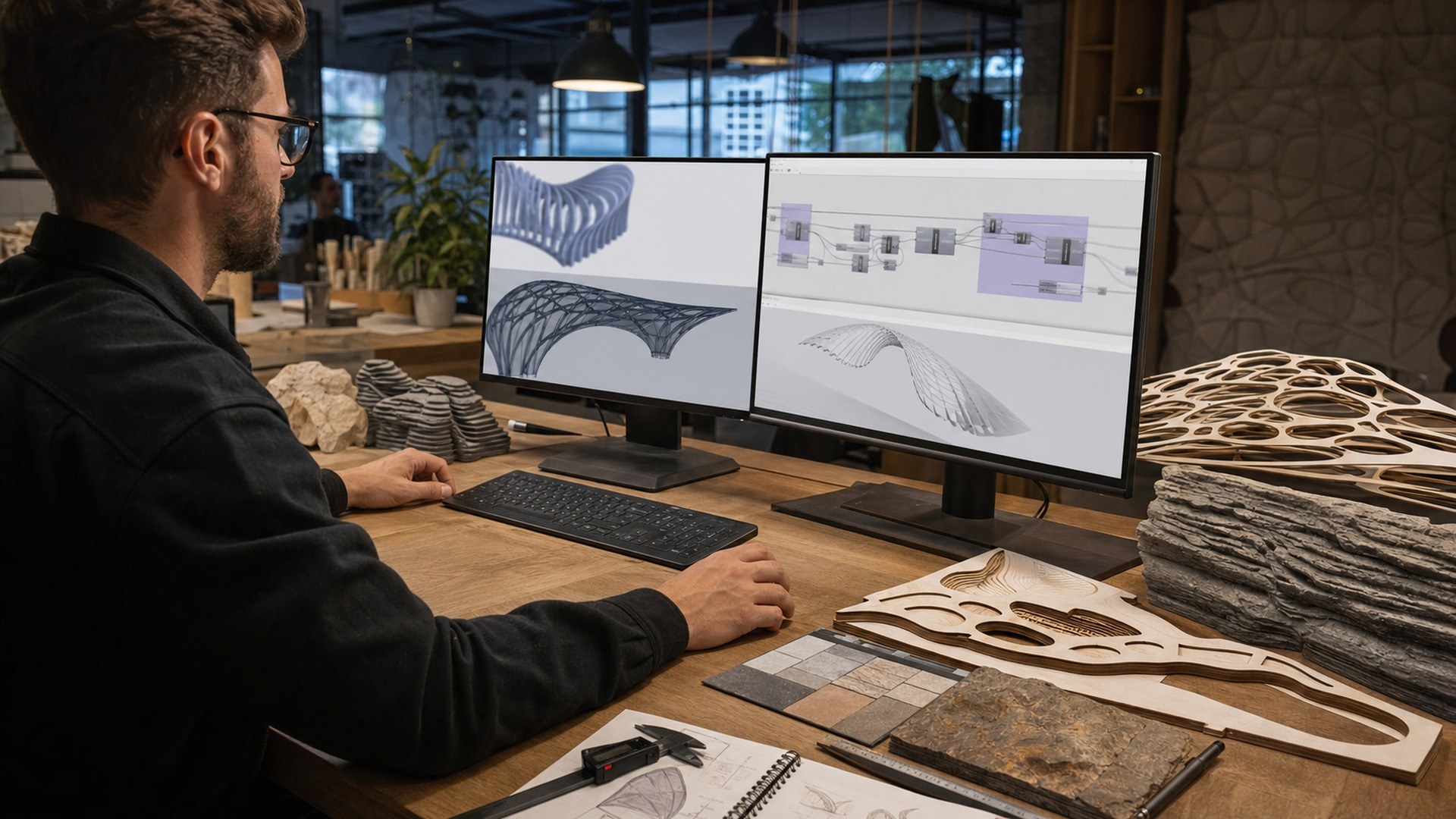
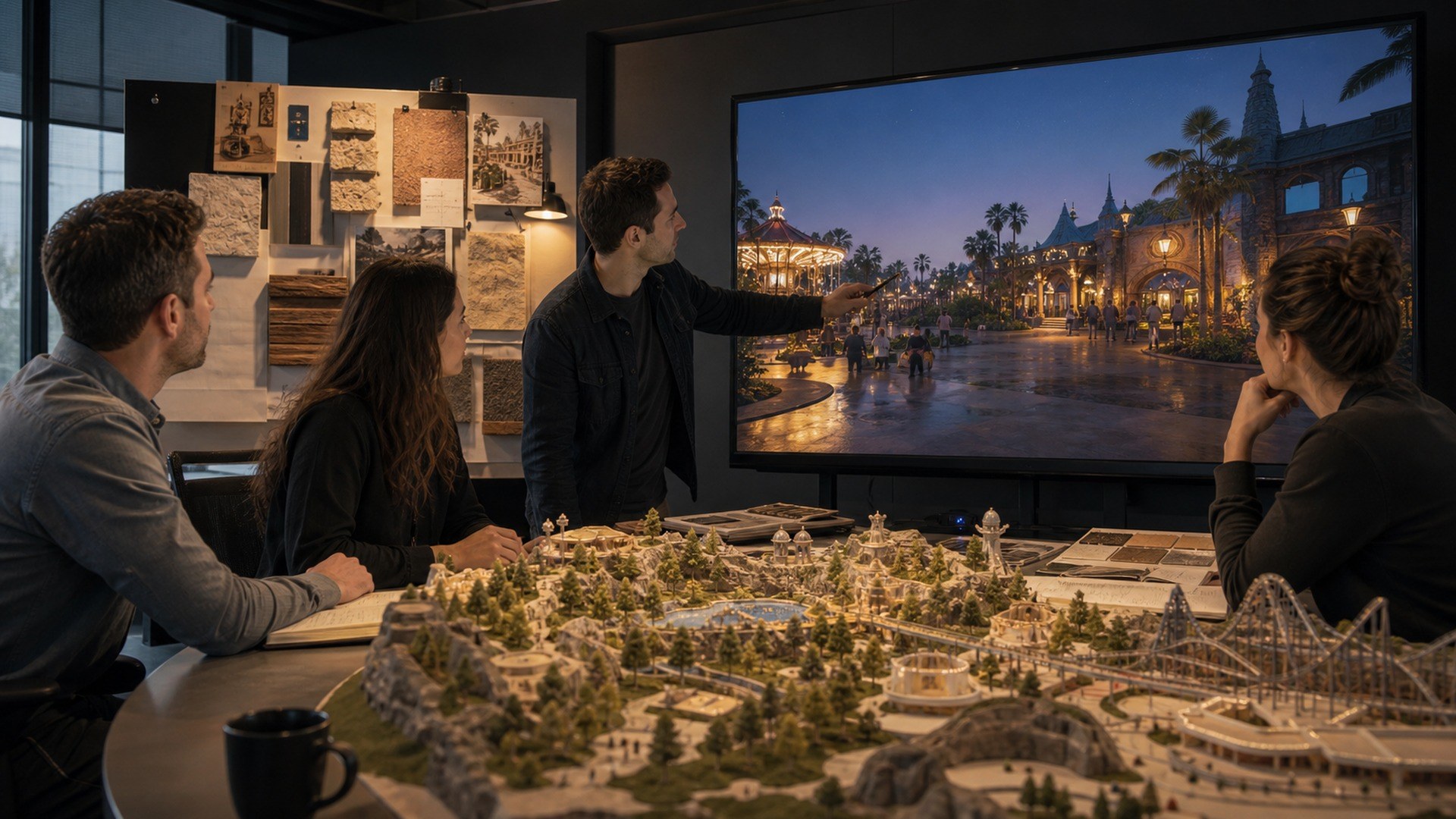
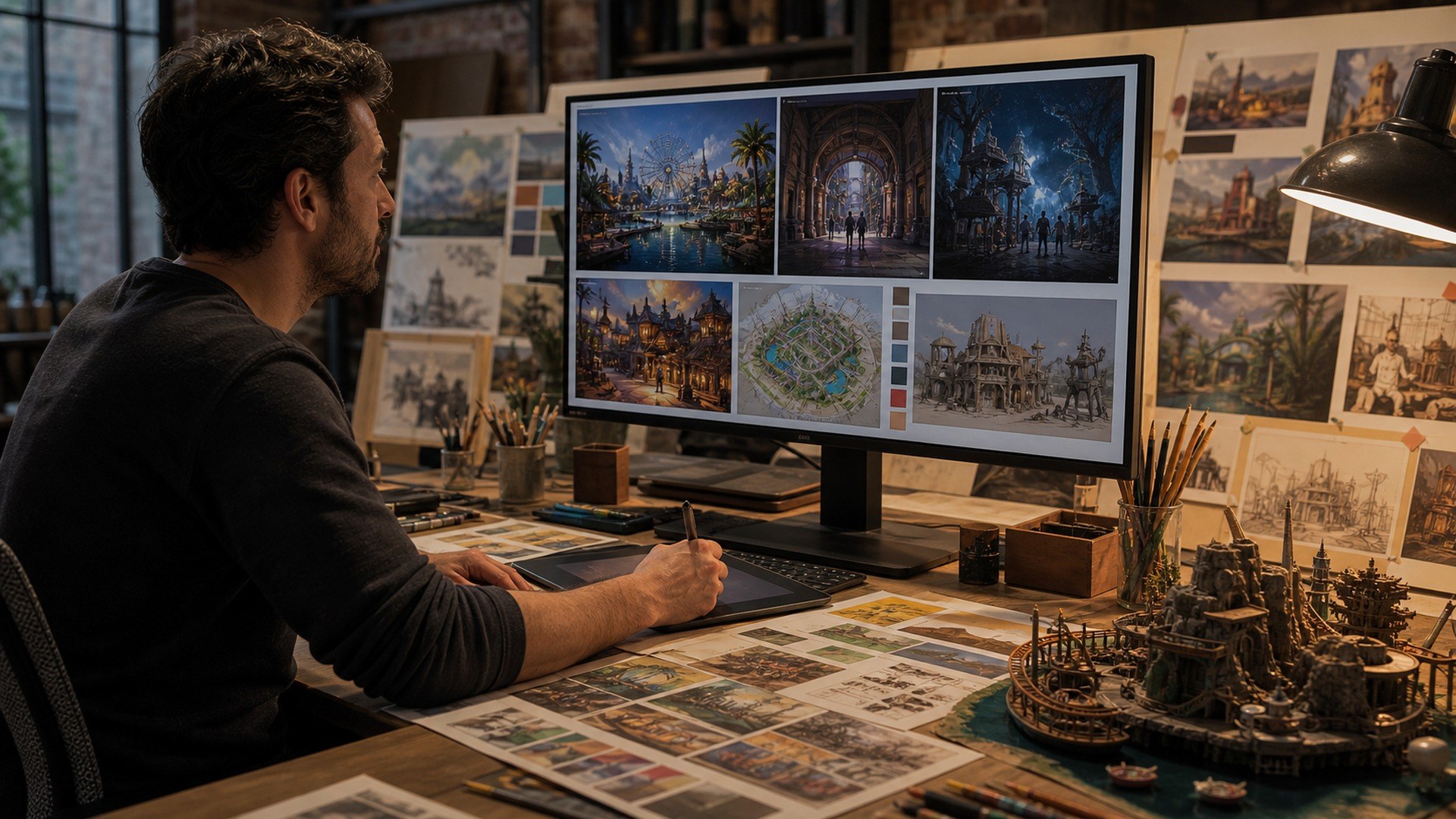
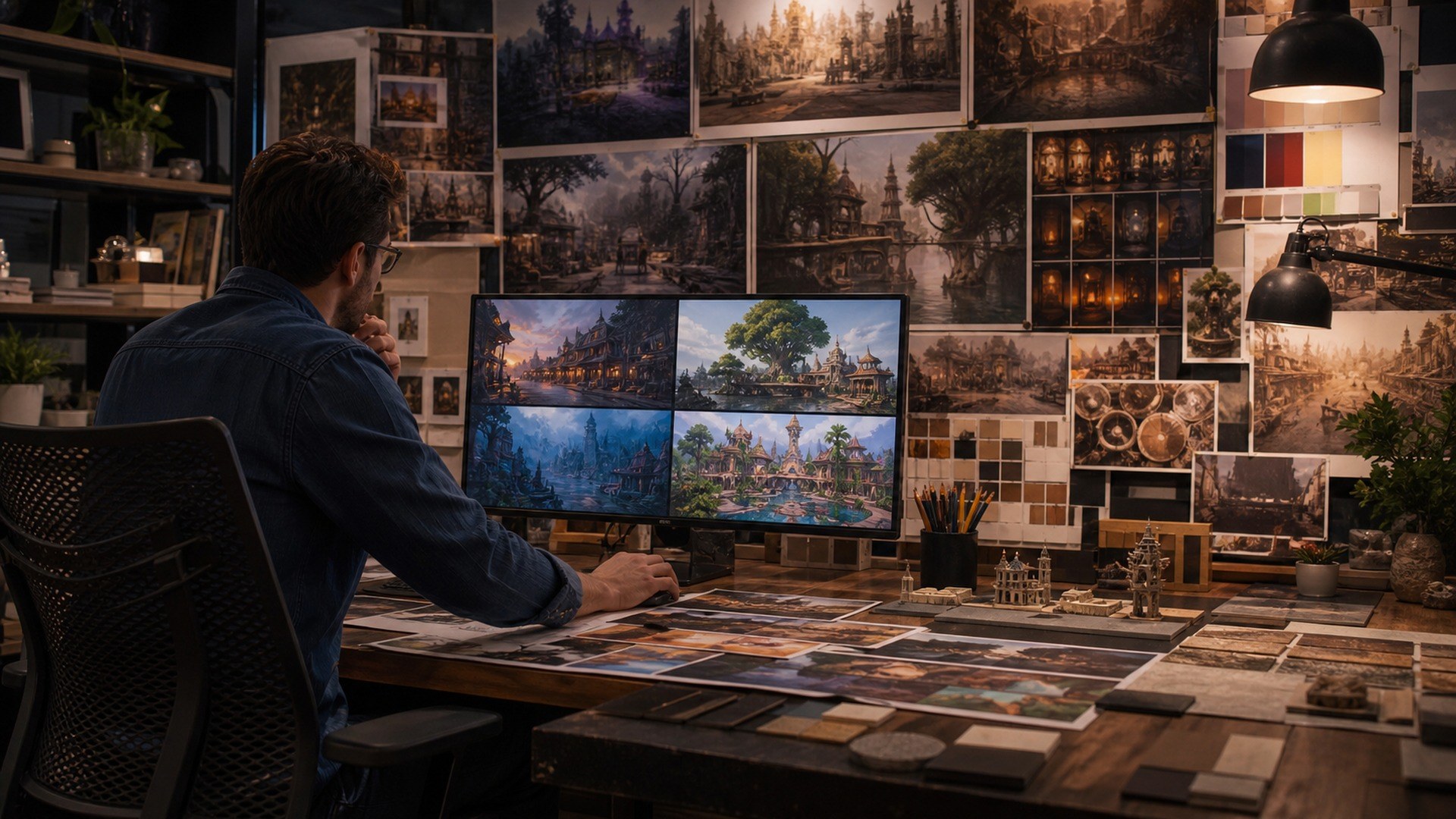
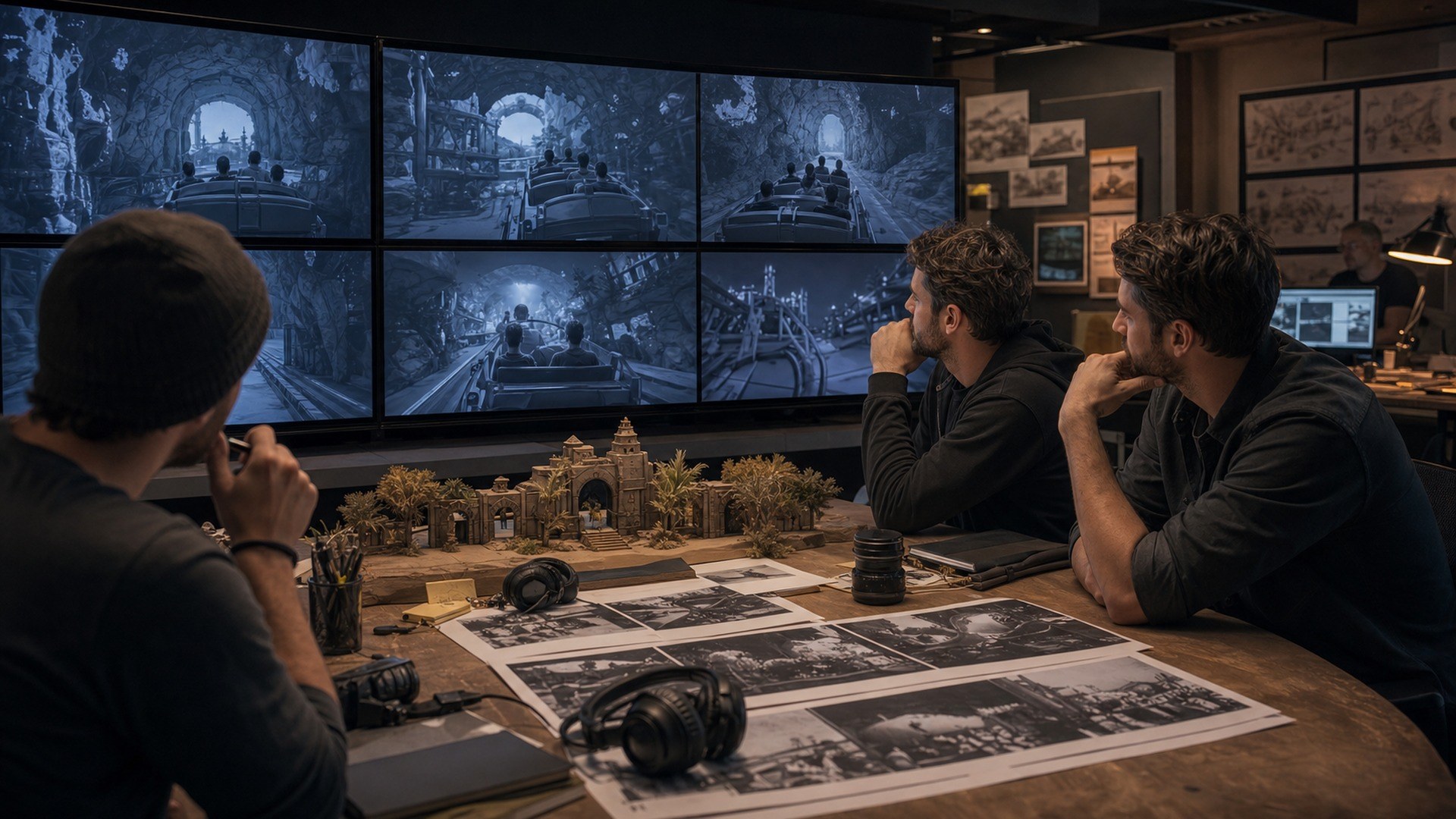
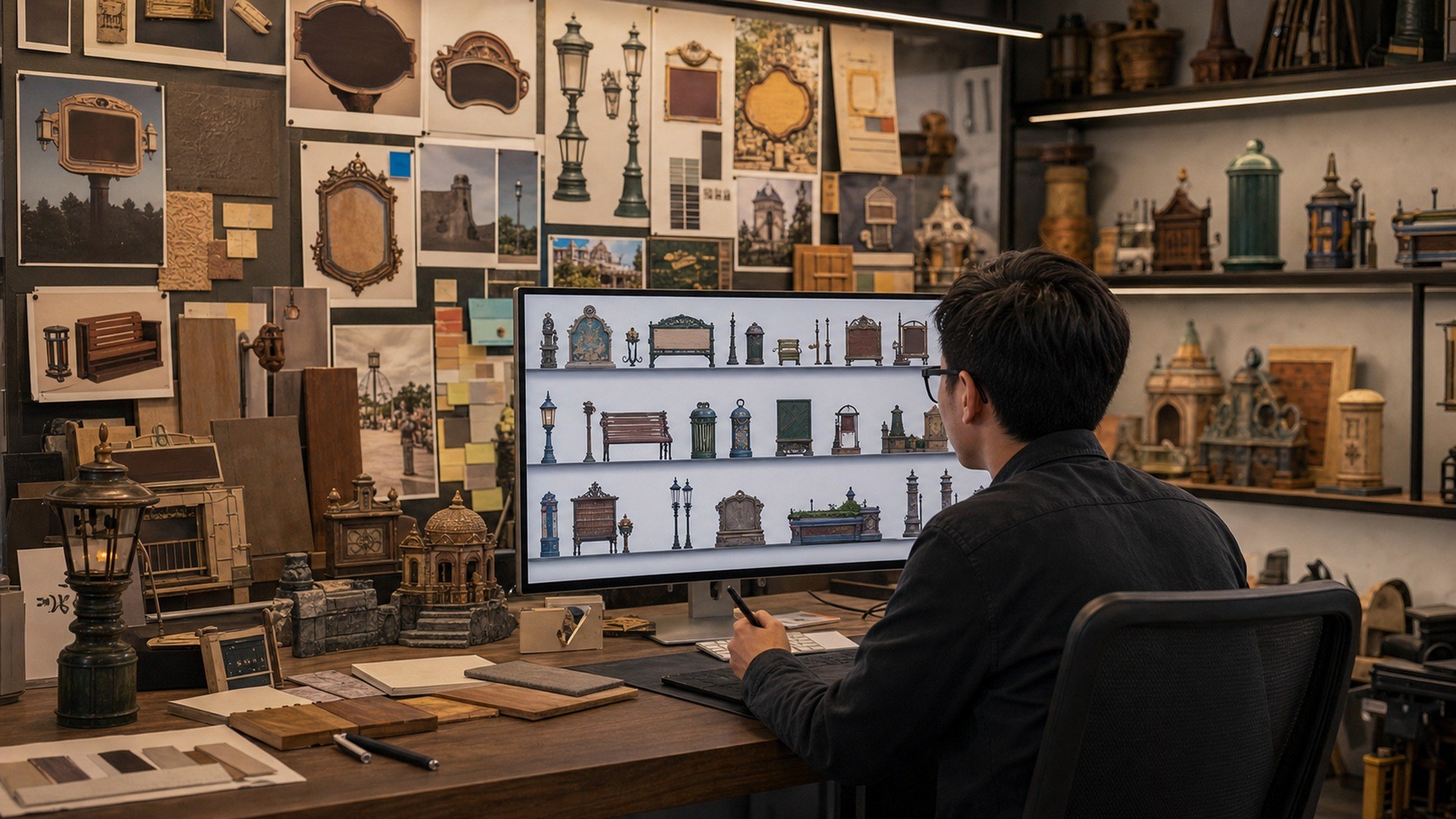
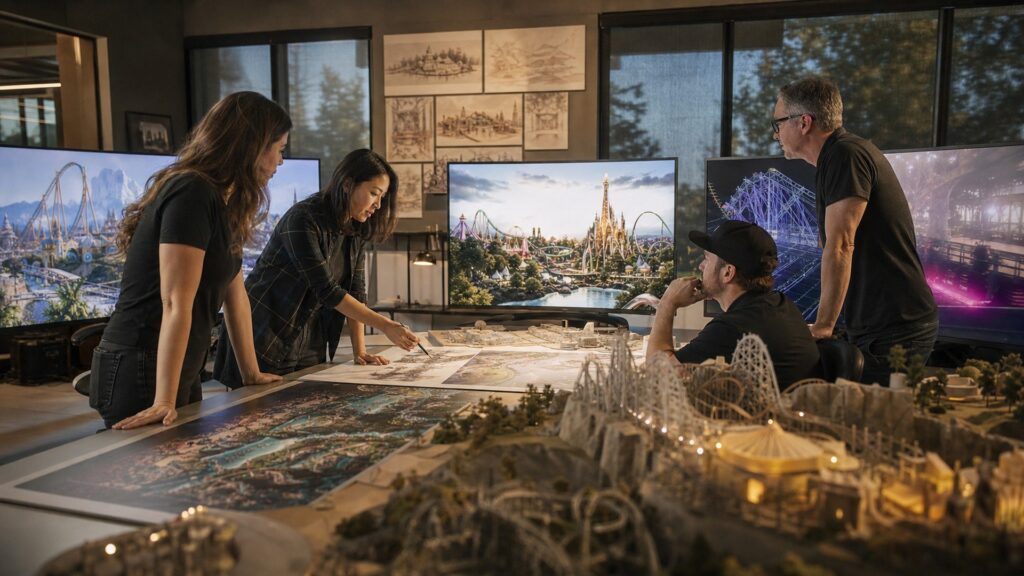
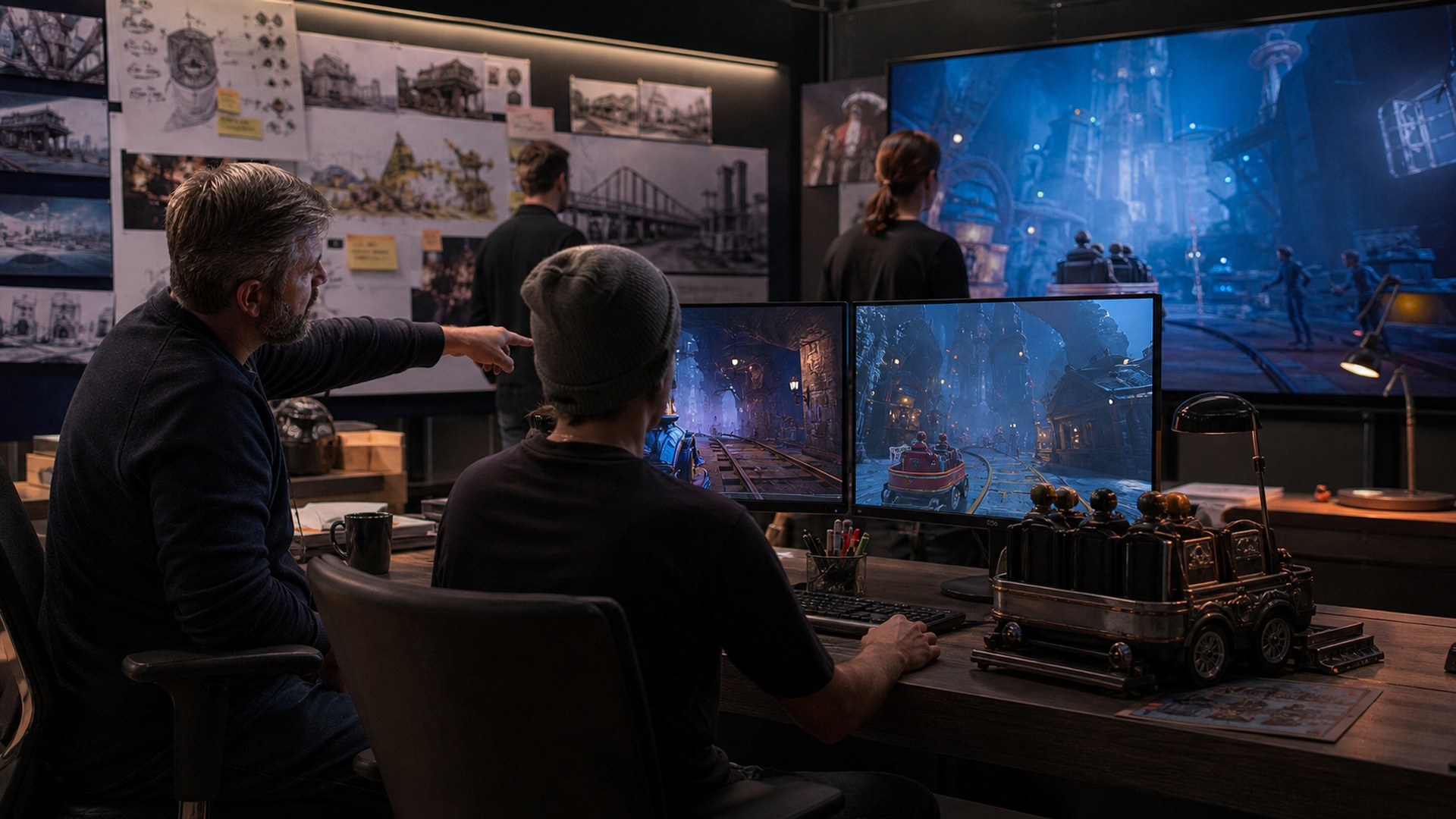
Theme park design studio using AI tools for attraction concepts site planning real time visualization 3D forms and pitch media

Best AI Tools for Theme Park Designers (Top 10 Picks) - Top 10 Picks

Our editorial picks ranked by performance, build quality, features, usability, ergonomics, value, support, and everyday fit. Tap any image to expand, or jump to full reviews for deeper ownership notes.

Unreal Engine 5 AI tool shown in a theme park design studio workflow
#1 Best Overall for Real-Time Themed Experiences Score: 9.7 / 10

Unreal Engine 5

A real-time 3D creation platform for immersive attraction previews, interactive worlds, virtual production, simulation, lighting studies, and guest-facing experience prototypes.

Primary Use: Real-time 3D creationBest Fit: Immersive attractionsDeployment: Desktop engineStrength: Interactive visualization

Pros

  • Best-in-class real-time worlds
  • Strong visualization and simulation ecosystem
  • Useful AI assistant and procedural workflows

Cons

  • Requires technical artists or developers
  • Production pipelines can become complex
  • Not a full CAD or BIM replacement

Best For

  • Interactive attraction previews
  • Immersive show environments
  • Real-time stakeholder walkthroughs
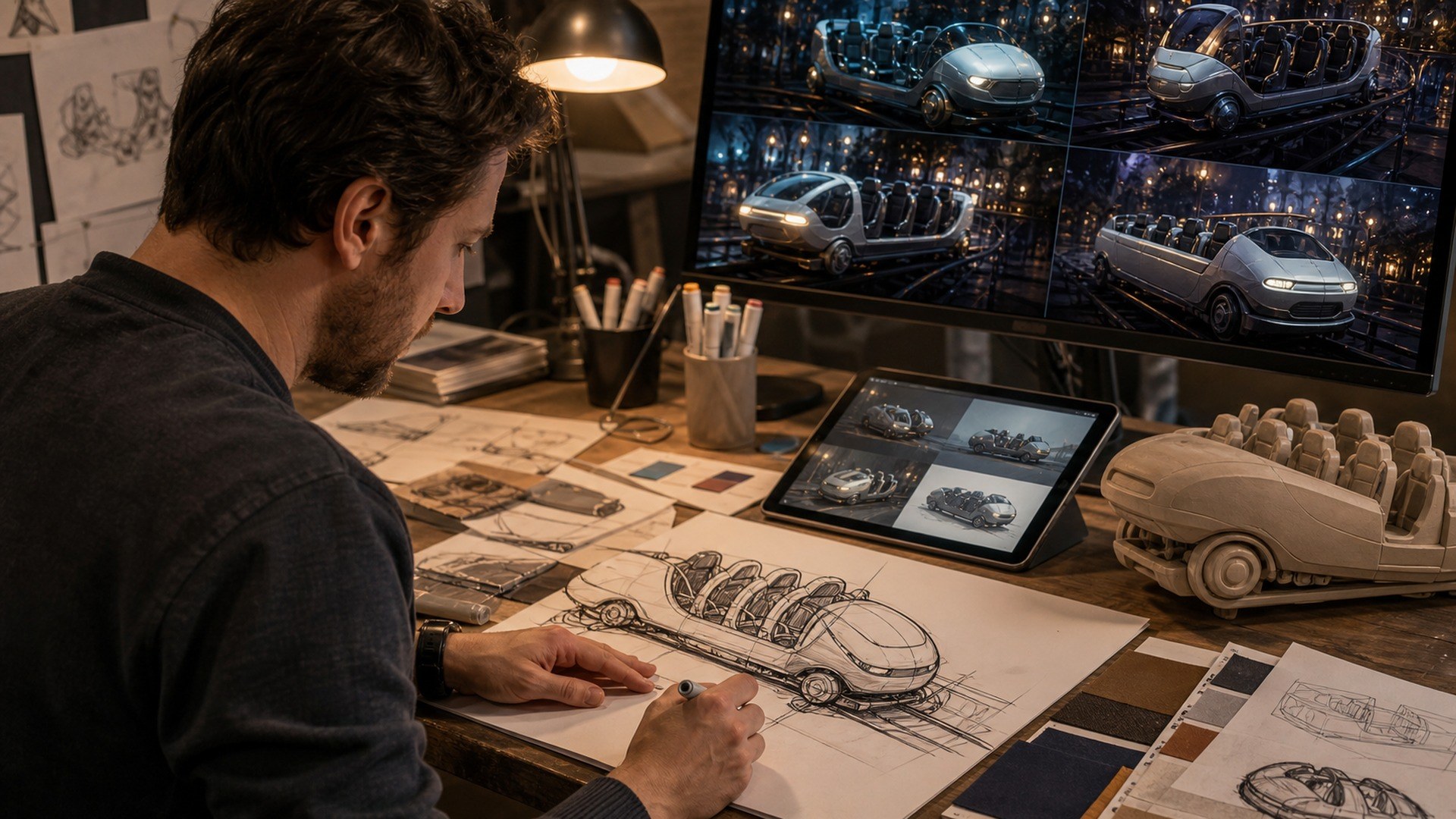
Autodesk Forma AI tool shown in a theme park design studio workflow
#2 Best AI-Native Planning Tool for Site Concepts Score: 9.5 / 10

Autodesk Forma

An AI-native Autodesk cloud for early planning, data-connected design decisions, site studies, feasibility, sustainability analysis, and design-make coordination.

Primary Use: Planning and analysisBest Fit: Early site designDeployment: Cloud platformStrength: Data-informed decisions

Pros

  • Strong early planning logic
  • Autodesk ecosystem fit
  • Useful analysis-led design direction

Cons

  • AEC-focused rather than theme-park-specific
  • Best with Autodesk workflows
  • Not a concept-art tool

Best For

  • Master planning studies
  • Site feasibility
  • Early land and facility planning
Rhino 8 and Grasshopper AI tool shown in a theme park design studio workflow
#3 Best Parametric Toolkit for Themed Geometry Score: 9.3 / 10

Rhino 8 and Grasshopper

A flexible 3D and parametric design environment for facades, show sets, rockwork panels, shade structures, ride envelopes, patterns, and fabrication logic.

Primary Use: 3D and parametric modelingBest Fit: Complex geometryDeployment: Desktop softwareStrength: Controlled form systems

Pros

  • Excellent geometry control
  • Powerful parametric workflows
  • Strong fabrication handoff with the right plugins

Cons

  • Less AI-native by default
  • Requires skilled operators
  • Can need companion tools for rendering and BIM

Best For

  • Complex themed forms
  • Parametric facades
  • Fabrication-ready pattern systems
Twinmotion AI tool shown in a theme park design studio workflow
#4 Best Fast Visualization Tool for Design Reviews Score: 9.1 / 10

Twinmotion

A real-time visualization tool for turning CAD, BIM, and 3D models into persuasive walkthroughs, environment studies, stakeholder visuals, and design-review media.

Primary Use: Real-time visualizationBest Fit: Design reviewDeployment: Desktop softwareStrength: Speed to presentation

Pros

  • Fast presentation workflow
  • Broad design-tool import support
  • Excellent for stakeholder reviews

Cons

  • Less deep than Unreal for custom interactivity
  • Not an AI generator by itself
  • Complex show systems need other tools

Best For

  • Fast park walkthroughs
  • Architecture and land reviews
  • Client-facing visualizations
Adobe Firefly AI tool shown in a theme park design studio workflow
#5 Best Commercial-Safe Concept Image Workflow Score: 8.9 / 10

Adobe Firefly

Adobe's generative AI family for commercially safer image, vector, and creative-production workflows inside a broader professional design ecosystem.

Primary Use: Generative creative productionBest Fit: Concept and pitch visualsDeployment: Web and Adobe appsStrength: Commercial workflow fit

Pros

  • Strong commercial-safety positioning
  • Fits Adobe creative workflows
  • Useful for pitch visuals and style studies

Cons

  • Not a 3D production pipeline
  • Outputs still need art direction
  • Best value for Adobe teams

Best For

  • Pitch imagery
  • Graphic treatments
  • Concept variations with brand caution
Vizcom AI tool shown in a theme park design studio workflow
#6 Best AI Sketch-to-Render Tool for Attraction Concepts Score: 8.8 / 10

Vizcom

An AI design-visualization workspace that turns sketches, reference images, and shape ideas into polished render directions for objects, vehicles, scenic elements, and environments.

Primary Use: AI concept renderingBest Fit: Industrial and scenic visualsDeployment: Cloud workspaceStrength: Designer-controlled iteration

Pros

  • Excellent sketch-to-render workflow
  • Keeps designers in control
  • Good for fast visual iteration

Cons

  • Not a fabrication file tool
  • Requires clear art direction
  • Needs handoff into 3D or CAD

Best For

  • Ride vehicle concepts
  • Scenic objects
  • Fast attraction visual studies
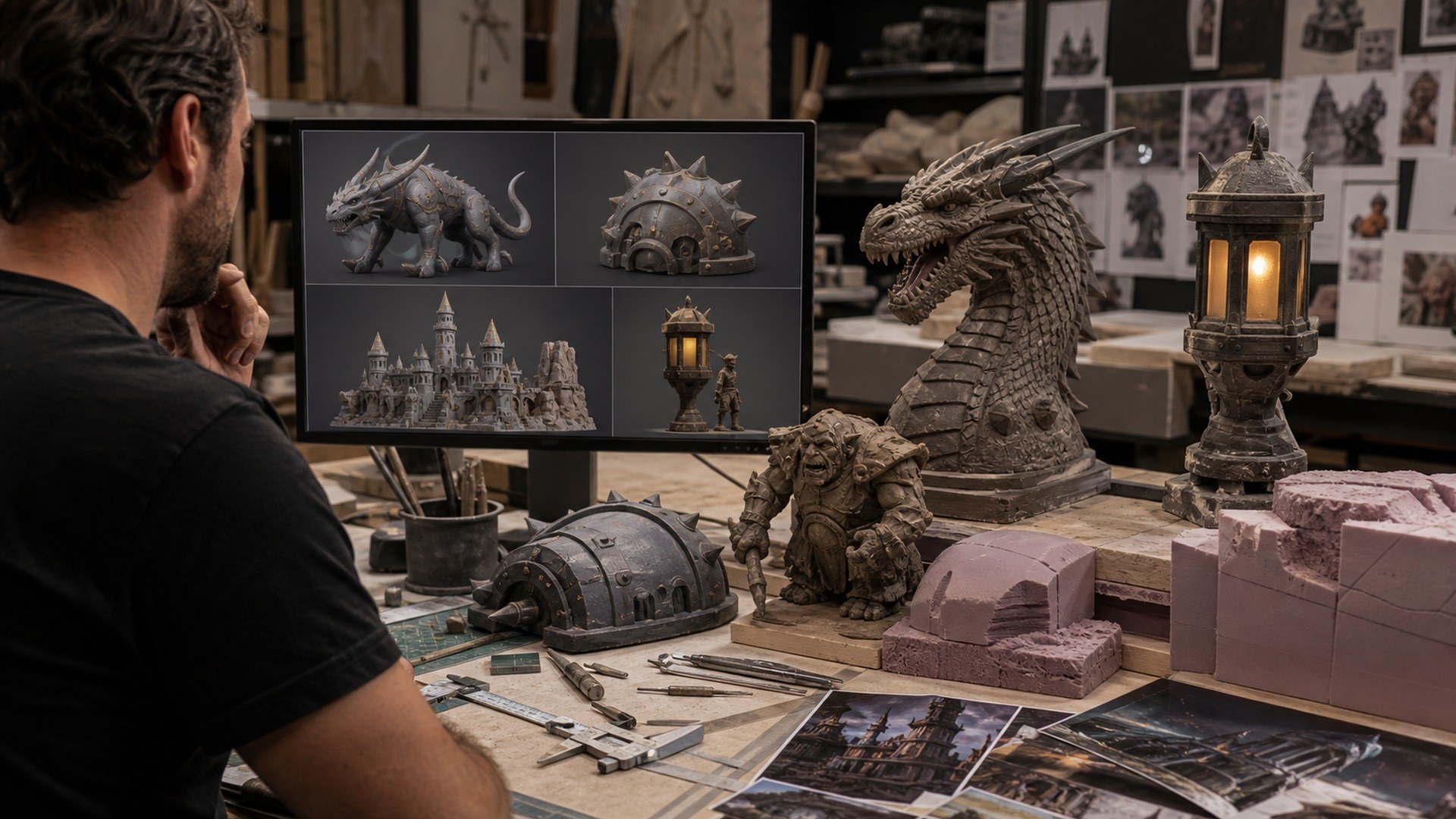
Meshy AI tool shown in a theme park design studio workflow
#7 Best AI 3D Generator for Scenic Form Exploration Score: 8.7 / 10

Meshy

A text-to-3D and image-to-3D generator for quickly exploring props, scenic forms, decorative objects, creatures, mascots, and early 3D directions.

Primary Use: AI 3D generationBest Fit: Concept formsDeployment: Cloud platformStrength: Speed

Pros

  • Fast 3D ideation
  • Useful text and image inputs
  • Good for rough shape options

Cons

  • Generated meshes need cleanup
  • Not final CAD
  • Complex ride systems require another tool

Best For

  • Prop concepts
  • Scenic object exploration
  • Early 3D studies
Midjourney AI tool shown in a theme park design studio workflow
#8 Best Moodboard Tool for Themed Worlds Score: 8.6 / 10

Midjourney

A leading generative image platform for rapid moodboards, environmental visual directions, character atmospheres, material studies, and early client concept options.

Primary Use: AI image generationBest Fit: Mood and style studiesDeployment: Cloud serviceStrength: Visual exploration

Pros

  • Excellent visual range
  • Fast mood and style exploration
  • Strong for early creative options

Cons

  • Not dimensionally reliable
  • Requires careful rights and brand review
  • Can produce impossible details

Best For

  • Moodboards
  • Early themed land visuals
  • Atmosphere and story direction
Runway AI tool shown in a theme park design studio workflow
#9 Best Generative Video Tool for Pitch Sequences Score: 8.5 / 10

Runway

A generative video and creative AI platform for quick motion studies, story beats, pitch films, atmosphere tests, and previsualization-style creative exploration.

Primary Use: Generative videoBest Fit: Pitch and previsualizationDeployment: Cloud platformStrength: Motion ideation

Pros

  • Strong video ideation
  • Useful for pitch sequences
  • Good for atmosphere and motion tests

Cons

  • Not a ride simulation platform
  • Temporal consistency can vary
  • Needs human story supervision

Best For

  • Pitch films
  • Story beats
  • Atmospheric motion studies
Scenario AI tool shown in a theme park design studio workflow
#10 Best AI Asset System for Consistent Worlds Score: 8.3 / 10

Scenario

An AI asset-generation platform for building consistent visual styles, reusable world assets, and production-aware concept variants across creative teams.

Primary Use: AI asset generationBest Fit: Consistent concept assetsDeployment: Cloud platformStrength: Style control

Pros

  • Good consistency angle
  • Useful for world asset families
  • Team-friendly asset workflows

Cons

  • Game-asset heritage may need adaptation
  • Not CAD or BIM
  • Requires clear style governance

Best For

  • Consistent visual worlds
  • Asset families
  • Themed environment variants

Methodology

How We Tested

Our ranking favors real, currently available products from legitimate brands that can support themed entertainment, experiential design, creative production, attraction development, immersive environments, and stakeholder review. We weighted overall quality, category fit, design usefulness, workflow depth, reliability, ecosystem strength, buyer sentiment, availability, usability, and value.

Our Evaluation Framework

We compared each product through a consistent editorial framework: core performance, build quality, features, usability, ergonomics, value, warranty/support, and fit for the intended buyer.

What We Prioritized

Performance and core function carried the most weight, followed by reliability, usability, value, and long-term ownership fit.

How to Read the Scores

A higher score means a stronger overall mix of capability, execution, owner experience, and value for the product's intended buyer.

Side-by-Side Comparisons

Quickly narrow your shortlist. Use this first, then jump to full reviews for your finalists.

#ModelBest ForPlatformFootprintFeelWhy It Won
1 Unreal Engine 5Best Overall for Real-Time Themed Experiences Real-time experience design 3D engine Concept to simulation Powerful It can turn a themed land or attraction idea into a navigable, high-fidelity experience instead of a static presentation.
2 Autodesk FormaBest AI-Native Planning Tool for Site Concepts Site-scale planning AI-native AEC cloud Predesign to coordination Strategic It helps teams evaluate the site and planning layer before the visual polish takes over.
3 Rhino 8 and GrasshopperBest Parametric Toolkit for Themed Geometry Parametric themed forms 3D modeling environment Design to fabrication logic Technical It is exceptional when a themed environment needs repeatable geometry rather than one-off concept imagery.
4 TwinmotionBest Fast Visualization Tool for Design Reviews Fast visualization Real-time renderer Model to presentation Accessible It helps teams communicate the feel of a place quickly without building a full Unreal pipeline.
5 Adobe FireflyBest Commercial-Safe Concept Image Workflow Commercial-safe visuals Generative AI creative suite Ideation to production art Polished It is a safer first stop when client-facing themed-entertainment visuals must live inside professional Adobe workflows.
6 VizcomBest AI Sketch-to-Render Tool for Attraction Concepts Sketch to render AI rendering workspace Ideation Creative It speeds up polished visual exploration without removing the designer's sketch from the center of the process.
7 MeshyBest AI 3D Generator for Scenic Form Exploration Fast 3D concepts AI 3D generator Ideation Quick It can turn rough attraction ideas into manipulable 3D starting points before cleanup and production design.
8 MidjourneyBest Moodboard Tool for Themed Worlds Moodboards Generative image tool Early concepting Expressive It is fast for exploring the emotional language of a themed world before technical design begins.
9 RunwayBest Generative Video Tool for Pitch Sequences Pitch video Creative AI video suite Concept motion Cinematic It helps teams explore the emotional pacing of an attraction or environment before full previs is justified.
10 ScenarioBest AI Asset System for Consistent Worlds Consistent assets AI asset platform Concept asset system Organized It helps creative teams keep a themed world coherent across many props, textures, details, and visual variants.

#1 - Unreal Engine 5

Best Overall for Real-Time Themed Experiences
Best For
Real-time experience design
Platform
3D engine
Footprint
Concept to simulation
Feel
Powerful
Why it wonIt can turn a themed land or attraction idea into a navigable, high-fidelity experience instead of a static presentation.

#2 - Autodesk Forma

Best AI-Native Planning Tool for Site Concepts
Best For
Site-scale planning
Platform
AI-native AEC cloud
Footprint
Predesign to coordination
Feel
Strategic
Why it wonIt helps teams evaluate the site and planning layer before the visual polish takes over.

#3 - Rhino 8 and Grasshopper

Best Parametric Toolkit for Themed Geometry
Best For
Parametric themed forms
Platform
3D modeling environment
Footprint
Design to fabrication logic
Feel
Technical
Why it wonIt is exceptional when a themed environment needs repeatable geometry rather than one-off concept imagery.

#4 - Twinmotion

Best Fast Visualization Tool for Design Reviews
Best For
Fast visualization
Platform
Real-time renderer
Footprint
Model to presentation
Feel
Accessible
Why it wonIt helps teams communicate the feel of a place quickly without building a full Unreal pipeline.

#5 - Adobe Firefly

Best Commercial-Safe Concept Image Workflow
Best For
Commercial-safe visuals
Platform
Generative AI creative suite
Footprint
Ideation to production art
Feel
Polished
Why it wonIt is a safer first stop when client-facing themed-entertainment visuals must live inside professional Adobe workflows.

#6 - Vizcom

Best AI Sketch-to-Render Tool for Attraction Concepts
Best For
Sketch to render
Platform
AI rendering workspace
Footprint
Ideation
Feel
Creative
Why it wonIt speeds up polished visual exploration without removing the designer's sketch from the center of the process.

#7 - Meshy

Best AI 3D Generator for Scenic Form Exploration
Best For
Fast 3D concepts
Platform
AI 3D generator
Footprint
Ideation
Feel
Quick
Why it wonIt can turn rough attraction ideas into manipulable 3D starting points before cleanup and production design.

#8 - Midjourney

Best Moodboard Tool for Themed Worlds
Best For
Moodboards
Platform
Generative image tool
Footprint
Early concepting
Feel
Expressive
Why it wonIt is fast for exploring the emotional language of a themed world before technical design begins.

#9 - Runway

Best Generative Video Tool for Pitch Sequences
Best For
Pitch video
Platform
Creative AI video suite
Footprint
Concept motion
Feel
Cinematic
Why it wonIt helps teams explore the emotional pacing of an attraction or environment before full previs is justified.

#10 - Scenario

Best AI Asset System for Consistent Worlds
Best For
Consistent assets
Platform
AI asset platform
Footprint
Concept asset system
Feel
Organized
Why it wonIt helps creative teams keep a themed world coherent across many props, textures, details, and visual variants.

FAQ: Ai Tools For Theme Park Designers

Quick answers to common questions before choosing from this Top 10 list.

In-Depth Reviews: What These Picks Are Really Like to Use

These full reviews expand on the Top 10 cards with a deeper look at strengths, tradeoffs, ownership fit, and ideal buyers.

60-second takeReal-use breakdownWho it's for
#1 Best Overall for Real-Time Themed ExperiencesScore: 9.7 / 10

Unreal Engine 5

A real-time 3D creation platform for immersive attraction previews, interactive worlds, virtual production, simulation, lighting studies, and guest-facing experience prototypes.

Compare Specs

What It's Great At

  • Best-in-class real-time worlds
  • Strong visualization and simulation ecosystem
  • Useful AI assistant and procedural workflows

Watch-Outs

  • Requires technical artists or developers
  • Production pipelines can become complex
  • Not a full CAD or BIM replacement

Ideal Buyer

  • Interactive attraction previews
  • Immersive show environments
  • Real-time stakeholder walkthroughs
The Real-World Verdict

Unreal Engine 5 ranks first because theme park design is ultimately about lived experience. A land, queue, preshow, ride scene, retail space, or nighttime spectacular has to work as a sequence of views, sounds, movement, crowd moments, and emotional reveals. Unreal is one of the strongest tools for testing that experience before it exists physically.

Practical Ownership Notes

Its real-time rendering, world-building, Sequencer, MetaHuman, virtual production, and procedural content workflows give creative teams a place to prototype scale, sightlines, lighting, story beats, and interactivity. The newest AI assistant direction also makes it more approachable for teams that want help inside the editor rather than another disconnected AI tool.

Where It Fits in the Top 10

The tradeoff is pipeline seriousness. Unreal rewards technical artists, optimized assets, source control, and clear review discipline. For themed entertainment teams that can support it, though, it is the most complete AI-adjacent creative production hub in this list.

#2 Best AI-Native Planning Tool for Site ConceptsScore: 9.5 / 10

Autodesk Forma

An AI-native Autodesk cloud for early planning, data-connected design decisions, site studies, feasibility, sustainability analysis, and design-make coordination.

Compare Specs

What It's Great At

  • Strong early planning logic
  • Autodesk ecosystem fit
  • Useful analysis-led design direction

Watch-Outs

  • AEC-focused rather than theme-park-specific
  • Best with Autodesk workflows
  • Not a concept-art tool

Ideal Buyer

  • Master planning studies
  • Site feasibility
  • Early land and facility planning
The Real-World Verdict

Autodesk Forma earns the second spot because theme park designers often need to solve the unglamorous planning questions before the concept art becomes meaningful. Land use, building massing, guest circulation, shade, service access, climate context, and long-term design-make coordination all shape whether a themed idea can become a real place.

Practical Ownership Notes

Forma is not a dedicated attraction design suite, but its AI-native planning and Autodesk ecosystem position make it valuable for early feasibility and AEC coordination. It is especially relevant when a design team is bridging creative development with architecture, engineering, sustainability, and operator review.

Where It Fits in the Top 10

Creative teams will still need tools like Unreal, Rhino, Twinmotion, or Adobe for expressive work. Forma is the planning-side pick for teams that want smarter early decisions and stronger handoff into the broader Autodesk stack.

#3 Best Parametric Toolkit for Themed GeometryScore: 9.3 / 10

Rhino 8 and Grasshopper

A flexible 3D and parametric design environment for facades, show sets, rockwork panels, shade structures, ride envelopes, patterns, and fabrication logic.

Compare Specs

What It's Great At

  • Excellent geometry control
  • Powerful parametric workflows
  • Strong fabrication handoff with the right plugins

Watch-Outs

  • Less AI-native by default
  • Requires skilled operators
  • Can need companion tools for rendering and BIM

Ideal Buyer

  • Complex themed forms
  • Parametric facades
  • Fabrication-ready pattern systems
The Real-World Verdict

Rhino and Grasshopper remain essential for theme park designers because themed places are full of irregular but controlled geometry. Rockwork, facade systems, canopies, portals, ride scenic, show-set ribs, parade elements, and queue details often need a balance of artistry and repeatable construction logic.

Practical Ownership Notes

The AI angle is strongest when Rhino is paired with generative ideation, scripting assistants, optimization, and downstream fabrication workflows. AI can suggest or accelerate directions, but Rhino gives designers the technical grip needed to refine surfaces, panelize forms, rationalize details, and communicate dimensions.

Where It Fits in the Top 10

This is not the easiest tool for a casual concept team. In the hands of a computational designer or technical art director, it is one of the most important bridges between spectacle and buildability.

#4 Best Fast Visualization Tool for Design ReviewsScore: 9.1 / 10

Twinmotion

A real-time visualization tool for turning CAD, BIM, and 3D models into persuasive walkthroughs, environment studies, stakeholder visuals, and design-review media.

Compare Specs

What It's Great At

  • Fast presentation workflow
  • Broad design-tool import support
  • Excellent for stakeholder reviews

Watch-Outs

  • Less deep than Unreal for custom interactivity
  • Not an AI generator by itself
  • Complex show systems need other tools

Ideal Buyer

  • Fast park walkthroughs
  • Architecture and land reviews
  • Client-facing visualizations
The Real-World Verdict

Twinmotion is the practical visualization pick for theme park teams that need compelling review materials quickly. It can take models from common design tools and turn them into walkable environments, atmosphere studies, rendered stills, and video sequences without the heavier setup of a custom engine project.

Practical Ownership Notes

That matters in themed entertainment, where stakeholders often need to understand scale, mood, guest arrival, facade impact, landscape density, and lighting before approving the next stage. Twinmotion is especially useful for architecture-led lands, exterior spaces, resorts, retail districts, and early immersive environments.

Where It Fits in the Top 10

It does not replace Unreal for custom interactivity or advanced simulation. Its strength is speed, accessibility, and the ability to make a design legible to nontechnical decision makers.

#5 Best Commercial-Safe Concept Image WorkflowScore: 8.9 / 10

Adobe Firefly

Adobe's generative AI family for commercially safer image, vector, and creative-production workflows inside a broader professional design ecosystem.

Compare Specs

What It's Great At

  • Strong commercial-safety positioning
  • Fits Adobe creative workflows
  • Useful for pitch visuals and style studies

Watch-Outs

  • Not a 3D production pipeline
  • Outputs still need art direction
  • Best value for Adobe teams

Ideal Buyer

  • Pitch imagery
  • Graphic treatments
  • Concept variations with brand caution
The Real-World Verdict

Adobe Firefly is valuable for theme park designers because concept visuals often become client-facing, brand-sensitive, and legally reviewed very quickly. Firefly's commercial-safety positioning and Adobe ecosystem fit make it a practical option for moodboards, graphic treatments, environmental concepts, material studies, signage directions, and pitch decks.

Practical Ownership Notes

Its strength is creative acceleration inside familiar production tools. Designers can iterate treatments, explore colorways, extend imagery, test graphic directions, and refine presentation assets while staying closer to Photoshop, Illustrator, Express, and broader Adobe workflows.

Where It Fits in the Top 10

Firefly is not the tool that creates ride envelopes or final show-set dimensions. It is the concept and production-art assistant that can reduce blank-page friction while keeping the team inside a more enterprise-friendly creative stack.

#6 Best AI Sketch-to-Render Tool for Attraction ConceptsScore: 8.8 / 10

Vizcom

An AI design-visualization workspace that turns sketches, reference images, and shape ideas into polished render directions for objects, vehicles, scenic elements, and environments.

Compare Specs

What It's Great At

  • Excellent sketch-to-render workflow
  • Keeps designers in control
  • Good for fast visual iteration

Watch-Outs

  • Not a fabrication file tool
  • Requires clear art direction
  • Needs handoff into 3D or CAD

Ideal Buyer

  • Ride vehicle concepts
  • Scenic objects
  • Fast attraction visual studies
The Real-World Verdict

Vizcom is a strong specialty pick for attraction designers because many great themed-entertainment ideas begin as rough sketches. Ride vehicles, interactive props, scenic set pieces, kiosks, portals, themed fixtures, and show equipment often need quick visual exploration before anyone invests in detailed 3D modeling.

Practical Ownership Notes

The advantage is control. Vizcom lets designers guide AI with sketches and references, then refine visual directions for shape, finish, lighting, and mood. That makes it more appropriate for professional design review than a purely prompt-only workflow when form language matters.

Where It Fits in the Top 10

The limitation is production readiness. Vizcom can clarify the look, but the winning direction still needs modeling, dimensions, safety review, materials, and fabrication planning.

#7 Best AI 3D Generator for Scenic Form ExplorationScore: 8.7 / 10

Meshy

A text-to-3D and image-to-3D generator for quickly exploring props, scenic forms, decorative objects, creatures, mascots, and early 3D directions.

Compare Specs

What It's Great At

  • Fast 3D ideation
  • Useful text and image inputs
  • Good for rough shape options

Watch-Outs

  • Generated meshes need cleanup
  • Not final CAD
  • Complex ride systems require another tool

Ideal Buyer

  • Prop concepts
  • Scenic object exploration
  • Early 3D studies
The Real-World Verdict

Meshy earns its place because theme park designers often need to explore physical forms in three dimensions long before the build package exists. A creature head, oversized artifact, queue prop, themed ornament, facade detail, or mascot shape can be easier to evaluate as a rough model than as a single flat image.

Practical Ownership Notes

Its text-to-3D and image-to-3D workflows can reduce early modeling friction and give teams more options to compare. That is helpful when a creative director wants to review volume, silhouette, and proportion quickly.

Where It Fits in the Top 10

Meshy output still needs professional cleanup. Designers should treat it as an ideation accelerator, then move useful forms into Blender, Rhino, Fusion, Unreal, or another tool for scale, topology, materials, and fabrication review.

#8 Best Moodboard Tool for Themed WorldsScore: 8.6 / 10

Midjourney

A leading generative image platform for rapid moodboards, environmental visual directions, character atmospheres, material studies, and early client concept options.

Compare Specs

What It's Great At

  • Excellent visual range
  • Fast mood and style exploration
  • Strong for early creative options

Watch-Outs

  • Not dimensionally reliable
  • Requires careful rights and brand review
  • Can produce impossible details

Ideal Buyer

  • Moodboards
  • Early themed land visuals
  • Atmosphere and story direction
The Real-World Verdict

Midjourney is powerful for the earliest stage of theme park design, when the question is not yet how to build the environment but what it should feel like. It can explore worlds, eras, materials, lighting moods, scenic density, character atmosphere, and visual story tones at remarkable speed.

Practical Ownership Notes

That speed is valuable in blue-sky workshops and client conversations. A team can generate many directions, identify what resonates, and then hand the strongest ideas to designers who understand storytelling, architecture, ride systems, operations, and fabrication.

Where It Fits in the Top 10

It should not be confused with a production design tool. Midjourney images can be beautiful and wrong at the same time, so the editorial value depends on disciplined art direction and careful translation into real design documents.

#9 Best Generative Video Tool for Pitch SequencesScore: 8.5 / 10

Runway

A generative video and creative AI platform for quick motion studies, story beats, pitch films, atmosphere tests, and previsualization-style creative exploration.

Compare Specs

What It's Great At

  • Strong video ideation
  • Useful for pitch sequences
  • Good for atmosphere and motion tests

Watch-Outs

  • Not a ride simulation platform
  • Temporal consistency can vary
  • Needs human story supervision

Ideal Buyer

  • Pitch films
  • Story beats
  • Atmospheric motion studies
The Real-World Verdict

Runway is the motion-first pick. Theme park designers often need to communicate how a guest moment feels across time: the approach to a portal, a reveal inside a queue, a creature movement, a projection beat, a parade cue, or a transition from calm to spectacle.

Practical Ownership Notes

Generative video is not a substitute for engineering simulation or final media production, but it can help teams create fast pitch sequences and atmospheric studies. That is useful when static boards fail to sell pacing, mystery, scale, or emotional momentum.

Where It Fits in the Top 10

The risk is overprecision. Runway output should be treated as a mood and sequence exploration tool, then translated into storyboards, animatics, Unreal previews, media production plans, or show-control documentation.

#10 Best AI Asset System for Consistent WorldsScore: 8.3 / 10

Scenario

An AI asset-generation platform for building consistent visual styles, reusable world assets, and production-aware concept variants across creative teams.

Compare Specs

What It's Great At

  • Good consistency angle
  • Useful for world asset families
  • Team-friendly asset workflows

Watch-Outs

  • Game-asset heritage may need adaptation
  • Not CAD or BIM
  • Requires clear style governance

Ideal Buyer

  • Consistent visual worlds
  • Asset families
  • Themed environment variants
The Real-World Verdict

Scenario rounds out the list because theme park design is rarely one image. A believable land needs many related details: signage, props, textures, merchandise cues, wall graphics, icons, vehicle trims, menu boards, scenic fragments, and visual rules that stay consistent across teams.

Practical Ownership Notes

Scenario's asset-generation and consistency orientation make it useful when a team wants repeatable visual language rather than isolated one-off images. It is especially interesting for concept departments that need to explore families of assets while preserving a defined world style.

Where It Fits in the Top 10

It is not a replacement for CAD, Unreal, or fabrication design. Its role is the visual-system layer: keeping the creative vocabulary organized enough that a themed environment feels intentional.

Key Takeaways

  • Unreal Engine 5 is our best overall for real-time themed experiences pick.
  • Autodesk Forma is our best ai-native planning tool for site concepts pick.
  • Rhino 8 and Grasshopper is our best parametric toolkit for themed geometry pick.
  • Twinmotion is our best fast visualization tool for design reviews pick.
  • Adobe Firefly is our best commercial-safe concept image workflow pick.

Top Picks

Tap a pick to jump to the full review, or compare specs.

Best Overall for Real-Time Themed ExperiencesUnreal Engine 5 ->

Best AI-Native Planning Tool for Site ConceptsAutodesk Forma ->

Best Parametric Toolkit for Themed GeometryRhino 8 and Grasshopper ->

Jump to Comparison

Useful Evaluation Steps

  • Test each tool with the same attraction brief, reference mood, guest-flow constraints, target audience, and deliverable format.
  • Compare how quickly early AI outputs can become reviewable 3D, render, storyboard, CAD, or production-reference assets.
  • Confirm commercial-use terms, IP policy, export formats, team permissions, data handling, and fit with existing design pipelines.