
Blackhead Removal Devices Buying Guide for Device Features and Attachments
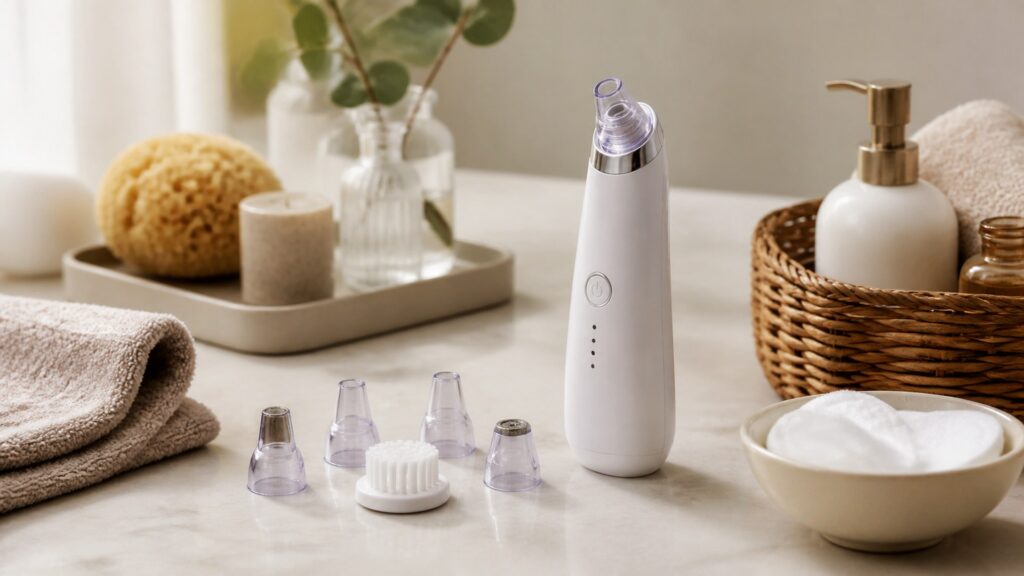
Blackhead-device kits often advertise many suction heads, lights, cameras, exfoliating tips, and modes. More attachments are useful only when each has a defined safe role, a clear footprint, and a cleaning method that does not invite stronger or broader treatment.
Compare features by how they improve low-force control and hygiene. A large bundle can be worse than one well-documented gentle tip if ambiguous parts encourage experimentation on inflamed or unsuitable skin.
Buying framework
Define the device features and attachments routine before comparing products
Use the setting, frequency, and skin priorities to narrow blackhead removal devices logically.
Start with the use case: Map every included attachment to force type, contact area, and intended skin zone.
Rank the practical tradeoffs: Prioritize a distinct low setting, quick release, stable grip, and complete cleaning access.
Check instructions early: Exclude accessories that duplicate scraping, heat, or abrasion without a justified role.
Use profiles
Match blackhead removal devices to the person and pace
Three shopper profiles expose different priorities for device features and attachments.
Routine-focused buyer: A beginner needs few clearly labeled tips and simple controls.
Performance-focused buyer: A precision user should choose visible tip footprints rather than extreme magnification.
Occasional or flexible user: A hygiene-focused buyer benefits from removable nonporous parts and available replacements.
Specifications
Read the specifications through a device features and attachments lens
Translate technical language into visible routine benefits.
Handling lens
Evaluate each accessory at the weakest setting and shortest pass.
Ownership lens
Count inaccessible seams and consumables before valuing feature quantity.
Suction Method: Small round tips concentrate suction on a narrow seal.
Adjustable Intensity: Oval openings change edge pressure while moving along the nose.
Tip Attachments: Microcrystal or abrasive tips add friction to vacuum exposure.
Charging Runtime: Cameras magnify pores but do not measure tissue stress.
Cleaning Method: Water tanks, filters, and tubing create hidden cleaning surfaces.
Common mistakes
Avoid shortcuts that undermine device features and attachments
A good purchase can still disappoint when selection or use is based on the wrong assumption.
Buying from one metric: Do not assume every supplied tip belongs in one session.
Skipping compatibility checks: Avoid abrasive attachments on recently exfoliated or sensitive skin.
Ignoring post-use care: Do not pay for camera resolution that encourages repeated pore chasing.
Decision guidance
Choose the simplest option that covers the real need
Use these decision rules to finish a shortlist for device features and attachments.
Choose the basic format when: Choose a small set of well-explained gentle attachments.
Choose the flexible format when: Select quick-release control and cleanability over peak suction.
Pause before upgrading when: Reject kits with unclear tip roles, porous contact parts, or unavailable replacements.
Ownership & compatibility
Plan for clean, repeatable ownership
The best value remains convenient after the first few uses.
Consumables and replacements: Label attachments if several users or zones could be confused.
Cleaning and storage: Replace filters, seals, and tips at documented intervals.
Routine compatibility: Inspect contact edges for cracks, roughness, and retained debris.
FAQ
Blackhead Removal Devices Buying Guide for Device Features and Attachments FAQ
Practical answers about choosing and owning blackhead removal devices for device features and attachments.
What matters most when choosing blackhead removal devices for device features and attachments?
Is the most expensive option better for device features and attachments?
How should I compare two similar blackhead removal devices options?
Bottom line
Buy for repeatable device features and attachments results
A focused shortlist is easier to own and use well.
Prioritize fit: Value attachments only when they improve controlled specific use.
Verify the limits: Prefer cleanability and fast release over feature count.
Count ownership costs: Keep magnification from expanding the treatment target.
Reading Shortcuts
Jump to the key blackhead removal devices decisions.
Decision Reminders
Keep these checks beside your shortlist.
- Check suction method: Begin with the lowest setting and never hold suction in one place.
- Check adjustable intensity: Do not use on broken, inflamed, infected, or highly irritated skin.
- Check tip attachments: Stop if bruising, pain, or persistent irritation develops.
Glossary Snippets
Plain-language blackhead removal devices terms.
When to Use a Top 10 Review
Use a ranked list to identify a manageable set of strong candidates.
- You are still exploring: A ranked list can reveal the main formats and price tiers.
- You want a shortlist: Start broad, then confirm fit with this buying guide.
Have finalists? Use a Comparison.
When to Use a Comparison
Use a direct comparison when only a few candidates remain.
- Features are close: Side-by-side details clarify meaningful differences.
- Prices overlap: Compare ownership value, not only purchase price.
Still exploring? See the Top 10.