
Body Wash Buying Guide for Dryness, Roughness, and Comfort
A comfort-focused body wash should remove necessary soil without worsening roughness through harsh surfactants, excessive quantity, long hot showers, or abrasive tools. The word moisturizing is useful only when skin remains comfortable after rinsing and later in the day.
Dryness may be widespread, while roughness can be localized to elbows, knees, heels, or follicular bumps. A rinse-off cleanser should not be expected to replace a targeted leave-on product or diagnose persistent inflammation.
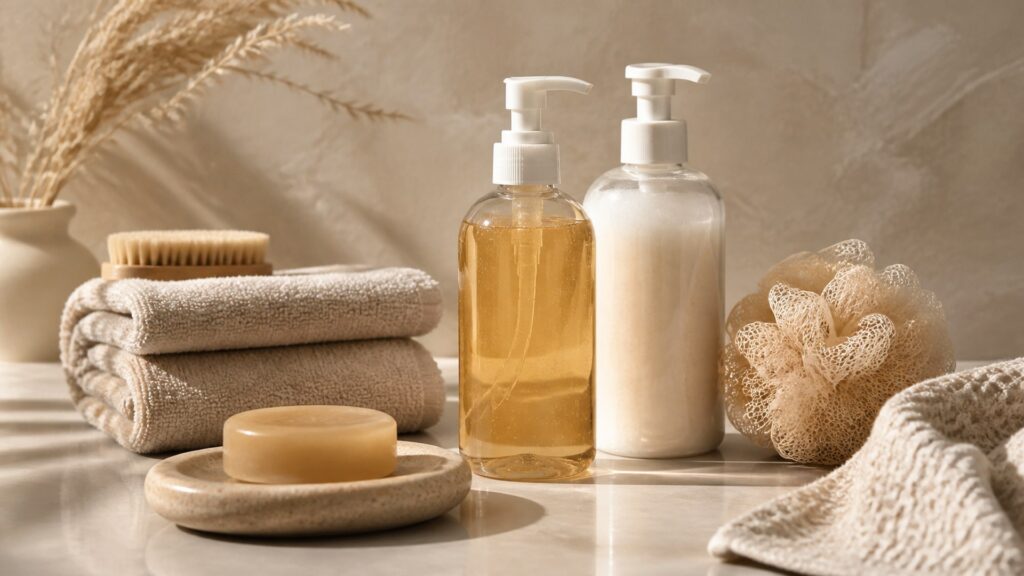
Buying framework
Define the dryness, roughness, and comfort routine before comparing products
Use the setting, frequency, and skin priorities to narrow body wash logically.
Start with the use case: Separate tight dry skin, flaky scale, callused areas, and inflamed bumps.
Rank the practical tradeoffs: Test a milder wash with lower water heat and reduced friction.
Check instructions early: Add targeted moisturizer or qualified care according to the actual concern.
Use profiles
Match body wash to the person and pace
Three shopper profiles expose different priorities for dryness, roughness, and comfort.
Routine-focused buyer: A generally dry user may prefer a creamy fragrance-light wash with controlled dosing.
Performance-focused buyer: A localized roughness user should cleanse gently and focus treatment only where needed.
Occasional or flexible user: A person with painful cracks, spreading rash, or infection signs needs assessment beyond body wash.
Specifications
Read the specifications through a dryness, roughness, and comfort lens
Translate technical language into visible routine benefits.
Handling lens
Score comfort immediately, thirty minutes later, and the next morning.
Ownership lens
Compare body wash plus moisturizer with moisturizer changes alone.
Surfactant System: Surfactant blend determines cleaning and possible post-rinse tightness.
Fragrance Profile: Humectants in rinse-off products have limited contact compared with leave-on care.
Texture And Dispensing: Emollient deposits can improve feel while varying by formula and water.
Rinse Behavior: Exfoliating acids or particles introduce treatment and irritation considerations.
Packaging Control: Pump size affects how much cleanser is repeatedly applied.
Common mistakes
Avoid shortcuts that undermine dryness, roughness, and comfort
A good purchase can still disappoint when selection or use is based on the wrong assumption.
Buying from one metric: Do not scrub dry flakes until the skin feels polished.
Skipping compatibility checks: Avoid using extra pumps because creamy wash produces less foam.
Ignoring post-use care: Never treat persistent itchy or painful roughness only with cosmetic exfoliation.
Decision guidance
Choose the simplest option that covers the real need
Use these decision rules to finish a shortlist for dryness, roughness, and comfort.
Choose the basic format when: Choose mild wash when lower-friction cleansing improves widespread dryness.
Choose the flexible format when: Use directed targeted care for localized thick or rough areas.
Pause before upgrading when: Seek qualified help when symptoms persist, worsen, crack deeply, or appear infected.
Ownership & compatibility
Plan for clean, repeatable ownership
The best value remains convenient after the first few uses.
Consumables and replacements: Measure a consistent dose and rinse completely.
Cleaning and storage: Keep bath temperature and duration within a comfortable range.
Routine compatibility: Adjust moisturizer texture when climate changes rather than intensifying washing.
FAQ
Body Wash Buying Guide for Dryness, Roughness, and Comfort FAQ
Practical answers about choosing and owning body wash for dryness, roughness, and comfort.
What matters most when choosing body wash for dryness, roughness, and comfort?
Is the most expensive option better for dryness, roughness, and comfort?
How should I compare two similar body wash options?
Bottom line
Buy for repeatable dryness, roughness, and comfort results
A focused shortlist is easier to own and use well.
Prioritize fit: Evaluate comfort after water has evaporated.
Verify the limits: Keep localized roughness from driving whole-body overcleansing.
Count ownership costs: Use leave-on support for work a rinse-off wash cannot perform.
Reading Shortcuts
Jump to the key body wash decisions.
Decision Reminders
Keep these checks beside your shortlist.
- Check surfactant system: Use a comfortable water temperature and avoid aggressive scrubbing.
- Check fragrance profile: Rinse thoroughly and adjust frequency if skin feels persistently tight or uncomfortable.
- Check texture and dispensing: Stop use if significant or persistent dryness, itching, or irritation develops.
Glossary Snippets
Plain-language body wash terms.
When to Use a Top 10 Review
Use a ranked list to identify a manageable set of strong candidates.
- You are still exploring: A ranked list can reveal the main formats and price tiers.
- You want a shortlist: Start broad, then confirm fit with this buying guide.
Have finalists? Use a Comparison.
When to Use a Comparison
Use a direct comparison when only a few candidates remain.
- Features are close: Side-by-side details clarify meaningful differences.
- Prices overlap: Compare ownership value, not only purchase price.
Still exploring? See the Top 10.