
Bond Repair Treatments Buying Guide for Hair Type and Texture
Hair type and texture change how a bond repair treatment spreads, weighs on the hair, and fits into wash day, but they do not diagnose damage on their own. Start with the stress the hair has actually experienced, then choose a format and dose that can reach the affected lengths without flattening fine strands, disrupting curl groups, or leaving dense and coarse sections unevenly coated. The best match is the lightest workable routine that improves manageability without promising to restore hair permanently.
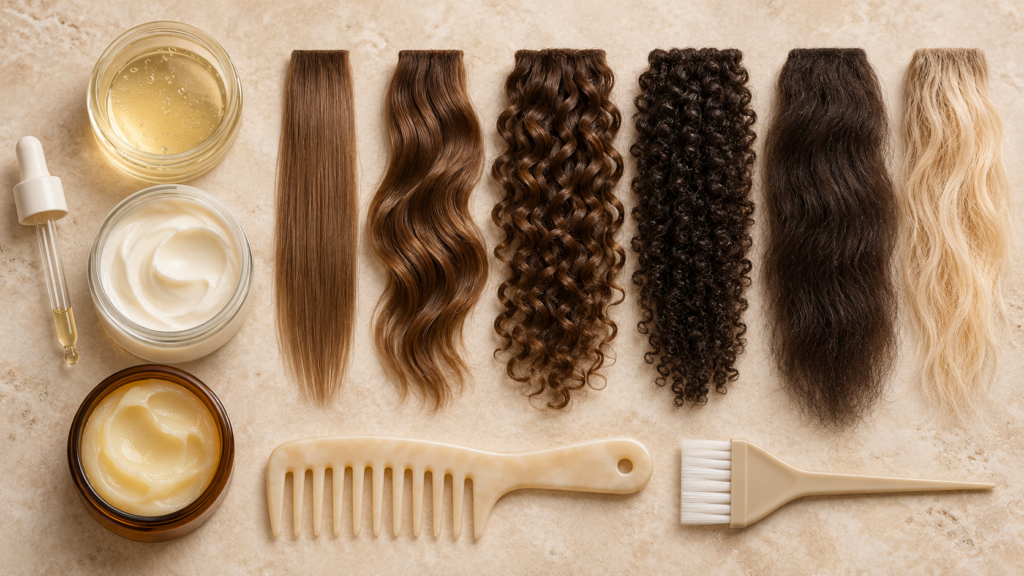
Buying framework
Separate Damage Need from Hair Type
Use hair type to control delivery and dose after confirming why a repair treatment belongs in the routine.
Map the stress history: Bleaching, permanent color, chemical straightening, repeated high heat, and mechanical wear create different levels and locations of weakness. Texture alone is not proof that bonds are damaged.
Read strand diameter: Fine strands usually show coating and lost volume sooner, while coarse strands may need more product per section for even distribution. Diameter guides dose, not a universal treatment strength.
Account for pattern: Straight hair exposes oiliness and flatness quickly. Waves, curls, and coils need application that preserves grouping and slip without stretching or rough handling.
Add density and porosity: High density increases the number of sections that need coverage. Porous areas may absorb product unevenly, so compare the most processed ends with healthier roots.
Choose the routine slot: Decide whether the label calls for pre-shampoo, rinse-out, leave-in, or a timed treatment. A formula is only practical if that stage works with cleansing, conditioning, detangling, and styling.
Who this is for
Match Format to the Hair in Front of You
Use the same damage evidence, then adjust weight, spread, sectioning, and frequency for the hair’s physical behavior.
Fine or low-density hair: Favor a fluid or light cream that spreads at a small dose. Keep rich formulas away from the root and judge volume after the hair is fully dry.
Medium straight or wavy hair: Start with moderate slip and controlled coverage through stressed lengths. Avoid treating the whole head heavily when only highlighted or heat-styled zones need support.
Curly hair: Choose enough slip to distribute without breaking curl groups. Apply in sections, preserve clumps, and separate the repair step from the styling products that provide hold.
Coily or high-density hair: Prioritize spread time, section control, and complete coverage over a blanket recommendation for heavier product. A concentrated treatment can still be overdosed if layered unevenly.
Coarse, porous, or heavily processed lengths: A richer format may improve coverage and feel, but watch for stiff, coated, or tangled results. Use the label frequency and adjust the dose before adding more treatment days.
What to pay attention to
Compare Formula Behavior, Not Texture Labels Alone
The useful specifications describe how a treatment reaches the damaged area and what it leaves behind.
Coverage lens
Can the dose reach the stressed lengths evenly across this strand diameter, pattern, and density?
Weight lens
Does the dried result retain volume, movement, curl grouping, and clean feel at the directed frequency?
Treatment stage: Pre-shampoo, rinse-out, and leave-in products change which other steps remain available. Check whether conditioner follows and whether styling products can be layered afterward.
Spread per dose: A treatment that distributes easily can cover dense or curly sections without repeated scoops. Poor spread encourages patchy application and excess product.
Slip during application: Useful slip reduces tugging while sectioning, but it does not prove repair. Evaluate detangling separately from the product’s stated bond-care purpose.
Film weight after drying: Fine and straight hair reveal residue, stringiness, and lost lift early. Curly and coily hair may reveal excess as stretched groups, dull coating, or difficult refreshes.
Frequency directions: More frequent use is not automatically better. Compare the labeled schedule with wash frequency and the number of other conditioning or strengthening products in the routine.
Compatibility and limits: Follow directions for color services, heat styling, scalp contact, timing, and rinsing. Do not combine concentrated treatments simply because their marketing uses different repair terms.
Avoid these traps
Avoid Hair-Type Shortcuts
Common mismatches happen when texture is treated as a diagnosis or when richer product is assumed to mean stronger repair.
Buying by curl pattern alone: Two people with the same pattern can have different diameter, density, porosity, and damage histories. Use pattern to plan application, not to infer the amount of damage.
Equating dryness with broken bonds: Dry feel can reflect cleansing, weather, styling, or conditioning needs. A bond treatment may not replace moisture, lubrication, or hold.
Choosing the richest jar for coarse hair: Coarse strands can tolerate more film than fine strands, but richness can still cause buildup, stiffness, or poor rinse-out. Spread and dose matter.
Applying one dose to every zone: Virgin roots, highlighted mids, and weathered ends may need different coverage. Start with the most stressed lengths instead of saturating the scalp area.
Stacking repair products: Using a repair shampoo, mask, leave-in, and styler together makes it hard to identify the source of stiffness or coating. Change one concentrated step at a time.
Judging while hair is wet: Slip can make many formulas feel successful in the shower. Check the dry result for volume, grouping, movement, residue, and breakage during normal handling.
Decision guidance
Let the First Failure Choose the Adjustment
Keep the damage target constant and change one variable after a normal wash-and-style cycle.
If fine hair dries flat: Reduce the dose, move application away from roots, or choose a lighter rinse-out format before abandoning the repair step.
If waves lose definition: Use smaller sections with less film and keep the treatment separate from stylers. Confirm that heavy conditioning is not replacing the product that supplies hold.
If curls feel rough between sections: Improve distribution and slip rather than adding a large final scoop. Work methodically so dense areas receive comparable coverage.
If coils feel stiff after drying: Reduce frequency or concentrated layering and reassess the full strengthening routine. Stiffness is a reason to simplify, not automatically to add more moisture on top.
If processed ends still tangle: Target those ends, follow timing directions, and compare detangling and breakage across several normal cycles. Trim or professional assessment may still be needed for severely weathered hair.
Ownership & compatibility
Run a Controlled Texture-Aware Trial
A consistent application makes product comparisons more useful and reduces unnecessary manipulation.
Photograph the dry baseline: Record volume, curl grouping, frizz distribution, shine, and the location of processed sections before changing the routine.
Use repeatable sections: Divide hair by density and pattern so each area receives a known amount. Do not rely on a single palmful for the whole head.
Hold other strong treatments steady: Avoid introducing another mask, protein treatment, clarifier, or chemical service during the first comparison cycles.
Track wet and dry signals: Note slip and detangling during application, then volume, movement, grouping, coating, and breakage during normal dry handling.
Stop for adverse reactions: Discontinue use and follow label guidance if irritation occurs. Seek appropriate professional help for persistent scalp symptoms or sudden unexplained hair loss.
FAQ
Hair Type and Bond Repair Questions
These answers keep strand behavior, damage evidence, and routine fit in separate lanes.
Do curly and coily hair need stronger bond repair treatments?
Are bond repair treatments too heavy for fine hair?
Should coarse hair always use a mask instead of a serum?
Does high porosity mean hair has broken bonds?
Can straight hair use bond repair treatments?
How should I apply bond repair treatment to dense hair?
Will bond repair treatment define curls?
How often should different hair textures use bond repair?
What if hair feels stiff after a bond treatment?
Readiness check
Choose Coverage Before Richness
A good bond repair purchase matches real damage with a formula that can be distributed evenly and worn comfortably on the finished hair.
Start with damage history: Do not use texture as the diagnosis.
Map diameter, pattern, density, and porosity: Use each trait for the decision it actually changes.
Choose a workable stage: Fit the treatment around cleansing, conditioning, detangling, and styling.
Test the dry result: Watch volume, movement, grouping, residue, stiffness, and breakage.
Adjust one variable: Change dose, placement, format, or frequency separately.
Texture-Matching Shortcuts
Jump to the trait that changes format, coverage, or dose.
Six Texture-Fit Checks
Use these before increasing dose or frequency.
- Damage: Name the actual stress history.
- Diameter: Set the initial film limit.
- Pattern: Protect grouping during application.
- Density: Plan enough sections for coverage.
- Porosity: Target unevenly weathered zones.
- Dry result: Check weight, movement, and residue.
Useful Hair-Response Terms
Plain language for comparing treatment fit.
When a Top 10 List Helps
Use rankings after defining the damage target and texture constraints.
- The treatment stage fits: Filter by pre-shampoo, rinse-out, or leave-in use.
- The coverage plan is clear: Estimate spread across density and pattern.
- The film limit is clear: Favor the lightest workable dry result.
- The schedule is practical: Compare frequency with actual wash days.
Already have a shortlist? A Comparison can help resolve the remaining tradeoffs.
When a Comparison Helps
Compare finalists with the same sections, dose, and finishing routine.
- Spread differs: Track how evenly each formula reaches stressed lengths.
- Slip differs: Note detangling without confusing it with repair.
- Dry weight differs: Compare lift, movement, grouping, and residue.
- Frequency differs: Choose the schedule the hair and routine can tolerate.
Still discovering options? Start with a Top 10 to build a relevant shortlist.