
Brake Components Buying Guide for Repair Shop Estimate Reviews
Brake estimates are comparable only when they describe the same diagnosed condition and repair outcome. A pads-only price, complete axle service, and caliper or hydraulic repair may look like competing quotes while solving different problems.
Ask for measured findings and connect every line item to the complaint, required companion work, or supported preventive service. Clarify parts, labor, supplies, changes, road testing, bedding, warranty, and deferred findings before authorization.
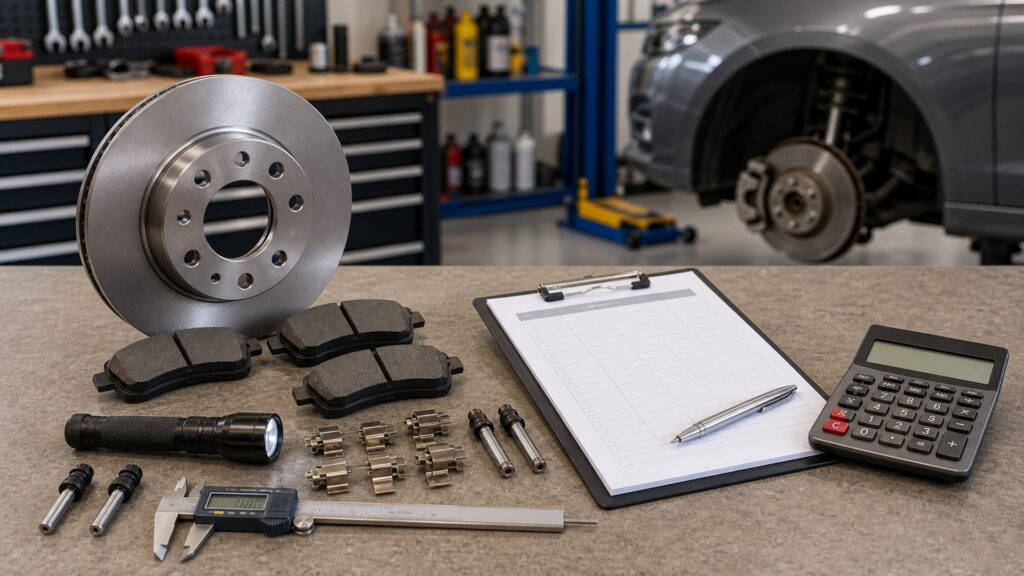
Buying framework
Translate the estimate into diagnosis, scope, and outcome
A brake estimate should show what the customer reported, what the shop measured, why each operation is required, which parts are supplied, and how the completed system will be verified.
Start with the complaint and safety status: Ask how noise, vibration, pull, warning, fluid loss, odor, heat, parking-brake fault, or pedal change was reproduced and whether the vehicle should be driven. A price discussion should not override an immediate safety instruction.
Request measured findings: Look for pad or shoe thickness by position, rotor or drum thickness or diameter, condition, runout where relevant, caliper or slide findings, leaks, hoses, lines, fluid, parking brake, sensors, hubs, bearings, and photographs when useful.
Map every line to the diagnosis: Separate required friction and companion components, failed mechanical or hydraulic parts, preventive work made efficient by access, diagnostic labor, calibration or scan functions, shop supplies, taxes, and optional recommendations.
Identify part and labor quality: Ask for manufacturer or service line, new or remanufactured status, axle quantity, hardware, sensors, fasteners, fluid, labor operations, machining, wheel and hub preparation, bleeding, electronic service mode, road test, and bedding.
Control authorization and changes: Approve a written scope and contact limit, then require documentation before additional work. Compare the final invoice with the authorization, retained or photographed parts, measurements, warranty, road-test result, and any deferred conditions.
Who this is for
Estimate questions depend on the proposed repair
A simple pad service, full axle work, caliper repair, drum system, and diagnostic complaint require different evidence.
Routine pad replacement customers: Ask why rotors are reused, machined, or replaced; review measurements and condition, axle-pair requirements, hardware, sensor, labor, road test, and bedding. A pad percentage without actual thickness or rotor data offers limited planning value.
Pad-and-rotor estimate customers: Confirm both sides of the axle, rotor construction and coating, new pads, hardware, sensors, hub-face preparation, runout procedure where applicable, wheel torque, bedding, and whether the quoted package addresses the original wear pattern.
Caliper, hose, or line repair customers: Request evidence of leakage, binding, restriction, corrosion, or damage; identify new versus remanufactured caliper, bracket and core, hose or line scope, fluid, bleeding, scan functions, and whether opposite-side or axle work is required by procedure.
Rear drum and parking-brake customers: Review shoe and drum measurements, wheel cylinders, springs, adjusters, backing plates, cables or actuators, parking-brake adjustment, drum machining or replacement, labor for seized components, and verification of hold and release.
Noise or vibration diagnosis customers: Ask what was reproduced and measured before approving parts. Noise can come from wear indicators, hardware, contamination, glazing, corrosion, or normal conditions; vibration may involve runout, hub, bearing, wheel torque, tire, or suspension factors.
What to pay attention to
Estimate details that make prices comparable
Two totals cannot be compared until they describe the same measured condition, part quality, procedures, and warranty.
Diagnosis & Scope
Complaint, measurements, wear pattern, causal faults, parts, axle coverage, labor, hardware, and consumables.
Price & Recourse
Rates, supplies, taxes, authorization, changes, warranty, testing, bedding, final invoice, and deferred work.
Friction and rotor or drum measurements: Request actual pad or shoe positions, rotor thickness, drum diameter, minimum or discard limits, condition, and runout where specified. Ask whether machining remains permitted and what the post-machining measurement would be.
Part identity and package quantity: Identify brand, product line, part number where available, new or remanufactured status, coated surfaces, axle or side quantity, clips, shims, springs, sensors, fasteners, hose seals, bracket, and core charge. Avoid comparing an unnamed kit with a documented line.
Labor operations: Separate inspection or diagnosis, wheel removal, pads or shoes, rotors or drums, caliper or bracket, hose or line, fluid service, bleeding, parking brake, electronic service mode, calibration, machining, seized-hardware labor, road test, and bedding preparation.
Hardware and consumables: Clarify clips, springs, pins, sensors, one-time bolts, washers, brake fluid, approved cleaners or lubricants, shop supplies, disposal, and taxes. A general supply charge should not hide a major unlisted component.
Related-condition findings: Uneven wear, seized slides, piston faults, restricted hose, corroded lines, hub runout, bearing play, parking-brake faults, tire problems, or damaged shields may change the scope. Ask which are causal, urgent, preventive, or deferred.
Warranty and remedy: Read parts and labor duration, mileage, eligible use, wear, corrosion, noise, towing or commercial exclusions, nationwide support, claim diagnosis, towing, consequential damage, deductible, and what happens if the complaint returns.
Authorization and final verification: Confirm estimate expiration, diagnostic fee, storage, contact threshold, payment, retained parts policy, road test, pedal and leak checks, warning clearing, parking-brake operation, bedding instructions, and written final measurements or deferred notes.
Avoid these traps
Estimate-review shortcuts that confuse cheap with equivalent
Questions should clarify evidence and alternatives without pressuring a shop to omit safety-critical work.
Comparing totals without line-item scope: One quote may include rotors, hardware, sensors, fluid, seized fasteners, road test, and labor warranty while another lists pads only. Normalize parts, quantities, procedures, rates, fees, and coverage before comparing.
Demanding pads only before seeing measurements: If rotors are below limit, cracked, heat damaged, deeply scored, corroded, or unsuitable for permitted machining, omitting them is not savings. Ask for the data and procedure instead of prescribing the repair from price.
Treating every recommendation as urgent: Ask the shop to classify immediate safety work, required companion work, preventive work, and future monitoring with evidence. This helps prioritize without dismissing a causal caliper, hose, line, hub, or parking-brake fault.
Assuming the highest-priced line is best: Premium branding can reflect material, coating, warranty, or distribution, but fitment and complete system correction still matter. Ask why the chosen part suits the vehicle and use and what alternative lines change.
Authorizing open-ended disassembly: Corroded brakes can expand after parts are removed. Set a written inspection or diagnostic authorization, communication threshold, photographs or retained-part policy, and transportation plan so additional work is documented before commitment.
Decision guidance
Choose the estimate with the clearest supported outcome
The preferred estimate explains the fault, restores the system, and states what happens if conditions change.
If two shops disagree about rotors: Compare their measurement method, actual readings, minimum or discard specification, surface condition, runout, machining allowance, hub findings, and vehicle procedure. A photo or pad percentage alone cannot resolve rotor serviceability.
If one estimate adds calipers: Ask for leakage, piston or slide binding, boot, bleeder, parking mechanism, hose, temperature, or wear evidence. Clarify new versus remanufactured, bracket, core, bleeding, fluid, opposite-side recommendation, and warranty before accepting or rejecting.
If a flush appears with pad service: Ask whether it is due by time, condition, contamination, or another procedure, which fluid is specified, how bleeding is performed, and whether scan functions are needed. Pad replacement alone does not prove fluid service.
If corrosion may increase labor: Request the base scope, known corroded parts, likely contingencies, labor rate, authorization threshold, and line or fastener capability. A higher estimate with realistic contingency can be more useful than a low figure that excludes probable recovery work.
If the estimate exceeds the vehicle's value: Compare the required safe repair with total vehicle condition, known future work, downtime, debt, and replacement cost. Do not ask for an incomplete brake repair; instead decide whether to repair fully or retire the vehicle safely.
Ownership & compatibility
Save the estimate as part of the brake history
Measurements and part lines help evaluate later wear, warranty, and repeated complaints.
Retain before-and-after records: Keep complaint, diagnostic notes, measurements by position, photographs, estimate revisions, authorization, part brands and numbers, labor operations, fluid, final invoice, road-test result, bedding instructions, warranty, and deferred findings.
Follow post-service instructions: Observe bedding, recheck, wheel-torque, or return guidance exactly. Stop and contact the shop for leaks, unsafe pedal, warning, pull, severe vibration, overheating, or new grinding rather than waiting for a warranty interval.
Use the warranty pathway: Report the symptom promptly, provide invoice and mileage, allow diagnosis under the warranty terms, and obtain authorization before another shop removes or modifies covered parts when practical. Wear and unrelated faults may require separate evaluation.
Compare later measurements: At subsequent service, request actual thickness or condition data and relate it to mileage and duty. Position-specific trends can reveal whether the original caliper, hose, hub, corrosion, or parking-brake cause was corrected.
FAQ
Brake estimate review FAQ
Answers about measurements, rotors, calipers, fluid, shop supplies, labor, warranties, and second opinions.
What measurements should a brake estimate include?
Why do shops often recommend pads and rotors together?
Should calipers always be replaced in pairs?
Is brake-fluid service required with every brake job?
What are shop supplies on a brake estimate?
How can I compare labor between brake estimates?
When is a second opinion useful?
What should a brake repair warranty state?
May I ask to see replaced brake parts?
Bottom line
Compare evidence and scope before price
A strong brake estimate connects complaint, measurements, complete repair, labor, verification, warranty, and change authorization.
Ask what failed: Get the reproduced symptom, measured condition, and safety status.
Normalize the scope: Compare axle, parts, hardware, fluid, labor, procedures, and fees.
Control changes: Set written authorization limits and require evidence for added work.
Save the outcome: Keep invoice, parts, measurements, road test, bedding, and warranty.
Reading Shortcuts
Confirm measurements before ordering.
Decision Reminders
Checks to complete before committing.
- Confirm application: Cross-check vehicle and installed-system evidence.
- Diagnose first: Let abnormal wear guide inspection.
- Keep axle consistency: Use the specified paired-service scope.
- Follow procedures: Respect torque, fluid, electronics, and bedding.
- Protect friction: Prevent unsuitable chemical or fluid contact.
- Verify release: Confirm pedal, leaks, warnings, and operation.
Glossary Snippets
Terms used in this decision.
When to Use a Top 10 Review
Use rankings after fitment and repair scope are documented.
- Fitment confirmed: Filter with codes and measurements.
- Scope identified: Compare the complete required repair.
- Evidence visible: Rank construction, hardware, and support.
- Procedure covered: Include tools, fluid, testing, and records.
Already down to 2–3 options? A Comparison is usually faster.
When to Use a Comparison
Compare finalists for the same verified application.
- Application data: Match each dimension and interface.
- Included content: List hardware, sensors, and companion parts.
- Service evidence: Review instructions, traceability, and warranty.
- Installed outcome: Price labor, consumables, testing, and downtime.
Still building a shortlist? Start with a Top 10.