
Brake Hardware Kits Buying Guide for Aftermarket Part Selection
Aftermarket brake small hardware kits range from bare budget kit contents to complete coated assemblies, so price alone does not explain what you are buying.
This guide shows how to compare aftermarket options by fit, included small hardware, materials, support, and realistic ownership cost.
Buying framework
How to think about buying brake hardware kits for aftermarket choices
Separate the kit component's catalog fit from its installed value: small hardware, coating, support, and return policy can matter as much as the main casting or media. For hardware kits, the real buying risk is often a missing spring, retainer, shim, or abutment clip rather than the headline price. For aftermarket choices, compare documentation, photos, contents, and support before trusting price or warranty language.
Compare value by installed outcome: Aftermarket brake small hardware kits should be judged by fit, contents, materials, and support, not by a single low price. For hardware kits, the real buying risk is often a missing spring, retainer, shim, or abutment clip rather than the headline price. For aftermarket choices, compare documentation, photos, contents, and support before trusting price or warranty language.
Separate grade from marketing: Terms around premium, heavy-duty, or performance mean little unless the brake small hardware kit details match the brake assembly's use. Disc and drum kits can sit in the same catalog family while using completely different clip shapes, hold-down pins, and adjuster pieces. Upgrade claims should point to a real material, coating, media, or completeness advantage for this vehicle.
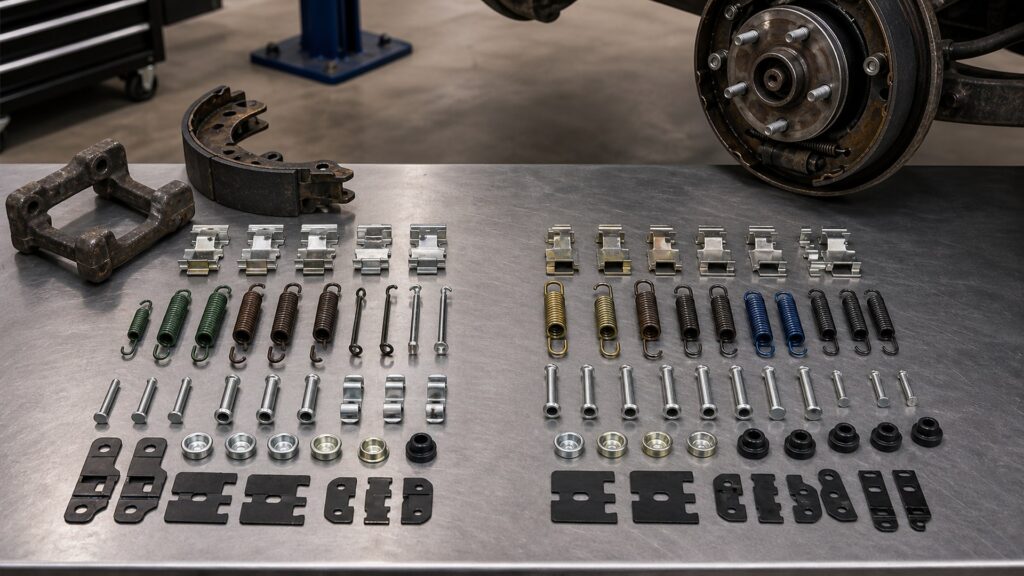
Check the complete box: Aftermarket listings for brake small hardware kits vary widely in included abutment clip, return spring, clips, seals, or brackets. Fresh hardware matters because old clips and springs lose tension, collect corrosion, and let pads or shoes move in ways the new friction parts cannot correct. A clear return path matters because aftermarket catalog errors are part of the ownership risk.
Match brand risk to labor risk: If the brake small hardware kit is hard to install, choose a supplier with stronger documentation and return handling. A useful listing shows the kit contents clearly enough to compare them with the old hardware before the brake assembly is apart. For aftermarket choices, compare documentation, photos, contents, and support before trusting price or warranty language.
Use vehicle conditions as the filter: Climate, mileage, dust, towing, or daily commuting should decide which aftermarket brake small hardware kits are worth paying for. Small hardware should be treated as fit-critical, especially when rust, heat, or previous repairs have changed how the brake corner comes apart. Upgrade claims should point to a real material, coating, media, or completeness advantage for this vehicle.
Who this is for
Match brake hardware kits to the vehicle, repair goal, and buyer situation
Use these profiles for aftermarket choices decisions. For hardware kits, the real buying risk is often a missing spring, retainer, shim, or abutment clip rather than the headline price. A clear return path matters because aftermarket catalog errors are part of the ownership risk.
Budget optimizer: Choose aftermarket brake small hardware kits that prove exact fit and include the kit contents that affect kit installation. For hardware kits, the real buying risk is often a missing spring, retainer, shim, or abutment clip rather than the headline price. A clear return path matters because aftermarket catalog errors are part of the ownership risk.
Upgrade-curious driver: Buy an upgraded brake small hardware kit only when material spring rate, coating durability, or complete axle coverage solve a real use condition. Disc and drum kits can sit in the same catalog family while using completely different clip shapes, hold-down pins, and adjuster pieces. For aftermarket choices, compare documentation, photos, contents, and support before trusting price or warranty language.
Parts-store shopper: Ask what differs between good, better, and best brake small hardware kits beyond coverage length. Fresh hardware matters because old clips and springs lose tension, collect corrosion, and let pads or shoes move in ways the new friction parts cannot correct. Upgrade claims should point to a real material, coating, media, or completeness advantage for this vehicle.
Online bargain hunter: Favor aftermarket brake small hardware kit listings with clear photos, fit notes, and kit contents source support over anonymous low-cost boxes. A useful listing shows the kit contents clearly enough to compare them with the old hardware before the brake assembly is apart. A clear return path matters because aftermarket catalog errors are part of the ownership risk.
Shop estimate reviewer: Ask whether the aftermarket brake small hardware kits quoted are economy, OE-equivalent, coated, complete, or performance-oriented. Small hardware should be treated as fit-critical, especially when rust, heat, or previous repairs have changed how the brake corner comes apart. For aftermarket choices, compare documentation, photos, contents, and support before trusting price or warranty language.
What to pay attention to
Which brake hardware kit specs actually matter
Prioritize specs that change aftermarket choices outcomes. For hardware kits, the real buying risk is often a missing spring, retainer, shim, or abutment clip rather than the headline price. Upgrade claims should point to a real material, coating, media, or completeness advantage for this vehicle.
Practical-feel specifications
In aftermarket choices, noise suppression, pad movement, shoe return shape the driver's first signs that the brake small hardware kit choice worked. For hardware kits, the real buying risk is often a missing spring, retainer, shim, or abutment clip rather than the headline price. For aftermarket choices, compare documentation, photos, contents, and support before trusting price or warranty language.
Capability specifications
For brake small hardware kits, material spring rate, coating durability, complete axle coverage matter when climate, workload, or old related kit contents add stress. Disc and drum kits can sit in the same catalog family while using completely different clip shapes, hold-down pins, and adjuster pieces. Upgrade claims should point to a real material, coating, media, or completeness advantage for this vehicle.
Supplier documentation: Good aftermarket brake small hardware kits explain axle position, disc or drum layout, pad ear shape, spring style, adjuster design, and corrosion-resistant finish and do not hide important brake assembly splits. For hardware kits, the real buying risk is often a missing spring, retainer, shim, or abutment clip rather than the headline price. Upgrade claims should point to a real material, coating, media, or completeness advantage for this vehicle.
Material grade: Compare material spring rate, coating durability, and complete axle coverage in relation to heat, corrosion, dust, or service load. Disc and drum kits can sit in the same catalog family while using completely different clip shapes, hold-down pins, and adjuster pieces. A clear return path matters because aftermarket catalog errors are part of the ownership risk.
Contents and small parts: A higher-priced brake small hardware kit can be better value if it includes the small hardware that would otherwise be bought separately. Fresh hardware matters because old clips and springs lose tension, collect corrosion, and let pads or shoes move in ways the new friction parts cannot correct. For aftermarket choices, compare documentation, photos, contents, and support before trusting price or warranty language.
Warranty process: Aftermarket coverage strength depends on claim steps, exclusions, and replacement speed. A useful listing shows the kit contents clearly enough to compare them with the old hardware before the brake assembly is apart. Upgrade claims should point to a real material, coating, media, or completeness advantage for this vehicle.
Installed feel: Details like noise suppression, pad movement, and shoe return affect whether the kit component feels like a clean brake small hardware service. Small hardware should be treated as fit-critical, especially when rust, heat, or previous repairs have changed how the brake corner comes apart. A clear return path matters because aftermarket catalog errors are part of the ownership risk.
Avoid these traps
Common mistakes people make when buying brake hardware kits
Aftermarket choices fails when fit or context is skipped. Fresh hardware matters because old clips and springs lose tension, collect corrosion, and let pads or shoes move in ways the new friction parts cannot correct. A clear return path matters because aftermarket catalog errors are part of the ownership risk.
Buying the cheapest listing: Low-cost brake small hardware kits can omit small hardware, use weaker finishes, or create return hassles that erase the savings. Fresh hardware matters because old clips and springs lose tension, collect corrosion, and let pads or shoes move in ways the new friction parts cannot correct. A clear return path matters because aftermarket catalog errors are part of the ownership risk.
Trusting vague upgrades: An aftermarket brake small hardware kit should state what is upgraded and why it matters for the brake assembly. A useful listing shows the kit contents clearly enough to compare them with the old hardware before the brake assembly is apart. For aftermarket choices, compare documentation, photos, contents, and support before trusting price or warranty language.
Ignoring seller support: Fitment disputes and coverage claims are kit component of aftermarket brake small hardware kits ownership. Small hardware should be treated as fit-critical, especially when rust, heat, or previous repairs have changed how the brake corner comes apart. Upgrade claims should point to a real material, coating, media, or completeness advantage for this vehicle.
Mixing incompatible grades: Pairing one upgraded brake small hardware kit with worn or economy related kit contents can create uneven results. For hardware kits, the real buying risk is often a missing spring, retainer, shim, or abutment clip rather than the headline price. A clear return path matters because aftermarket catalog errors are part of the ownership risk.
Skipping photos and contents: The listing should show whether the aftermarket brake small hardware kits include the pieces needed for your brake small hardware service. Disc and drum kits can sit in the same catalog family while using completely different clip shapes, hold-down pins, and adjuster pieces. For aftermarket choices, compare documentation, photos, contents, and support before trusting price or warranty language.
Decision guidance
Which type of brake hardware kit purchase is right for you
Use the brake small hardware service evidence before choosing a kit component tier. Fresh hardware matters because old clips and springs lose tension, collect corrosion, and let pads or shoes move in ways the new friction parts cannot correct. Upgrade claims should point to a real material, coating, media, or completeness advantage for this vehicle.
Choose economy for simple, low-risk repairs: Economy brake small hardware kits can work when labor is easy, brake assembly use is ordinary, and small hardware fit is certain. Fresh hardware matters because old clips and springs lose tension, collect corrosion, and let pads or shoes move in ways the new friction parts cannot correct. Upgrade claims should point to a real material, coating, media, or completeness advantage for this vehicle.
Choose OE-equivalent for most daily drivers: OE-equivalent brake small hardware kit options usually balance cost, fit, and predictable service behavior. A useful listing shows the kit contents clearly enough to compare them with the old hardware before the brake assembly is apart. A clear return path matters because aftermarket catalog errors are part of the ownership risk.
Choose coated or complete for harsh conditions: Better-protected brake small hardware kits make sense when rust, heat, or old small hardware caused the failure. Small hardware should be treated as fit-critical, especially when rust, heat, or previous repairs have changed how the brake corner comes apart. For aftermarket choices, compare documentation, photos, contents, and support before trusting price or warranty language.
Choose premium only for a clear need: Pay more for a brake small hardware kit when a specific material or design solves your brake assembly's duty cycle. For hardware kits, the real buying risk is often a missing spring, retainer, shim, or abutment clip rather than the headline price. Upgrade claims should point to a real material, coating, media, or completeness advantage for this vehicle.
Walk away from unclear listings: If aftermarket brake small hardware kits do not show fit notes, contents, and support, choose another kit contents source. Disc and drum kits can sit in the same catalog family while using completely different clip shapes, hold-down pins, and adjuster pieces. A clear return path matters because aftermarket catalog errors are part of the ownership risk.
Ownership & compatibility
What you are really buying into with brake hardware kits
Keep records, related kit contents, and support in view. Fresh hardware matters because old clips and springs lose tension, collect corrosion, and let pads or shoes move in ways the new friction parts cannot correct. For aftermarket choices, compare documentation, photos, contents, and support before trusting price or warranty language.
Save the product page: Aftermarket brake small hardware kits can change listings, so keep a copy of fit notes and included contents. Fresh hardware matters because old clips and springs lose tension, collect corrosion, and let pads or shoes move in ways the new friction parts cannot correct. For aftermarket choices, compare documentation, photos, contents, and support before trusting price or warranty language.
Track seller terms: Know whether the brake small hardware kit coverage requires return shipping, photos, diagnostics, or professional kit installation proof. A useful listing shows the kit contents clearly enough to compare them with the old hardware before the brake assembly is apart. Upgrade claims should point to a real material, coating, media, or completeness advantage for this vehicle.
Inspect packaging before install: Confirm small hardware, orientation, and surface condition before exposing the aftermarket brake small hardware kits to the brake assembly. Small hardware should be treated as fit-critical, especially when rust, heat, or previous repairs have changed how the brake corner comes apart. A clear return path matters because aftermarket catalog errors are part of the ownership risk.
Use consistent grades: When replacing paired brake small hardware kits, avoid mixing economy and premium kit contents unless service data supports it. For hardware kits, the real buying risk is often a missing spring, retainer, shim, or abutment clip rather than the headline price. For aftermarket choices, compare documentation, photos, contents, and support before trusting price or warranty language.
Watch early behavior: Aftermarket brake small hardware kit issues usually show up as noise, leaks, poor fit, restriction, or uneven wear soon after kit installation. Disc and drum kits can sit in the same catalog family while using completely different clip shapes, hold-down pins, and adjuster pieces. Upgrade claims should point to a real material, coating, media, or completeness advantage for this vehicle.
FAQ
Brake hardware kits buying guide FAQ
Focused answers for aftermarket choices decisions. Fresh hardware matters because old clips and springs lose tension, collect corrosion, and let pads or shoes move in ways the new friction parts cannot correct. A clear return path matters because aftermarket catalog errors are part of the ownership risk.
How do I compare aftermarket brake small hardware kits fairly?
What makes an aftermarket brake small hardware kit risky?
Are premium aftermarket brake small hardware kits worth it?
Should I buy the same grade on both sides or axles?
What should I save after buying aftermarket brake small hardware kits?
Bottom line
The simplest way to choose brake hardware kits
Choose by fit, evidence, and brake small hardware service risk. Fresh hardware matters because old clips and springs lose tension, collect corrosion, and let pads or shoes move in ways the new friction parts cannot correct. Upgrade claims should point to a real material, coating, media, or completeness advantage for this vehicle.
Compare the whole offer: Aftermarket brake small hardware kits should prove fit, contents, material quality, and support before price decides. Fresh hardware matters because old clips and springs lose tension, collect corrosion, and let pads or shoes move in ways the new friction parts cannot correct. Upgrade claims should point to a real material, coating, media, or completeness advantage for this vehicle.
Use upgrades carefully: Pay extra for material spring rate or coating durability only when the brake assembly conditions call for it. A useful listing shows the kit contents clearly enough to compare them with the old hardware before the brake assembly is apart. A clear return path matters because aftermarket catalog errors are part of the ownership risk.
Demand clear listings: Photos, axle position, disc or drum layout, pad ear shape, spring style, adjuster design, and corrosion-resistant finish, and included small hardware are non-negotiable for a trustworthy brake small hardware kit listing. Small hardware should be treated as fit-critical, especially when rust, heat, or previous repairs have changed how the brake corner comes apart. For aftermarket choices, compare documentation, photos, contents, and support before trusting price or warranty language.
Protect against returns: Keep packaging and screenshots until aftermarket brake small hardware kits are installed and verified. For hardware kits, the real buying risk is often a missing spring, retainer, shim, or abutment clip rather than the headline price. Upgrade claims should point to a real material, coating, media, or completeness advantage for this vehicle.
Final aftermarket check: Choose the brake small hardware kit with the clearest installed value, not the loudest marketing claim. Disc and drum kits can sit in the same catalog family while using completely different clip shapes, hold-down pins, and adjuster pieces. A clear return path matters because aftermarket catalog errors are part of the ownership risk.
Reading Shortcuts
Jump to the sections that matter most for choosing brake small hardware kits.
Decision Reminders
A quick checklist before you commit to brake small hardware kits.
- Confirm the old part: Use the removed kit component, OE number, or service data to verify the catalog listing.
- Check included hardware: Missing clips, springs, seals, brackets, or fasteners can change the real cost.
- Inspect nearby wear: Do not expect a new brake small hardware kit to solve problems caused by related components.
- Read warranty details: Know the claim process, exclusions, and whether labor is covered.
- Plan the install: Cleaning, torque, direction, bleeding, bedding, or adjustment steps matter after purchase.
Glossary Snippets
Quick translations for terms that confuse replacement-kit component buyers.
When to Use a Top 10 Review
Use this format when you want a faster way to narrow the field.
- You are early in the process: A Top 10 can separate common brake small hardware kits by small hardware fit confidence, completeness, and value.
- You want a shortlist: Ranked picks help organize budget, OE-style, complete-kit, and harsh-use options.
- You need category context: It is useful when you still need to understand the major choices before comparing two kit contents.
Already down to 2-3 options? A Comparison is usually faster than broad buying advice.
When to Use a Comparison
Ideal once you have a shortlist and need clear, practical tradeoffs.
- You narrowed it to 2-3 options: A comparison makes differences in fit notes, included small hardware, coverage, and total brake small hardware service cost easier to see.
- You are checking the quote: Side-by-side tradeoffs help determine whether a recommended kit component grade is justified.
- You are ready to decide: Use a comparison when the brake assembly fit is known and the final choice is about value and risk.
Still exploring? Start with a Top 10 to identify the right brake hardware kit category first.