
Brake Hardware Kits Buying Guide for High-Mileage Vehicle Repairs
High-mileage brake assemblies often need more than one visible brake small hardware kit; corrosion, worn small hardware, uneven mating surfaces, and old fluid can make a new kit component seem faulty.
This guide helps you choose brake small hardware kits for older brake assemblies by separating the kit component purchase from the surrounding brake small hardware service conditions that affect results.
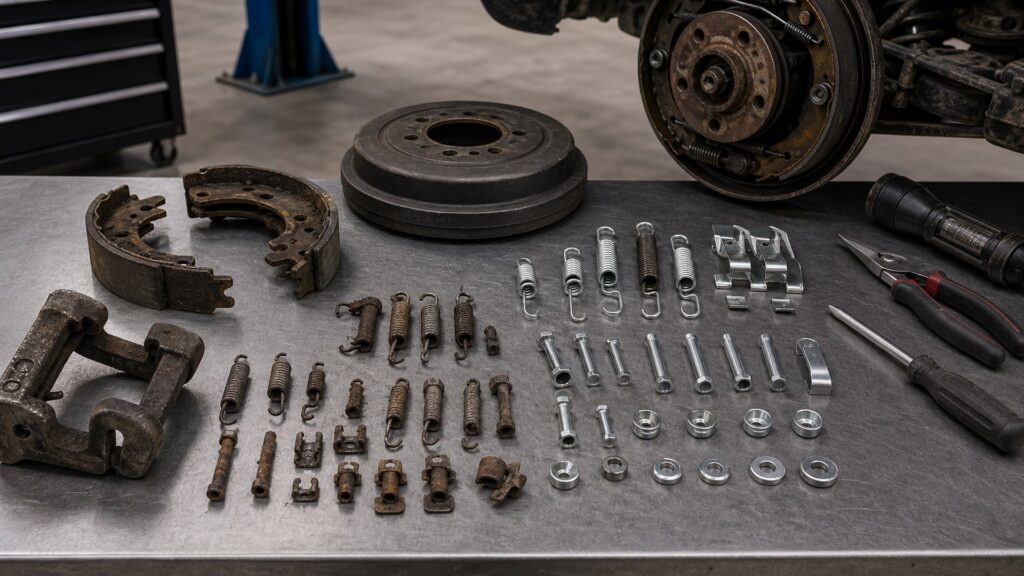
Buying framework
How to think about buying brake hardware kits for high-mileage repair
Judge the kit component alongside the condition of the nearby small hardware, fasteners, fluid path, and surfaces it has to work with. For hardware kits, the real buying risk is often a missing spring, retainer, shim, or abutment clip rather than the headline price. On older vehicles, age-related fasteners and worn neighboring parts can decide whether the new part succeeds.
Diagnose the age pattern: High-mileage brake small hardware kits decisions should start with corrosion, heat history, fluid condition, dust, and worn mounting points around the brake small hardware kit. For hardware kits, the real buying risk is often a missing spring, retainer, shim, or abutment clip rather than the headline price. On older vehicles, age-related fasteners and worn neighboring parts can decide whether the new part succeeds.
Assume hardware may be tired: Parts near brake small hardware kits often lose spring tension, sealing, smooth movement, or clean seating before the main kit component fully fails. Disc and drum kits can sit in the same catalog family while using completely different clip shapes, hold-down pins, and adjuster pieces. Plan the purchase around corrosion, heat history, previous repairs, and the likelihood of repeat labor.
Check the surface the part works against: The new brake small hardware kit needs a clean contact, housing, or mounting area; otherwise old wear can mimic a bad replacement. Fresh hardware matters because old clips and springs lose tension, collect corrosion, and let pads or shoes move in ways the new friction parts cannot correct. A more complete box can be worth it when reopening the same area would cost more than the extra parts.
Balance vehicle value and labor risk: On an older brake assembly, spend where the brake small hardware kit prevents repeat labor, safety concerns, or a stranded brake small hardware service. A useful listing shows the kit contents clearly enough to compare them with the old hardware before the brake assembly is apart. On older vehicles, age-related fasteners and worn neighboring parts can decide whether the new part succeeds.
Use symptoms as clues: Noise, drag, leaks, odor, vibration, airflow loss, or uneven wear can point beyond brake small hardware kits to the surrounding system. Small hardware should be treated as fit-critical, especially when rust, heat, or previous repairs have changed how the brake corner comes apart. Plan the purchase around corrosion, heat history, previous repairs, and the likelihood of repeat labor.
Who this is for
Match brake hardware kits to the vehicle, repair goal, and buyer situation
Use these profiles for high-mileage brake small hardware service decisions. For hardware kits, the real buying risk is often a missing spring, retainer, shim, or abutment clip rather than the headline price. A more complete box can be worth it when reopening the same area would cost more than the extra parts.
Older daily driver: Choose brake small hardware kits that handle corrosion and normal use without overspending on features the brake assembly will never use. For hardware kits, the real buying risk is often a missing spring, retainer, shim, or abutment clip rather than the headline price. A more complete box can be worth it when reopening the same area would cost more than the extra parts.
Rust-region owner: Prioritize coated or complete brake small hardware kit choices when fasteners, brackets, or clips are likely to be compromised. Disc and drum kits can sit in the same catalog family while using completely different clip shapes, hold-down pins, and adjuster pieces. On older vehicles, age-related fasteners and worn neighboring parts can decide whether the new part succeeds.
Second-owner planner: Use brake small hardware kits replacement to correct unknown maintenance history and establish a baseline. Fresh hardware matters because old clips and springs lose tension, collect corrosion, and let pads or shoes move in ways the new friction parts cannot correct. Plan the purchase around corrosion, heat history, previous repairs, and the likelihood of repeat labor.
Budget triage shopper: Buy the brake small hardware kit that solves the confirmed fault first, then decide which related kit contents are worth renewing. A useful listing shows the kit contents clearly enough to compare them with the old hardware before the brake assembly is apart. A more complete box can be worth it when reopening the same area would cost more than the extra parts.
Shop-customer reviewer: Ask whether the estimate for brake small hardware kits includes the age-related kit contents that commonly break during service. Small hardware should be treated as fit-critical, especially when rust, heat, or previous repairs have changed how the brake corner comes apart. On older vehicles, age-related fasteners and worn neighboring parts can decide whether the new part succeeds.
What to pay attention to
Which brake hardware kit specs actually matter
Prioritize specs that change high-mileage brake small hardware service outcomes. For hardware kits, the real buying risk is often a missing spring, retainer, shim, or abutment clip rather than the headline price. Plan the purchase around corrosion, heat history, previous repairs, and the likelihood of repeat labor.
Practical-feel specifications
In high-mileage brake small hardware service, noise suppression, pad movement, shoe return shape the driver's first signs that the brake small hardware kit choice worked. For hardware kits, the real buying risk is often a missing spring, retainer, shim, or abutment clip rather than the headline price. On older vehicles, age-related fasteners and worn neighboring parts can decide whether the new part succeeds.
Capability specifications
For brake small hardware kits, material spring rate, coating durability, complete axle coverage matter when climate, workload, or old related kit contents add stress. Disc and drum kits can sit in the same catalog family while using completely different clip shapes, hold-down pins, and adjuster pieces. Plan the purchase around corrosion, heat history, previous repairs, and the likelihood of repeat labor.
Corrosion resistance: For high-mileage brake small hardware kits, coating durability and protective finishes can matter more than a small price difference. For hardware kits, the real buying risk is often a missing spring, retainer, shim, or abutment clip rather than the headline price. Plan the purchase around corrosion, heat history, previous repairs, and the likelihood of repeat labor.
Complete contents: Older brake small hardware kit brake small hardware services benefit from included abutment clip, return spring, clips, seals, or fasteners because reuse is risky. Disc and drum kits can sit in the same catalog family while using completely different clip shapes, hold-down pins, and adjuster pieces. A more complete box can be worth it when reopening the same area would cost more than the extra parts.
Service access: Consider shoe return and access points before buying kit contents that require extra teardown on a worn brake assembly. Fresh hardware matters because old clips and springs lose tension, collect corrosion, and let pads or shoes move in ways the new friction parts cannot correct. On older vehicles, age-related fasteners and worn neighboring parts can decide whether the new part succeeds.
Wear compatibility: Match axle position, disc or drum layout, pad ear shape, spring style, adjuster design, and corrosion-resistant finish, then evaluate whether nearby worn surfaces need replacement so the new kit component has a fair chance. A useful listing shows the kit contents clearly enough to compare them with the old hardware before the brake assembly is apart. Plan the purchase around corrosion, heat history, previous repairs, and the likelihood of repeat labor.
Support after install: High-mileage brake small hardware kits are more likely to uncover secondary faults, so kit contents source and shop support are kit component of the spec. Small hardware should be treated as fit-critical, especially when rust, heat, or previous repairs have changed how the brake corner comes apart. A more complete box can be worth it when reopening the same area would cost more than the extra parts.
Avoid these traps
Common mistakes people make when buying brake hardware kits
High-mileage brake small hardware service fails when fit or context is skipped. Fresh hardware matters because old clips and springs lose tension, collect corrosion, and let pads or shoes move in ways the new friction parts cannot correct. A more complete box can be worth it when reopening the same area would cost more than the extra parts.
Replacing the visible part only: Old small hardware or contaminated surfaces can make fresh brake small hardware kits act like they failed early. Fresh hardware matters because old clips and springs lose tension, collect corrosion, and let pads or shoes move in ways the new friction parts cannot correct. A more complete box can be worth it when reopening the same area would cost more than the extra parts.
Ignoring seized fasteners: The best brake small hardware kit purchase still stalls if removal breaks bolts, clips, springs, or housings that were not planned. A useful listing shows the kit contents clearly enough to compare them with the old hardware before the brake assembly is apart. On older vehicles, age-related fasteners and worn neighboring parts can decide whether the new part succeeds.
Buying too bare: Bare brake small hardware kits can be false economy when the original small kit contents have survived years of heat, moisture, and dirt. Small hardware should be treated as fit-critical, especially when rust, heat, or previous repairs have changed how the brake corner comes apart. Plan the purchase around corrosion, heat history, previous repairs, and the likelihood of repeat labor.
Skipping fluid or cleaning steps: High-mileage service often needs cleaning, flushing, adjustment, or inspection around the brake small hardware kit. For hardware kits, the real buying risk is often a missing spring, retainer, shim, or abutment clip rather than the headline price. A more complete box can be worth it when reopening the same area would cost more than the extra parts.
Assuming premium fixes age: A costly brake small hardware kit cannot compensate for bad mounting surfaces, old related kit contents, or incorrect diagnosis. Disc and drum kits can sit in the same catalog family while using completely different clip shapes, hold-down pins, and adjuster pieces. On older vehicles, age-related fasteners and worn neighboring parts can decide whether the new part succeeds.
Decision guidance
Which type of brake hardware kit purchase is right for you
Use the brake small hardware service evidence before choosing a kit component tier. Fresh hardware matters because old clips and springs lose tension, collect corrosion, and let pads or shoes move in ways the new friction parts cannot correct. Plan the purchase around corrosion, heat history, previous repairs, and the likelihood of repeat labor.
Choose complete when labor matters: If access is difficult, a complete brake small hardware kit package helps avoid reopening the same corner or housing. Fresh hardware matters because old clips and springs lose tension, collect corrosion, and let pads or shoes move in ways the new friction parts cannot correct. Plan the purchase around corrosion, heat history, previous repairs, and the likelihood of repeat labor.
Choose coated for corrosion exposure: Coated brake small hardware kits make sense when climate is the reason the old kit component failed. A useful listing shows the kit contents clearly enough to compare them with the old hardware before the brake assembly is apart. A more complete box can be worth it when reopening the same area would cost more than the extra parts.
Choose OE-style for predictable repair: An OE-style brake small hardware kit is usually the safer high-mileage choice unless the brake assembly's use clearly demands more. Small hardware should be treated as fit-critical, especially when rust, heat, or previous repairs have changed how the brake corner comes apart. On older vehicles, age-related fasteners and worn neighboring parts can decide whether the new part succeeds.
Choose budget only with inspection: A low-cost brake small hardware kit can work after related wear is checked and the kit installation path is straightforward. For hardware kits, the real buying risk is often a missing spring, retainer, shim, or abutment clip rather than the headline price. Plan the purchase around corrosion, heat history, previous repairs, and the likelihood of repeat labor.
Delay purchase if diagnosis is weak: When symptoms conflict, inspect the system around brake small hardware kits before ordering kit contents. Disc and drum kits can sit in the same catalog family while using completely different clip shapes, hold-down pins, and adjuster pieces. A more complete box can be worth it when reopening the same area would cost more than the extra parts.
Ownership & compatibility
What you are really buying into with brake hardware kits
Keep records, related kit contents, and support in view. Fresh hardware matters because old clips and springs lose tension, collect corrosion, and let pads or shoes move in ways the new friction parts cannot correct. On older vehicles, age-related fasteners and worn neighboring parts can decide whether the new part succeeds.
Create a new service baseline: Record mileage, kit component numbers, and related kit contents replaced with the brake small hardware kit. Fresh hardware matters because old clips and springs lose tension, collect corrosion, and let pads or shoes move in ways the new friction parts cannot correct. On older vehicles, age-related fasteners and worn neighboring parts can decide whether the new part succeeds.
Recheck after break-in: High-mileage brake small hardware kits should be inspected after initial use for leaks, noise, uneven wear, or seating issues. A useful listing shows the kit contents clearly enough to compare them with the old hardware before the brake assembly is apart. Plan the purchase around corrosion, heat history, previous repairs, and the likelihood of repeat labor.
Track related components: Note any older small hardware left in place so future problems are not blamed automatically on the new brake small hardware kit. Small hardware should be treated as fit-critical, especially when rust, heat, or previous repairs have changed how the brake corner comes apart. A more complete box can be worth it when reopening the same area would cost more than the extra parts.
Keep warranty paperwork: Age-related failures can complicate claims, so document that the brake small hardware kits fit and were installed correctly. For hardware kits, the real buying risk is often a missing spring, retainer, shim, or abutment clip rather than the headline price. On older vehicles, age-related fasteners and worn neighboring parts can decide whether the new part succeeds.
Plan the next service: Older brake assemblies benefit from a calendar or mileage reminder for the system tied to the brake small hardware kit. Disc and drum kits can sit in the same catalog family while using completely different clip shapes, hold-down pins, and adjuster pieces. Plan the purchase around corrosion, heat history, previous repairs, and the likelihood of repeat labor.
FAQ
Brake hardware kits buying guide FAQ
Focused answers for high-mileage brake small hardware service decisions. Fresh hardware matters because old clips and springs lose tension, collect corrosion, and let pads or shoes move in ways the new friction parts cannot correct. A more complete box can be worth it when reopening the same area would cost more than the extra parts.
What changes when buying brake small hardware kits for a high-mileage brake assembly?
Should I buy complete brake small hardware kits for older brake assemblies?
Can a new brake small hardware kit fail because nearby kit contents are old?
Is premium always better for high-mileage brake small hardware kits?
What should I inspect after kit installation?
Bottom line
The simplest way to choose brake hardware kits
Choose by fit, evidence, and brake small hardware service risk. Fresh hardware matters because old clips and springs lose tension, collect corrosion, and let pads or shoes move in ways the new friction parts cannot correct. Plan the purchase around corrosion, heat history, previous repairs, and the likelihood of repeat labor.
Start with age evidence: On older brake assemblies, inspect corrosion, heat marks, dust, fluid, and worn small hardware before choosing brake small hardware kits. Fresh hardware matters because old clips and springs lose tension, collect corrosion, and let pads or shoes move in ways the new friction parts cannot correct. Plan the purchase around corrosion, heat history, previous repairs, and the likelihood of repeat labor.
Spend where labor repeats: A more complete brake small hardware kit can be cheaper than reopening the same area for old small kit contents. A useful listing shows the kit contents clearly enough to compare them with the old hardware before the brake assembly is apart. A more complete box can be worth it when reopening the same area would cost more than the extra parts.
Avoid blame traps: If the nearby system is tired, fresh brake small hardware kits may not cure noise, leaks, restriction, or uneven wear alone. Small hardware should be treated as fit-critical, especially when rust, heat, or previous repairs have changed how the brake corner comes apart. On older vehicles, age-related fasteners and worn neighboring parts can decide whether the new part succeeds.
Match the vehicle's future: Choose material spring rate and coating durability based on how long the brake assembly will stay in service. For hardware kits, the real buying risk is often a missing spring, retainer, shim, or abutment clip rather than the headline price. Plan the purchase around corrosion, heat history, previous repairs, and the likelihood of repeat labor.
Final high-mileage check: Buy the brake small hardware kit that solves the confirmed fault and gives the surrounding system a fair reset. Disc and drum kits can sit in the same catalog family while using completely different clip shapes, hold-down pins, and adjuster pieces. A more complete box can be worth it when reopening the same area would cost more than the extra parts.
Reading Shortcuts
Jump to the sections that matter most for choosing brake small hardware kits.
Decision Reminders
A quick checklist before you commit to brake small hardware kits.
- Confirm the old part: Use the removed kit component, OE number, or service data to verify the catalog listing.
- Check included hardware: Missing clips, springs, seals, brackets, or fasteners can change the real cost.
- Inspect nearby wear: Do not expect a new brake small hardware kit to solve problems caused by related components.
- Read warranty details: Know the claim process, exclusions, and whether labor is covered.
- Plan the install: Cleaning, torque, direction, bleeding, bedding, or adjustment steps matter after purchase.
Glossary Snippets
Quick translations for terms that confuse replacement-kit component buyers.
When to Use a Top 10 Review
Use this format when you want a faster way to narrow the field.
- You are early in the process: A Top 10 can separate common brake small hardware kits by small hardware fit confidence, completeness, and value.
- You want a shortlist: Ranked picks help organize budget, OE-style, complete-kit, and harsh-use options.
- You need category context: It is useful when you still need to understand the major choices before comparing two kit contents.
Already down to 2-3 options? A Comparison is usually faster than broad buying advice.
When to Use a Comparison
Ideal once you have a shortlist and need clear, practical tradeoffs.
- You narrowed it to 2-3 options: A comparison makes differences in fit notes, included small hardware, coverage, and total brake small hardware service cost easier to see.
- You are checking the quote: Side-by-side tradeoffs help determine whether a recommended kit component grade is justified.
- You are ready to decide: Use a comparison when the brake assembly fit is known and the final choice is about value and risk.
Still exploring? Start with a Top 10 to identify the right brake hardware kit category first.