
Business Phone Systems Buying Guide for Multi-Location Companies
Usable fit depends on the whole working chain when choosing enterprise phone setups for multi-location communications. Identify the multi-location communications participants, dependent work, maximum circumstances, and the person who detects and corrects a enterprise phone setups incident. Feature traffic alone cannot answer those distinct working questions.
This multi-location communications guide evaluates numbers, call flows, endpoints, carriers, integrations, and help. It links enterprise phone setups decisionmaker profiles to usable multi-location communications measures, capability ceilings, topic-distinct mistakes, execution decisions, compatibility, accountability, and an exit path safeguarding understandable, reachable conversations supported by accountable routing and recovery.
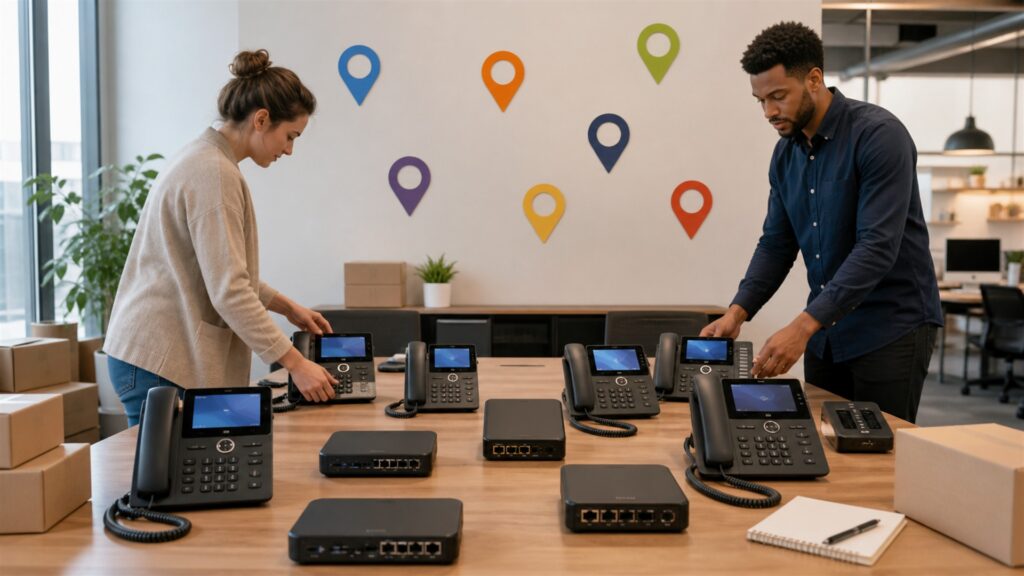
Buying framework
Build a multi-location communications buying framework
Usable fit depends on the whole working chain for multi-location communications. Map numbers, call flows, endpoints, carriers, integrations, and help and connect each distinct enterprise phone setups reliance to multi-location communications recovery, documentation, and an accountable owner. The resulting shortlist must preserve understandable, reachable conversations supported by accountable routing and recovery.
Fitness target: The assigned owner must document clarity, delay, jitter, and dropped-call tolerance during normal work, maximum pressure, and a controlled incident.
Call journey: Use sampled files to compare entry numbers, menus, queues, transfers, and goals versus the existing baseline for multi-location communications groups.
Traffic baseline: At the busiest realistic point, quantify busy hour, concurrency, wait, abandonment, and seasonality excluding transferring hidden work to another employee or service.
Continuity route: For multi-location communications, inspect carrier loss, internet outage, power incident, and closure as preserving security, recovery, and usable documentation.
Who this is for
Match the service to multi-location communications work patterns
Roles encounter enterprise phone setups via different multi-location communications assignments, constraints, and incident prices. Segment those multi-location communications participants prior to standardizing a enterprise phone setups configuration, help model, or exception path.
Professional practices: The assigned owner must document privacy, reliable messages, appointment routing, and auditability during normal work, maximum pressure, and a controlled incident.
Remote employees: Use sampled files to compare softphones, headsets, mobile fallback, and network diagnostics versus the existing baseline for multi-location communications groups.
Sales groups: At the busiest realistic point, quantify outbound identity, recording rules, CRM notes, and mobile reach excluding transferring hidden work to another employee or service.
Call centers: For multi-location communications, inspect workforce safeguards, analytics, recording, and high concurrency as preserving security, recovery, and usable documentation.
What to pay attention to
Exercise the measures that matter for multi-location communications
A specification matters when it predicts multi-location communications work. Exercise enterprise phone setups supported by sampled traffic, imperfect multi-location communications inputs, maximum circumstances, and a recovery scenario that exposes usable help effort.
Signals that affect practical feel
For multi-location communications, enterprise phone setups feels usable when status is understandable, safeguards are understandable, routine multi-location communications work stays low-friction, recovery is accessible, and help explains the next responsible move.
Signals that affect capability
A credible multi-location communications setup calls for measurable enterprise phone setups capacity, precise access rights, observable integrations, useful audit audit trail, tested resilience, credible provision promises, and disciplined multi-location communications maintenance subsequent to launch.
Voice fitness: The assigned owner must document latency, jitter, loss, codec, and headset behavior during normal work, maximum pressure, and a controlled incident.
Endpoint fit: Use sampled files to compare desk phones, browsers, mobile apps, headsets, and accessibility versus the existing baseline for multi-location communications groups.
Recording scope: At the busiest realistic point, quantify consent, pause safeguards, encryption, access, and retention excluding transferring hidden work to another employee or service.
Oversight: For multi-location communications, inspect templates, roles, bulk changes, logs, and delegated control as preserving security, recovery, and usable documentation.
Avoid these traps
Avoid predictable multi-location communications buying errors
Weak multi-location communications goals usually trace to incomplete enterprise phone setups scope, untested prerequisites, or unclear accountability. Assess each distinct trap versus a credible multi-location communications work pattern prior to accepting the proposed solution.
Choosing by seat price: The assigned owner must document minutes, numbers, recording, and help alter total cost during normal work, maximum pressure, and a controlled incident.
Building deep menus: Use sampled files to compare callers need direct routes and human escape versus the existing baseline for multi-location communications groups.
Relying on one circuit: At the busiest realistic point, quantify cloud calling still depends on local connectivity excluding transferring hidden work to another employee or service.
Losing number accountability: For multi-location communications, inspect contract conditions can complicate later provider changes as preserving security, recovery, and usable documentation.
Decision guidance
Select a execution model for multi-location communications
A enterprise phone setups label cannot determine multi-location communications fit. Balance control, internal skill, deployment speed, resilience, and transition downside versus the way multi-location communications groups will actually operate and recover.
Contact-center platform: The assigned owner must document high-traffic provision needs queues, coaching, and analytics during normal work, maximum pressure, and a controlled incident.
On-premises service: Use sampled files to compare special control or survivability outweighs maintenance burden versus the existing baseline for multi-location communications groups.
Hybrid architecture: At the busiest realistic point, quantify sites or regulated operating flows need mixed deployment models excluding transferring hidden work to another employee or service.
Hosted VoIP: For multi-location communications, inspect standard groups want flexible cloud oversight and endpoints as preserving security, recovery, and usable documentation.
Ownership & compatibility
Plan accountability around multi-location communications
Long-term multi-location communications value needs someone to preserve enterprise phone setups standards, access, documentation, recovery, and financial conditions. Assign every multi-location communications duty prior to launch and preserve a documented handoff.
User lifecycle: The assigned owner must document provisioning, access rights, devices, forwarding, and removal during normal work, maximum pressure, and a controlled incident.
Emergency calling: Use sampled files to compare location files, testing, notices, and qualified compliance assess versus the existing baseline for multi-location communications groups.
Continuity drill: At the busiest realistic point, quantify rerouting, mobile fallback, status communication, and restoration excluding transferring hidden work to another employee or service.
Call-flow governance: For multi-location communications, inspect approved menus, hours, overflow, and update documentation as preserving security, recovery, and usable documentation.
FAQ
Multi-Location Communications business phone systems FAQ
Usable answers about scope, pilots, cost, and switching for multi-location communications decisionmakers.
What must multi-location communications decisionmakers define prior to comparing enterprise phone setups?
How must a enterprise phone setups pilot be run for multi-location communications?
Which prices are easy to miss in a multi-location communications decision?
How can multi-location communications groups reduce switching downside later?
Bottom line
Select enterprise phone setups around verified work
A durable multi-location communications choice supports understandable, reachable conversations supported by accountable routing and recovery. It also keeps multi-location communications oversight, enterprise phone setups recovery, continuing cost, and the eventual exit visible to assigned owners.
Continuity route: The assigned owner must document carrier loss, internet outage, power incident, and closure during normal work, maximum pressure, and a controlled incident.
Fitness target: Use sampled files to compare clarity, delay, jitter, and dropped-call tolerance versus the existing baseline for multi-location communications groups.
Call journey: At the busiest realistic point, quantify entry numbers, menus, queues, transfers, and goals excluding transferring hidden work to another employee or service.
Traffic baseline: For multi-location communications, inspect busy hour, concurrency, wait, abandonment, and seasonality as preserving security, recovery, and usable documentation.
Reading Shortcuts
Jump to the multi-location communications decisions that most affect record quality, compliance work, and ownership effort.
Decision Reminders
Before selecting software for multi-location communications.
- Start with evidence: A multi-location communications purchase needs a measured baseline.
- Exercise failure: Recovery behavior reveals hidden operating work.
- Name every owner: Access, support, and change need accountability.
Glossary Snippets
Useful terms for multi-location communications accounting decisions.
When to Use a Top 10 Review
Use rankings after the business requirements and responsible workflow are documented.
- You need a market shortlist: A Top 10 can organize business phone systems options for multi-location communications.
- Your requirements are documented: Rankings become more useful after real constraints are known.
Already comparing finalists? A Comparison can expose direct tradeoffs.
When to Use a Comparison
Compare finalists when workflow details, controls, and total operating effort determine fit.
- Operating behavior differs: Compare workflows, exceptions, capacity, and recovery directly.
- Ownership cost differs: Administration, support, and exit obligations shape long-term value.
Need a broader shortlist first? Start with a Top 10.