
Callus Removers Buying Guide: How to Choose the Right One
Callus removers range from files and pumice stones to urea creams, acid liquids, medicated pads, and powered tools. They differ sharply in dose control and injury risk, so the first decision is whether the thickened area is appropriate for home care at all.
Confirm the problem, address the pressure or friction causing it, and choose the least aggressive format that can be used accurately. Diabetes, poor circulation, reduced sensation, open skin, infection signs, or diagnostic uncertainty warrant professional advice before self-treatment.
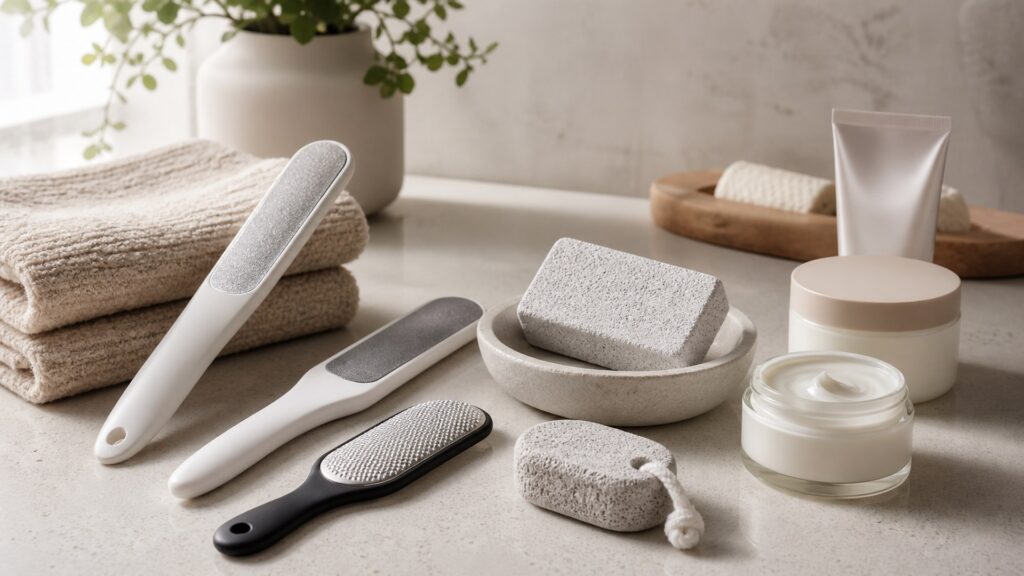
Buying framework
Define the right one routine before comparing products
Use the setting, frequency, and skin priorities to narrow callus removers logically.
Start with the use case: Identify the location, thickness, tenderness, skin integrity, and likely friction source.
Rank the practical tradeoffs: Screen medical conditions and distinguish a callus from a wart, corn, wound, or other lesion.
Check instructions early: Select mechanical or chemical care with controllable exposure and explicit directions.
Use profiles
Match callus removers to the person and pace
Three shopper profiles expose different priorities for right one.
Routine-focused buyer: A mild dry-callus user may need soaking, gentle filing, and moisturizer rather than acid.
Performance-focused buyer: A precise-treatment buyer should prioritize applicators that protect surrounding healthy skin.
Occasional or flexible user: A medically higher-risk user should seek clinician or podiatry guidance instead of experimenting.
Specifications
Read the specifications through a right one lens
Translate technical language into visible routine benefits.
Handling lens
Compare control at the treatment edge, not maximum removal speed.
Ownership lens
Include footwear correction and moisturization in the success test.
Removal Method: Manual files provide visible progress but pressure and sanitation depend on the user.
Abrasion Or Acid Strength: Powered tools increase speed while also increasing the chance of over-removal.
Application Control: Urea softens thick dry skin at concentrations that influence strength and sting.
Replacement Needs: Salicylic-acid products require exact placement, timing, and contraindication review.
Cleaning And Storage: Pads can shift under footwear and expose skin beyond the intended spot.
Common mistakes
Avoid shortcuts that undermine right one
A good purchase can still disappoint when selection or use is based on the wrong assumption.
Buying from one metric: Do not cut, shave, or slice a callus with a blade.
Skipping compatibility checks: Avoid acid treatment on broken, inflamed, infected, or poorly sensed skin.
Ignoring post-use care: Do not keep removing tissue while ignoring the shoe pressure that rebuilds it.
Decision guidance
Choose the simplest option that covers the real need
Use these decision rules to finish a shortlist for right one.
Choose the basic format when: Choose gentle manual smoothing for uncomplicated surface buildup when safe.
Choose the flexible format when: Consider a labeled keratolytic when precise dosing and all warnings can be followed.
Pause before upgrading when: Stop self-treatment and obtain care for severe pain, bleeding, infection signs, or medical risk.
Ownership & compatibility
Plan for clean, repeatable ownership
The best value remains convenient after the first few uses.
Consumables and replacements: Clean and dry reusable tools after each personal use.
Cleaning and storage: Protect surrounding skin and follow maximum contact and frequency limits.
Routine compatibility: Reassess footwear, gait pressure, and recurrence instead of escalating endlessly.
FAQ
Callus Removers Buying Guide: How to Choose the Right One FAQ
Practical answers about choosing and owning callus removers for right one.
What matters most when choosing callus removers for right one?
Is the most expensive option better for right one?
How should I compare two similar callus removers options?
Bottom line
Buy for repeatable right one results
A focused shortlist is easier to own and use well.
Prioritize fit: Confirm the diagnosis and medical-risk context before removal.
Verify the limits: Prefer controlled, gradual reduction over fast tissue loss.
Count ownership costs: Correct the recurring pressure as part of the purchase decision.
Reading Shortcuts
Jump to the key callus removers decisions.
Decision Reminders
Keep these checks beside your shortlist.
- Check removal method: Do not cut calluses with sharp tools or use products on broken, infected, or inflamed skin.
- Check abrasion or acid strength: People with diabetes, poor circulation, or reduced foot sensation should seek professional guidance before treatment.
- Check application control: Follow contact-time and frequency directions and stop if pain, burning, or significant irritation develops.
Glossary Snippets
Plain-language callus removers terms.
When to Use a Top 10 Review
Use a ranked list to identify a manageable set of strong candidates.
- You are still exploring: A ranked list can reveal the main formats and price tiers.
- You want a shortlist: Start broad, then confirm fit with this buying guide.
Have finalists? Use a Comparison.
When to Use a Comparison
Use a direct comparison when only a few candidates remain.
- Features are close: Side-by-side details clarify meaningful differences.
- Prices overlap: Compare ownership value, not only purchase price.
Still exploring? See the Top 10.