
Car Care & Detailing Buying Guide for Ceramic Protection Planning
Ceramic protection is a surface-preparation and installation project before it is a product choice. The coating locks in the condition beneath it, so bonded contamination, polishing haze, deep scratches, unstable repainting, and oily residue must be identified first. The label's coverage and cure conditions also need to fit the vehicle, workspace, and available time.
Build the plan backward from the finish you can safely create and maintain. Decide which defects will remain, make a test panel, calculate coating and towel capacity, and reserve a controlled period for flashing, leveling, curing, and water avoidance. Durability claims become useful only when the required preparation, layer count, wash method, storage, and inspection schedule are realistic for the owner.
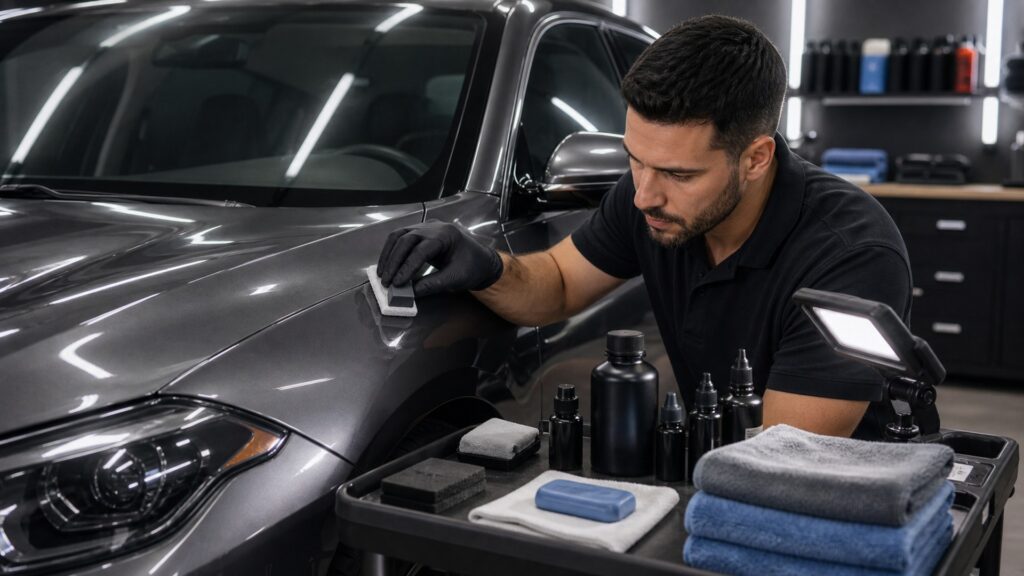
Buying framework
Build the purchase around the real job
Define the outcome, constraints, and verification steps before comparing products. Let build the purchase around the real job shape the comparison.
Surface map: Begin by documenting paint type, repaint history, texture, contamination, defects, trim, glass, and sensitive edges for every panel.
Correction boundary: Make a separate decision about which swirls, etching, oxidation, scratches, and thin or uncertain areas will be improved or left alone.
Test-panel sequence: Before shopping, establish washing, chemical decontamination, mechanical decontamination, polishing, residue removal, and coating on one representative zone.
Installation environment: Use a test to settle shade, panel temperature, humidity, lighting, ventilation, dust control, and uninterrupted working time against label limits.
Cure calendar: Complete the plan with layer timing, initial cure, outdoor exposure, rain, dew, washing, and customer handoff requirements.
Who this is for
Different users need different priorities
Frequency, environment, skill, vehicle design, and tolerance for downtime change the best choice. Let different users need different priorities shape the comparison.
Daily-driver owner: This use pattern rewards forgiving application, realistic outdoor curing, easy maintenance, and accessible technical support.
Garage-kept enthusiast: This owner should prioritize controlled lighting, multi-step correction, longer cure time, and documented compatibility between primer, coating, and topper.
Professional detailer: For this situation, compare repeatable flash behavior, lot traceability, training, liability boundaries, customer instructions, and efficient panel sequencing.
Repainted or delicate vehicle: This project needs finish stability, body-shop cure guidance, paint measurement, conservative polishing, and written approval from relevant product manufacturers.
What to pay attention to
Specifications that change the result
Published numbers matter only when they connect to fit, performance, safety, and repeatable use. Let specifications that change the result shape the comparison.
Substrate & Preparation
Paint type, repaint history, contamination, defects, polishing residue, panel wipe, test spot, and finish stability.
Installation & Service Life
Coverage, flash, leveling, temperature, humidity, cure, water avoidance, wash chemistry, decontamination, and warranty conditions.
Surface eligibility: Read listings for approved paint, matte, wrap, plastic, glass, wheel, and trim surfaces plus every stated exclusion.
Coverage and layer count: Confirm the published details for usable volume per vehicle, applicator absorption, waste allowance, open-bottle life, second-layer window, and optional topcoat.
Flash and leveling window: Compare evidence covering visual or tactile indicators, temperature and humidity effects, panel size, lighting needs, and the consequence of late removal.
Cure requirements: Treat as essential minimum temperature, moisture avoidance, infrared or ambient curing provisions, first-wash delay, and full chemical-resistance timing.
Chemical resistance claims: Look beyond headline claims to the test method, exposure time, concentration, and practical limits behind ph or solvent language rather than a bare range.
Warranty and maintenance terms: Require documentation of installer eligibility, inspections, registered products, exclusions, transfer, remedy, and required wash or decontamination records.
Avoid these traps
Shortcuts that create avoidable problems
A plausible product can still fail when preparation, interfaces, or operating limits are ignored. Let shortcuts that create avoidable problems shape the comparison.
Coating over defects: This fails when buyers overlook that gloss cannot hide etched clear coat, sanding marks, polishing haze, chips, or contamination trapped beneath a cured layer.
Using an improvised panel wipe: The hidden problem is that an aggressive or residue-forming solvent may swell fresh paint, stain trim, or leave surfactants that weaken bonding.
Chasing maximum layer count: Avoid assuming that that excess product can create smearing, slow leveling, high spots, and wasted material without proportional protection.
Installing outside the window: This shortcut can cause how heat, cold, humidity, wind, dust, or weak lighting changes flashing and makes complete leveling difficult.
Treating hydrophobicity as durability: Correct the plan by checking coating condition through cleaning response, contamination, gloss, defects, and verified performance instead of beading alone.
Decision guidance
Turn the evidence into a shortlist
Use conditional choices instead of treating one configuration as universally best. Let turn the evidence into a shortlist shape the comparison.
Sound paint needing modest protection: Choose this path only after confirming a single well-documented coating whose preparation and cure fit the available workspace.
Correction-intensive finish: This option fits when polishing and inspection as a separate project before selecting the coating and reserving uncontaminated towels.
Outdoor-only installation: Prefer this approach if a product with workable environmental limits and a credible covered curing plan rather than the longest advertised life.
Matte paint or film: Escalate the project when only explicit approval and a hidden test that preserves texture, color, and sheen without filling or glossing.
Uncertain repaint or thin clear coat: Delay purchase until you resolve surface evaluation and professional input before abrasion, solvent preparation, or long-cure coating commitment.
Ownership & compatibility
Keep the system dependable after purchase
Maintenance, records, updates, inspection, and storage determine whether the initial result lasts. Let keep the system dependable after purchase shape the comparison.
First-week behavior: After installation or use, track water spots, accidental rain, dust, bug residue, and the exact safe response during incomplete cure.
Maintenance-wash compatibility: Preserve a record of shampoo residue, rinseless chemistry, drying aids, toppers, towel cleanliness, and wash frequency.
Periodic decontamination: Routine care should include roughness, iron fallout, mineral deposits, road film, chemical dwell, and the least aggressive restoration method.
Performance history: Recheck the system whenever installation date, batch, panels, preparation, climate, maintenance products, inspections, and any warranty communication.
FAQ
Ceramic protection questions
Resolve preparation, application, cure, and maintenance details before coating the vehicle.
Does ceramic coating remove scratches?
Must paint be polished before coating?
Can I coat a freshly repainted panel?
How much coating does one vehicle need?
What causes ceramic-coating high spots?
Can a coating cure outdoors?
Does a higher solids percentage mean better protection?
Can I use any shampoo on a coated car?
When should a coating be professionally installed?
Bottom line
Make the final choice defensible
The strongest purchase connects the requirement, evidence, and verification plan without adding unsupported complexity. Let make the final choice defensible shape the comparison.
Verified surface condition: Anchor the purchase to a clean, stable, correctly corrected finish that the coating manufacturer allows.
Controlled installation: Protect the result through enough product, light, towels, time, temperature, humidity, and leveling discipline.
Maintainable protection: Leave room for care instructions the owner will actually follow across seasons and contamination events.
Reading Shortcuts
Move directly to the decision you need to resolve.
Decision Reminders
Use these checks while narrowing the field.
- Identify the exact application: Names alone do not prove fit.
- Read primary instructions: Limits and steps matter.
- Test before full commitment: Small trials expose mismatch.
- Budget the complete system: Accessories and labor count.
- Protect safety functions: Convenience never overrides control.
- Keep records: Future diagnosis needs evidence.
Glossary Snippets
Terms that appear in listings, labels, and service information.
When to Use a Top 10 Review
Use rankings after requirements and exclusions are clear.
- Scan candidates: Find credible options.
- Compare strengths: See major tradeoffs.
- Build a shortlist: Choose what to inspect.
- Check availability: Confirm current offerings.
Already down to 2–3 options? A Comparison is usually the faster next step.
When to Use a Comparison
Compare directly when only a few candidates remain.
- Align versions: Compare equivalent configurations.
- Trace differences: Locate meaningful distinctions.
- Price the outcome: Include continuing costs.
- Verify uncertainty: Inspect unresolved details.
Still exploring? Start with a Top 10 to build a shortlist first.