
Car Phone Mounts Buying Guide for Cabin Comfort Upgrades
A comfort-oriented mount should reduce reaching, glare, cable clutter, and vent disruption. For interior comfort upgrades, the useful mount is the one that can make routine navigation easier while preserving airflow and access to the car's controls. That requires checking the interior and the phone-bearing setup together instead of trusting a universal-fit label.
This guide starts with the car interface, then turns materials, dimensions, retention, and access into parked fit checks. It also separates occasional use from demanding routines, flags mistakes that create obstruction or wear, and finishes with a practical decision path for the exact conditions in the title.
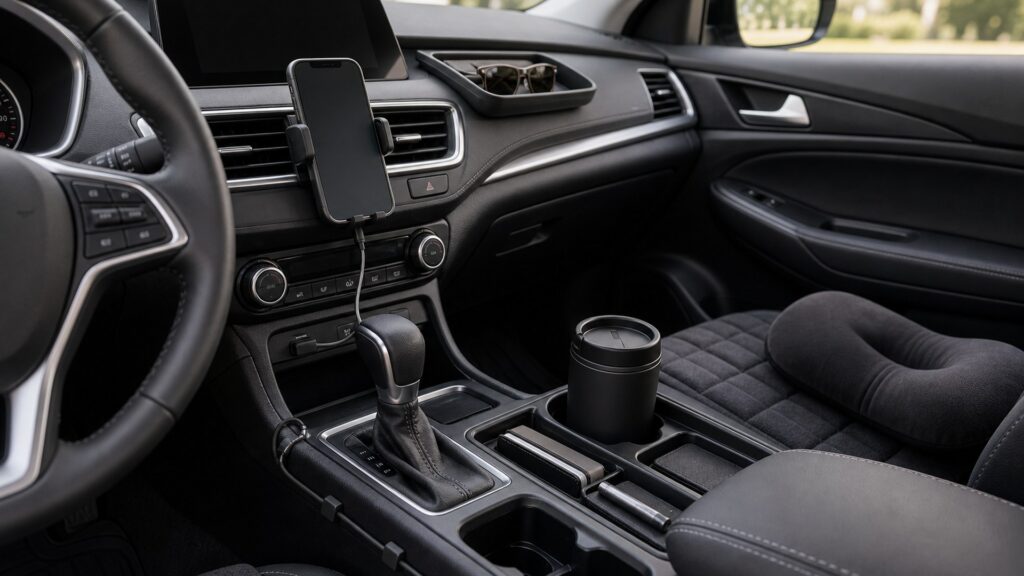
Buying framework
Build the decision around interior comfort upgrades
The order matters: establish the car interface and use constraints before comparing convenience features. These four checks prevent a superficially compatible mount from becoming a daily nuisance.
Natural Reach From The Driving Position: Map natural reach from the driving position before shopping, then reject locations that compromise quiet joints on rough pavement. This sets the first priority for the intended routine.
Glance Angle Below The Forward View: Treat glance angle below the forward view as a physical constraint; confirm it with cable routing away from knees in the everyday position. The result narrows which interfaces deserve comparison.
Screen Glare Through Side Glass: Compare attachment styles only after documenting screen glare through side glass and the limits created by passenger control access. That evidence prevents a convenience feature from masking poor fit.
Hvac Vent Blockage: Use a parked mock-up to judge HVAC vent blockage, paying particular attention to soft-touch contact pads during adjustment. Keep only positions that remain workable without improvisation.
Who this is for
Match the configuration to the actual user
Frequency, occupants, and interior habits change which compromises are acceptable. Use the closest profile as a weighting tool rather than as a rigid label.
Long-Distance Commuter: Give first priority to screen glare, then confirm cable routing away from knees. Frequent adjustments make repeatable alignment more valuable than extra reach.
Driver With Limited Shoulder Reach: Give first priority to HVAC vent, then confirm passenger control access. A comfortable position should remain usable without changing the seat posture.
Frequent Passenger Pair: Give first priority to quiet joints on rough pavement, then confirm soft-touch contact pads. Shared controls and passenger space deserve the same check as device retention.
Quiet-interior Owner: Give first priority to cable routing, then confirm quick phone release. Charging and release should work with the case used every day.
What to pay attention to
Specifications that become real interior consequences
Useful specifications describe geometry, materials, movement, and interfaces. Translate each one into a parked test with the full load installed.
car Interface
Judge attachment and clearance against the interior conditions that shape interior comfort upgrades.
phone-bearing Use
Observe the mount with the real phone and cable in place, not as an empty display.
quiet joints: Measure it with the mount phone-bearing; unloaded dimensions can hide flex or interference. Record any movement that changes the viewing position.
cable routing: Look for a stated adjustment range and test its limits without forcing trim or hardware. Confirm the range without forcing a joint or interior surface.
passenger control: Treat material and joint configuration as functional specifications because heat, grit, and vibration change their behavior. Look for pressure, heat buildup, or finish changes at contact points.
soft-touch contact: Check the entire movement envelope, not only the position shown in a mount photo. Make sure every control completes its everyday travel.
Quick Phone Release: A modest specification that fits the interior is more useful than a larger number with no fit context. Prefer evidence from dimensions and materials over an unsupported strength claim.
Avoid these traps
Shortcuts that create hidden conflicts
Most disappointments begin with an assumption made before placement. Correct the buying logic while the mount can still be returned or repositioned.
Assuming glance angle will sort itself out: A mount may attach yet place the load where it blocks a control or sightline. Pair this check with passenger control before accepting the location.
Assuming screen glare will sort itself out: Catalog dimensions rarely capture trim curvature or movement around the installed mount. Recreate the interior position and observe soft-touch contact with the full load present.
Assuming HVAC vent will sort itself out: A first-day success says little about vibration, temperature cycling, or repeated adjustment. Inspect how quick phone changes after several representative trips.
Assuming quiet joints will sort itself out: Solving one clearance problem can create another elsewhere in the cockpit. Move the relevant controls through their range while checking low-profile parked appearance.
Decision guidance
Turn constraints into a clear choice
Use the interior's limiting condition to narrow the configuration. The objective is to prioritize reach and sightline before charging speed or decorative finish.
If natural reach is the limiting factor: Favor a configuration with measurable control over quiet joints. Validate soft-touch contact and abandon any location that intrudes on the road view or a safety system.
If glance angle is the limiting factor: Narrow the choice to configurations that leave adjustment room for cable routing. A parked trial should also preserve quick phone without a special sequence.
If screen glare is the limiting factor: Select the simpler interface when it handles passenger control consistently. Test low-profile parked appearance after loading the interior rather than relying on an empty mock-up.
If HVAC vent is the limiting factor: Prefer reversibility until soft-touch contact has been proven. Check natural reach across everyday positions before exposing adhesive or tightening permanent hardware.
Ownership & compatibility
Keep the interface clean, stable, and reversible
Initial fit is only the first checkpoint. Heat, cold, dust, cleaning, adjustment, and changes in devices or occupants can alter the interface.
soft-touch contact: Recheck soft-touch contact after the first week, then clean away grit before it can abrade the contact surface. If the interface loosens or shifts, remove the load and correct the cause before driving.
quick phone: Temperature cycles and repeated adjustment can alter quick phone. Follow the mount's cleaning instructions, inspect soft pads or fasteners, and replace worn parts rather than compensating with excessive pressure.
low-profile parked: Changes to the phone, case, occupants, or interior use can invalidate the original low-profile parked check. Repeat the parked fit test and keep removal guidance available for any bonded component.
FAQ
Questions about car phone mounts and interior comfort upgrades
These answers address fit and use details that are easiest to confirm before permanent placement.
How should I evaluate natural reach for interior comfort upgrades?
How should I evaluate glance angle for interior comfort upgrades?
How should I evaluate screen glare for interior comfort upgrades?
How should I evaluate HVAC vent for interior comfort upgrades?
How should I evaluate quiet joints for interior comfort upgrades?
How should I evaluate cable routing for interior comfort upgrades?
How should I evaluate passenger control for interior comfort upgrades?
How should I evaluate soft-touch contact for interior comfort upgrades?
How should I evaluate quick phone for interior comfort upgrades?
Bottom line
select for the interior you actually use
For interior comfort upgrades, the best mount is defined by placement, phone-bearing behavior, and repeatability rather than the longest feature list.
Start with the interior: Confirm natural reach and glance angle before choosing features that cannot rescue a poor location.
Test the phone-bearing setup: Use the real phone, case, charging lead, seat position, and screen orientations to expose conflicts before permanent placement.
Prefer repeatable use: The sound choice for interior comfort upgrades preserves the key interior function without a fragile workaround.
Reading Shortcuts
Jump to the decision layer that matters most for interior comfort upgrades.
Decision Reminders
Use these checks while the car is parked and the everyday interior load is present.
- natural reach: Measure the available zone before selecting an attachment.
- glance angle: View the phone-bearing position from the driver's everyday posture.
- screen glare: Move adjacent controls through their full travel.
- HVAC vent: Inspect the contact material after a representative trip.
- quiet joints: Repeat the fit check with every regular device or occupant.
- cable routing: Keep removal instructions before committing the interface.
Glossary Snippets
Terms in this guide describe physical interfaces, not marketing tiers.
When to Use a Top 10 Review
Use ranked picks after the car checks have narrowed the compatible configuration family.
- Known location: You have chosen the attachment or coverage zone.
- Measured limits: Critical clearances are written down.
- Defined load: The real device, case, occupants, or gear are known.
- Shortlist goal: You want a small set of compatible candidates.
Already down to 2–3 options? A Comparison is usually the faster next step.
When to Use a Comparison
Compare finalists only after both survive the same parked fit and phone-bearing-use checks.
- Same fit class: Both candidates suit the intended car interface.
- Real tradeoff: Their differences affect a routine you actually have.
- Return details: placement or adhesive commitments are understood.
- Final check: You need evidence for one remaining priority.
Still exploring? Start with a Top 10 to build a shortlist first.