
Car Wash Equipment Buying Guide for Weekend Wash Routines
A weekend wash routine works when setup, panel temperature, wheel sequencing, contact safety, drying, quick interior care, laundry, and storage fit the available time every week.
Create a repeatable setup that balances time, weather, water access, pre-rinse, wheels, contact wash, drying, quick interior work, tool segregation, laundering, inspection, storage, and escalation for bonded contamination. Keep the weekend washing recommendation conditional until weather and work area, wheel and lower-panel sequence, and escalation triggers agree with the final check.
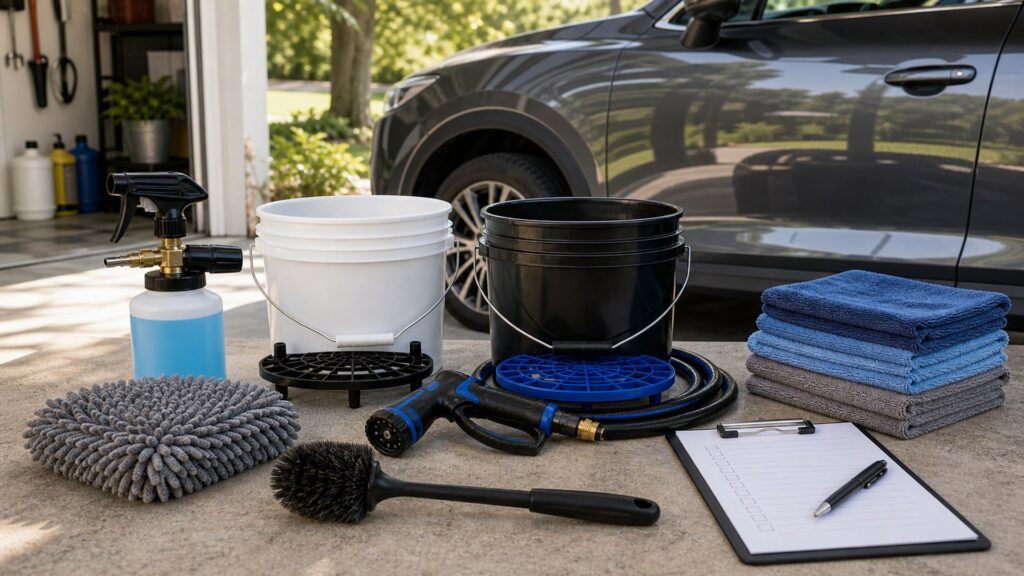
Buying framework
Build the weekend car-wash routine planning decision
Weekend washing begins with routine time budget, is constrained by contact-wash safety, and finishes through escalation triggers.
Capture the starting condition: For weekend washing, document routine time budget. Photograph weather and work area, identify the vehicle or surface, and preserve weekend washing evidence from prior work.
Separate cause from symptom: Test weather and work area against wheel and lower-panel sequence. The weekend washing diagnosis must explain the weekend washing system, not merely the easiest visible defect.
Map weekend washing material and equipment limits: Make setup efficiency agree with contact-wash safety. Apply the exact weekend washing instructions for weekend washing vehicle, surface, chemical, component, and tool.
Price the completed workflow: Combine wheel and lower-panel sequence with access and cleanup. Add drying workflow, weekend washing materials, weekend washing setup, verification, downtime, and labor.
Define the finish line: Set stop conditions for tool reset and laundry. Preserve escalation triggers as the weekend washing weekend washing release or storage record.
Who this is for
Situations that reshape weekend car-wash routine planning
Vehicle condition, surface, work area, prior service, and failure consequence change which weekend washing evidence matters most.
Thirty-minute maintenance wash: Use a pre-staged hose or rinseless system appropriate to light soil, dedicated wheel decision, ample clean media, section discipline, efficient drying, and a short inspection rather than skipping safety steps.
Full ninety-minute wash: Include wheels, pre-rinse, contact wash, crevices, thorough rinse, drying, door jamb priorities, glass, quick vacuum, tool reset, and notes for contamination needing later correction.
Hot sunny weekend: Start earlier or later, use shade, cool panels safely, reduce section size, manage dwell and water spots, and postpone when chemistry will dry faster than it can be rinsed.
Post-road-trip cleanup: Prioritize insects, road film, salt, wheel soil, glass, sensors, radiator-facing surfaces only under vehicle guidance, and an inspection for chips or damage before aggressive scrubbing.
Family vehicle reset: Add trash and belongings removal, dry vacuuming, high-touch compatible cleaning, mat work, child-seat boundaries, glass, odor check, and complete drying without turning the wash into an unplanned restoration.
What to pay attention to
Specifications governing weekend car-wash routine planning
Read routine time budget, contact-wash safety, and tool reset and laundry as connected gates; passing one weekend washing gate does not waive another.
Condition and compatibility
Routine time budget, Weather and work area, Setup efficiency, Contact-wash safety.
Process and verification
Wheel and lower-panel sequence, Drying workflow, Tool reset and laundry, Escalation triggers.
Routine time budget: Divide available minutes among setup, wheels, pre-rinse, contact, rinse, drying, interior, inspection, and tool reset. A routine that always overruns encourages unsafe shortcuts.
Weather and work area: Check shade, panel temperature, wind, rain, freeze, hose and electrical trip hazards, drainage, runoff rules, neighbor exposure, lighting, and a clean staging area before unpacking.
Setup efficiency: Use quick reliable connections, leak-free shutoff, pre-labeled dilutions, color-coded media, staged buckets, reachable tools, stable cart or bins, and enough towels for the entire vehicle.
Contact-wash safety: Match soil level to the method, pre-rinse loose grit, work in sections with lubricated clean media, separate lower panels, and remove any dropped or contaminated tool from paint duty.
Wheel and lower-panel sequence: Decide whether wheels come first under cool-surface chemistry, then segregate wheel tools and manage splatter. Clean lower panels after upper surfaces with different media where contamination warrants.
Drying workflow: Rinse completely and dry from clean upper areas with adequate towels or compatible air. Address mirrors, badges, handles, fuel door, seams, wheels, and drips without dragging dirty runoff upward.
Tool reset and laundry: Rinse tools, empty and clean tanks or buckets, launder media by type under manufacturer guidance, inspect for debris, dry fully, label chemical, relieve pressure, protect hoses, and store safely.
Avoid these traps
Errors that undermine weekend car-wash routine planning
These weekend washing shortcuts confuse weekend washing appearance, pressure, price, or a single symptom with a complete weekend washing result.
Starting without checking weather: Hot panels, wind, freezing conditions, or approaching rain can make chemistry dry, spread debris, freeze runoff, or waste the work. Adjust or postpone.
Spending the whole budget on wheels: Set time limits and soil thresholds. Heavily bonded wheel contamination may deserve a separate session rather than rushing paint contact and drying.
Using too few towels: A weekend routine fails when saturated drying or glass towels are reused across dirty areas. Stock by vehicle size and soil, not by minimum purchase count.
Adding correction mid-wash: Clay, tar removal, polishing, coating, and deep interior extraction require their own materials, time, testing, and weather. Record them for a planned project.
Putting equipment away wet: Reset is part of the routine. Wet media, solution in tanks, pressurized hoses, unlabeled bottles, and dirty brushes create odor, damage, and next-week contamination.
Decision guidance
Choose by the unresolved condition
Branch on the remaining weekend washing uncertainty, then close the weekend washing question with weekend washing materials, controlled procedure, and retained verification.
If soil is light and time is short: Use a method explicitly suitable for light contamination with generous clean media, strict section control, and no forced cleaning of bonded deposits.
If road film is heavy: Allow more pre-cleaning, rinse, chemistry dwell within limits, wheel and lower-panel segregation, and drying capacity; postpone if the full safe sequence will not fit.
If water spots begin forming: Reduce section size, keep surfaces wet only as intended, rinse and dry sooner, move to shade, and avoid adding more chemistry to hot panels.
If interior work expands: Finish exterior drying and secure equipment, then scope dry vacuuming or a separate restoration project. Do not leave wet paint or open chemicals unattended.
If inspection finds chips or contamination: Photograph and schedule glass repair assessment, paint decontamination, touch-up, or mechanical service separately instead of improvising during routine wash time.
Ownership & compatibility
Preserve a usable work record
A weekend washing file should identify the choice, procedure, result, and later weekend washing follow-up without reconstructing the record.
Save identity and condition: File routine time budget with weekend washing photographs, date, invoice, and equipment identity. Store weather and work area in the same weekend washing record.
Record materials and procedure: Connect setup efficiency to contact-wash safety. Note every weekend washing weekend washing chemical, dilution, tool, environment, instruction revision, and stop condition.
Keep setup and verification outputs: Attach proof of tool reset and laundry. Preserve weekend washing weekend washing calibration, cure, moisture, finish, scan, inspection, or operational output where weekend washing work requires it.
Track later performance: Link later weekend washing damage, warnings, residue, odor, moisture, or claims to escalation triggers. Keep each weekend washing weekend washing follow-up with the original work file.
FAQ
Car Wash Equipment weekend car-wash routine planning FAQ
Answers about routine time budget, weekend washing equipment boundaries, procedure, evidence, and follow-up.
How should ideal routine length be evaluated?
Why does weather checks matter?
What evidence supports wheel order?
When should contact method change the plan?
Can towel quantity be handled routinely?
What mistake is common with quick interiors?
How is road-trip soil verified?
What should be recorded about equipment reset?
When does project escalation need specialist help?
Bottom line
Complete weekend car-wash routine planning without a missing link
The weekend washing identity, interfaces, weekend washing procedure and measured outcome must support one conclusion.
Identify: Begin weekend washing work with routine time budget and weather and work area.
Match: For weekend washing, cross-check setup efficiency against contact-wash safety.
Control: During weekend washing work, manage wheel and lower-panel sequence and document drying workflow.
Verify: Close the weekend washing record with tool reset and laundry and escalation triggers.
Reading Shortcuts
Confirm application and condition first.
Decision Reminders
Checks to complete before committing.
- Confirm the exact application: Cross-check vehicle, engine, housing, and original part.
- Preserve removed-part clues: Contamination and damage can identify another fault.
- Keep the work clean: Keep downstream openings protected.
- Follow the procedure: Respect pressure, fluids, torque, priming, and resets.
- Inspect interfaces: Seals, caps, connectors, threads, and fittings must agree.
- Verify before release: Check leaks, warnings, starting, idle, and road behavior.
Glossary Snippets
Terms used in this decision.
When to Use a Top 10 Review
Use rankings after application and service scope are documented.
- Application confirmed: Filter with exact engine and interface evidence.
- Duty identified: Compare parts for the real interval and environment.
- Evidence published: Rank construction, testing, traceability, and support.
- Job scope complete: Include seals, fluids, tools, and verification.
Already down to 2–3 options? A Comparison is usually faster.
When to Use a Comparison
Compare finalists for the same verified application.
- Interfaces: Match dimensions, seals, valves, fittings, and connectors.
- Performance evidence: Compare documented efficiency, capacity, and service claims.
- Included content: List every seal, cap, sensor, boot, and fitting.
- Installed outcome: Price fluids, labor, priming, disposal, and downtime.
Still building a shortlist? Start with a Top 10.