
Cardio Equipment Buying Guide: How to Choose the Right One
Cardio equipment is a family of different motions, not one interchangeable product type. A treadmill, bike, rower, elliptical, or stair machine changes posture, rhythm, impact, controls, and room requirements.
Start with the movement you will use, then compare fit, effort range, entry and dismount, noise, power, active clearance, feedback, and maintenance. The right machine is the one that fits both the session and the room.
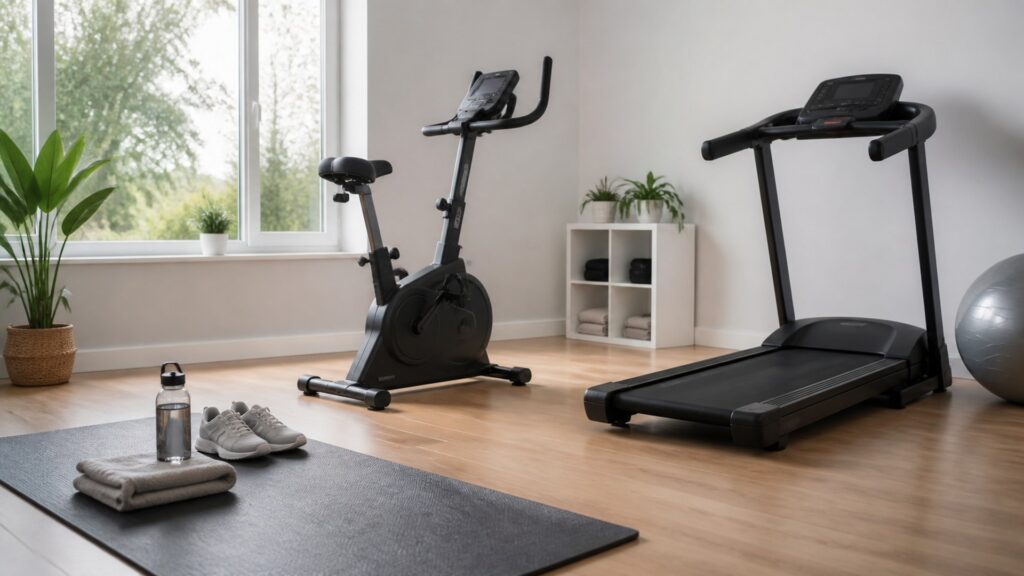
Buying framework
Choose the motion before the machine
Cardio equipment is not interchangeable just because every product raises heart rate. Start with the movement, then test fit, control, room, and upkeep.
Name the movement: Walking, cycling, rowing, elliptical motion, and stair stepping feel different in posture, rhythm, impact, and technique. Choose the pattern you will actually return to.
Check the effort range: Speed, incline, resistance, cadence, and step rate should support the session types you plan, from easier steady work to controlled intervals.
Fit the body to the motion: Deck length, saddle position, handle reach, stride, rail length, and step height affect whether the movement stays comfortable and controlled.
Measure the active room: Mounting, dismounting, arm swing, ceiling height, rear clearance, and storage position all belong in the measurement.
Include the ownership burden: Noise, power, sweat, service, belts, rails, pedals, and electronics affect whether the machine remains practical after delivery.
Who this is for
Match the machine to the user
The right cardio machine depends on the movement the buyer prefers and the room, impact, and control constraints around it.
Walking or running user: A treadmill supports pace and incline changes, but deck length, handrails, noise, clearance, and dismount space matter. Choose it when the gait and room fit.
Cycling user: An exercise bike offers seated aerobic work and convenient resistance control. Check saddle adjustment, pedal position, handle reach, and whether the machine feels natural at the intended duration.
Full-body conditioning user: A rower combines legs, trunk, and arms, but it needs rail length, technique, storage, and a clear path behind the seat. Choose it when the motion is appealing enough to learn.
Low-impact stride user: An elliptical can provide a guided step pattern with reduced repeated landing compared with running, but stride length, step-on height, handle path, and controls should fit.
Climbing or shared-home user: A stair machine or compact stepper creates a different rhythm and footprint. Compare step height, handrails, noise, entry, and whether multiple users can reset the settings quickly.
What to pay attention to
Translate machine specifications into use
Cardio numbers are only useful when they describe a movement and a room consequence. Read the machine from entry to dismount.
Movement, Fit & Effort
Compare geometry, contact, resistance, speed, incline, stride, and step behavior.
Room, Controls & Ownership
Compare active footprint, noise, power, display, service access, and upkeep.
Deck, saddle, stride, rail, or step geometry: These dimensions affect gait, posture, pedal position, stroke, or climbing rhythm. Compare them with the user's body and intended pace.
Resistance and incline behavior: Smooth, reachable changes help you settle into an effort or structure intervals. A high maximum matters less than usable control.
Entry and exit: Step-on height, handrails, seat position, foot placement, and dismount room affect confidence and the space around the machine.
Display and controls: A readable console should show the metrics you need and let you change effort without breaking movement or reaching into an awkward position.
Noise, vibration, and power: Motors, fans, flywheels, steps, and cords determine when the machine works in a home. Check outlets, flooring, neighbors, and airflow.
Service points: Belts, rails, pedals, cables, rollers, batteries, and electronics need different inspections. Make sure the machine can be reached for care.
Avoid these traps
Cardio equipment buying mistakes
The wrong machine often looks acceptable in a specification table. These mistakes happen when the type and the room are treated as secondary.
Equating machines by calories: A console estimate cannot erase differences in motion, comfort, intensity control, or space. Choose the activity and fit before using a number to compare.
Buying by program count: Programs do not help if the machine's movement, controls, or room placement is wrong. Prioritize manual control and the session types you know you will use.
Measuring the stored footprint: Treadmills, rowers, and step machines need clearance to mount, move arms, dismount, or store safely. Draw the active zone before ordering.
Chasing maximum resistance: Smooth control at the intended effort is more important than a high setting you rarely reach. Compare how the machine changes, not just how far it goes.
Ignoring service access: A machine packed tightly into a corner may be hard to inspect, clean, or repair. Leave access around belts, rails, cords, and moving connections.
Decision guidance
Choose the cardio format by the job
Each machine family has a clear reason to choose it and a tradeoff to accept.
If you want walking or running control, choose a treadmill: Choose it when the deck, handrails, speed, incline, noise, and active clearance fit. A treadmill is a poor choice if dismount space or quiet hours are unavailable.
If you want seated aerobic work, choose an exercise bike: Compare upright or recumbent position, saddle adjustment, pedals, handlebars, resistance steps, and bottle access. Prioritize comfort for the planned duration.
If you want coordinated full-body work, choose a rower: A rower can add a strong whole-body rhythm, but rail length, foot position, technique, storage, and rear clearance deserve careful checking.
If you want a guided low-impact stride, choose an elliptical: Compare stride length, step-on height, handle path, resistance, and noise. The machine should feel natural rather than forcing a short or awkward stride.
If you want climbing emphasis, choose a stair machine or stepper: Check step height, handrails, cadence control, noise, and room around the steps. Compact does not mean easy to use or easy to exit.
If you share the room or schedule, choose the machine with the cleanest reset: Fast adjustments, visible controls, manageable noise, and a clear storage path can outweigh a longer feature list in a shared home.
Ownership & compatibility
Maintain the machine around the motion
Cardio equipment collects sweat and repeated movement. Keep the contact points, floor, and service areas in view.
Clean contact and sweat areas: Wipe decks, seats, handlebars, rails, pedals, steps, displays, and mats according to the manual.
Inspect motion points: Check belts, pedals, rollers, rails, cables, fasteners, and step connections for unusual noise, looseness, or uneven travel.
Manage power and airflow: Keep cords out of paths, use an appropriate outlet, and leave ventilation and service access around powered machines.
Respond to changes early: Stop and investigate new vibration, abrupt movement, damaged controls, or instability before increasing speed, resistance, or duration.
FAQ
Cardio equipment buying guide FAQ
Answers about choosing, fitting, and maintaining cardio machines.
Which type of cardio equipment is best?
Is a treadmill better than an exercise bike?
Which cardio machine works the most muscles?
Which cardio equipment is easiest on the joints?
How much clearance does a cardio machine need?
Do cardio machines require a dedicated outlet?
Are machine calorie displays accurate?
What should I test before buying a cardio machine?
How often does cardio equipment need maintenance?
Bottom line
Choose the machine whose motion fits your life
The right cardio machine makes the intended effort controllable, comfortable, and practical in the room.
Match the motion: Choose walking, cycling, rowing, stride, or stepping based on actual preference.
Measure use, not storage: Check fit, entry, dismount, clearance, noise, power, and controls.
Plan the upkeep: Sweat, moving parts, service access, and floor conditions affect the long-term choice.
Reading Shortcuts
Use the framework to choose a movement family, then compare fit, room, control, and ownership details.
Decision Reminders
Cardio machines differ most in motion, fit, and the room they require.
- Motion: Choose a movement you prefer.
- Fit: Check deck, saddle, stride, rail, or step.
- Control: Test speed, resistance, and incline.
- Room: Measure the active footprint.
- Power: Check cords, outlets, and airflow.
- Service: Leave access to moving parts.
Glossary Snippets
These terms separate cardio machine families.
When a Top 10 Helps
Use a Top 10 after you choose the machine family.
- Types: Browse products within a chosen motion.
- Examples: Compare real options inside that family.
Use a Top 10 after you have defined the product family and the priorities your routine actually needs.
When a Comparison Helps
Use a comparison after two machines share the same movement and room fit.
- Control: Compare resistance, speed, and displays.
- Ownership: Compare noise, power, and service.
Use a comparison after you have a shortlist and need direct product-to-product tradeoffs.