
Cheek Makeup Buying Guide for Photo-Ready Looks
Camera-ready cheek makeup needs dimension, not an indiscriminately stronger stripe. Test blush, bronzer, and highlight from normal conversation distance before reviewing close photographs.
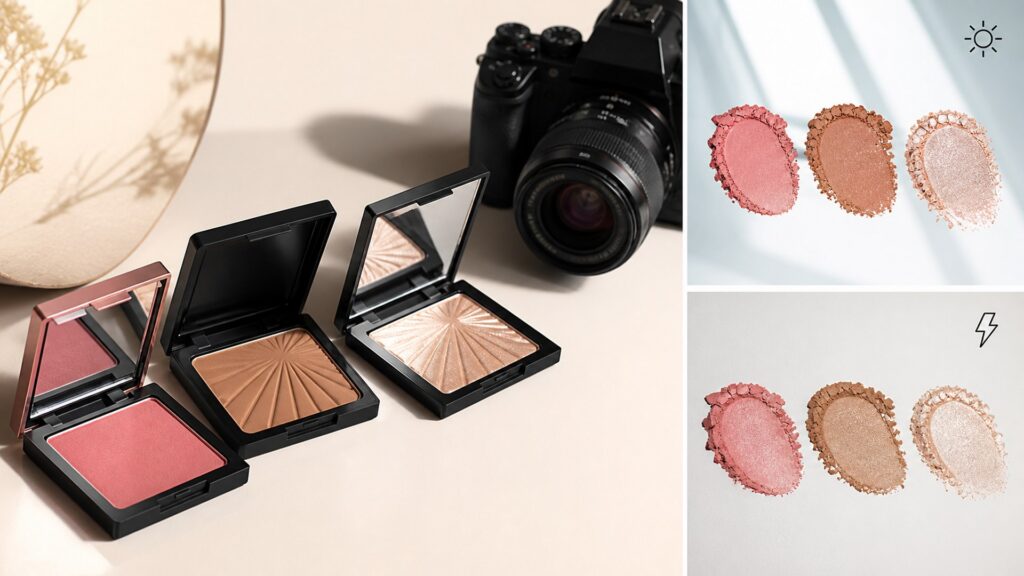
Flash and directional light can exaggerate reflectivity or erase subtle color. Keep base makeup and lighting stable, photograph both sides, and select the finish that remains believable off camera too.
Buying framework
Define the photo-ready makeup job before comparing cheek makeup products
Use dimension that reads naturally both in person and through a camera as the pass condition. For this photo-ready cheek makeup comparison, undertone and pigment control supply the most relevant evidence.
Routine evidence: Keep a photo-ready cheek makeup record of undertone across controlled lighting, flash tests, and high-resolution photographs. Retire the photo-ready cheek makeup product when there is irritation, patchiness that worsens, or products used past a safe condition.
Performance boundary: Recreate controlled lighting, flash tests, and high-resolution photographs and inspect finish reflectivity before changing technique. Keep the photo-ready cheek makeup trial controlled, and stop for irritation, patchiness that worsens, or products used past a safe condition.
Decision signal: On a representative day, record how pigment control affects the photo-ready cheek makeup result. Irritation, patchiness that worsens, or products used past a safe condition is a rejection boundary, never a wear tradeoff.
Use profiles
Match the cheek product to the person and frequency
The hardest part of controlled lighting, flash tests, and high-resolution photographs is the honest test. Put photo-ready cheek makeup through it while documenting finish reflectivity, flash response, and correction work.
Routine evidence: Recreate controlled lighting, flash tests, and high-resolution photographs and inspect finish reflectivity before changing technique. Keep the photo-ready cheek makeup trial controlled, and stop for irritation, patchiness that worsens, or products used past a safe condition.
Performance boundary: On a representative day, record how pigment control affects the photo-ready cheek makeup result. Irritation, patchiness that worsens, or products used past a safe condition is a rejection boundary, never a wear tradeoff.
Decision signal: Give photo-ready cheek makeup enough time to reveal flash response, fading, and comfort during controlled lighting, flash tests, and high-resolution photographs. End use immediately for irritation, patchiness that worsens, or products used past a safe condition.
Specifications
Read cheek product specifications through real use
Before spending more, prove that photo-ready cheek makeup improves pigment control without weakening edge diffusion. The reference point is controlled lighting, flash tests, and high-resolution photographs, not a demonstration.
Opening evidence: undertone
During the first photo-ready cheek makeup session, log undertone, application control, and immediate comfort. Reserve judgment until removal is complete.
Later evidence: edge diffusion
Across repeated controlled lighting, flash tests, and high-resolution photographs, revisit edge diffusion, hygiene, fading, and photo-ready cheek makeup tolerance before keeping the photo-ready cheek makeup.
Routine evidence: On a representative day, record how pigment control affects the photo-ready cheek makeup result. Irritation, patchiness that worsens, or products used past a safe condition is a rejection boundary, never a wear tradeoff.
Performance boundary: Give photo-ready cheek makeup enough time to reveal flash response, fading, and comfort during controlled lighting, flash tests, and high-resolution photographs. End use immediately for irritation, patchiness that worsens, or products used past a safe condition.
Decision signal: Compare equal areas when judging edge diffusion. The photo-ready cheek makeup option must keep edge diffusion manageable and feel comfortable, with no irritation, patchiness that worsens, or products used past a safe condition.
Common mistakes
Avoid shortcuts that distort the photo-ready makeup decision
For controlled lighting, flash tests, and high-resolution photographs, photo-ready cheek makeup should connect flash response and touch-up behavior to one visible outcome: dimension that reads naturally both in person and through a camera.
Routine evidence: Give photo-ready cheek makeup enough time to reveal flash response, fading, and comfort during controlled lighting, flash tests, and high-resolution photographs. End use immediately for irritation, patchiness that worsens, or products used past a safe condition.
Performance boundary: Compare equal areas when judging edge diffusion. The photo-ready cheek makeup option must keep edge diffusion manageable and feel comfortable, with no irritation, patchiness that worsens, or products used past a safe condition.
Decision signal: Document touch-up behavior in ordinary light and at the end of controlled lighting, flash tests, and high-resolution photographs. Do not keep photo-ready cheek makeup in the shortlist after irritation, patchiness that worsens, or products used past a safe condition.
Decision guidance
Decide when basic, premium, or no purchase makes sense
Start this decision with edge diffusion. In the photo-ready cheek makeup test, observe undertone under the ordinary conditions of controlled lighting, flash tests, and high-resolution photographs.
Routine evidence: Compare equal areas when judging edge diffusion. The photo-ready cheek makeup option must keep edge diffusion manageable and feel comfortable, with no irritation, patchiness that worsens, or products used past a safe condition.
Performance boundary: Document touch-up behavior in ordinary light and at the end of controlled lighting, flash tests, and high-resolution photographs. Do not keep photo-ready cheek makeup in the shortlist after irritation, patchiness that worsens, or products used past a safe condition.
Decision signal: Change one variable while assessing undertone; otherwise the photo-ready cheek makeup evidence becomes unclear. Pause the experiment for irritation, patchiness that worsens, or products used past a safe condition.
Ownership & compatibility
Keep the cheek product reliable after purchase
A credible photo-ready cheek makeup verdict comes from repeated use. Track touch-up behavior, then ask whether finish reflectivity helps dimension that reads naturally both in person and through a camera for controlled lighting, flash tests, and high-resolution photographs.
Routine evidence: Document touch-up behavior in ordinary light and at the end of controlled lighting, flash tests, and high-resolution photographs. Do not keep photo-ready cheek makeup in the shortlist after irritation, patchiness that worsens, or products used past a safe condition.
Performance boundary: Change one variable while assessing undertone; otherwise the photo-ready cheek makeup evidence becomes unclear. Pause the experiment for irritation, patchiness that worsens, or products used past a safe condition.
Decision signal: Count application, correction, and removal when scoring finish reflectivity. A fast photo-ready cheek makeup result does not justify irritation, patchiness that worsens, or products used past a safe condition.
FAQ
Questions about cheek makeup products for photo-ready makeup
Answers for a careful photo-ready cheek makeup comparison, including pigment control, flash response, tolerance, and safe-use limits.
What should I compare first when choosing photo-ready cheek makeup?
How long should I test photo-ready cheek makeup?
When is premium photo-ready cheek makeup worth the price?
Bottom line
Finish the photo-ready makeup choice with observable proof
Keep controlled lighting, flash tests, and high-resolution photographs unchanged while examining undertone. The photo-ready cheek makeup candidate remains viable only when pigment control supports dimension that reads naturally both in person and through a camera.
Routine evidence: Change one variable while assessing undertone; otherwise the photo-ready cheek makeup evidence becomes unclear. Pause the experiment for irritation, patchiness that worsens, or products used past a safe condition.
Performance boundary: Count application, correction, and removal when scoring finish reflectivity. A fast photo-ready cheek makeup result does not justify irritation, patchiness that worsens, or products used past a safe condition.
Decision signal: Inspect pigment control with clean hands and tools. If the photo-ready cheek makeup session produces irritation, patchiness that worsens, or products used past a safe condition, discontinue it rather than concealing a problem during controlled lighting, flash tests, and high-resolution photographs.
Reading Shortcuts
Jump to the photo-ready cheek makeup evidence required for photo-ready cheek makeup.
Decision Reminders
Keep the photo-ready cheek makeup test realistic and hygienic.
- Target: The intended result is to dimension that reads naturally both in person and through a camera.
- Evidence: Track undertone, comfort, wear, and removal.
- Boundary: Stop for irritation, patchiness that worsens, or products used past a safe condition.
Glossary Snippets
Useful terms for assessing photo-ready cheek makeup.
When a Top 10 List Helps
Use rankings to discover plausible products, then screen each for controlled lighting, flash tests, and high-resolution photographs.
- Explore formats: A list can reveal useful approaches to undertone.
- Create finalists: Discovery helps, but only a controlled photo-ready cheek makeup trial establishes fit.
Have finalists already? Open the comparison section.
When a Direct Comparison Helps
Compare finalists after both demonstrate dimension that reads naturally both in person and through a camera.
- Two remain: Set finish reflectivity, comfort, wear, and removal side by side.
- An upgrade is unclear: Ask whether higher cost improves edge diffusion in repeated use.
Still exploring? Start with the Top 10 section.