Cloud Accounting Software vs Desktop Accounting Software: Key Differences Explained

Cloud accounting software and desktop accounting software can both support accurate books, but they create different tradeoffs around access, updates, collaboration, control, security model, and ownership. This comparison helps businesses decide which accounting environment fits their work.

By: Harley Hansen
Updated: June 24, 2026
Approx. 10-12 min read
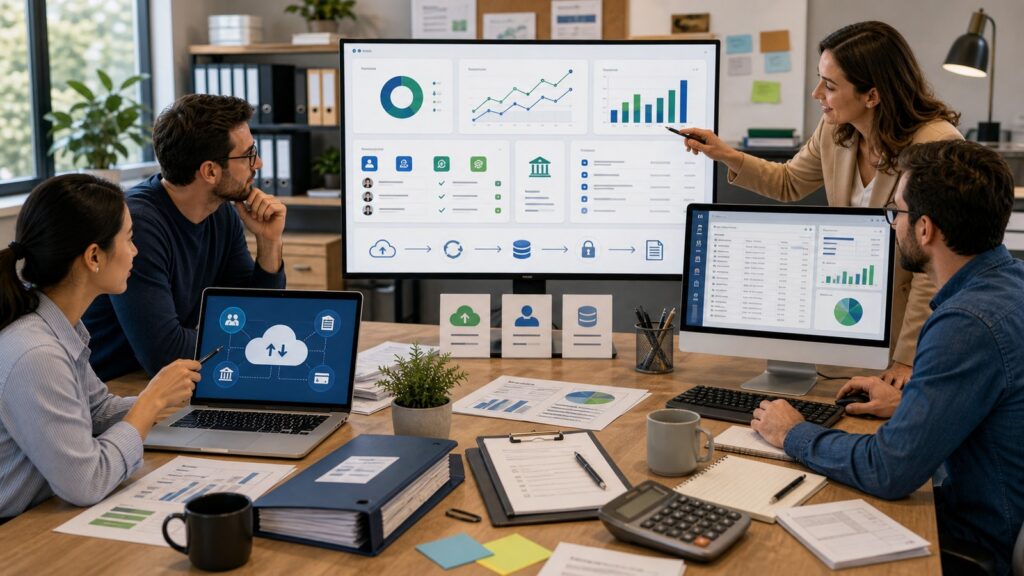
Cloud Accounting Software vs Desktop Accounting Software business comparison image

Head-to-head

Cloud Accounting Software vs Desktop Accounting Software: Key Differences Explained

A practical A/B look at Cloud Accounting Software and Desktop Accounting Software, focused on accounting workflow fit, reporting, automation, integrations, support, pricing posture, and buyer fit.

Cloud Accounting Software comparison image

Cloud Accounting Software

Cloud accounting software is the stronger default when a business needs remote access, collaboration, automated updates, bank feeds, and easier advisor visibility.

Score 8.8 Best for remote access Access Anywhere Why buy Collaboration
  • Supports remote and advisor collaboration
  • Usually includes automatic updates
  • Fits bank feeds and modern app workflows
VS
Desktop Accounting Software comparison image

Desktop Accounting Software

Desktop accounting software is stronger when a business values local control, stable workflows, offline access, and a fixed environment that changes less often.

Score 8.2 Best for local control Access Local Why buy Control
  • Works well for stable local processes
  • Appeals to control-focused teams
  • Can be useful when offline access matters
Metric
Cloud
Desktop
Winner
Remote access
Stronger
Limited
Cloud
Local control
Shared
Stronger
Desktop
Collaboration
Stronger
Manual
Cloud
Updates
Automatic
Manual
Cloud
Offline use
Limited
Stronger
Desktop
Best use
Modern teams
Stable local
Cloud
Real-world context
Cloud accounting software wins for access and collaboration; desktop accounting software wins when local control and stable offline workflows are more important.

Cloud - Why people choose it

  • Better remote and advisor access
  • Automatic update model
  • Strong fit for connected bank workflows

Desktop - Why people choose it

  • More local control
  • Useful for stable office workflows
  • Can support offline accounting routines
Winner: Cloud Accounting Software Cloud accounting software is the stronger default for most modern small businesses, while desktop accounting software remains useful when local control and offline workflow stability matter most.
Read FAQs

Deep dive

What actually matters in this matchup

The cloud-versus-desktop accounting decision is about operating model as much as features. We weighted remote access, collaboration, update cadence, data control, security responsibility, offline needs, bank-feed workflows, advisor access, and how the business expects accounting work to happen every week.

Access model: Cloud accounting software is built for browser-based or app-based access from multiple locations, which helps owners, bookkeepers, and advisors work from the same current file. Desktop accounting software keeps the workflow closer to a specific machine, office, or hosted environment.

Updates and maintenance: Cloud tools usually handle updates, backups, and feature improvements through the provider. Desktop tools can give teams more control over timing and version changes, but they may require more attention to upgrades, backups, file management, and local IT practices. Today.

Collaboration: Cloud accounting makes collaboration easier because users can access current records without sending files back and forth. Desktop accounting can still support collaboration, but it often depends on shared files, hosting, remote access tools, or disciplined handoff processes. Practically speaking.

Control and security: Desktop software appeals to teams that want more local control over files and operating environment. Cloud software shifts more responsibility to the provider, so buyers should review access controls, backups, export options, security settings, and what happens if service access is interrupted.

Workflow fit: Businesses with distributed teams, outside accountants, real-time bank feeds, or owners who travel usually benefit from cloud accounting. Businesses with stable office workflows, strict local-process preferences, or unreliable internet may still prefer desktop accounting. That keeps final rollout planning practical.

Final choice: Cloud accounting software earns the default edge for modern small businesses because access, collaboration, updates, and connected workflows matter every week. Desktop accounting software remains the better answer when offline access, local control, or stable legacy processes are more important.

Methodology

How we evaluated the matchup

This comparison uses current category research and buyer-decision analysis rather than hands-on lab testing.

Scope: This comparison uses official product information, vendor documentation, and buyer workflow analysis. We did not claim hands-on lab testing of Cloud Accounting Software and Desktop Accounting Software; the goal is to map practical fit, adoption risk, and purchase criteria.

What we compared: We compared remote access, collaboration, update model, local control, backup responsibility, offline access, security settings, bank-feed workflows, and advisor access, operating control, implementation effort, scalability, cost shape, reporting needs, integration burden, data governance, support expectations, and how quickly a business can get reliable outcomes after setup.

How results are interpreted: The winner is the stronger default for the buyer described here, not a universal answer. Cloud Accounting Software and Desktop Accounting Software can both be correct when company size, workflow maturity, budget, staffing, and change-management tolerance point different directions.

What buyers should verify: Before deciding, verify current pricing, feature availability, contract terms, migration support, security requirements, data ownership, integration limits, reporting depth, exit options, and the internal owner who will keep the workflow working. That keeps rollout planning practical.

FAQ

Cloud Accounting Software vs Desktop Accounting Software: common questions

Are Cloud Accounting Software and Desktop Accounting Software direct substitutes?
Sometimes, but not perfectly. Cloud Accounting Software and Desktop Accounting Software can solve overlapping business problems, yet they usually differ in ownership model, workflow depth, implementation effort, reporting style, and long-term flexibility. Start with the process you need to improve, then compare fit.
Which option is better for most businesses?
Cloud Accounting Software is the stronger default for the buyer described in this comparison because it better matches the central workflow tradeoff. Still, Desktop Accounting Software can be smarter when team size, budget, integration needs, compliance requirements, or internal ownership point another direction.
When should a team choose Cloud Accounting Software?
Choose Cloud Accounting Software when its strengths match the workflow you repeat often and the team can own adoption after launch. Verify integrations, reporting depth, user permissions, migration effort, support needs, and renewal terms before assuming it will stay practical after kickoff. Today.
When should a team choose Desktop Accounting Software?
Choose Desktop Accounting Software when its strengths match the buyer's constraints better than Cloud Accounting Software. Before committing, check implementation scope, data portability, user limits, support coverage, compliance fit, and how much training the team will need to use the option consistently. Today.
Should price decide the comparison?
Price should be a gate, not the whole decision. A cheaper option can cost more if adoption fails, integrations break, reporting is weak, or migration takes longer than planned. Compare total ownership cost, setup effort, support needs, and switching friction. That matters practically.
Can a company use both options together?
Yes. Some teams combine Cloud Accounting Software and Desktop Accounting Software when each solves a different part of the workflow. Define which system owns records, reporting, approvals, and ongoing changes so the combination does not create duplicated work or unclear accountability. Practically speaking.
What should buyers verify before deciding?
Verify the current feature set, pricing page, contract length, security posture, data export options, implementation timeline, integration needs, support coverage, and internal owner. A small pilot or structured demo is safer than buying from a feature checklist alone. That keeps rollout planning practical.
Is this based on hands-on testing?
No. This comparison synthesizes official documentation, category definitions, implementation patterns, and buyer decision criteria. It does not claim instrumented testing of every platform or configuration. Buyers should verify current terms, demos, references, and security details for the exact option considered. That matters practically.

Key Takeaways

  • Cloud wins for remote collaboration.
  • Desktop wins for local control.
  • Updates and backups matter.
  • Advisor access can decide the choice.
  • Offline needs should be tested.
  • Data export terms deserve review.

Verdict

The Better Default for Modern Accounting Workflows

This accounting-platform matchup favors cloud accounting when collaboration, updates, and remote access matter most.

#1 Winner

Cloud Accounting Software

Cloud accounting software is the better default for businesses that need current records, remote access, advisor collaboration, and automatic updates.

  • Better remote access
  • Easier collaboration
  • Automatic update model

Runner-up

Jump to the Head-to-Head

Tip: Ask where accounting work actually happens; if owners, bookkeepers, and advisors are not in one office, cloud usually deserves the lead.

Where to Buy

Use demos, trials, discovery calls, and contract review before committing budget.

Vendor terms, demos, pricing, and feature availability change regularly. Some links may earn a commission and never affect rankings.

Accessories You’ll Want

  • Requirements checklist (keeps must-have workflows, data needs, and approvals visible before demos start)
  • Decision matrix (scores each option against cost, control, speed, risk, and long-term ownership)
  • Data inventory (shows which records, integrations, and permissions must move or be protected)
  • Stakeholder map (names the teams that will use, approve, support, or fund the choice)
  • Implementation calendar (turns the decision into milestones, owners, training dates, and review points)

Tip: Document responsibilities before kickoff so the winning option has an owner, timeline, data plan, and review point.