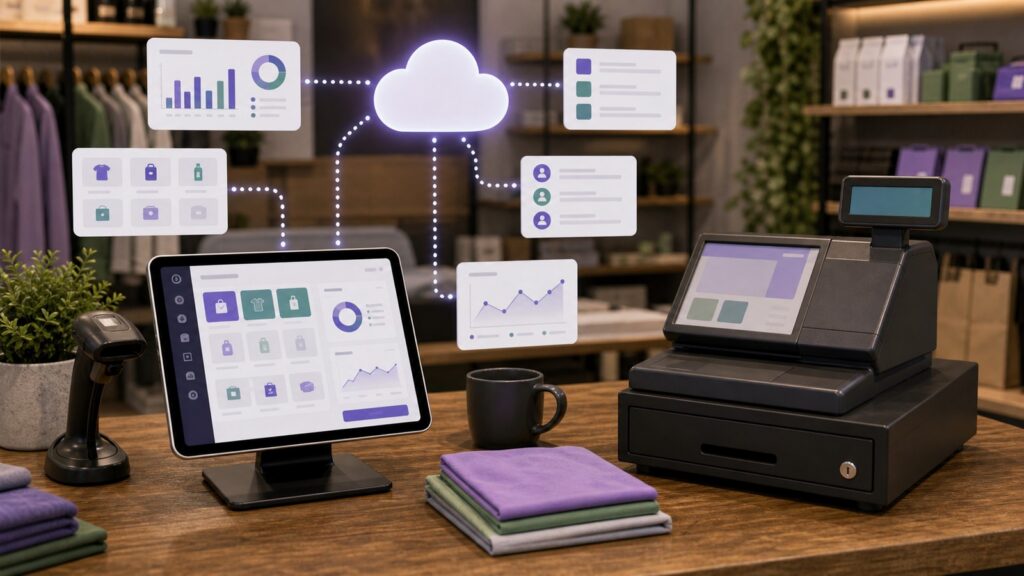
This comparison uses current category research and buyer-decision analysis rather than hands-on lab testing.
Scope: This comparison uses official product information, vendor documentation, and buyer workflow analysis. We did not claim hands-on lab testing of Cloud POS Systems and Traditional POS Systems; the goal is to map practical fit, adoption risk, and purchase criteria.
What we compared: We compared data access, offline resilience, hardware dependency, inventory sync, reporting, remote management, payment integrations, updates, ownership cost, and implementation complexity, operating control, implementation effort, scalability, cost shape, reporting needs, integration burden, data governance, support expectations, and how quickly a business can get reliable outcomes after setup.
How results are interpreted: The winner is the stronger default for the buyer described here, not a universal answer. Cloud POS Systems and Traditional POS Systems can both be correct when company size, workflow maturity, budget, staffing, and change-management tolerance point different directions.
What buyers should verify: Before deciding, verify current pricing, feature availability, contract terms, migration support, security requirements, data ownership, integration limits, reporting depth, exit options, and the internal owner who will keep the workflow working. That keeps rollout planning practical.