
Cologne Buying Guide for Warm Weather
Warm weather changes the wearing environment. Heat can accelerate evaporation and increase perceived projection, humidity may make dense accords feel heavier, and movement, sweat, sunscreen, and air conditioning can alter how a cologne is experienced.
Do not reduce the decision to “citrus for summer.” Test the complete composition at a modest dose through the conditions that matter: outdoor heat, shade, transit, indoor cooling, and conversational distance after the opening has lifted.
Climate test
Recreate the hottest part of the routine
A counter strip in a cool store cannot predict a commute, outdoor lunch, or humid evening. The trial should cross the actual temperature changes the wearer faces.
Map heat exposure: Separate brief outdoor movement from hours in direct heat, and note how much of the day will still occur inside cooled rooms.
Hold the dose steady: Use the same conservative application while comparing candidates so a louder spray count is not mistaken for better warm-weather performance.
Observe other products: Wear normal sunscreen, moisturizer, deodorant, and laundry scent during at least one trial to identify crowding, irritation, or an unpleasant combination.
Summer profiles
Match freshness and presence to the schedule
Warm-weather needs differ between outdoor activity, an air-conditioned office, evening dining, and travel through changing climates.
Outdoor commuter: Look for a composition that stays coherent after movement without requiring an assertive trail in crowded transport.
Cooled-office wearer: Remember that a scent chosen for the sidewalk may spend most hours around desks and meetings where restrained diffusion remains important.
Warm-evening socializer: Test the dry-down after sunset conditions; sweetness, woods, herbs, or florals can work when structure and dosage suit guest proximity.
Performance details
Evaluate the evaporation curve, not just the bright opening
Volatile top notes may create an appealing first impression and disappear quickly. The surviving heart and base determine whether the cologne remains balanced in heat.
Outdoor evidence
A short measured wear in realistic heat shows whether the composition swells, turns sharp, vanishes unevenly, or remains comfortable.
Indoor evidence
Returning to air conditioning reveals whether the same application becomes too present once body temperature and surrounding airflow change.
Opening speed: Note how quickly citrus, aromatic, green, or watery effects lift, and whether the transition leaves a coherent middle rather than a thin gap.
Projection under movement: Ask a trusted person about scent at normal distance after walking outdoors; the wearer may adapt while a warm trail remains obvious.
Atomizer control: A consistent fine spray helps reduce dose precisely. Coarse streams and partial pumps make small warm-weather adjustments difficult to repeat.
Hot-weather errors
Avoid solving every change with another spray
Rapid top-note loss and personal nose fatigue can suggest disappearance even when the base or trail remains detectable to other people.
Reapplying from habit: Move into neutral air or seek outside feedback before adding scent; repeated blind reapplication can create excessive projection indoors.
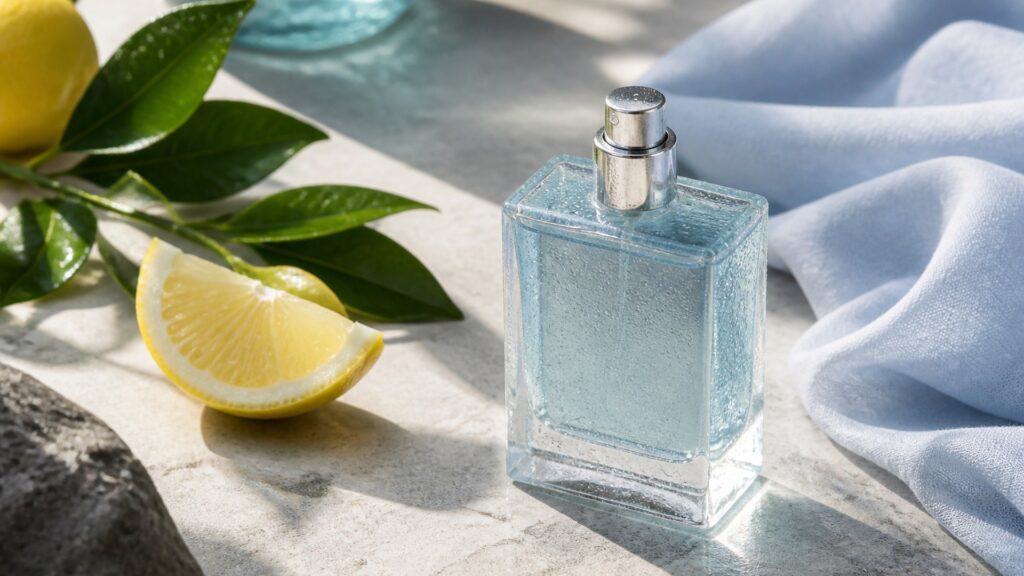
Assuming light color means light wear: Clear liquid, blue packaging, and aquatic names do not establish restraint. Test the concentration, atomizer, and full development.
Leaving fragrance in a vehicle: Cars, luggage compartments, sunny windows, and beach bags can reach damaging temperatures. Heat exposure is a storage failure, not a performance test.
Purchase guidance
Choose a format that fits seasonal use
If the cologne will be worn only during a short warm season, a smaller bottle can preserve freshness and reduce storage burden without sacrificing choice.
Start with samples: Use measured vials across several temperatures before deciding that an attractive cool-store opening represents outdoor wear.
Choose a travel spray: A smaller size suits seasonal rotation and travel, provided the container is labeled, compatible, leak-tested, and protected from heat.
Buy a full bottle: Commit after repeated warm-day tests succeed, expected frequency justifies the volume, and cool dark home storage is available.
Summer care
Protect cologne from heat and careless transport
Fragrance lasts best under stable conditions. Convenience does not justify keeping a bottle in a car, on a sunny sill, or loose inside hot luggage.
Store cool and dark: Keep the bottle upright in a shaded cabinet or drawer, away from radiators, windows, shower humidity, and changing vehicle temperatures.
Pack liquids separately: Place a tested travel container in a sealed washable pouch, isolated from electronics, documents, and fabrics that could be stained by leakage.
Respect irritated skin: Do not apply fragrance to sunburn, heat rash, or broken skin, and stop using a formula that causes persistent discomfort.
FAQ
Warm-weather cologne questions
These answers connect temperature, projection, dosing, and storage to a comfortable summer wearing routine.
Should warm-weather cologne always smell fresh or citrusy?
Why does cologne seem stronger in hot weather?
How should I store cologne during summer travel?
Bottom line
Choose the cologne that handles both heat and indoors
The strongest warm-weather candidate stays coherent during outdoor movement, settles comfortably in cooled spaces, and can be dosed without guesswork.
Review the temperature changes: Confirm performance in the conditions actually encountered rather than treating the hottest outdoor moment as the whole day.
Favor controlled application: Choose an atomizer and formula that remain satisfying at a modest known amount instead of requiring repeated correction.
Plan seasonal ownership: Match bottle size to likely warm-weather use and provide stable cool storage before a discount encourages unnecessary volume.
Reading Shortcuts
Move directly to the warm weather decision stage you need.
Decision Reminders
Keep the evidence for warm weather visible while comparing.
- Role: The cologne serves the named task.
- Proof: The trial observes a clear opening, balanced projection, wearable dry-down, and predictable duration.
- Care: Keep the bottle capped, shaded, upright, and protected from repeated temperature swings.
Glossary Snippets
Useful language for comparing colognes.
When a Top 10 List Helps
Use rankings to discover credible colognes, then screen them for warm weather.
- The format is undecided: A broad list reveals plausible forms and price levels.
- A shortlist is needed: Rankings narrow discovery but do not replace fit testing.
Have finalists already? Open the comparison section.
When a Direct Comparison Helps
Compare finalists after establishing their suitability for warm weather.
- Two candidates remain: Side-by-side evidence exposes meaningful tradeoffs.
- An upgrade is uncertain: Compare whether added cost corrects the original weakness.
Still exploring? Start with the Top 10 section.