
Cologne Buying Guide: How to Choose the Right One
The word cologne does not guarantee one concentration, gender, style, or level of performance. Some bottles are bright and fleeting; others are dense and persistent. The label matters less than how the formula develops on the wearer.
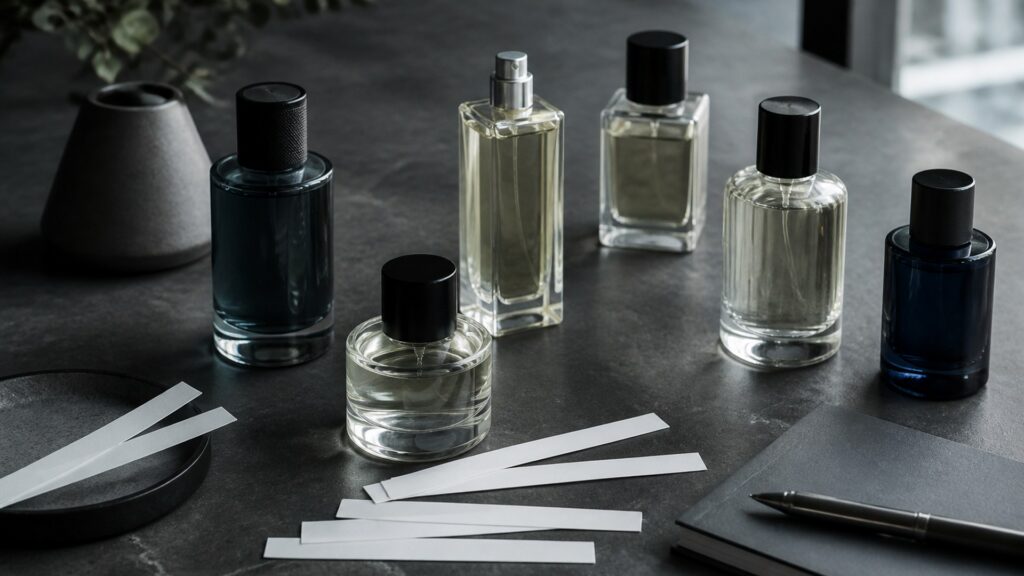
Start with the desired wearing experience: close or noticeable, crisp or enveloping, familiar or unusual. Smell a manageable shortlist on labeled strips, move the strongest candidates to skin on separate days, and evaluate the hours after the opening.
Selection method
Define the wearing job before choosing notes
A useful brief includes setting, climate, typical duration, preferred scent radius, and note aversions. It does not begin with bottle color or celebrity association.
Describe the scent radius: Decide whether the cologne should remain near the body, register at conversational distance, or leave a deliberate trail in suitable settings.
List hard exclusions: Write down ingredients, note effects, sweetness levels, or dry-down styles that repeatedly cause discomfort or dislike.
Plan multiple wears: Reserve finalists for separate days so weather, skin preparation, spray count, and olfactory fatigue do not blur the comparison.
Wearer profiles
Match the formula to taste and tolerance
The best choice depends on how much experimentation, projection, upkeep, and wardrobe coordination the wearer actually enjoys.
Understated wearer: Look for a controllable atomizer and a composition that stays coherent at a modest dose without demanding frequent reapplication.
Scent explorer: Use discovery sets and measured samples to investigate unusual structures without turning every intriguing first impression into a full bottle.
Signature seeker: Prioritize repeat enjoyment, versatility, and reliable availability; a signature should feel welcome on ordinary days, not merely distinctive at a counter.
Formula and bottle
Read concentration as a clue, not a verdict
Names such as eau de cologne, eau de toilette, and parfum suggest formulation choices, but brands use them inconsistently. Skin performance remains the decisive evidence.
What paper reveals
A labeled blotter screens obvious dislikes and lets several structures unfold without assigning every candidate a patch of skin.
What skin reveals
A controlled wear shows comfort, diffusion, interaction with personal skin odor, and whether the base remains enjoyable after hours.
Development: Track the opening, heart, and settled base. A beautiful citrus start cannot compensate for a dry-down that becomes sour, harsh, or tiring.
Projection and duration: Record when the scent is noticeable to others at normal distance and when it becomes skin-close, rather than relying on your nose alone.
Atomizer and seal: Inspect spray consistency, crimp quality, cap fit, and leakage. Poor delivery makes dosage difficult and can damage packaging or nearby possessions.
Buying mistakes
Avoid deciding from the first spray
Retail lighting, crowded air, persuasive stories, and fresh top notes can create urgency before the buyer has experienced the cologne that will last.
Testing too many: Limit each session, label every strip, step into neutral air, and continue later when individual scents become difficult to distinguish.
Equating strength with quality: Long wear and a large trail are characteristics, not proof of refinement. Excess presence can make an otherwise appealing formula unusable.
Blind-buying the reputation: Awards, perfumers, rarity, and enthusiastic reviews describe other people’s experiences; they cannot establish personal comfort or enjoyment.
Purchase size
Increase commitment only after the evidence improves
Samples, travel sprays, and full bottles solve different levels of certainty. The smallest format that answers the remaining question is usually the sensible next step.
Choose a sample: Use one when the formula is unfamiliar, expensive, difficult to test locally, or reported to change substantially after the opening.
Choose a travel spray: Select this after several successful wears when frequency, seasonality, or long-term preference still does not justify a large bottle.
Choose a full bottle: Commit when the cologne has performed well across settings, the volume fits expected use, and the retailer, batch, and return terms are trustworthy.
Care and value
Protect the formula and control the dose
Heat, sunlight, poor seals, and careless decanting can shorten useful life. Thoughtful application also protects shared spaces from unwanted exposure.
Store upright and cool: Keep the bottle in a stable dark location away from sunny sills, hot vehicles, radiators, and the repeated humidity of a shower area.
Apply with social awareness: Start conservatively in offices, transport, restaurants, and close gatherings. People nearby may have sensitivities or simply prefer unscented air.
Watch for change: Investigate sharp shifts in odor, unusual cloudiness, leakage, or a failing sprayer before continuing to use or transfer the formula.
FAQ
Questions to answer before buying cologne
These answers keep the decision centered on complete wear, dosage, purchase size, and practical ownership.
How should I test cologne before buying it?
Does a higher cologne concentration always last longer?
When should I buy a full bottle of cologne?
Bottom line
Choose the dry-down you want to live with
The right cologne has a complete development you enjoy, a dose you can control, and a social footprint that fits the places where it will be worn.
Review the wear notes: Compare comfort, projection, duration, and mood after the opening has passed; counter impressions alone are incomplete evidence.
Confirm the bottle: Inspect authenticity signals, fill, seal, atomizer, cap, and storage requirements before assuming the packaging will support reliable use.
Match volume to confidence: Let samples prove curiosity, travel sizes prove repeat wear, and full bottles follow established preference rather than urgency or discount pressure.
Reading Shortcuts
Move directly to the general selection decision stage you need.
Decision Reminders
Keep the evidence for general selection visible while comparing.
- Role: The cologne serves the named task.
- Proof: The trial observes a clear opening, balanced projection, wearable dry-down, and predictable duration.
- Care: Keep the bottle capped, shaded, upright, and protected from repeated temperature swings.
Glossary Snippets
Useful language for comparing colognes.
When a Top 10 List Helps
Use rankings to discover credible colognes, then screen them for general selection.
- The format is undecided: A broad list reveals plausible forms and price levels.
- A shortlist is needed: Rankings narrow discovery but do not replace fit testing.
Have finalists already? Open the comparison section.
When a Direct Comparison Helps
Compare finalists after establishing their suitability for general selection.
- Two candidates remain: Side-by-side evidence exposes meaningful tradeoffs.
- An upgrade is uncertain: Compare whether added cost corrects the original weakness.
Still exploring? Start with the Top 10 section.