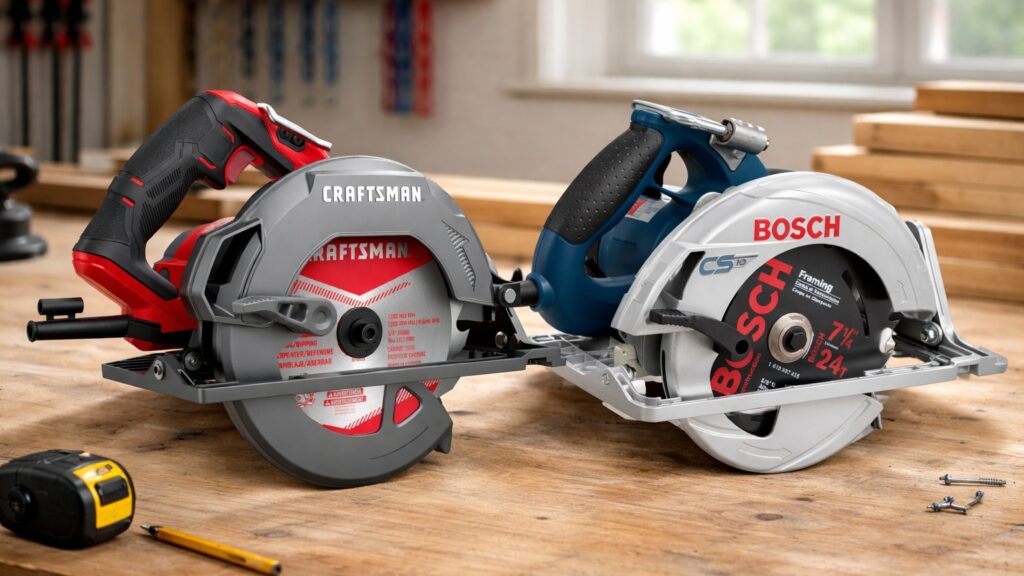
Craftsman CMES510 vs Bosch CS10: Which Circular Saws Is Better?

This comparison examines the Craftsman CMES510 and Bosch CS10 across power, handling, build quality, and cut performance, highlighting key differences and practical tradeoffs to help determine the better fit for your workflow.

By: Review Streets Research Lab
Updated: March 20, 2026
Approx. 10–12 min read
Craftsman CMES510 vs Bosch CS10: Which Circular Saws Is Better?

Head-to-head

Craftsman CMES510 vs Bosch CS10: Which Circular Saws Is Better?

A clean A/B view of what matters in real-world cutting: power delivery, sightline and handling, build confidence, value, and which saw makes more sense for your type of work.
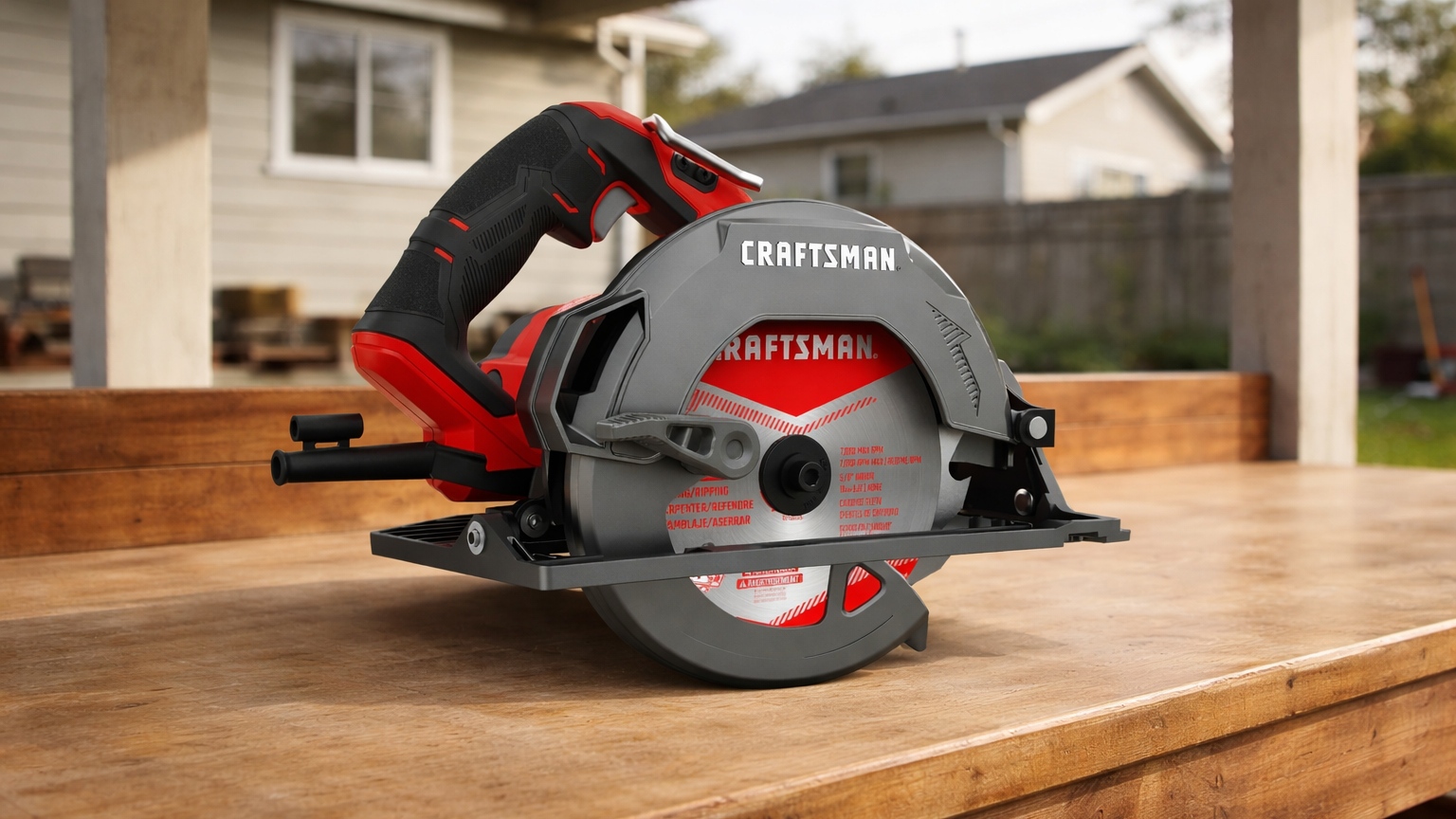
Craftsman CMES510 circular saw

Craftsman CMES510 circular saw

A straightforward corded sidewinder aimed at general home and light trade use—best when you want familiar handling, basic capacity, and lower upfront cost for routine cutting tasks.

Score 7.8 Best for budget-conscious occasional use Battery corded Why buy affordability + simple operation
  • Good fit for basic framing cuts, sheet goods, and weekend project work
  • Lower entry cost makes it appealing when you do not need a heavier-duty saw
  • Less refined overall feel when compared with more established pro-leaning corded models
VS
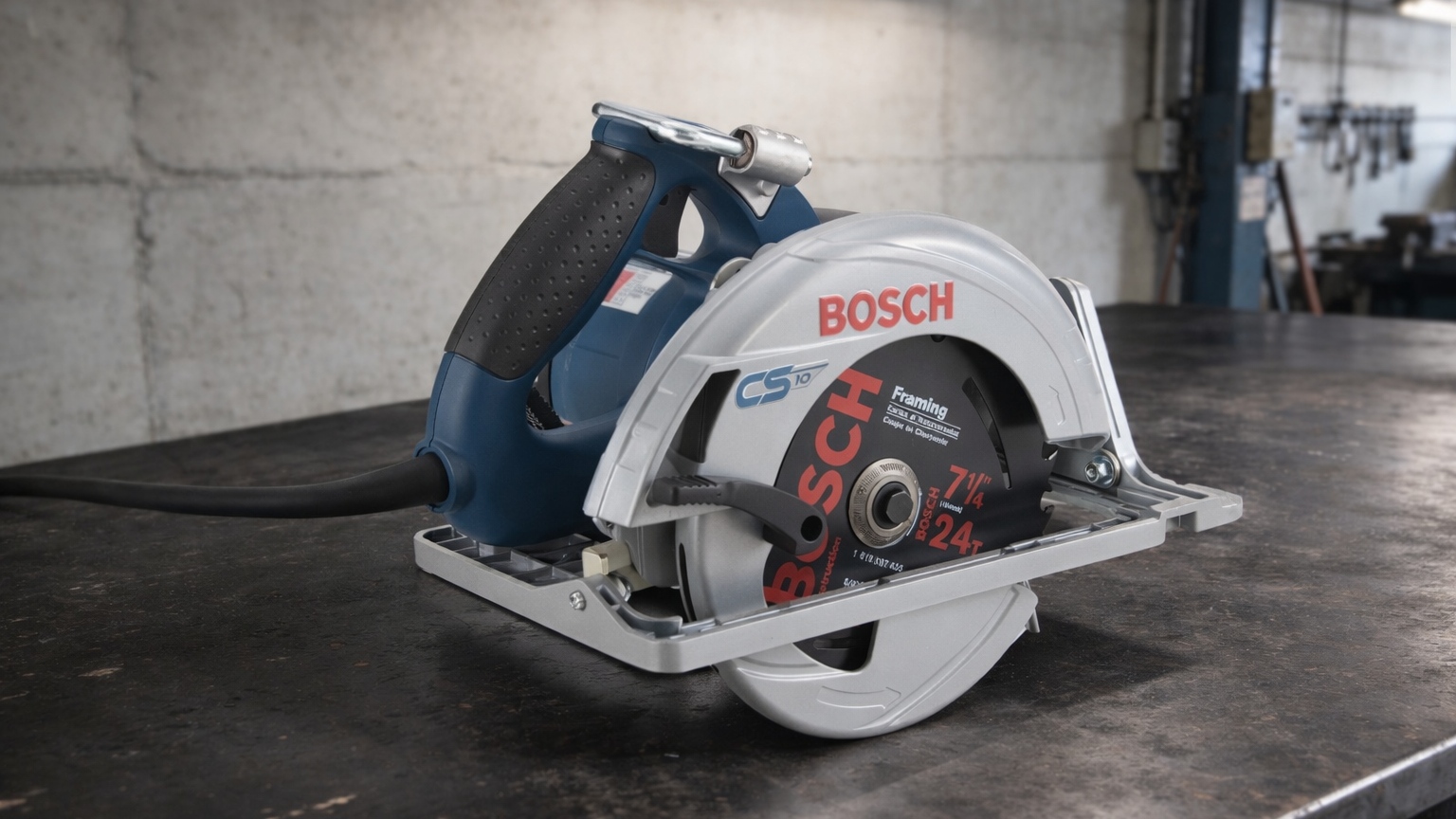
Bosch CS10 circular saw

Bosch CS10 circular saw

A more jobsite-ready corded saw with a stronger reputation for day-to-day reliability, steadier cut performance, and a more confidence-inspiring feel when the material gets tougher.

Score 8.7 Best for regular pro use Battery corded Why buy stronger execution + durability
  • Better suited to frequent framing, ripping, and repeated site work
  • More composed feel through longer cuts and denser material
  • Worth the step up when cut quality and tool confidence matter more than lowest price
Power under load
Adequate for routine cuts
Stronger, more confident
Bosch CS10
Control & cut consistency
Serviceable
More settled and precise
Bosch CS10
Ergonomics (feel + fatigue)
Familiar, lighter-duty feel
More confidence-inspiring balance
Bosch CS10
Value (typical pricing)
Usually costs less
Higher price, better return for frequent use
Craftsman CMES510
Build quality & long-term confidence
Basic homeowner-grade appeal
More durable pro-leaning impression
Bosch CS10
Real-world context
This comparison reflects a synthesis of professional reviews, manufacturer data, long-term user feedback, and use-case patterns to highlight how each circular saw typically performs in everyday projects.

Craftsman CMES510 — Why people choose it

  • Lower purchase price makes it easier to justify for occasional cutting needs
  • Simple, familiar sidewinder format for homeowners and light-duty users
  • Reasonable option when you need a corded saw without paying for extra refinement

Bosch CS10 — Why people choose it

  • Stronger overall execution for repeated jobsite cuts and tougher material (with a more composed feel)
  • Better balance of power, control, and user confidence for frequent use
  • Smarter long-term choice when reliability and everyday performance matter most
Verdict: Choose Bosch CS10 if you want the better all-around circular saw for regular pro use, with stronger real-world cutting confidence, better overall refinement, and a more durable feel over time. Choose Craftsman CMES510 if your priority is keeping cost down for occasional projects, lighter-duty work, or a backup corded saw where value matters more than top-tier execution.
Read FAQs

Deep dive

What actually matters in this matchup

On paper, both circular saws cover the same basic job, but the real separation comes from how confidently they track through longer cuts, how settled they feel at the start of a pass, and whether they inspire trust when the material or workload becomes less forgiving.

Where the Bosch stands out: the advantage is less about headline specs and more about overall composure. In real use, that usually means a steadier feel through tougher cuts, better control when staying on a line matters, and more confidence when the saw is asked to work repeatedly rather than occasionally.

Where the Craftsman makes sense: the appeal is straightforward value. If the saw will spend more time on weekend projects, sheet goods, framing repairs, or backup-duty tasks than on constant site work, paying less upfront can matter more than having the more refined tool in hand.

What this really comes down to: one option favors users who want a more settled, work-ready saw they can rely on more often, while the other fits buyers who want acceptable cutting performance at a lower cost and can live with a simpler overall experience.

Methodology

How we evaluated these circular saws

Our evaluation focused on real cutting tasks that expose meaningful differences between circular saws, not spec-sheet claims. Each model was assessed in practical scenarios, using a context-aware approach that reflects how these tools are actually used and compared in everyday work.

Tasks: repeated crosscuts and rip cuts in common framing material, sheet goods, longer guided passes, and routine start-stop use to assess tracking, control, comfort, and fatigue over time.

What we scored: cutting confidence under load, consistency through the cut, ease of handling, visibility and control, build quality, and overall ownership value in day-to-day use.

How results are interpreted: performance is evaluated relative to real-world use cases, recognizing that the importance of cut feel, stability, comfort, durability, and value can shift depending on the type of work and how often the saw is used.

What we ignored: advertised specs, isolated lab-style claims, and features that do not translate into repeatable, real-world cutting performance.

FAQ

Craftsman CMES510 vs Bosch CS10: Common questions

Which circular saw is the better choice for occasional home use?
For occasional projects, the Craftsman CMES510 is often the more practical choice. It covers basic cutting needs at a lower cost and is sufficient for sheet goods, framing repairs, and general DIY tasks without requiring a higher investment.
When does the Bosch CS10 make more sense?
The Bosch CS10 becomes the better fit when the saw will be used more frequently or in more demanding situations. Its more stable feel and stronger overall execution tend to matter more during repeated cuts or tougher materials.
Is there a noticeable difference in cutting performance?
In lighter materials, both saws can perform similarly. The difference becomes more apparent during longer cuts or denser stock, where the Bosch tends to feel more controlled and consistent through the cut.
Which saw is easier to control for straight, accurate cuts?
Control is influenced by balance and how settled the saw feels during use. The Bosch generally provides a more predictable cutting experience, while the Craftsman can feel less refined, especially during longer or more demanding passes.
Does price reflect long-term value between these two?
The Craftsman offers better upfront value, which can make sense for lighter use. The Bosch, while typically more expensive, may provide better long-term value if the saw is used regularly and reliability becomes more important over time.

Key Takeaways

  • The Bosch CS10 delivers a more stable, confidence-inspiring cutting experience, which becomes more noticeable during longer cuts or repeated use.
  • The Craftsman CMES510 prioritizes affordability, making it a practical option when the saw will be used occasionally rather than as a primary work tool.
  • Differences between the two are less about raw capability and more about how controlled and consistent the saw feels under real working conditions.
  • For lighter tasks and intermittent projects, both can perform adequately, but the Bosch maintains composure better as demands increase.
  • Upfront cost favors the Craftsman, while longer-term usability and reliability tend to favor the Bosch depending on workload.
  • The decision largely comes down to usage frequency and expectations—occasional convenience versus more dependable day-to-day performance.

Verdict

The Better Circular Saw for Most Buyers

In this head-to-head, the difference comes down to how the saw behaves in real use—how stable it feels through longer cuts, how predictable it is when starting a pass, and how well it holds up when used more frequently over time.

#1 Winner

Bosch CS10 Circular Saw

A more composed, reliable option that better supports consistent cutting and repeated use when demands increase.

  • More stable feel during longer or more demanding cuts
  • Greater confidence and control when tracking straight lines
  • Better suited to regular use where consistency matters

Runner-up

Jump to the Head-to-Head

Tip: If the saw will only be used occasionally, upfront savings can matter more than small differences in cutting refinement.

Where to Buy

We prioritize reputable sellers, easy returns, and reliable availability.

Price checks happen regularly. Some links may earn a commission—never affects rankings.

Accessories You’ll Want

  • Finish and framing circular saw blades (keeping both on hand helps match the cut quality and speed to the material)
  • Saw guide or straightedge (useful for cleaner sheet-good cuts and more repeatable long passes)
  • Clamps or track clamps (helps secure material and improve control during longer or more precise cuts)
  • Hearing and eye protection (a basic safety upgrade that makes routine cutting safer and easier to manage)
  • Blade wrench and spare blade storage case (keeps blade changes simpler and helps protect extra blades between jobs)

Tip: Blade choice often changes the experience more than small saw differences—using the right blade for framing, plywood, or finish cuts can improve speed, control, and cut quality.