
Crutches Buying Guide for Travel and Storage Planning
Travel changes the crutch decision because the aid has to survive packing, long seated stretches, unfamiliar floors, and repeated setup away from home. The useful pair is not just stable in a hallway; it also needs predictable locks, protected tips, and a storage shape that does not turn every transfer into a gear problem.
This guide focuses on travel-ready frame design, folded length, tip protection, reassembly checks, hotel-room storage, and safe movement during transit days. It is buyer guidance only; weight-bearing limits, stair technique, surgery recovery, and gait training should come from a qualified clinician.
Buying framework
Plan for packing, then prove the crutches still feel safe
A travel crutch choice starts with what happens before and after the walk. Storage convenience matters only if the crutches return to the correct height, grip position, and tip contact once unpacked.
Know the packed shape: Compare folded length, tube profile, and whether the pair nests together. A compact design is more useful when it fits a car trunk, hotel closet, or luggage side pocket without bending the adjustment hardware.
Protect the floor-contact end: Rubber tips pick up grit, wear, and moisture during travel days. Tip covers or a washable carry sleeve can keep luggage clean while also reminding the user to inspect traction before walking.
Make reassembly obvious: Folding joints, push buttons, and height holes should be easy to confirm at a glance. If a helper or tired traveler can miss a lock, the storage benefit creates a safety problem.
Test transit transitions: Try the crutches around vehicle doors, lobby floors, narrow aisles, and bed edges. Travel exposes awkward surfaces and small spaces that a normal home fitting may never reveal.
Who this is for
Travel scenarios that change the crutch choice
Different travelers need different storage compromises. Match the frame and accessories to how the crutches will move between home, vehicle, lodging, and destination surfaces.
Car-trip planner: This buyer should prioritize crutches that fit beside luggage without forcing the tips against bags or seats. Quick height confirmation matters after the pair has been shifted in and out of the vehicle.
Flight or train traveler: This person needs a manageable folded profile and a plan for keeping tips contained near personal items. Any travel design should still feel secure on polished floors and ramps.
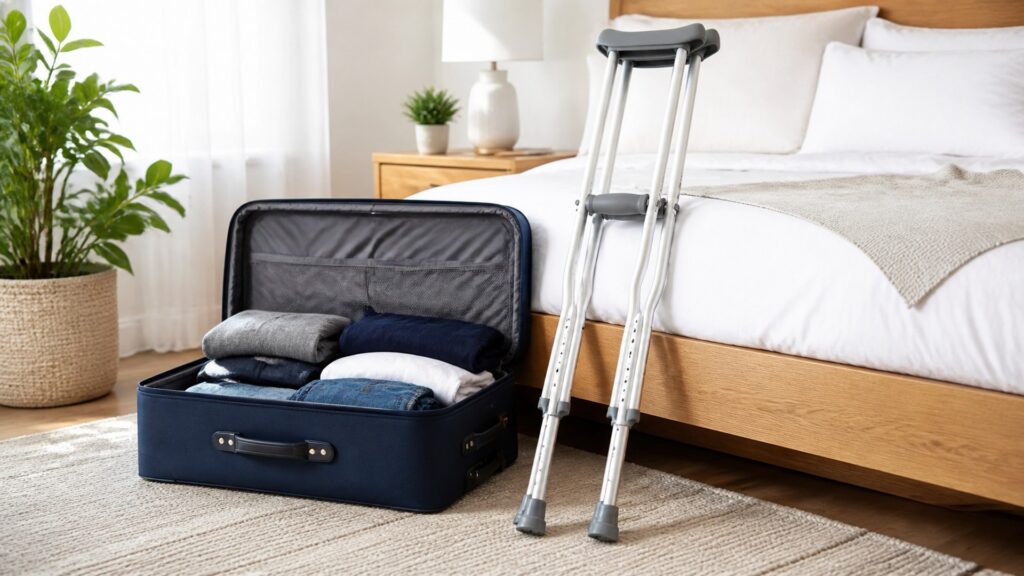
Hotel-room user: A hotel room adds tight paths around beds, bathrooms, and luggage stands. Crutches should be easy to park upright or lay down without creating a tripping hazard.
Destination walker: The buyer should think about sidewalks, thresholds, elevators, and longer distances after arrival. Tip traction, handgrip comfort, and fatigue matter more than the packed size once the trip begins.
What to pay attention to
Travel-ready crutch details that matter after unpacking
Travel specs should be judged by repeatability. The pair needs to pack cleanly, reopen securely, and keep the same support geometry after each transfer.
Packability and Lock Security
Folded length is useful only when the crutches reopen to a fully locked, repeatable support position.
Surface Changes and Tip Control
Travel moves crutches across pavement, carpet, tile, ramps, and vehicle thresholds, so tips need regular attention.
Folded or collapsed length: A shorter packed length helps only if hinges and telescoping sections lock solidly afterward. Check whether the folded crutches still leave tips, pads, or grips vulnerable to damage.
Lock visibility: Buttons, collars, and folding catches should show clearly when seated. Low-contrast or hidden locks are easy to miss in a dim hotel room or busy vehicle pickup area.
Tip material and covers: Travel can move crutches from wet pavement to polished lobby floors quickly. Look for replaceable rubber tips and a storage method that keeps worn tips from touching clothing.
Grip comfort over distance: Destination walking can last longer than daily home movement. Handgrip shape and padding should remain comfortable after luggage handling or a long seated interval.
Storage stability: Crutches that roll off a bed, slide in a closet, or fall from a luggage stack create friction. Simple straps, sleeves, or a stable folded shape can matter more than a tiny weight difference.
Avoid these traps
Travel mistakes that make crutches harder to use
Travel failures usually come from treating storage as separate from mobility. The packed pair still has to become a safe walking aid quickly and repeatedly.
Buying the smallest folded pair: The shortest packed design is not always the best travel choice. Hinges, locks, and tube stiffness matter if the crutches are unfolded several times in one day.
Packing dirty tips against clothing: Rubber tips contact pavement, restroom floors, and entry mats. Without a cover or separate sleeve, the clean side of travel planning gets messy fast.
Forgetting post-flight or post-drive swelling: Long sitting can change comfort and hand pressure. Recheck grip height, underarm clearance, and walking control before assuming the morning fit still works.
Ignoring where crutches rest overnight: A pair leaning loosely near a bed can fall or block a bathroom path. Plan a stable parking spot that the user can reach safely in low light.
Decision guidance
Choose the travel compromise that solves your trip
After safety fit is clear, choose by the hardest travel moment. A road trip, hotel stay, and flight all stress different parts of the crutch setup.
If packing space is tight: Consider folding or telescoping crutches with obvious locks and protected tips. Reject any compact design that feels loose, rattly, or unclear after reopening.
If walking distance increases at the destination: Prioritize handgrip comfort, tip traction, and frame stiffness over the smallest folded size. The packed shape matters less once the crutches are carrying repeated steps.
If surfaces change often: Bring attention to rubber tip condition and replacement availability. Smooth lobby floors, ramps, wet entries, and sidewalks can expose tip wear quickly.
If travel involves medical restrictions: Do not improvise around weight-bearing rules to fit a trip schedule. Clinician instructions should guide stairs, transfers, and whether travel is sensible at all.
Ownership & compatibility
Travel care keeps crutches ready between stops
Travel adds dirt, compression, and repeated packing to normal crutch wear. A simple inspection routine prevents small problems from becoming trip disruptions.
Use a carry sleeve: A sleeve or dedicated bag keeps tips away from clothing and protects adjustment buttons from snagging. It also gives the pair a predictable place in the vehicle or room.
Check locks after every pack: Folding joints and telescoping holes should be confirmed after the crutches leave luggage or a trunk. A partial lock can feel fine until weight shifts.
Pack spare tips when appropriate: Longer trips make replacement tips more useful than at-home storage. A worn tip is harder to solve when the user is already away from familiar stores.
FAQ
Questions about traveling with crutches
These answers focus on packing, storage, surfaces, and travel-day checks.
Are folding crutches worth it for travel?
How should crutches be packed in a car?
What should I check after unpacking?
Do crutch tips need covers?
Can crutches go through airports easily?
What matters in a hotel room?
Should I choose lighter crutches?
How do long drives affect fit?
Can travel planning replace medical guidance?
Bottom line
Choose crutches that travel without losing their setup
For travel and storage planning, the best crutches pack cleanly and return to a secure walking position without guesswork. The right pair solves both sides of the trip: carrying the aid and using it afterward.
Prioritize repeatable locks: Every folded or collapsed section should confirm clearly before walking. Travel convenience is not useful if setup becomes uncertain.
Plan for dirty tips: Tip covers, sleeves, and spare tips keep storage cleaner and movement safer. Floor contact is still the critical point after every stop.
Test the actual trip moments: Vehicle doors, luggage areas, hotel beds, and smooth lobby floors reveal problems that a hallway test can miss.
Reading Shortcuts
Jump to the sections focused on travel checks.
Decision Reminders
Use these checks before ordering.
- Confirm fit: Height, grips, pads, and tips should match the intended use.
- Check locks: Buttons and collars should be visibly secure before movement.
- Think ahead: Plan the next moment of travel checks, not just the product photo.
- Watch tips: Rubber tip condition affects every step.
- Avoid guessing: Clinical restrictions should come from qualified guidance.
- Recheck often: Storage, travel, or helper changes can alter setup.
Glossary Snippets
Crutch terms used in this guide.
When to Use a Top 10 Review
Use a ranked list after the crutch requirements are clear.
- Shortlist styles: Compare underarm, forearm, platform, or folding designs.
- Filter by setting: Favor products that match the use case from this guide.
- Scan fit notes: Look for comments on locks, grips, pads, and tips.
- Check ownership: Tip replacement and storage details matter after purchase.
Already down to 2-3 options? A Comparison is usually the faster next step.
When to Use a Comparison
Use a direct comparison when two crutch designs seem close.
- Compare locks: See which design is easier to verify.
- Compare tips: Check traction, size, and replacement access.
- Compare storage: Decide which pair fits the real storage moment.
- Compare comfort: Look at grips, pads, and longer-use friction.
Still exploring? Start with a Top 10 to build a shortlist first.