
Cycling Apparel Buying Guide for Group Rides
A group ride does not require a special wardrobe just because other riders wear matching jerseys. The useful clothing choices follow the announced distance, pace, surface and stops. Your outfit must work while you pedal, carry your own essentials and wait at regroup points; club colors come after those jobs.
Start with clothing that already works on comparable solo rides. If the group outing adds longer saddle time, fewer opportunities to stop or a cool cafe break, identify that new requirement before shopping. This guide explains when padded shorts, accessible pockets and a removable layer earn their place, and which fitting compromises to check before buying.
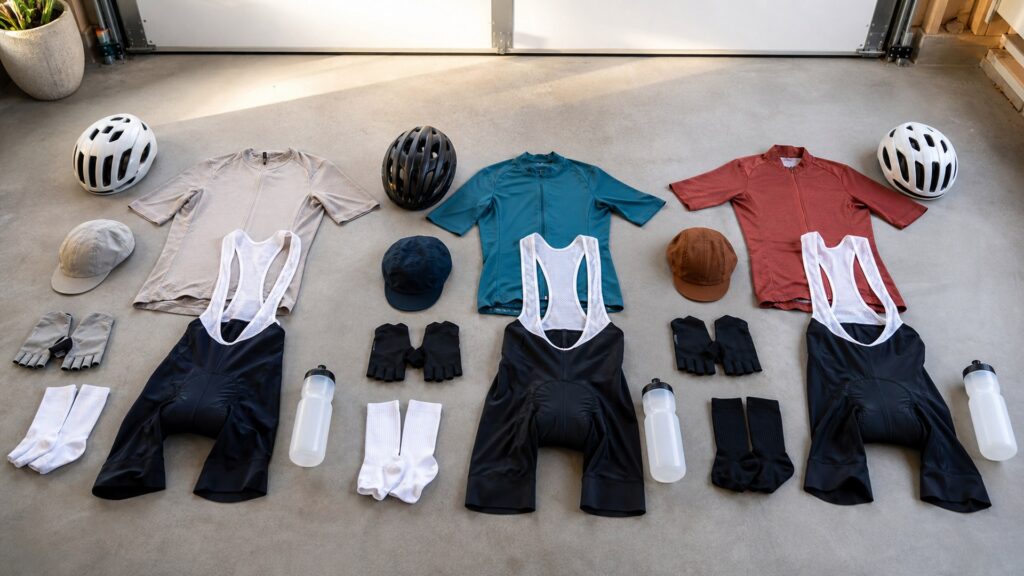
Buying framework
Plan around the ride announcement
Translate the organizer’s description into clothing jobs before deciding whether you need a complete kit.
Duration before dress code: A short social loop and a long steady road outing put different demands on clothing. Use the expected time riding, not how professional the group looks, to decide whether your current outfit needs a padded or pocketed addition.
Pace changes access: A brisk ride with fewer pauses makes it useful to organize food and layers before departure. Carrying them in a bag can work, but decide how you will retrieve them at a suitable stop rather than assuming the group will wait whenever you search.
Stops change coverage: A jersey that feels warm enough while pedaling may leave you wanting another layer at a regroup point. Plan for that pause using the weather forecast and your own experience; the group’s speed does not establish a universal jacket requirement.
Your supplies remain yours: Shared company does not guarantee shared food, tools or clothing. Check the organizer’s expectations and arrange your own carrying space, whether in jersey pockets, a bike bag or a backpack that already suits you.
Upgrade the missing function: Keep proven clothes where they meet the ride’s needs. Add saddle-contact support, storage or weather coverage separately when that is the gap, rather than replacing every garment to match someone else’s outfit.
Who this is for
Which group outing are you dressing for?
Use the closest ride pattern to set a priority. A rider may combine more than one of these conditions.
Short social rides: Frequent stops and modest riding time may leave ordinary sportswear entirely adequate. Prioritize secure trouser hems and comfortable movement; buy cycling-specific padding only if your own saddle-contact experience gives you a reason.
Long steady road rides: Extended time in a forward riding position makes a stable chamois and reliable back coverage more relevant. Compare waist and bib shorts by how they hold the insert on your body, then plan carrying space for the outing’s food and layers.
Brisk rides with limited pauses: Storage layout matters when the group spends longer stretches riding together. Favor a tested arrangement that keeps the necessary items settled, and practice retrieving them while stopped before relying on unfamiliar loaded pockets.
Mixed-surface rides with casual breaks: A liner under casual outer shorts may suit your off-bike preference. The compromise is an extra garment to fit and wash: check knee lift and pad position with both layers together, not just the outer short’s appearance.
Cool rides with regrouping: Allow for the wait as well as the moving effort. A removable outer layer can add coverage during pauses without committing to a thick jersey for the whole outing, provided you have somewhere to carry it afterward.
What to pay attention to
Inspect the outfit in riding posture
Construction details should explain what happens while reaching, pedaling, carrying supplies and stopping.
Riding contact
Inspect how the pad, waistband or straps and garment overlap behave in forward reach. Construction must keep the intended contact areas positioned.
Carrying and stops
Compare loaded storage and the steps needed to remove layers or use a restroom. Convenience depends on the complete outfit, not an isolated pocket count.
Chamois placement: The insert should remain aligned with the saddle-contact area as you bend and pedal. A large or thick pad is not automatically better; a pad that folds or shifts creates a fitting problem regardless of its advertised material.
Retention system: Waist shorts use a waistband, while bib shorts add shoulder straps. Check whether the waistband rolls in forward reach or the straps pull uncomfortably; neither construction guarantees a good fit without trying the intended size and cut.
Loaded pockets: If fitting permission allows, try representative items in rear pockets. Inspect how the jersey hem and fabric settle under that load, and distinguish an open pocket for bulky items from a secure closure for small valuables.
Outfit overlap: Reach toward the bars and check the jersey-to-short overlap, leg grippers and liner-to-outer clearance. The useful outfit stays positioned through knee lift; a tidy standing fit can conceal pulling or bunching on the bike.
Access at stops: Examine jersey openings, pocket closures and any bib toilet-access design. These details determine how much clothing you must rearrange at a cafe or restroom, especially when an outer layer sits over the jersey.
Avoid these traps
Avoid dressing for appearances alone
Several familiar group-ride assumptions can lead to purchases that do not address your actual outing.
Buying race fit by default: A close cut may suit your preference, but it is not a membership requirement. Reject a jersey that restricts your reach or cannot carry the intended load merely because it resembles the clothing worn by faster riders.
Letting the group carry everything: Another rider’s pockets are not a dependable storage plan. Arrange your own essentials and ask about ride expectations beforehand; a premium jersey is unnecessary if an existing bag already carries the required items comfortably.
Adding a second pad: Layering two padded garments introduces two inserts rather than improving the fit of either. Choose one padded garment and check its intended wearing instructions instead of stacking a liner under already padded shorts.
Leaving the layer question until departure: An untested jacket may displace food or pull a loaded jersey when stuffed into a pocket. Check the complete carrying arrangement at home, including what moves into storage when you take the layer off.
Decision guidance
Choose the addition that the group ride requires
These branches identify purchases and the practical cost that comes with each choice.
Keep a proven outfit for an easy social loop: If your existing clothes move freely and carry what you need, matching kit can wait. You forgo dedicated pockets or padding, but you avoid paying for features that this particular ride has not made necessary.
Choose waist or bib shorts for a saddle-contact gap: Start with the construction that holds its pad well on you. Waist shorts simplify off-bike access; bibs remove reliance on a waistband but add straps to manage. Let that fitting and stop-access tradeoff decide.
Add a pocketed jersey for on-body carrying: Choose this when you want supplies on your clothing rather than in a separate bag. Accept that pocket loads affect the jersey’s fit, and test the load before choosing a particularly light or stretchy cut.
Choose a liner outfit or removable outer layer for the distinct gap: A liner plus casual shorts answers an off-bike coverage preference at the cost of two fitted layers. A packable jacket answers a weather or waiting requirement at the cost of carrying space; these are different purchases.
Ownership & compatibility
Keep a reliable outfit ready for the next ride
Group departures are easier when cleaning, packing and minor garment repairs are settled beforehand.
Care for the used pad: Wash padded clothing according to its label and allow it to dry before reuse. Plan the laundry around scheduled rides so a damp insert does not become the reason to improvise an unfamiliar outfit at departure.
Check carrying seams: Inspect pocket stitching and closures after regularly loading the jersey. Repair a developing opening or stop using that pocket for valuables; the storage plan depends on sound fabric as well as sufficient capacity.
Open wet layers on return: Unpack the jacket and any warmers after a wet outing. Dry them as their instructions permit before putting the ride kit together again, rather than leaving the next group ride’s spare coverage bundled in a damp pocket.
Pack the proven combination: Keep track of which shorts, jersey and outer layer worked together. A spare outfit is useful when laundry timing requires it, but an identical collection of colors does not solve a missing weather or carrying function.
FAQ
Practical questions before joining the ride
Resolve event expectations and accessory decisions separately from the main clothing choice.
Do I have to wear the club jersey?
Are cycling shoes part of this clothing purchase?
Should I try new shorts on the longest group ride?
Can I carry food in a bike bag instead?
Do sunglasses have to match the jersey?
Is a tight jersey needed to avoid being dropped?
What if I prefer not to use padded shorts?
Can a jacket pocket carry my phone?
How much spare clothing should I bring?
Bottom line
Leave with an outfit matched to the outing
Use the announced ride to order the purchase rather than allowing a club photo to choose it.
Read the ride details: Confirm expected pace, duration, surfaces and stops with the organizer. These establish the clothing jobs and reveal what differs from rides your existing outfit already handles.
Select one useful addition: Choose the unresolved contact, carrying or weather requirement first. A whole wardrobe is unnecessary when one well-fitted garment or a familiar bag answers the actual problem.
Accept the outfit’s compromise: Check strap management, loaded pocket pull or the extra layer in a liner outfit. Make sure the convenience you gain is worth that specific burden on this ride.
Rehearse departure and stops: Put on the complete outfit, load its storage and check reach and off-bike access. Resolve the problem at home before making it part of the group’s first regroup point.
Reading Shortcuts
Follow the ride pattern through fit, carrying and stop access.
Decision Reminders
Use these checks before the group departure.
- Ride pattern: Confirm the pace, duration and stops.
- Personal supplies: Reserve your own carrying space.
- Complete outfit: Practice reach and restroom access.
Glossary Snippets
Clothing terms used in group-ride planning.
When to Use a Top 10 Review
Shortlist clothing after identifying what the scheduled ride adds to your needs.
- Choose the garment job: Compare shorts, jerseys or outer layers separately.
- Check intended use: Keep the announced duration and stop pattern visible.
Already down to 2-3 options? A Comparison is usually faster than reading broad buying advice.
When to Use a Comparison
Compare finalists in the same complete riding outfit.
- Assess retention: Judge pad placement and waist or strap behavior.
- Load the storage: Compare pocket pull with the supplies you plan to carry.
Still exploring? Start with a Top 10 to identify the right category first.