
Cycling Apparel Buying Guide for Road Riding
For road riding, choose clothing that stays settled as you move between the brake hoods and drops, carry supplies in rear pockets and change effort on climbs. Start with the shorts and jersey fit, then add a packable layer for the conditions your route actually includes. A race label or premium pad cannot settle those questions for your body.
The best comparison uses your normal riding position and a realistic pocket load. This guide shows how to assess waistband versus bib retention, road-cut coverage and weather transitions, so you can choose a complete outfit without paying for aerodynamic or comfort claims that have not been demonstrated for you.
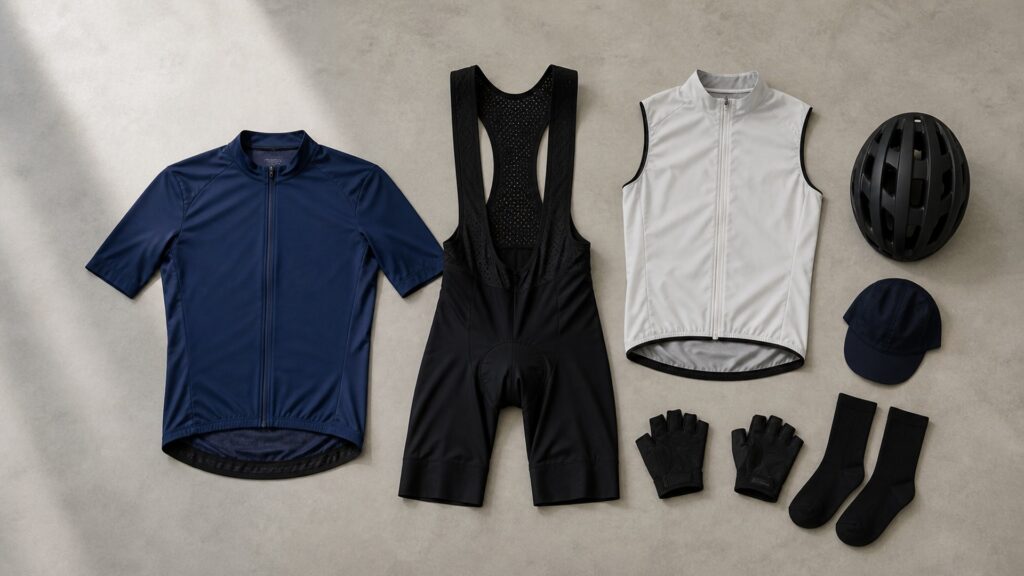
Buying framework
Fit the outfit to the road position
Road clothing has to work through more than a standing try-on. Establish these priorities before comparing fabric names or team graphics.
Use both main hand positions: Reach to the hoods and lower into the drops during the fit check. Sleeves, back coverage and the chamois should stay in place without a hem or strap pulling you out of position.
Decide what the jersey must carry: Lay out the small items you normally put in rear pockets. Their size and weight determine whether pocket construction matters more than an exceptionally light jersey fabric.
Plan the exposed parts of the route: Separate the warm climb from the windy descent or extended stop. Choose removable coverage for those transitions rather than judging the outfit only by the temperature at departure.
Treat speed claims as a separate purchase: A close cut can reduce loose fabric, but this guide has no measured aerodynamic results. Establish practical fit first and require relevant test evidence before paying specifically for promised speed.
Who this is for
Which road outfit solves your routine?
Road riders differ in posture, carrying habits and exposure. These patterns change the clothing details worth prioritizing.
Short fair-weather loops: You can travel light and avoid most forecast changes. A well-fitting short and top may cover the task without large pockets or a collection of specialist shells.
Pocket-carrying day rides: Food, a phone and a folded layer ride against your back. Jersey stability and access deserve a loaded trial, not just an empty fitting-room inspection.
Hilly routes with exposed descents: You alternate substantial effort with cooler or windier sections. A ventable, packable outer layer can be more useful than wearing one warm jersey throughout.
Regular riding with frequent stops: You value easy clothing changes and practical breaks as well as pedaling fit. Compare waist shorts and bib access on those terms rather than assuming straps are a mandatory upgrade.
What to pay attention to
Six road-specific fit checks
Compare candidates with the same underlying garments and intended load. Reject the mismatch you can observe before ranking smaller feature differences.
Fit across road positions
Inspect contact and coverage as the torso angle changes. Pad retention, strap length and sleeve reach must work in the positions you actually use.
Carrying and weather transitions
Evaluate the jersey under load and the shell through route transitions. Carrying and changing layers should not disturb the outfit's basic fit.
Torso and sleeve reach: Bend into the actual road posture and inspect the jersey back and cuffs. Coverage that disappears in the drops cannot be judged adequate from its standing length.
Chamois retention: Check that the pad lies smoothly and stays positioned as the hips move. Compare the complete short rather than a detached foam sample or a claimed number of comfortable riding hours.
Waistband and bib tension: A waistband should remain settled when folded at the hips; bib straps must accommodate your torso without restrictive pulling. Try the relevant motion rather than sizing down solely to remove every standing wrinkle.
Loaded rear pockets: Place representative items in the pockets and return to riding posture. Look for downward pull, excessive movement and openings that become awkward to reach; unused pocket volume is not a benefit by itself.
Hems and zipper contact: Check the leg grippers and jersey hem through pedaling movement, then close the zipper fully. A zipper garage or smooth edge is useful only if the actual contact remains comfortable.
Layer coverage and pack volume: Try a gilet or jacket over the jersey, with sleeves or warmers where intended. Confirm the removed layer fits the chosen pocket or bag without displacing the supplies you need.
Avoid these traps
Avoid race-look shortcuts
A plausible road outfit can still be wrong for its owner. These comparisons confuse appearance with a useful riding function.
Choosing the tightest available cut: A garment that binds at the shoulders or distorts the pad has failed the fit test. Try another cut if changing size cannot resolve both loose and restrictive areas.
Assuming bibs guarantee comfort: Straps provide a different retention system, not a personal fit guarantee. Waist shorts remain a valid option when their waistband and pad work reliably in your position.
Buying pockets without filling them: An empty lightweight jersey can feel excellent while a normal load drags it down. Judge carrying performance with the items you expect to bring.
Treating a gilet as full weather protection: A sleeveless layer leaves the arms exposed, and its rain resistance depends on construction. Choose it for its stated role rather than expecting every gilet to replace a rain jacket.
Decision guidance
Choose the configuration by the remaining need
Once the contact fit works, spend on the function your road rides lack. The useful alternatives are garment systems, not automatic price tiers.
Choose waist shorts for a secure simple setup: If the waistband stays comfortable and the chamois remains stable, keep that solution. Combine it with a jersey whose cut and carrying capacity match your normal ride.
Choose bibs when shoulder retention works better: Compare strap length and the complete riding fit, then rehearse stop access. Pay for the construction that resolves your actual retention problem rather than for the bib label alone.
Choose a carrying-focused jersey for pocket loads: Favor pockets that hold your normal supplies without distorting the garment. Move excess bulk to suitable bicycle luggage instead of sizing a jersey mainly to create storage.
Choose removable layers for variable routes: A gilet suits an identified torso-wind task; a jacket provides additional coverage when needed. Select the stated weather function and a packed size you can carry throughout the ride.
Ownership & compatibility
Keep the road outfit in useful rotation
The best-fitting kit still needs appropriate care. Account for washing and wear before buying several copies of an unproven garment.
Follow separate care labels: Shorts, jerseys and technical shells may need different washing or drying methods. Keep the maker's instructions and close or protect fasteners as directed before laundering.
Inspect load-bearing details: Check pocket seams, grippers, straps and zipper operation for deterioration. Retire or repair a garment whose retention no longer works rather than compensating with repeated adjustment on the road.
Add rotation after the fit is proven: Try one outfit on representative rides before multiplying it. Then buy enough usable clothing to cover the actual wash-and-dry turnaround between outings.
FAQ
Road-apparel questions
Use these details to settle the final clothing choice. Exact garment features vary between models.
Do I need a race-cut jersey for road riding?
Can a mountain-bike top work on the road?
Are arm warmers a replacement for a jacket?
Should road shorts feel comfortable while standing?
Can I carry a pump in a jersey pocket?
Does a full-length zipper matter?
Should I buy matching shorts and jersey sizes?
Will reflective panels replace my bicycle lights?
How do I test an online purchase without losing return eligibility?
Bottom line
Choose road function before race styling
The right outfit stays positioned, carries its intended load and covers the route's transitions. Those observable results are a stronger starting point than prestige claims.
Test the riding angles: Check the hoods and drops with the shorts, jersey and layers together.
Pack the pockets honestly: Judge the loaded garment and provide another carrying solution when clothing cannot hold the bulk comfortably.
Pay for the missing coverage: Add the layer that serves your route, with a practical place to stow it.
Reading Shortcuts
Compare road posture, loaded pockets and changing exposure.
Decision Reminders
Take these checks into the fitting room.
- 1: Try both hoods and drops.
- 2: Load the rear pockets.
- 3: Check straps and waistband bent forward.
- 4: Plan where the shell goes when removed.
Glossary Snippets
Useful terms for a road-clothing comparison.
When to Use a Top 10 Review
Find road garments after choosing the required function.
- Choose a fit family: Start with the cut and short-retention system that suits you.
- Identify a route gap: Add carrying or weather capability for a recurring need.
References: PEARL iZUMi cycling-jersey guide; Rapha shorts and bibs guide. Checked October 7, 2026. This guide does not claim original product measurements. Use the Comparison to assess finalists.
When to Use a Comparison
Compare outfits with the same posture and pocket contents.
- Use a consistent fitting test: Keep underlying layers and load the same.
- Separate evidence from claims: Do not infer personal comfort or aerodynamic gains from a premium label.
For a selection of candidates, visit the Top 10.