
Cycling Lights Buying Guide: How to Choose the Right One
A cycling light can look convincing on a feature list while asking you to power or attach it in a way you never intended. Start with those commitments, then weigh the beam you want. These headlight examples show how to compare the actual equipment instead of letting one appealing specification settle the purchase.
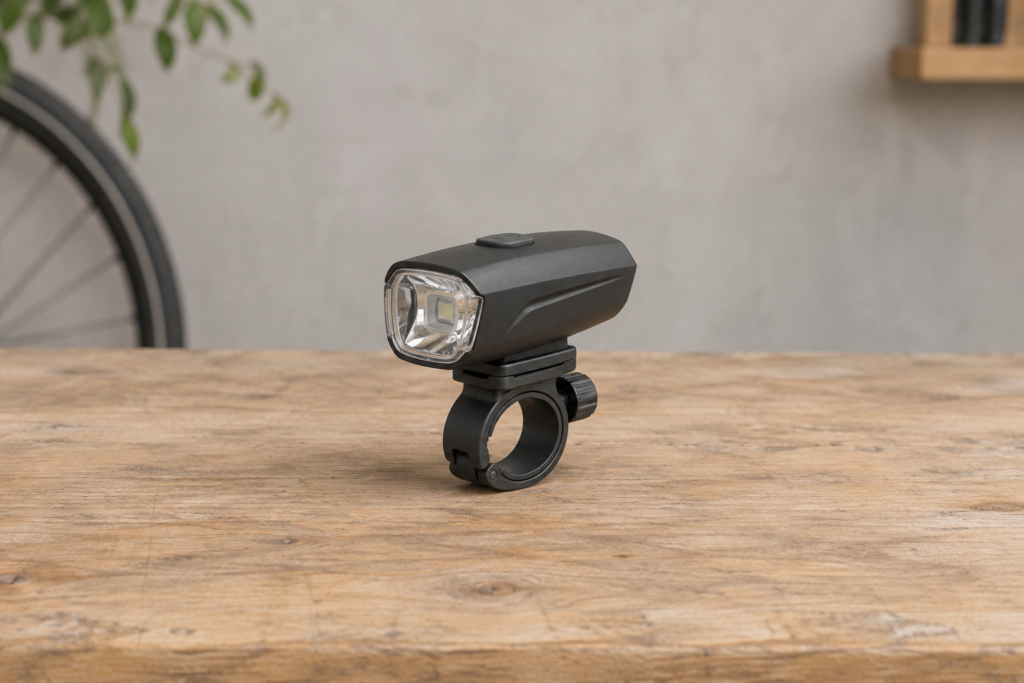
Buying framework
Choose the commitments first
Two answers give the rest of the search a useful direction.
How you want to replenish power: Decide whether you intend to keep replacement cells available or make room for USB charging. Write down the routine you will actually provide, rather than treating either arrangement as an automatic upgrade.
Whether an upper beam edge is essential: Decide whether a defined top boundary belongs in your lighting plan. Keep that preference distinct from the output number so you can judge the pattern on its own terms.
Who this is for
Build around the routine you already planned
These buying projects begin with different commitments, without ranking one rider above another.
Keeping a deliberate cell supply: Suppose you already keep a dedicated box of AA cells for household equipment and want your bicycle light included in that plan. Make the cell requirement explicit at the start. A light that asks for a separate charging arrangement changes the project you set out to complete.
Adding a light to your charging station: Imagine a rider who has reserved a USB connection and a place for the light beside other rechargeable equipment. That buyer can start with charging as a chosen habit. There is little value in buying around a replacement-cell routine they never intended to maintain.
What to pay attention to
Compare three independent design choices
Power, optics and attachment answer different questions. A match on one cannot stand in for the others.
Daily provision
Treat the power arrangement as part of the purchase, not an afterthought once the box arrives.
Physical design
Read a beam description for its shape and a mounting diagram for the operation it shows. Avoid giving either specification a job it cannot answer.
Replacement cells or USB charging: CatEye lists two AA alkaline cells for its International HL-EL135. Choose it to replenish power by changing cells, accepting an ongoing supply of replacements. The International AMPP500 (HL-EL085RC) instead has a rechargeable lithium-ion battery and USB charging, with a Micro-USB cable included. Choose it for a charging routine, accepting charging time and a USB power source.
A defined upper edge or no cutoff: Outbound presents Detour's upper-cutoff beam for road and gravel use; accept its defined upper boundary. Trail Evo is its non-cutoff singletrack option; accept the absence of that upper limit. Choose between those manufacturer-stated uses rather than assuming either pattern suits every route.
A band and dial or a bolted clamp: HL-EL135 includes the H-34N bracket: a band wraps the bar and a hand-operated dial tensions it. Choose that fastening arrangement, while allowing for its separate angle screw. Detour includes a quick-release mount whose clamp is installed with an M2.5 hex wrench. Choose the bolted bracket, accepting that tool and its 35 mm bar provision or supplied 31.8 mm shim. Both light units release separately from their brackets; bolting on the bracket does not make Detour permanently attached.
Avoid these traps
Read a corrected number as a correction
Different printed figures need an explanation before they become a reason to choose.
Do not invent a newer Detour: Outbound states that a 1,600-lumen figure in some printed Detour manuals was a typo and that the light has not changed. Its current FAQ specifies 1,200 lumens on High. Treat this as the manufacturer correcting documentation, rather than evidence of an upgraded generation.
Decision guidance
Require the mode and the power source together
Here is how a shared feature can leave a candidate outside the brief.
AA cells plus flashing: For a buyer requiring AA alkaline cells and a flashing mode, HL-EL135 satisfies both. Accept replacing its pair of cells. AMPP500 also offers flashing, but its specified lithium-ion battery and USB replenishment fail the AA requirement. Matching the mode alone does not make it an equivalent choice.
Ownership & compatibility
Keep replacement cells from becoming a mixed pair
The replacement practice deserves attention after the initial battery choice.
Separate new cells from old ones: The linked HL-EL135 manual instructs owners not to mix new and old batteries. When replenishing the light, keep the fresh pair together rather than combining one new cell with a previously used one.
FAQ
Controls and connections to know
These details add specific operating information beyond the three purchase decisions.
How does AMPP500 select High directly?
What does the AMPP500 red indicator mean?
Can Detour recharge a phone?
Readiness check
Decide which preference can yield
A final choice becomes clearer when you name the conflict instead of averaging the feature lists.
Research note: This headlight-led guide uses manufacturer product pages and linked manuals from CatEye and Outbound. It covers selected equipment choices from two makers; rear-light choices are not represented. This was desk research with manual diagrams inspected, without riding, photometric or mounting-strength testing. Product specifications may change.
Do not buy a beam without a power plan: Suppose you find the beam pattern you prefer on a light that requires charging, but you have no place to charge it and have committed to replacement cells. Keep looking unless you are willing to create that charging provision. The attractive pattern cannot supply the missing part of your plan.
Find your next answer
Read from your current sticking point.
Keep the brief in view
Use a short requirement list while browsing.
- Separate musts from preferences: Name what you are willing to change before an appealing light appears.
- Record the exact model: Keep your notes tied to the equipment you would order.
One practical term
A distinction that helps you read the hardware.
Discover cycling-light candidates
Browse lists to begin a focused search.
- Gather relevant names: Keep only candidates worth investigating against your requirements.
Have a pair in mind? Use comparisons to examine their differences.