
Dermaplaning Devices Buying Guide for Skin Sensitivity Levels
Sensitive skin may react to dermaplaning with burning, prolonged redness, bumps, dryness, or flaring of an underlying condition even when no visible cut occurs. Recent acids, retinoids, scrubs, sun exposure, or shaving can lower tolerance further.
Reduce both blade exposure and treatment ambition. If calm intact skin cannot tolerate one gentle guarded pass, a no-blade grooming option is more appropriate than experimenting with higher speed, extra lubrication, or repeated strokes.
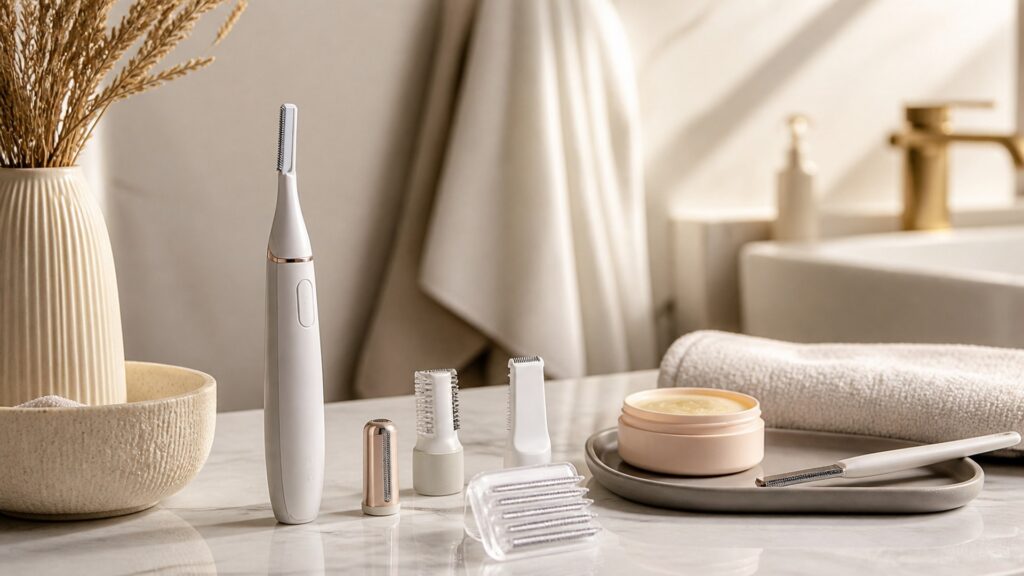
Buying framework
Define the skin sensitivity levels routine before comparing products
Use the setting, frequency, and skin priorities to narrow dermaplaning devices logically.
Start with the use case: Identify baseline sensitivity, rosacea, eczema, acne, and recent irritating exposures.
Rank the practical tradeoffs: Choose the most guarded fresh edge and smallest suitable test zone.
Check instructions early: Wait through immediate and next-day response before treating another area.
Use profiles
Match dermaplaning devices to the person and pace
Three shopper profiles expose different priorities for skin sensitivity levels.
Routine-focused buyer: A redness-prone user should avoid heat, scrubs, and multiple passes around the session.
Performance-focused buyer: An eczema- or rosacea-prone user should not treat during a flare.
Occasional or flexible user: An active-acne user must keep the blade away from inflamed lesions.
Specifications
Read the specifications through a skin sensitivity levels lens
Translate technical language into visible routine benefits.
Handling lens
Check the test zone several hours and the following morning.
Ownership lens
Evaluate comfort after cleanser and moisturizer rather than immediately alone.
Edge Design: Low blade exposure reduces but does not eliminate friction and cuts.
Speed And Control: Dull edges increase tugging and pressure on reactive skin.
Safety Guard: Oscillation adds repeated microcontact even during one visible stroke.
Replacement Blades: Lubricating products may alter glide while adding their own ingredients.
Cleaning Method: Magnifying lights can encourage treatment of barely visible hair.
Common mistakes
Avoid shortcuts that undermine skin sensitivity levels
A good purchase can still disappoint when selection or use is based on the wrong assumption.
Buying from one metric: Do not dermaplane soon after acids, retinoids, scrubs, or sunburn.
Skipping compatibility checks: Avoid treating redness or sting as a normal adjustment period.
Ignoring post-use care: Do not repeat strokes because fine hairs remain under magnification.
Decision guidance
Choose the simplest option that covers the real need
Use these decision rules to finish a shortlist for skin sensitivity levels.
Choose the basic format when: Choose no blade treatment when sensitivity or disease makes reaction unpredictable.
Choose the flexible format when: Use one guarded pass only on a suitable calm test zone when appropriate.
Pause before upgrading when: Seek professional guidance for persistent redness, dermatitis, rosacea, or recurrent bumps.
Ownership & compatibility
Plan for clean, repeatable ownership
The best value remains convenient after the first few uses.
Consumables and replacements: Log blade age, zone, strokes, preparation, and delayed reaction.
Cleaning and storage: Use bland compatible aftercare and avoid adding new actives.
Routine compatibility: Allow complete recovery before shaving, exfoliating, or testing another zone.
FAQ
Dermaplaning Devices Buying Guide for Skin Sensitivity Levels FAQ
Practical answers about choosing and owning dermaplaning devices for skin sensitivity levels.
What matters most when choosing dermaplaning devices for skin sensitivity levels?
Is the most expensive option better for skin sensitivity levels?
How should I compare two similar dermaplaning devices options?
Bottom line
Buy for repeatable skin sensitivity levels results
A focused shortlist is easier to own and use well.
Prioritize fit: Let sensitivity reduce area, passes, and expected outcome.
Verify the limits: Keep dermaplaning separate from other irritating exposures.
Count ownership costs: Use next-day response as the tolerance decision point.
Reading Shortcuts
Jump to the key dermaplaning devices decisions.
Decision Reminders
Keep these checks beside your shortlist.
- Check edge design: Use only as directed on clean, intact skin with light controlled strokes.
- Check speed and control: Do not use on active acne, broken skin, infection, or significant irritation.
- Check safety guard: Never share blades and replace them as directed.
Glossary Snippets
Plain-language dermaplaning devices terms.
When to Use a Top 10 Review
Use a ranked list to identify a manageable set of strong candidates.
- You are still exploring: A ranked list can reveal the main formats and price tiers.
- You want a shortlist: Start broad, then confirm fit with this buying guide.
Have finalists? Use a Comparison.
When to Use a Comparison
Use a direct comparison when only a few candidates remain.
- Features are close: Side-by-side details clarify meaningful differences.
- Prices overlap: Compare ownership value, not only purchase price.
Still exploring? See the Top 10.