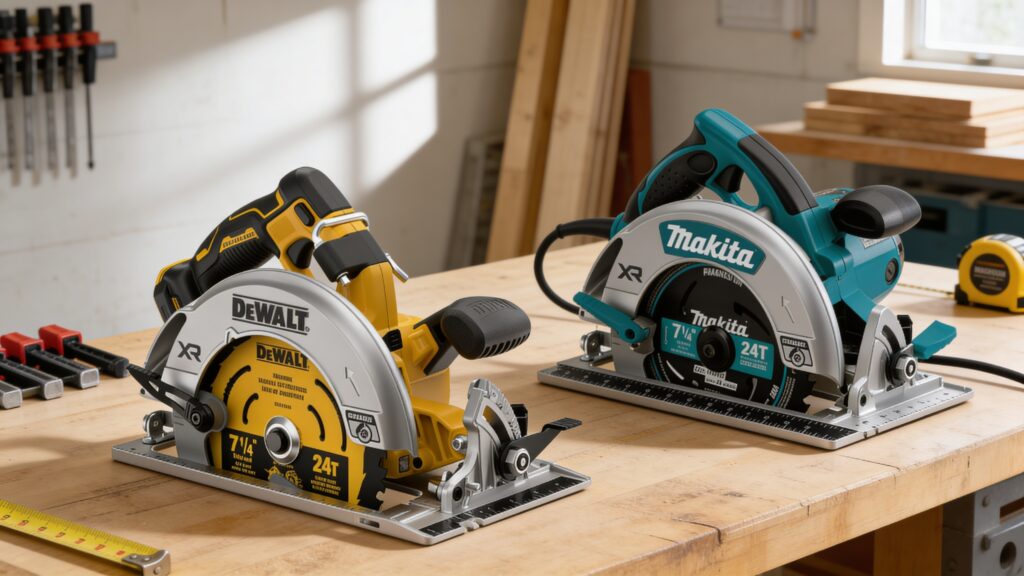
DeWalt DWE575SB vs Makita 5007MG: Which Circular Saws Is Better?

The DeWalt DWE575SB and Makita 5007MG represent two proven circular saw designs, each with distinct strengths in power, weight, and handling, making this comparison focused on real-world performance and practical tradeoffs.

By: Review Streets Research Lab
Updated: March 20, 2026
Approx. 10–12 min read
DeWalt DWE575SB vs Makita 5007MG: Which Circular Saws Is Better?

Head-to-head

DeWalt DWE575SB vs Makita 5007MG: Which Circular Saws Is Better?

A clean A/B view of what matters on real jobs: cutting feel, weight and balance, sightlines, durability, value, and which saw makes more sense for long days in framing and general carpentry.
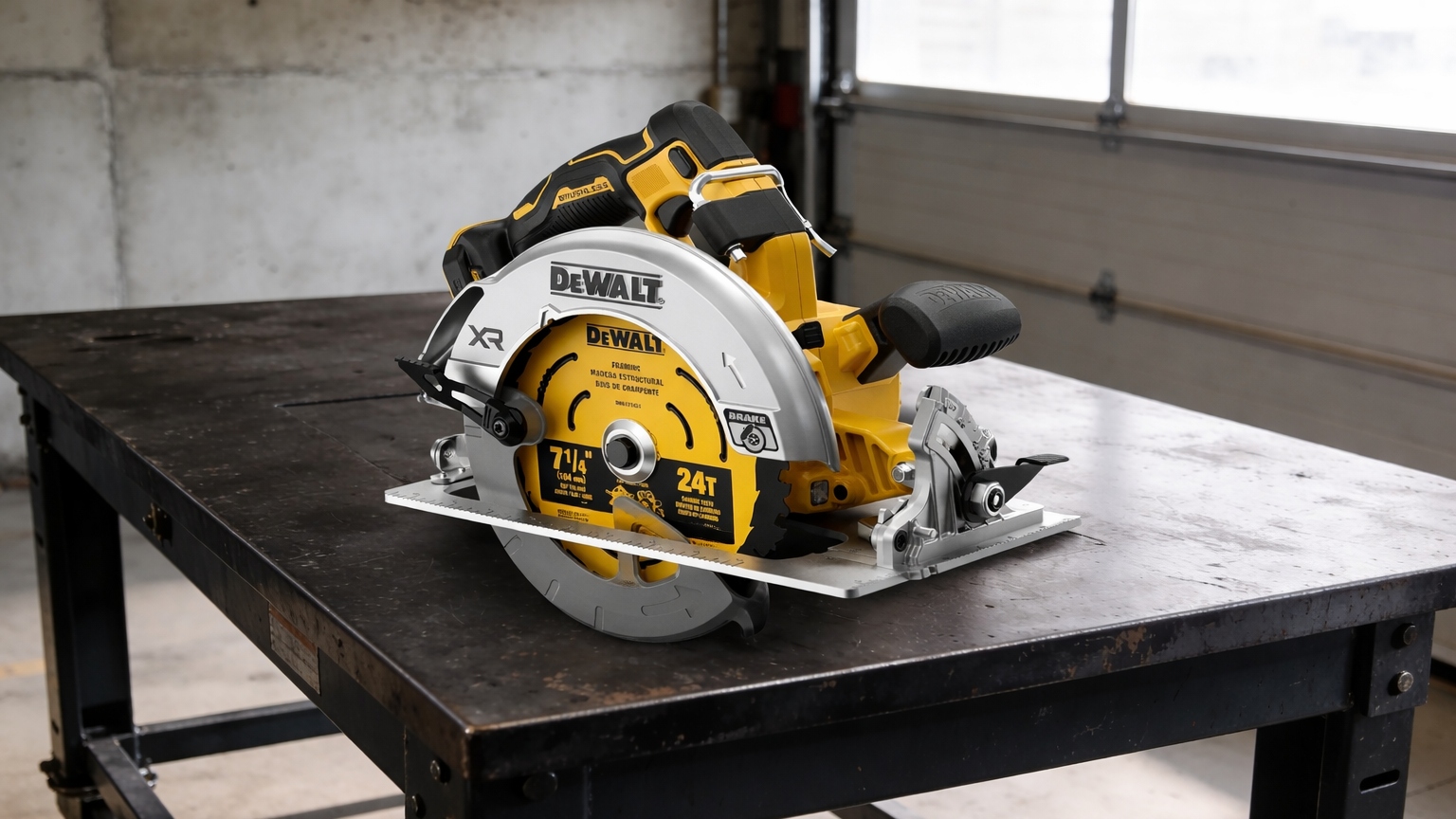
DeWalt DWE575SB circular saw

DeWalt DWE575SB circular saw

A light, jobsite-friendly sidewinder that feels easy to carry and easy to trust over long days, especially when you want strong overall performance without extra bulk.

Score 9.0 Best for all-day pro use Battery corded Why buy low weight + easy handling
  • Lighter feel makes it easier to manage during repetitive cuts and ladder work
  • Good balance and clear sightlines help it feel predictable in everyday framing tasks
  • Strong choice when portability and reduced fatigue matter as much as raw confidence
VS
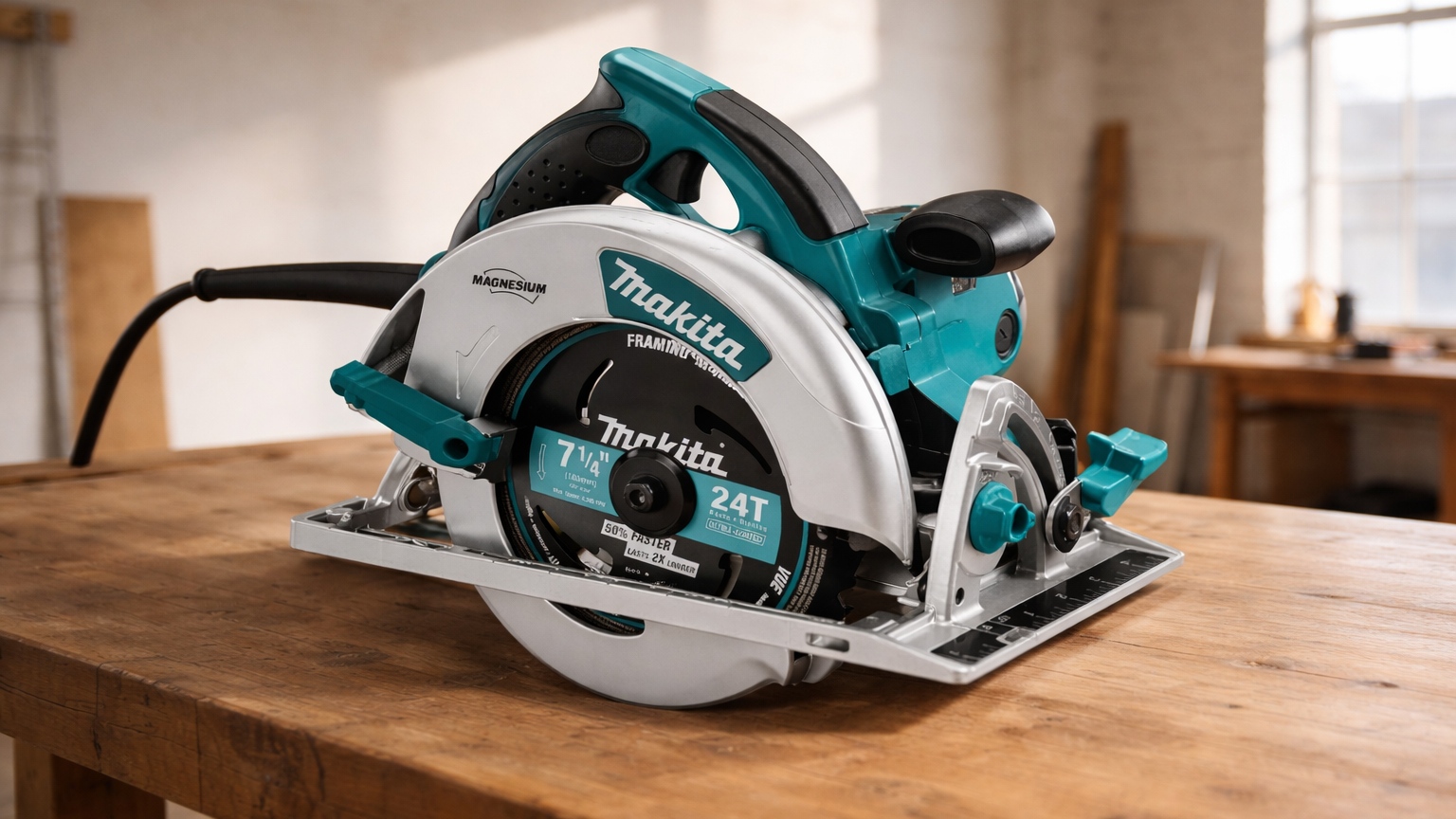
Makita 5007MG circular saw

Makita 5007MG circular saw

A magnesium-built saw with a more planted, confidence-first feel that suits pros who value solid tracking, durable construction, and a slightly more substantial cutting character.

Score 8.8 Best for rugged daily framing Battery corded Why buy sturdy build + planted feel
  • Feels more substantial in hand, which some pros prefer for steady line tracking
  • Magnesium construction supports long-term durability without feeling overly bulky
  • Appeals to users who want a traditional, confidence-inspiring jobsite saw
Power under load
Strong and efficient
Very solid, planted feel
Makita 5007MG
Control & cut-line visibility
Very good
Good
DeWalt DWE575SB
Ergonomics (feel + fatigue)
Lighter, easier all day
Solid, slightly heavier
DeWalt DWE575SB
Value (typical pricing)
Usually the better buy
Competitive but less compelling
DeWalt DWE575SB
Build quality & durability
Pro-grade, proven
Excellent magnesium construction
Makita 5007MG
Real-world context
This comparison reflects a synthesis of professional reviews, manufacturer data, long-term user feedback, and use-case patterns to highlight how each saw typically performs in everyday projects.

DeWalt DWE575SB — Why people choose it

  • Lighter overall feel makes it easier to carry, reposition, and use repeatedly through the day
  • Well-rounded cutting experience with good balance for framing, sheet goods, and general carpentry
  • Often the smarter pick when you want strong pro performance without paying extra for a heavier build

Makita 5007MG — Why people choose it

  • More substantial in-hand feel can inspire confidence when making repeated jobsite cuts
  • Magnesium construction stands out for durability and a more premium build character
  • Good fit for pros who prefer a sturdier saw and do not mind a bit more weight for that planted feel
Verdict: Choose DeWalt DWE575SB if you want the better all-around buy for professional use, especially when lower weight, easier handling, and everyday value matter most. Choose Makita 5007MG if you prefer a sturdier, more planted saw with excellent build quality and do not mind trading a bit of agility for that more substantial feel.
Read FAQs

Deep dive

What actually matters in this matchup

On paper, both circular saws cover the same core jobs, but the meaningful differences show up in how they carry, how settled they feel through a cut, and how much effort they demand over a full day. This comparison is less about headline specs and more about what affects real use: confidence at the start of a cut, steadiness through sheet goods and framing lumber, visibility, fatigue, and how each saw fits into everyday jobsite rhythm.

For long workdays: the DeWalt’s lighter, easier-moving feel matters because fatigue builds gradually, especially when the saw is being carried often, repositioned repeatedly, or used from less stable footing.

For cut confidence: the Makita stands out when a more planted, substantial feel is the priority, which can make the saw feel steadier and more reassuring during repeated framing cuts or tougher material transitions.

For overall fit: this matchup really comes down to whether lower effort and everyday agility matter more, or whether a sturdier in-hand character and stronger build confidence better match the way the saw will be used over time.

Methodology

How we evaluated these circular saws

Our evaluation focuses on real cutting scenarios that reveal meaningful differences between circular saws, not spec-sheet claims. Each model is assessed through practical use, using a context-aware approach that reflects how these tools actually perform on jobsites and in everyday projects.

Tasks: crosscuts and rip cuts in framing lumber and sheet goods, repeated start–stop cuts, bevel adjustments, and extended use sessions to evaluate control, tracking, and fatigue.

What we scored: consistency under load, cut-line visibility, balance and ergonomics, build quality, and overall usability during repeated real-world tasks.

How results are interpreted: performance is evaluated in context, recognizing that stability, handling, and comfort can matter more than raw output depending on the type of work and duration of use.

What we ignored: advertised specifications and features that do not consistently translate into predictable, repeatable performance in real cutting conditions.

FAQ

DeWalt DWE575SB vs Makita 5007MG: Common questions

Which circular saw is easier to use for extended periods?
The DeWalt DWE575SB generally feels easier to manage over long sessions due to its lighter weight and more agile handling. This can reduce fatigue during repetitive cuts or when moving frequently around a jobsite. The Makita remains comfortable but feels more substantial over time.
When does the Makita 5007MG make more sense?
The Makita 5007MG is a better fit when a more planted, stable feel is preferred, particularly for repeated framing cuts or when consistency through the cut matters most. Its build also appeals to users who prioritize long-term durability and a more traditional saw feel.
Is there a noticeable difference in cutting performance?
In typical use, both saws handle common materials well. Differences tend to show up more in feel than raw cutting ability, with the Makita offering a slightly steadier character and the DeWalt emphasizing ease of control and smoother handling.
Which saw is better for precision and visibility?
The DeWalt DWE575SB often feels a bit easier to track along a line due to its balance and lighter handling. The Makita remains accurate, but its slightly heavier feel can make fine adjustments feel more deliberate rather than effortless.

Key Takeaways

  • The DeWalt DWE575SB emphasizes lower weight and easier handling, which becomes more noticeable during long workdays or frequent repositioning.
  • The Makita 5007MG offers a more planted, substantial feel that can improve confidence and stability during repeated framing or heavier cuts.
  • Cutting performance is similar in typical use, but the difference shows up in how each saw feels through the cut rather than raw output.
  • DeWalt’s lighter design tends to favor precision and reduced fatigue, while Makita’s sturdier build leans toward durability and consistency.
  • This matchup comes down to whether ease of use and agility or a more solid, traditional saw feel better fits the way the tool will be used.
  • Both are strong long-term options, with the better choice depending more on handling preference than any single standout feature.

Verdict

The Better Circular Saw for Most Jobsite Use

In this matchup, the decision comes down to how the saw feels in real use. Both deliver reliable cutting performance, but differences in weight, handling, and in-hand confidence shape which one fits better over time.

#1 Winner

DeWalt DWE575SB Circular Saw

The better all-around choice for most users due to its lighter feel, easier handling, and reduced fatigue during extended use.

  • Easier to carry, position, and use repeatedly throughout the day
  • More agile feel supports cleaner tracking and control in common cuts
  • Delivers strong overall performance without added weight or bulk

Runner-up

Jump to the Head-to-Head

Tip: If you prioritize lighter handling and reduced fatigue, DeWalt has the edge; if you prefer a sturdier, more substantial feel, Makita may suit you better.

Where to Buy

We prioritize reputable sellers, easy returns, and reliable availability.

Price checks happen regularly. Some links may earn a commission—never affects rankings.

Accessories You’ll Want

  • General-purpose carbide blade set (keep a fast-framing blade and a finer-finish blade ready for different materials and cut quality needs)
  • Straightedge cutting guide (helps make cleaner, more repeatable rip cuts in plywood, OSB, and other sheet goods)
  • Stable sawhorses or cutting supports (improves control, material support, and overall safety during longer or larger cuts)
  • Spare blade wrench and blade case (makes blade changes easier and keeps extra blades protected between jobs)
  • Eye and hearing protection (basic safety gear that matters every time you use a corded circular saw)

Tip: For circular saws, blade quality and matching the blade to the material often make a bigger day-to-day difference than small differences between saw models.