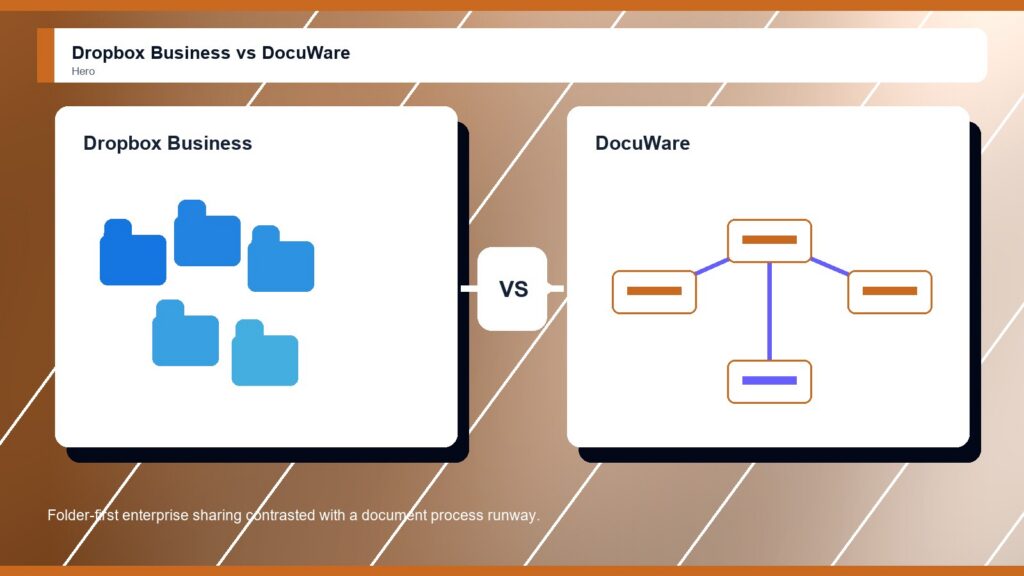
This comparison is about file access versus document process control. We weighted team adoption, sync habits, external sharing, capture, indexing, workflow routing, records retention, search, audit needs, migration cleanup, and whether documents simply need to be available or reliably moved through a defined business path.
Operating model: Dropbox Business feels natural when employees already think in folders, devices, and shared links. DocuWare feels more natural when documents arrive from forms, scans, invoices, HR packets, or email intake and then need a defined route through the business. That keeps the choice practical.
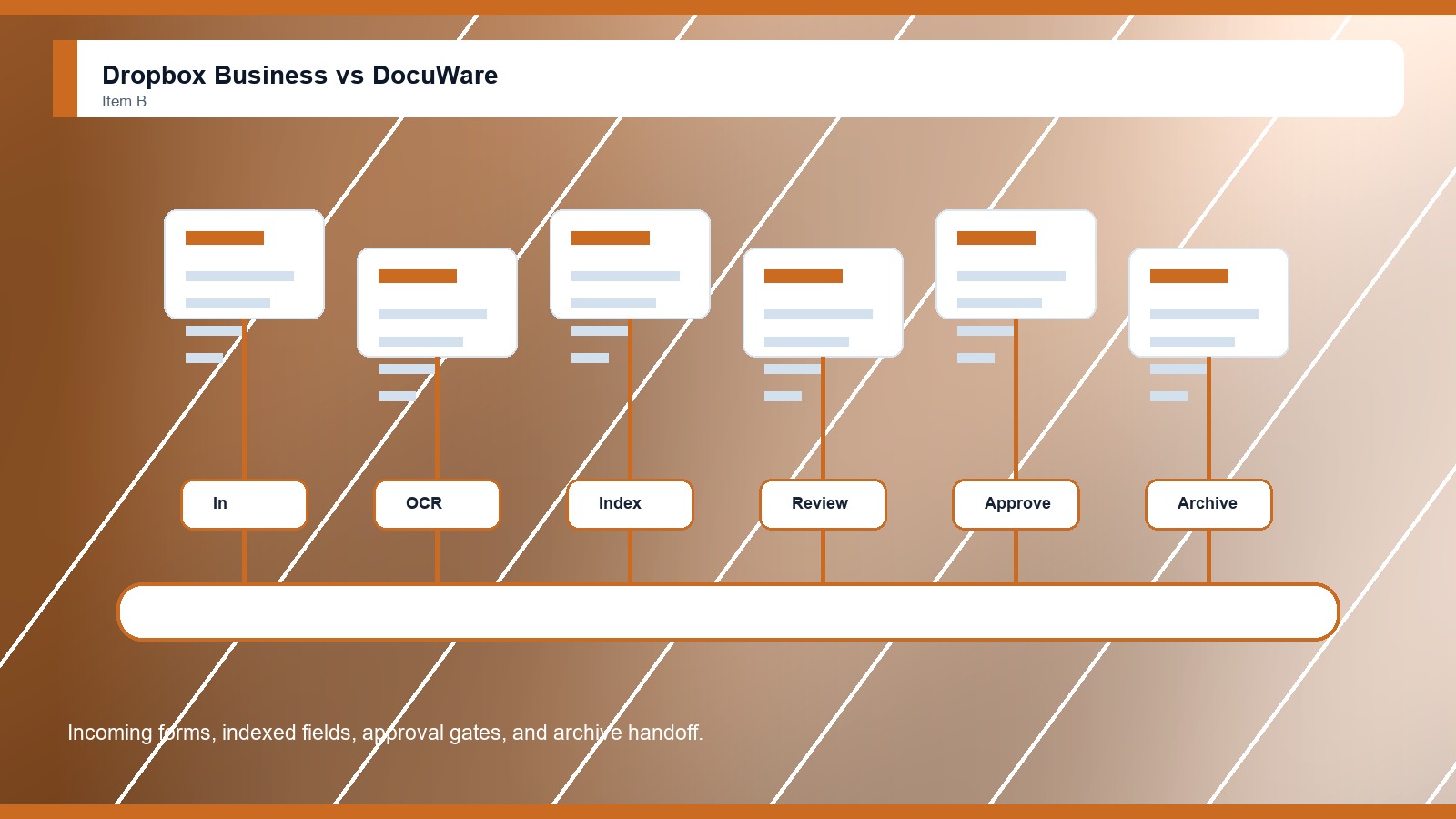
Process discipline: DocuWare has the stronger enterprise document-management case because it focuses on capture, indexing, approvals, and archiving. Dropbox Business supports collaboration around files, but it is not primarily a document-process engine for routed records. That keeps the choice practical. That matters during rollout.
Search and records: Dropbox Business can work well when folder structure and naming rules are healthy. DocuWare is stronger when search depends on index fields, document type, approval state, vendor name, retention period, or other structured record details. That keeps the choice practical.
Adoption tradeoff: Dropbox Business usually asks less of users at launch. DocuWare asks the company to define document classes, routes, owners, and exceptions. That extra design work is worthwhile when informal sharing already causes delays or missing approvals. That keeps the choice practical.
Enterprise risk: The risk in Dropbox Business is that unmanaged links and duplicated folders can become the process. The risk in DocuWare is overbuilding workflows that users avoid. Buyers should pilot one real document path before choosing either system. That keeps the choice practical.
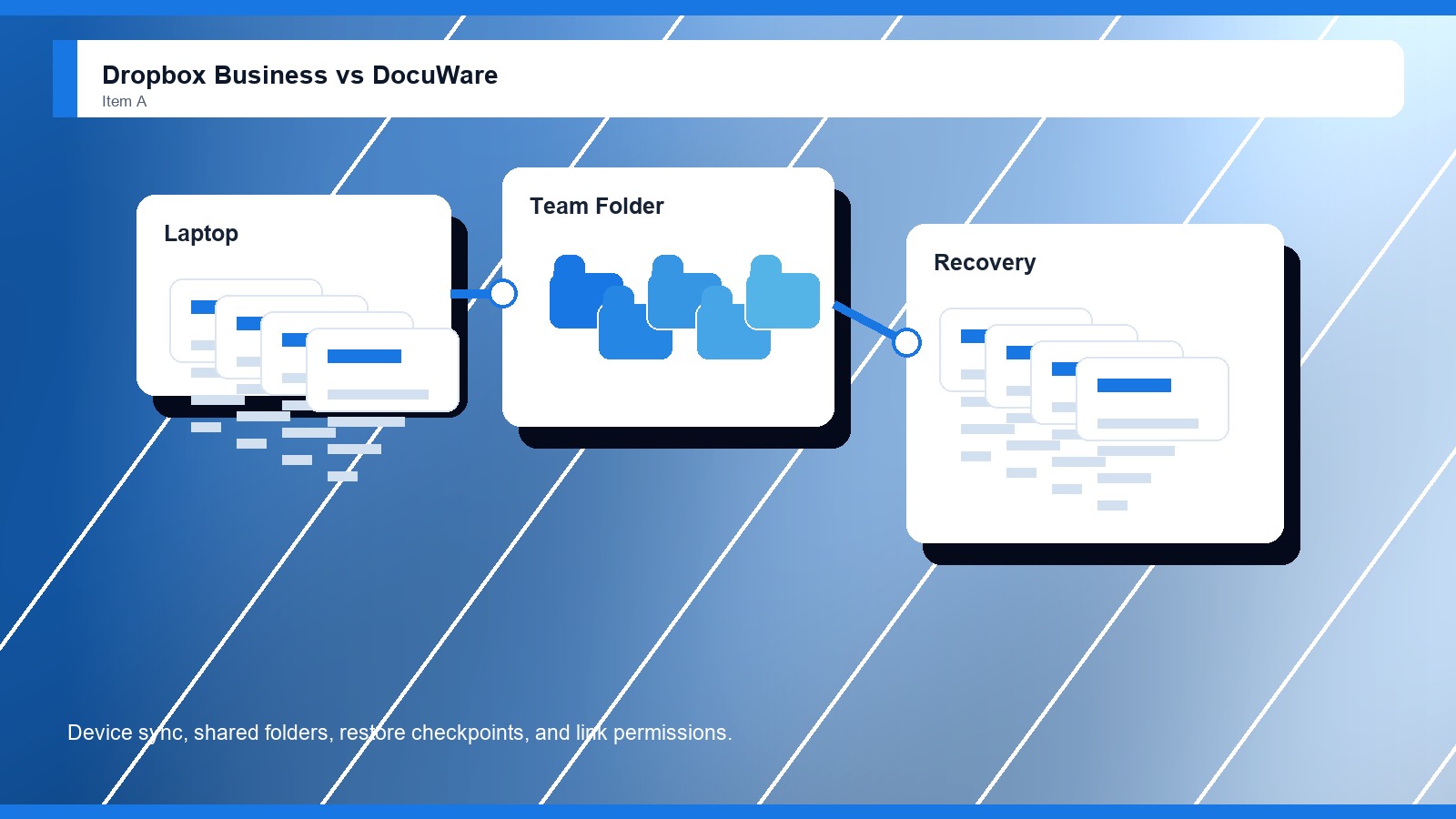
Final choice: Choose DocuWare when document management requires intake control, indexing, approvals, archiving, and retrieval by business context. Choose Dropbox Business when the company mostly needs easy file access, shared folders, recovery, and collaboration employees understand immediately. That keeps the choice practical.