Dropbox Business vs Egnyte: Which Enterprise Document Management Software Is Better?

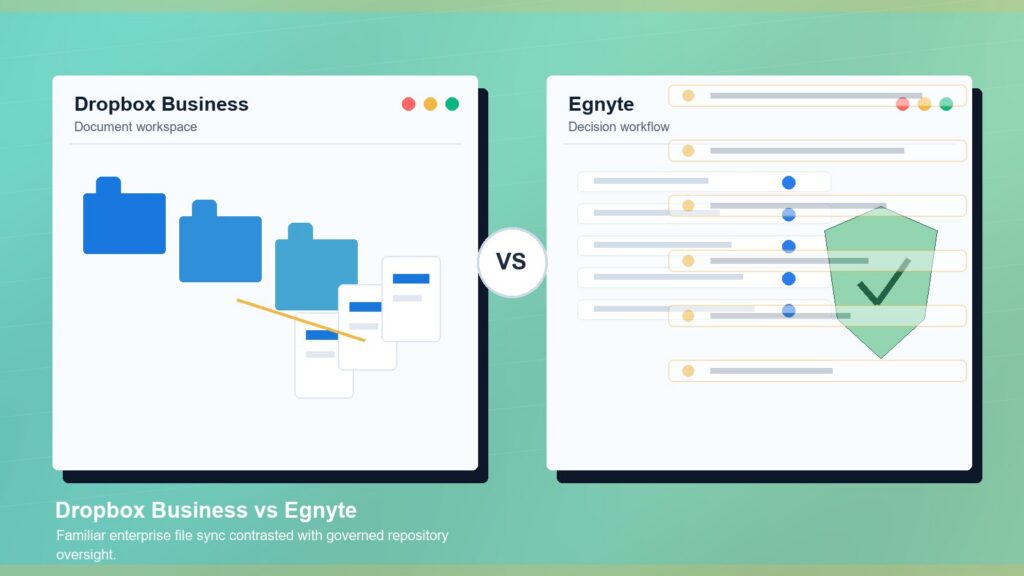
Dropbox Business and Egnyte both help employees store and share files, but enterprise document management asks for more than availability. Dropbox Business is strongest when teams want familiar folders, sync, shared links, and a tool people understand quickly. Egnyte is stronger when the company needs governance, sensitive-content visibility, access review, controlled sharing, and oversight across repositories.

By: Review Streets Research Lab
Updated: September 8, 2026
Approx. 10-12 min read
Dropbox Business vs Egnyte business comparison image

Head-to-head

Dropbox Business vs Egnyte: Which Enterprise Document Management Software Is Better?

Egnyte is the stronger Enterprise Document Management Software choice when governance and sensitive-file control matter. Dropbox Business is better for simple file sync and fast adoption.

Dropbox Business comparison image

Dropbox Business

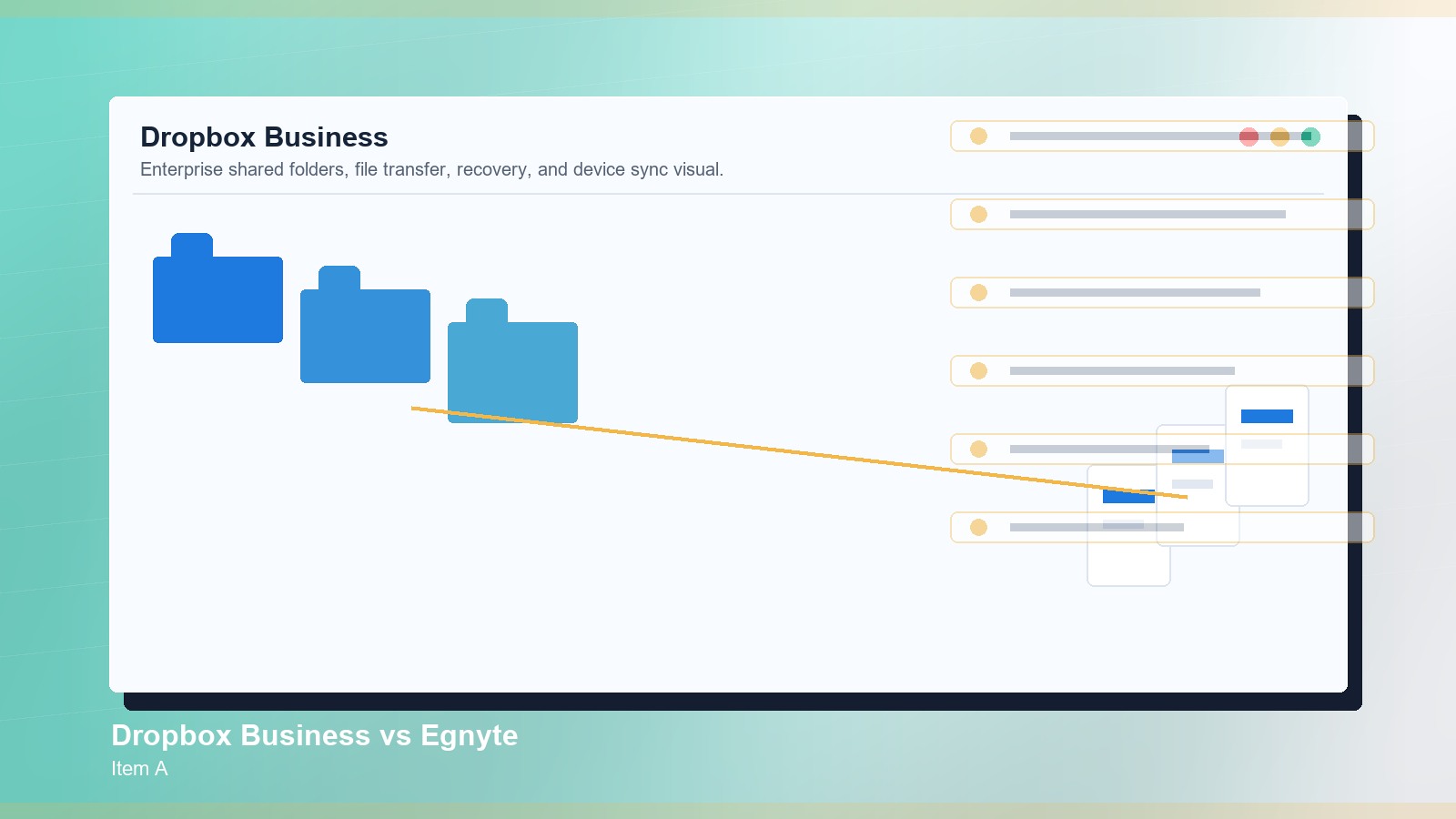
Dropbox Business is stronger when the company wants familiar team folders, device sync, shared links, recovery controls, admin roles, SSO, and straightforward adoption for distributed employees.

Score 8.5/10 Best for enterprise file sync and familiar sharing Focus Sync Why buy Fit
  • Very familiar file-sharing model
  • Fast user adoption and sync
  • Good fit for straightforward teams
VS
Egnyte comparison image

Egnyte

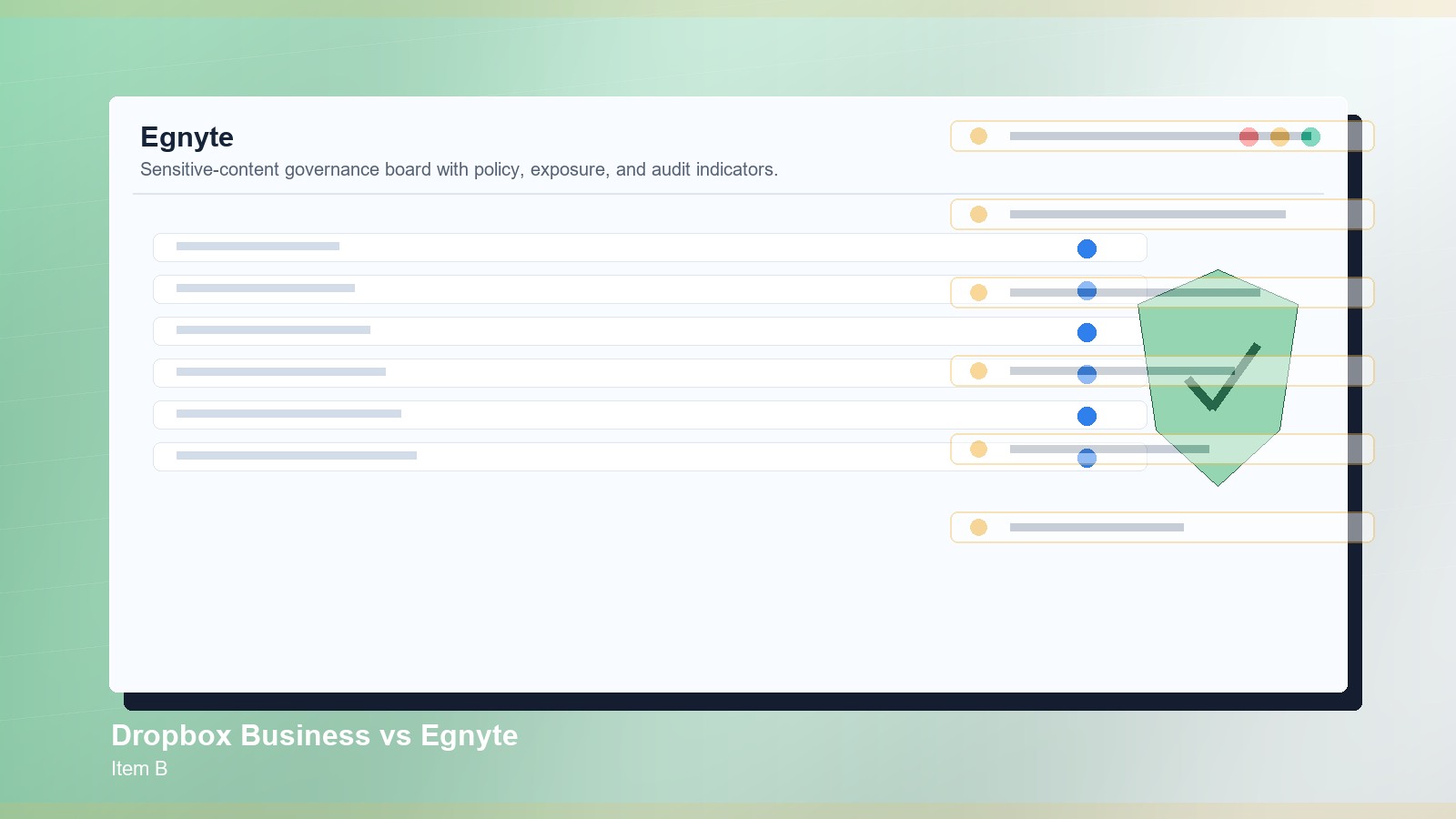
Egnyte is stronger when the business needs sensitive-content discovery, audit visibility, access reviews, controlled external collaboration, data governance, and stronger oversight across enterprise repositories.

Score 8.9/10 Best for governed enterprise file operations Focus Governance Why buy Fit
  • Strong sensitive-content governance
  • Useful audit and access visibility
  • Good fit for regulated file estates
Metric
Dropbox Business
Egnyte
Winner
Governance at scale
Team folders, roles, SSO, and plan-level controls
Sensitive-content visibility, access review, audit, and governance
Egnyte
Workflow depth
Light content work around folders, sharing, and signatures
Governed file workflows and repository processes
Egnyte
Search and metadata
File and folder search that depends on clean organization
Sensitive-content visibility across enterprise repositories
Egnyte
Collaboration control
Fast links, sync, Transfer, and familiar shared folders
Controlled external access with governance oversight
Egnyte
Enterprise rollout
Fast rollout when file habits are already simple
Needs permission cleanup and governance ownership
Dropbox Business
Best fit
Enterprise file sync and sharing
Governed enterprise file operations
Egnyte
Real-world context
Egnyte wins when the enterprise needs to govern files, not just share them. Dropbox Business still has a clear role when the organization values employee comfort, quick rollout, recovery, and straightforward collaboration.

Why people choose it

  • Very familiar file-sharing model
  • Fast user adoption and sync
  • Good fit for straightforward teams

Why people choose it

  • Strong sensitive-content governance
  • Useful audit and access visibility
  • Good fit for regulated file estates
Winner: Egnyte Egnyte wins for Enterprise Document Management Software buyers who need stronger governance, audit visibility, and access oversight. Dropbox Business is the easier fit when enterprise needs are mostly folder sync, shared links, and low training effort.
Read FAQs

Deep dive

What actually matters in this matchup

This matchup tests the line between enterprise file sharing and enterprise document management. We weighted sync comfort, sharing speed, sensitive-content governance, permissions, search, audit visibility, workflow discipline, recovery, migration cleanup, and the internal effort required to keep repositories controlled. That keeps the choice practical.

Daily user experience: Dropbox Business has the easier user story because folders, desktop sync, and links feel familiar. That matters for adoption. The weakness appears when the enterprise needs stronger answers about who can access sensitive files and how risky content is reviewed.

Governance depth: Egnyte is stronger when administrators need visibility into sensitive repositories, external access, policy exceptions, and audit activity. Dropbox Business has useful controls, but it is usually selected first for ease rather than governance depth. That keeps the choice practical. That matters during rollout.

Document management fit: Enterprise document management often requires access review, repository ownership, retention planning, classification, and controlled collaboration. Egnyte maps more directly to those needs. Dropbox Business can support lighter document management when process and risk demands are modest. That keeps the choice practical.

Search and cleanup: Dropbox Business search depends heavily on healthy folder habits and naming discipline. Egnyte is better when the company needs to identify sensitive content, review exposure, and turn scattered file repositories into governed operating areas. That keeps the choice practical. That matters during rollout.

Rollout tradeoff: Dropbox Business may launch faster, but speed can hide unmanaged links and duplicate repositories. Egnyte takes more governance planning, but the planning is the point when exposure, compliance, and access risk are the real purchase drivers. That keeps the choice practical.

Final choice: Choose Egnyte when the enterprise needs governed file operations, sensitive-content oversight, and stronger access control. Choose Dropbox Business when the company mainly needs easy folders, reliable sync, shared links, and quick adoption. That keeps the choice practical. That matters during rollout.

Methodology

How we evaluated the matchup

This review weighs enterprise document management software fit against practical adoption, governance, workflow, and migration realities.

Scope: We evaluated Dropbox Business and Egnyte as enterprise document management options for buyers deciding between familiar file sharing and governance-centered file operations. The review uses official vendor information, public documentation, and enterprise workflow analysis. That keeps the choice practical.

What we compared: The comparison weighs team folders, sync, shared links, recovery, sensitive-content visibility, access control, external sharing, audit reporting, governance ownership, search behavior, migration cleanup, retention planning, implementation effort, and category fit. That keeps the choice practical. That matters during rollout.
Interpretation: Egnyte wins because enterprise document management places a premium on governance and access oversight. Dropbox Business still scores well when adoption speed and simple collaboration outweigh sensitive-file controls and structured repository governance. That keeps the choice practical. That matters during rollout.
Buyer checks: Before choosing, verify current pricing, enterprise plan terms, storage limits, recovery windows, security controls, audit reporting, external-sharing rules, governance features, identity integrations, migration support, and who will review access after launch. That keeps the choice practical. That matters during rollout.

FAQ

Dropbox Business vs Egnyte: common questions

Is Dropbox Business better than Egnyte?
Dropbox Business is better for familiar file sync, shared folders, recovery, and simple collaboration. Egnyte is better when the enterprise needs sensitive-content visibility, stronger access governance, controlled sharing, audit reporting, and repository oversight. That keeps the choice practical. That matters during rollout. That keeps the buying decision grounded.
Where does Egnyte beat Dropbox Business?
Egnyte beats Dropbox Business on enterprise governance, especially when administrators need to review access, find sensitive content, control external sharing, and reduce repository risk across departments. That keeps the choice practical. That matters during rollout. That keeps the buying decision grounded. That keeps the choice practical.
Which is easier for employees?
Dropbox Business is usually easier for employees because the folder and sync model is familiar. Egnyte can require more governance discipline, but that structure is useful when unmanaged sharing has become risky. That keeps the choice practical. That matters during rollout. That keeps the buying decision grounded.
Which is better for regulated files?
Egnyte is better for regulated or sensitive files when the company needs visibility, auditability, and access review. Dropbox Business may still work for less complex file sharing where compliance demands are lighter. That keeps the choice practical. That matters during rollout. That keeps the buying decision grounded.
Can Dropbox Business replace Egnyte?
Dropbox Business can replace Egnyte only when governance needs are modest. If the business needs sensitive-content oversight, access reviews, and file-risk controls, Egnyte is the stronger document-management fit. That keeps the choice practical. That matters during rollout. That keeps the buying decision grounded.
Should price decide this comparison?
Price should not decide the comparison by itself. A lower-cost or easier platform can become expensive if access risk, unmanaged sharing, weak governance, or migration cleanup creates operational problems later. That keeps the choice practical. That matters during rollout. That keeps the buying decision grounded.
What should buyers demo first?
Test one sensitive file, one shared folder, one external link, one permission change, one audit report, and one recovery scenario. The better option should fit both employee behavior and governance requirements. That keeps the choice practical. That matters during rollout. That keeps the buying decision grounded.
Is this review based on hands-on testing?
No. This review uses official product information, public documentation, and document-management workflow analysis. Buyers should confirm current pricing, plan limits, security features, integrations, implementation support, and contract terms with each vendor. That keeps the choice practical. That matters during rollout. That keeps the buying decision grounded.

Key Takeaways

  • Egnyte wins governance needs.
  • Dropbox wins easy sync moments.
  • Sensitive files change the answer.
  • Audit visibility matters at scale.
  • Shared links need review.
  • Choose control or simplicity.

Verdict

The Better Default for Governed Enterprise Files

Egnyte is the stronger default when enterprise document management depends on governance, access oversight, and sensitive-content visibility.

#1 Winner

Egnyte

Egnyte wins because it answers enterprise file-governance requirements more directly than a sync-first sharing platform.

  • Stronger access governance
  • Better sensitive-content oversight
  • More useful audit visibility

Runner-up

Jump to the Head-to-Head

Tip: If the risk review matters as much as the folder experience, Egnyte has the better enterprise argument.

Where to Buy

Use the official Dropbox Business and Egnyte pages to confirm current plans, demos, security details, and implementation options.

Vendor terms, demos, pricing, and feature availability change regularly. Some links may earn a commission and never affect rankings.

Accessories You’ll Want

  • Access review worksheet (tracks owners, external users, and sensitive repositories)
  • Shared-link audit (checks whether simple collaboration has become unmanaged exposure)
  • Recovery scenario list (tests deleted files, versions, and departed-user handling)
  • Governance owner map (names who reviews policy, permissions, and exceptions after launch)
  • Folder cleanup sample (uses messy real repositories during vendor demos)

Tip: Use the same sample documents in every demo so workflow, search, governance, and rollout differences are visible.