Dropbox Business vs Egnyte: Which Secure File Sharing Platforms Is Better?

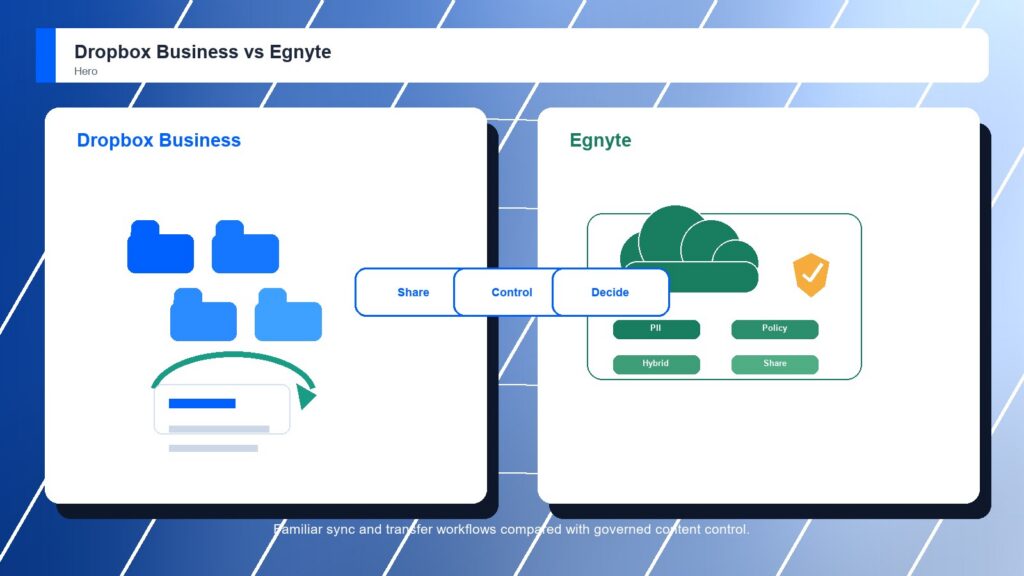
Dropbox Business and Egnyte both make file sharing easier for teams, but they lead with different strengths. Dropbox Business is the simpler choice for familiar folders, sync, shared links, and transfer workflows. Egnyte is stronger when the organization needs secure collaboration tied to content governance, sensitive-data visibility, and complex file estates.

By: Review Streets Research Lab
Updated: September 9, 2026
Approx. 10-12 min read
Dropbox Business vs Egnyte business comparison image

Head-to-head

Dropbox Business vs Egnyte: Which Secure File Sharing Platforms Is Better?

Egnyte wins because secure file sharing becomes more demanding as content volume, external access, and compliance concerns grow. Dropbox Business stays attractive when the main goal is user adoption. If the company mostly needs fast sync and sharing, Dropbox is easier. If governance matters, Egnyte is safer.

Dropbox Business comparison image

Dropbox Business

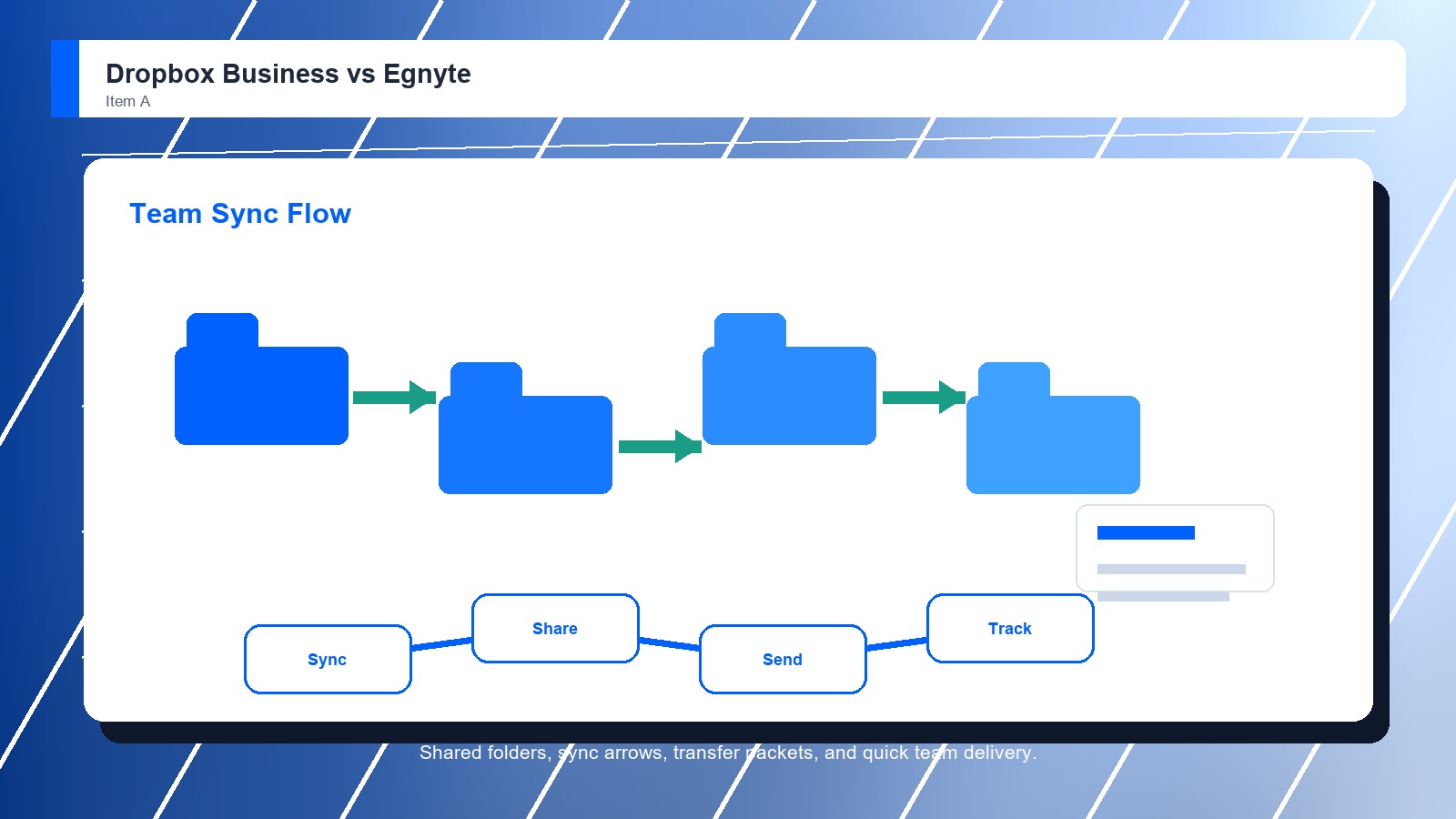
Dropbox Business is stronger when teams want secure file sharing that feels simple, familiar, and fast across folders, shared links, team spaces, and large file transfers.

Score 8.8/10 Best for teams that want familiar sync, sharing, and transfer workflows Focus Fast sync Rating 8.8/10
  • Very familiar sync and folder experience
  • Strong large-file transfer workflow
  • Easy adoption for everyday sharing
VS
Egnyte comparison image

Egnyte

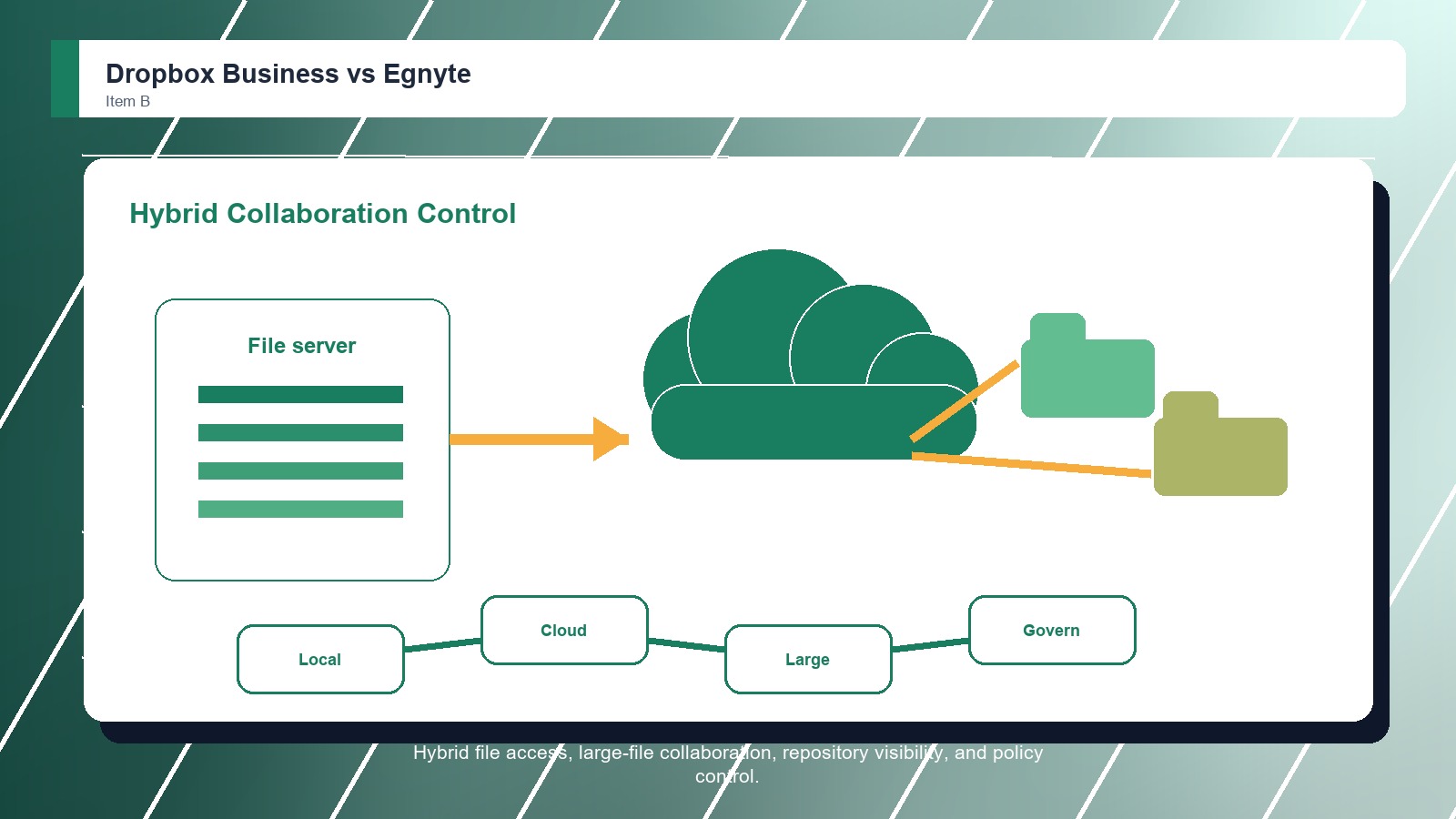
Egnyte is stronger when secure file sharing needs to connect with content governance, sensitive-data discovery, hybrid file access, large-file collaboration, and compliance-aware administration.

Score 9.1/10 Best for organizations that need secure collaboration with sensitive-data governance Focus Content governance Rating 9.1/10
  • Strong sensitive-data governance
  • Good hybrid and large-file collaboration fit
  • Useful secure sharing and compliance controls
Metric
Dropbox Business
Egnyte
Winner
Secure sharing controls
Simple shared links, team folders, and permission controls
Sensitive-content aware sharing rules, permissions, and upload links
Egnyte
External collaboration
Very approachable sharing for mixed internal and external teams
Secure collaboration with employees, vendors, customers, and contractors
Egnyte
Sync and transfer
Excellent sync, desktop familiarity, and large file transfer flow
Strong large-file sync and hybrid file access patterns
Dropbox Business
Governance and compliance
Solid business security with lighter content governance depth
Excellent content governance, classification, and compliance support
Egnyte
Ease of rollout
Faster adoption for teams already comfortable with Dropbox
More planning when repositories and policies are complex
Dropbox Business
Best fit
Simple secure sync, sharing, and file delivery
Sensitive data governance and hybrid content collaboration
Egnyte
Real-world context
This is a classic simplicity-versus-governance decision. Dropbox Business protects user momentum. Egnyte protects content control. For secure file sharing as a business-critical system, Egnyte has the better long-term shape, especially when files carry sensitive or regulated information.

Why people choose it

  • Very familiar sync and folder experience
  • Strong large-file transfer workflow
  • Easy adoption for everyday sharing

Why people choose it

  • Strong sensitive-data governance
  • Good hybrid and large-file collaboration fit
  • Useful secure sharing and compliance controls
Winner: Egnyte Egnyte is the better overall secure file sharing platform for teams that need stronger policy control, sensitive-content visibility, and hybrid collaboration. Dropbox Business is better when the organization wants secure sharing that feels simple, especially for users already comfortable with Dropbox folders and large file delivery.
Read FAQs

Deep dive

What actually matters in this matchup

The better choice depends on whether users or administrators drive the decision. Dropbox Business is built around simple sharing that people already understand. Egnyte is built around secure content control for organizations that need more than a folder-sync upgrade. That keeps the choice practical.

Adoption Speed: Dropbox Business is strongest when teams need secure sharing to feel immediately familiar. That matters when users would otherwise fall back to email attachments, personal drives, or informal transfer tools that administrators cannot easily monitor. That keeps the choice practical.

Governance Layer: Egnyte is stronger when the company needs to understand the content being shared, not just the people receiving it. Sensitive-data discovery and policy visibility make it better for security-led deployments. That keeps the choice practical. That matters during rollout. That keeps the buying decision grounded.

Complex File Estates: Egnyte has a better story when cloud folders, old file servers, large project files, and external collaboration all overlap. Dropbox Business stays cleaner when the company mostly needs simple sync and sharing. That keeps the choice practical. That matters during rollout.

Demo evidence: Buyers should make Dropbox Business and Egnyte show the same live workflow, using familiar files and real permission examples. A controlled demo reveals whether the stronger product advantage appears in daily work or only in vendor positioning. That keeps the choice practical.

Governance check: The winner should also fit the team's control model. For secure file sharing platforms, that means administrators can explain access, sharing, retention, exports, and exceptions clearly enough that staff do not create parallel folders or side workflows. That keeps the choice practical.

Adoption reality: The practical choice depends on who will keep the system orderly after launch. If attorneys, staff, managers, or external partners cannot follow the filing and sharing routine, even the better-rated option can lose value quickly. That keeps the choice practical.

Methodology

How we evaluated the matchup

This review weighs secure file sharing platforms fit against real buyer workflows, governance needs, adoption risk, and long-term ownership.

User behavior: We considered how quickly everyday users can adopt secure sharing without drifting into personal tools, email attachments, or unmanaged transfer habits that reduce administrative visibility. That keeps the choice practical. That matters during rollout. That keeps the buying decision grounded.

Governance needs: We weighted sensitive-content discovery, policy control, compliance support, repository visibility, and whether administrators can explain who can access files and why. That keeps the choice practical. That matters during rollout. That keeps the buying decision grounded. That keeps the choice practical.

File workflow: We compared sync, sharing, transfer, large-file collaboration, hybrid access, and whether each platform can support both internal teams and outside collaborators under real deadlines. That keeps the choice practical. That matters during rollout. That keeps the buying decision grounded.

Buyer verification: We recommend confirming current pricing, implementation scope, permissions, migration support, export options, integrations, security documentation, administrator controls, and contract terms before choosing a secure file sharing platform for production use. That keeps the choice practical. That matters during rollout.

FAQ

Dropbox Business vs Egnyte: common questions

Is Dropbox Business better than Egnyte?
Dropbox Business can be better when the team mainly wants familiar folders, fast sync, simple shared links, and easy file transfers. Egnyte is better when secure sharing requires stronger governance, sensitive-data visibility, hybrid access, and more administrative control. That keeps the choice practical.
Where does Egnyte beat Dropbox Business?
Egnyte beats Dropbox Business in governance-heavy situations. It is stronger for sensitive-content discovery, complex repositories, compliance support, large-file collaboration, and secure sharing policies. Dropbox Business is still stronger for pure ease of adoption and familiar everyday syncing. That keeps the choice practical. That matters during rollout.
Which platform is better for large files?
Both platforms can support serious business file sharing, but Egnyte is often stronger when large files connect to project repositories, hybrid access, and governance. Dropbox Business is excellent when the main issue is straightforward file transfer and sync simplicity. That keeps the choice practical.
Which platform is safer for compliance-minded teams?
Egnyte is the safer default for compliance-minded teams because secure sharing is tied more directly to sensitive-content visibility and governance. Dropbox Business can still be secure, but it is strongest when the compliance requirement is less complex. That keeps the choice practical. That matters during rollout.
Should buyers demo Dropbox Business and Egnyte with real files?
Yes. Buyers should bring real matters, folders, client files, sharing rules, and search examples into both demos. The best secure file sharing platform choice becomes clearer when users test everyday retrieval, permissions, handoffs, and administration instead of watching polished sample data. That keeps the choice practical.
Should pricing decide the winner?
Pricing should narrow the shortlist, but it should not decide the winner alone. A cheaper secure file sharing platform can cost more if search fails, migration drags, permissions confuse users, support is weak, or adoption requires workarounds after launch. That keeps the choice practical.
Can a team migrate from Dropbox Business to Egnyte later?
Yes, but migration should be treated as a project. Confirm export options, folder structures, metadata, permission mapping, version history, archived files, training needs, and support responsibilities before assuming a future move from Dropbox Business to Egnyte will be simple. That keeps the choice practical.
Who should own the final decision?
The final decision should include the people who create, approve, share, search, and administer files every week. Leadership can choose the budget, but the best secure file sharing platform fit depends on real user behavior and long-term ownership. That keeps the choice practical.

Key Takeaways

  • Box wins overall.
  • Dropbox Business is easier to adopt.
  • Governance decides the matchup.
  • Sync speed still matters.
  • External sharing needs testing.
  • Admins should verify link controls.

Verdict

Egnyte wins for Secure File Sharing Platforms

Choose Egnyte if secure sharing must include sensitive-data controls, compliance support, hybrid access, or administrative visibility. Choose Dropbox Business if the main goal is to give users a fast, familiar, secure file-sharing system with minimal process redesign.

#1 Winner

Egnyte

Egnyte wins because it combines secure collaboration with stronger content visibility, classification, policy control, and hybrid file-server modernization.

  • Secure sharing controls
  • External collaboration
  • Governance and compliance

Runner-up

Jump to the Head-to-Head

Tip: A design team that mainly shares project files with clients may prefer Dropbox Business because sync and transfer workflows are straightforward. A life sciences, architecture, or financial services team with sensitive files and external collaborators should prefer Egnyte because governance and visibility matter more.

Where to Buy

Use the official Dropbox Business and Egnyte pages to confirm current demos, security details, integrations, implementation options, and contract terms.

Vendor terms, demos, pricing, and feature availability change regularly. Some links may earn a commission and never affect rankings.

Accessories You’ll Want

  • Workflow map (shows who creates, files, shares, reviews, approves, and retrieves documents)
  • Permission checklist (keeps access, external sharing, client data, and administrator rules visible)
  • Migration inventory (identifies old folders, email attachments, versions, metadata, and owners before rollout)
  • Pilot workspace (tests one real matter, client, or partner file set before a full migration)
  • Adoption scorecard (captures search success, training friction, support issues, and user confidence)

Tip: Before choosing either secure file sharing platform, map who creates, reviews, shares, stores, and retrieves files. The better product is the one that matches those real behaviors instead of forcing every team into a generic file cabinet.