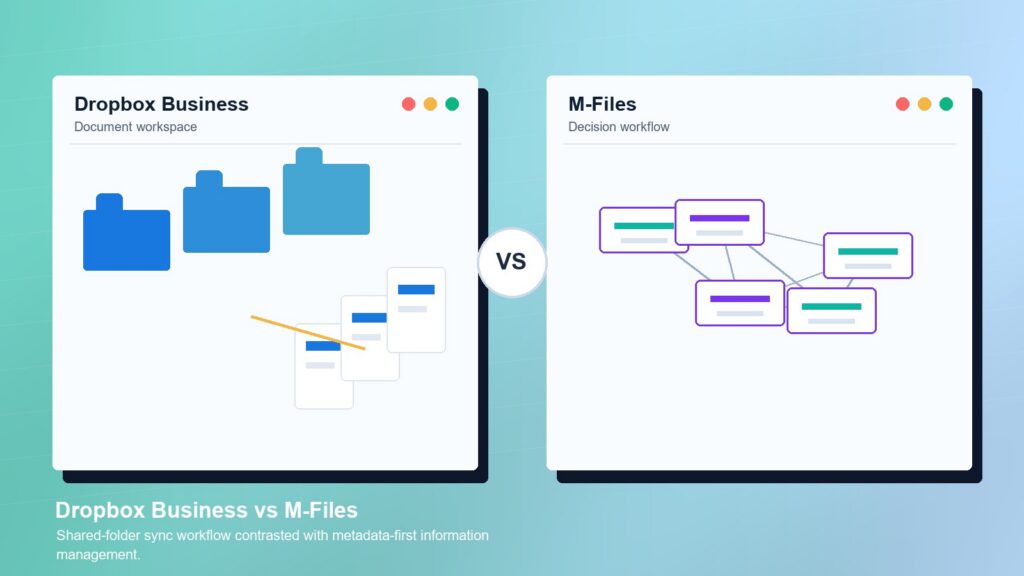
This comparison contrasts familiar folder behavior with structured information management. We weighted sync, links, user comfort, metadata, search, workflow routing, governance, retention planning, migration cleanup, and whether document context matters more than storage location. That keeps the choice practical. That matters during rollout.
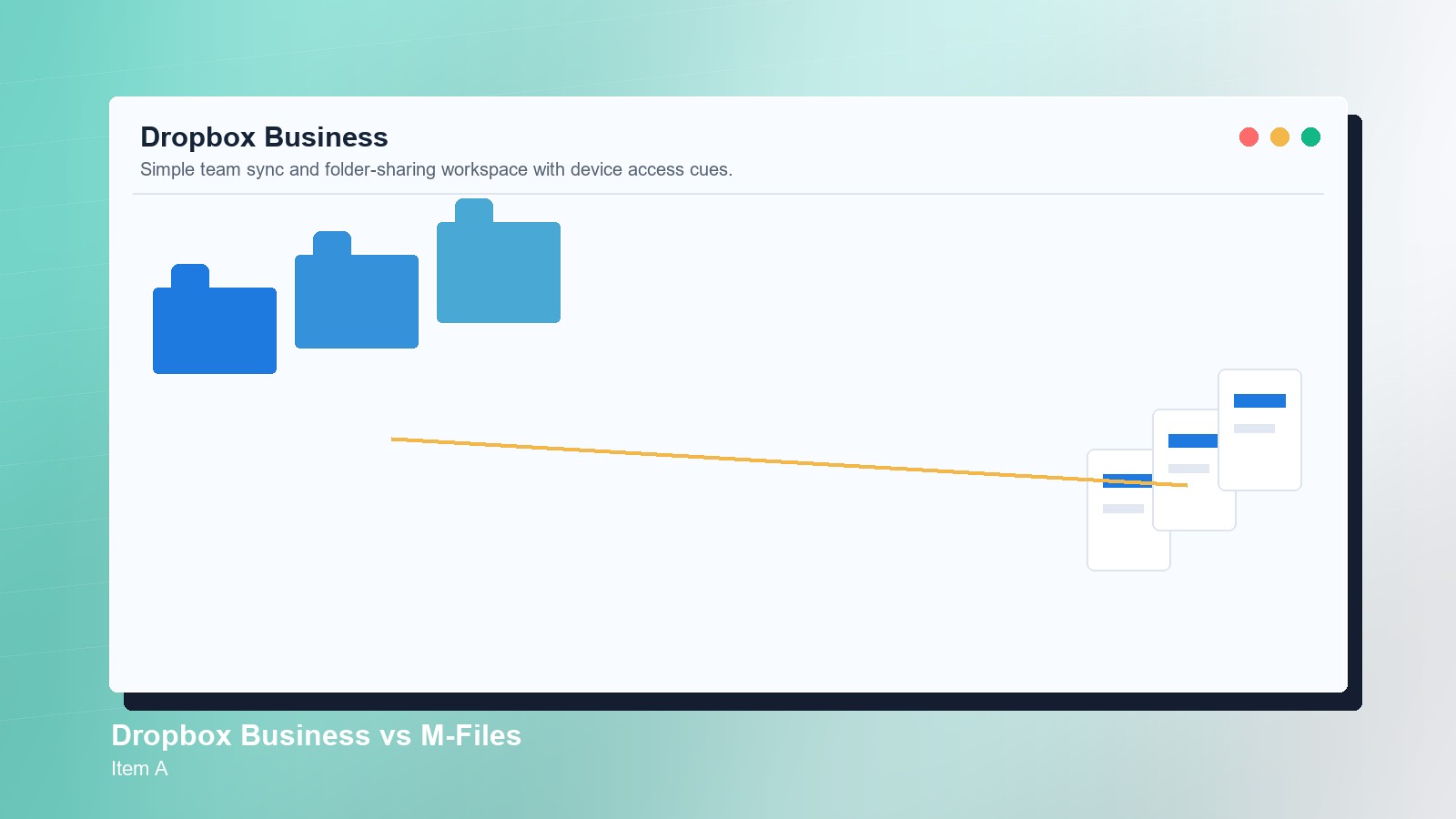
Folder habits: Dropbox Business wins the comfort test for users who already understand folders, desktop sync, and shared links. That simplicity is useful, but it can fall short when documents need classification, status, owner, and business context. That keeps the choice practical.
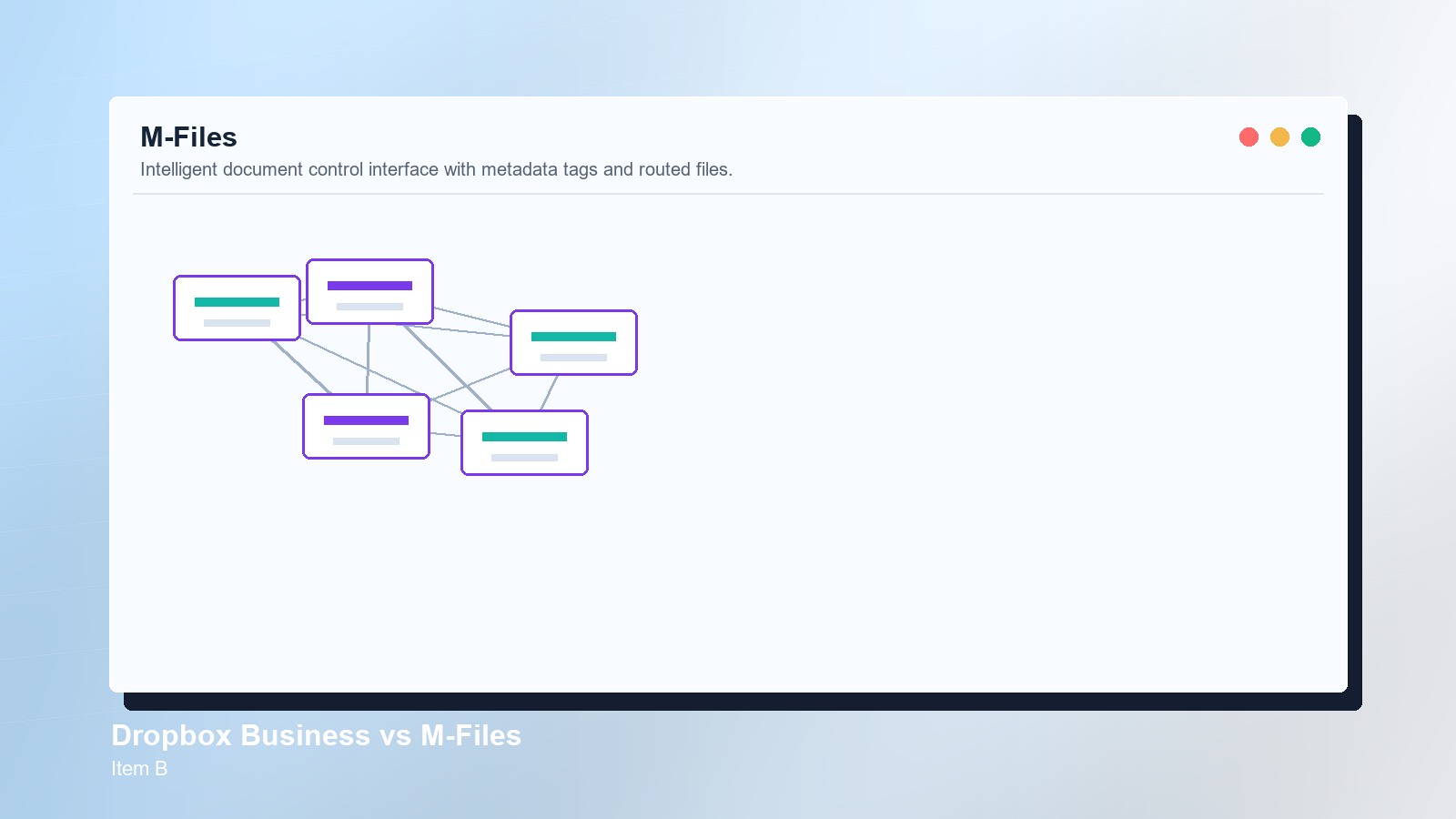
Metadata value: M-Files is stronger when a document must be found by customer, project, matter, status, or record type. Metadata makes the system less dependent on perfect folder discipline, which is hard to maintain at scale. That keeps the choice practical. That matters during rollout.
Workflow control: Dropbox Business supports collaboration around files, but it is not primarily a metadata-driven workflow system. M-Files is better when approvals, version discipline, routing, and document status are part of the daily operating process. That keeps the choice practical. That matters during rollout.
Adoption tradeoff: Dropbox Business requires less training because it matches familiar file behavior. M-Files requires clearer rules and user habits around metadata. The extra structure is worthwhile only when finding and governing documents has become painful. That keeps the choice practical. That matters during rollout.
Governance questions: If the buyer mainly asks where files are and who can share them, Dropbox Business may be enough. If the buyer asks what each document represents, how it relates to work, and who owns it, M-Files leads. That keeps the choice practical.
Final choice: Choose M-Files when document management needs context, workflow, search, and governance. Choose Dropbox Business when the organization mostly needs simple sync, quick links, recovery, and a shared workspace that employees adopt immediately. That keeps the choice practical. That matters during rollout.