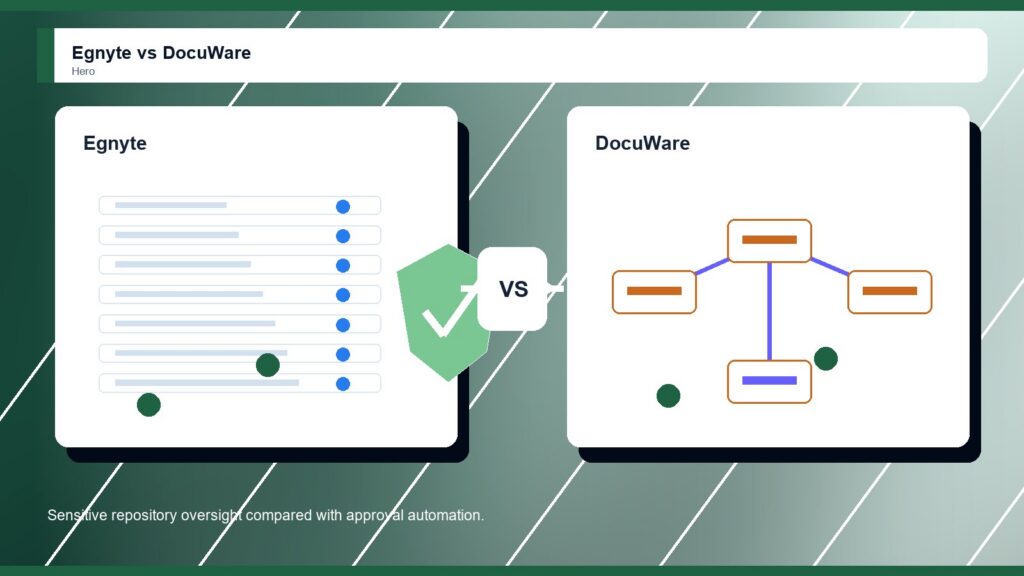
This matchup asks whether the enterprise needs broader repository governance or deeper workflow automation. We weighted sensitive-content discovery, permissions, audit visibility, external sharing, workflow routing, capture, indexing, records handling, search, migration cleanup, and the internal owner who will maintain controls after launch.
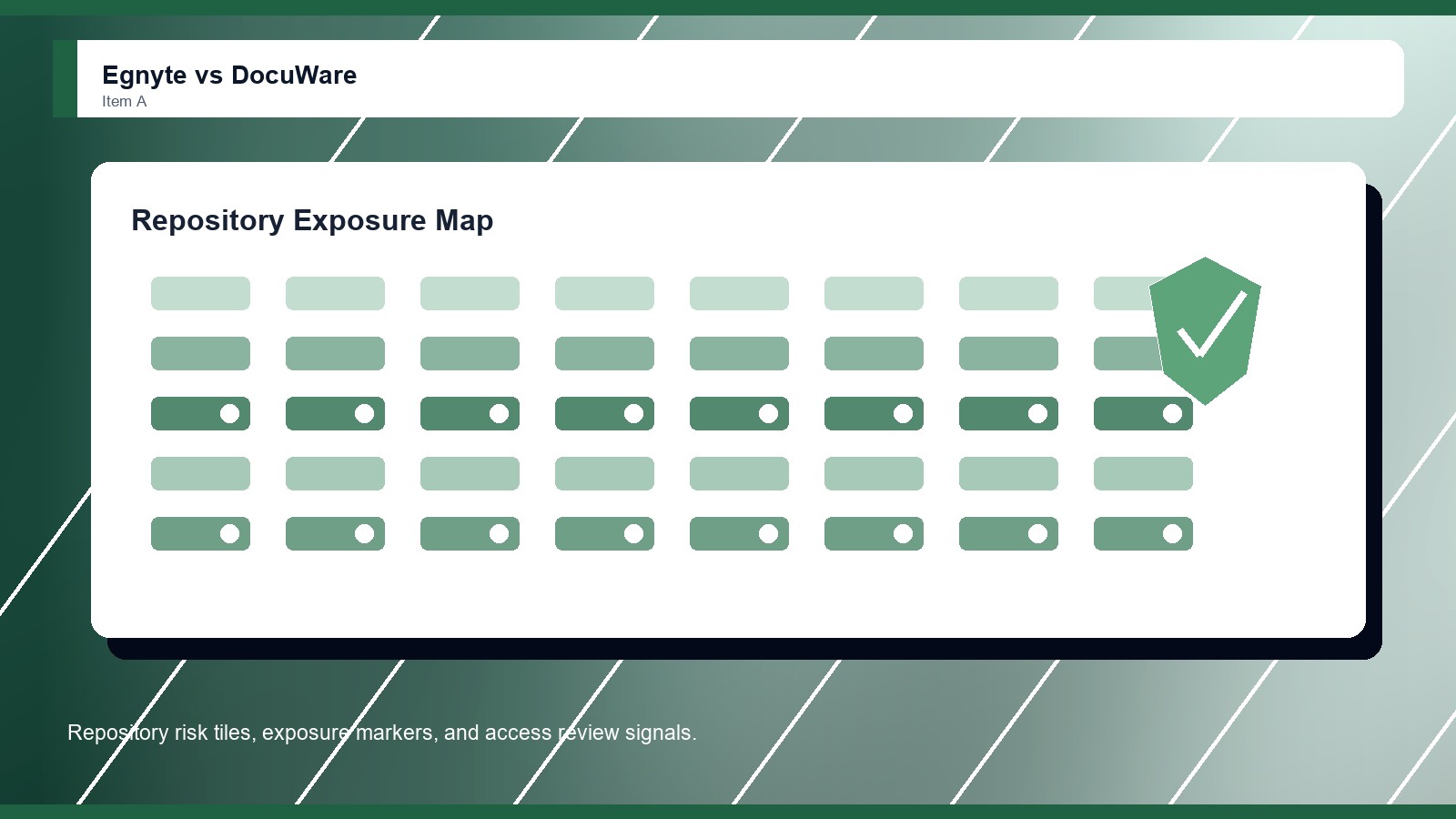
Governance scope: Egnyte is stronger when leaders need a clear view of sensitive files, risky sharing, access exposure, and repository ownership. DocuWare can govern documents inside workflows, but its strength is usually tied to specific document classes and process paths. That keeps the choice practical.
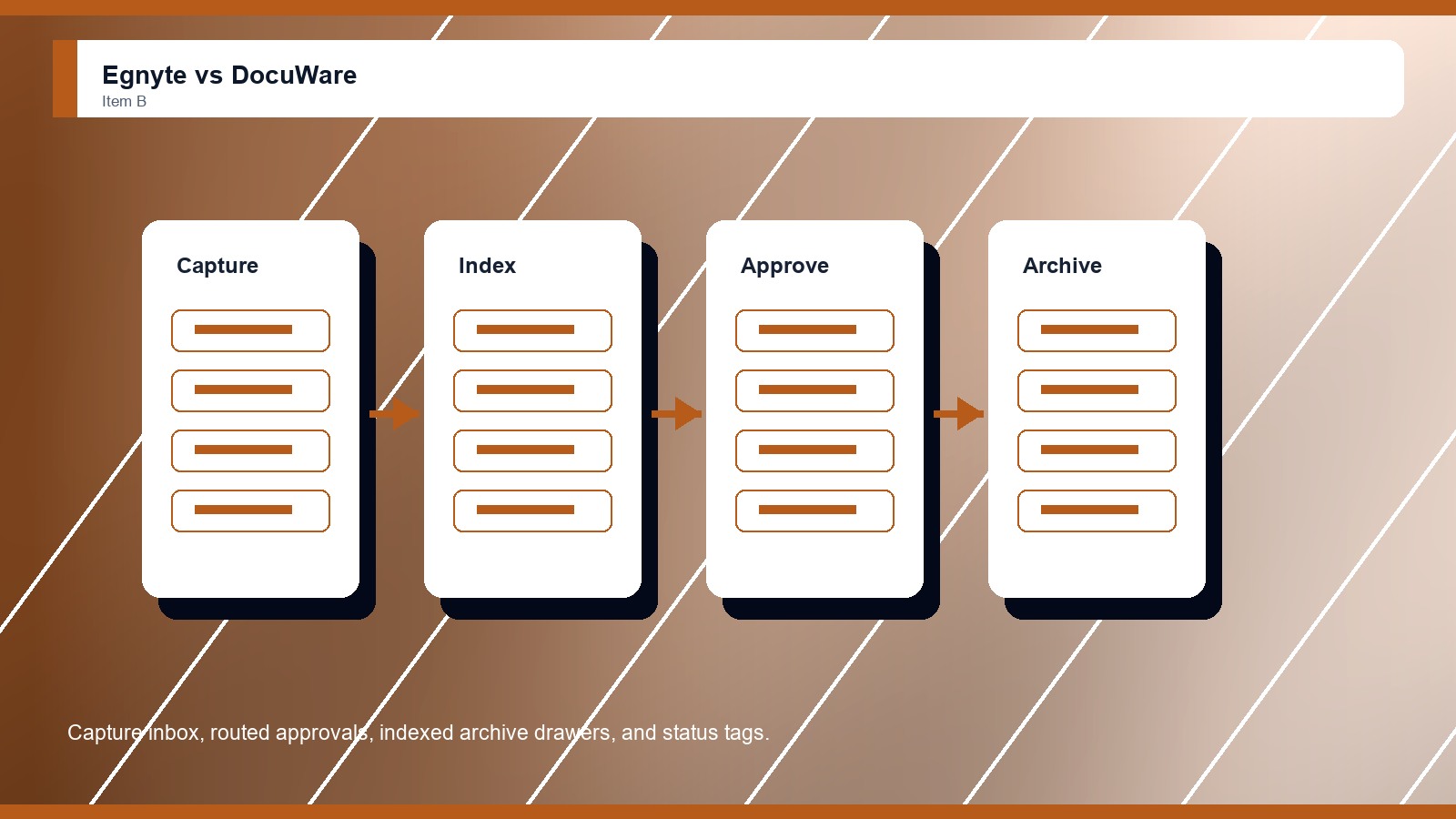
Workflow specificity: DocuWare is better when a department needs intake, indexing, routed approvals, and secure archives. Egnyte can support governed workflows, but its broader value is file oversight across the enterprise rather than one highly mapped process. That keeps the choice practical.
Search and visibility: Egnyte is more persuasive when search and reporting must expose sensitive content and access risk. DocuWare is more persuasive when search depends on index fields attached to records that moved through a formal workflow. That keeps the choice practical. That matters during rollout.
Collaboration reality: Egnyte fits teams that still need active collaboration with strong controls around external access. DocuWare fits teams that need to keep documents inside a known route so approvals, records, and archives are consistent. That keeps the choice practical. That matters during rollout.
Implementation burden: An Egnyte rollout should start with repositories, permission inheritance, sensitive folders, and audit reporting. A DocuWare rollout should start with document types, capture sources, route logic, indexing fields, and exception handling. That keeps the choice practical. That matters during rollout.
Final choice: Choose Egnyte when enterprise document management is mainly a governance and access-visibility problem. Choose DocuWare when documents must be captured, indexed, approved, archived, and retrieved through a defined department workflow. That keeps the choice practical. That matters during rollout. That keeps the buying decision grounded.