
Engine Filters Buying Guide for High-Mileage Vehicle Repairs
High mileage does not make every dark filter defective, and a new filter cannot repair oil-pressure loss, unfiltered intake leaks, fuel contamination, sludge, metal debris, cracked housings, or years of uncertain service. The removed element is evidence within a larger system.
Document symptoms and history, open each circuit cleanly, inspect the filter and housing, preserve unusual contamination, and separate scheduled service from diagnosis. Complete the verified repair with a recorded baseline and a follow-up plan tied to the actual finding.
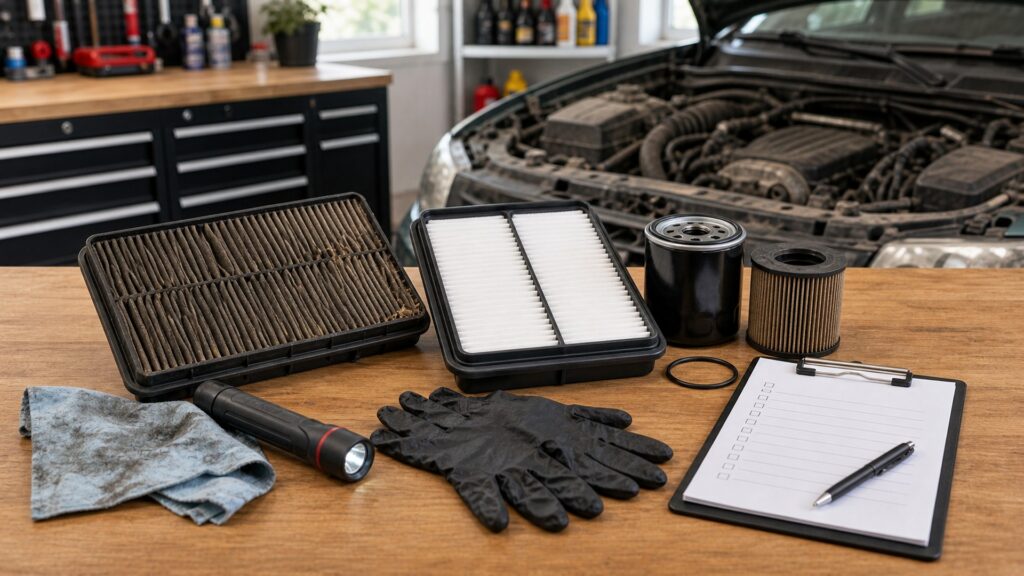
Buying framework
Use the old filter as evidence, not an explanation
Mileage makes contamination history more valuable. A filter can reveal another fault, but replacing it cannot repair worn pumps, intake leaks, sludge, water, or damaged housings.
Collect symptoms before service: Record oil-pressure behavior, consumption, leaks, starting, power loss, fuel-pressure complaints, water warnings, smoke, idle changes, service intervals, oil and fuel sources, dusty use, overheating, and prior housing or engine work.
Open the system deliberately: Use clean containers, photograph seals and orientation, label primary and secondary elements, and preserve suspicious oil, fuel, water, sludge, metal, or collapsed media. Avoid cutting a filter open without safe tools and a diagnostic reason.
Inspect the complete interface: Check air box and ducts, filter base, oil cooler, cap, drain, standpipe, gasket land, fuel bowl, heater, sensor, fittings, lines, priming pump, and wiring. Aging plastic, threads, hoses, and clips can enlarge the job.
Separate service from diagnosis: A due filter can be replaced, but oil-pressure warnings, repeated restriction, fuel starvation, water, abnormal debris, coolant, heavy sludge, or unfiltered dust tracks demand system diagnosis before the engine is returned to use.
Create a new baseline: Install the verified part and seals with correct fluid, torque, priming, reset, and leak checks. Record removed-filter findings and schedule follow-up for the underlying condition, not merely the next filter date.
Who this is for
High mileage produces different filtration histories
Steady highway use, short trips, neglected service, dusty work, and older diesel systems leave different clues.
Documented highway vehicles: Long operating cycles may keep moisture low, but cumulative hours, oil cooler seals, housings, fuel quality, and intake duct aging still matter. Compare the removed filter and fluid with the consistent service record.
Short-trip gasoline vehicles: Fuel dilution, moisture, sludge risk, repeated cold starts, and low annual mileage can make calendar and operating condition more important than distance. Diagnose abnormal oil or crankcase evidence instead of selecting a more restrictive filter.
Older diesel vehicles: Inspect water separation, drain, heater, sensor, priming pump, fuel hoses, return system, tank contamination, and staged filters. Air introduced during service can mimic or add to an existing hard-start complaint.
Dusty work and rural vehicles: Housing warpage, broken latches, duct cracks, precleaners, restriction indicators, and clean-side dust deserve close attention. Repeated early loading can indicate an intake or environmental problem, not inadequate pleat color.
Unknown-history acquisitions: Establish exact parts, fluids, intervals, housing condition, and baseline samples before adopting extended service. A new-looking filter cannot prove the previous oil, fuel, intake, or contamination history.
What to pay attention to
Removed-filter findings that change repair scope
Interpret debris and damage in the context of the circuit, service history, engine symptoms, and controlled inspection.
Evidence & Diagnosis
Dust tracks, media damage, sludge, metal, water, fuel debris, pressure symptoms, housing condition, and service history.
Repair Baseline
Verified application, seals, fluids, priming, leak checks, monitoring, samples, records, and follow-up timing.
Air-filter dust tracks: Look for dirt past the perimeter seal, damaged media, distorted frame, rodent holes, loose ducting, warped cover, missing fasteners, or clean-side residue. Do not run the engine until an unfiltered path is corrected and downstream inspection is considered.
Oil-filter media and housing: Note collapsed or twisted media, damaged end caps, hardened gasket, double gasket, torn O-ring, sludge, glitter, fragments, bypass clues, wrong cartridge length, broken cage, leaking cap, and damaged drain. Seek qualified analysis for abnormal debris.
Fuel and water evidence: Observe water volume, rust, biological material, wax, sediment, wrong fuel, damaged seals, restricted element, and tank or line condition. Protect samples and the high-pressure side; ordinary replacement may be insufficient after contamination.
Oil-pressure and flow symptoms: A filter can be wrong, restricted, leaking, or damaged, but pumps, pickup screens, bearings, valves, oil level, viscosity, sensors, and wiring also affect pressure. Use the vehicle diagnostic method rather than choosing a filter to change gauge behavior.
Housing and thread aging: Inspect plastic cap embrittlement, aluminum thread damage, gasket lands, adapter looseness, cooler seals, warped air boxes, cracked fuel bowls, corroded fittings, brittle connectors, and mounting brackets before ordering only an element.
Interval and fluid history: Reconcile receipts, oil-life resets, top-off volume, hours, idling, fuel sources, severe use, prior filter brands, and missed services. Unknown or inconsistent history supports shorter follow-up observation, not unsupported engine-cleaning claims.
Post-service trend: Track oil or fuel level, pressure indication, starting, idle, leaks, restriction or water warnings, consumption, and repeat debris at a defined early check. A stable baseline is more useful than assuming one filter change corrected years of causes.
Avoid these traps
Mileage shortcuts that hide the actual fault
A thicker can, smaller micron claim, or shorter interval cannot compensate for damaged systems and poor evidence handling.
Calling every dark filter clogged: Media color can reflect normal capture, oil additives, soot, or fuel staining. Use schedule, restriction or pressure diagnosis, condition, and test context rather than appearance alone.
Cutting open filters carelessly: Sharp cans, contaminated fuel, hot oil, metal fragments, and destroyed evidence create hazards. Use an appropriate cutter, protective equipment, clean inspection method, and qualified analysis when findings can affect major repair decisions.
Installing a high-volume or high-efficiency part to cure pressure: Unverified changes can alter bypass, restriction, sealing, or fit. Diagnose the actual pressure or flow complaint and use an approved filter specification for the engine.
Flushing contamination without a plan: Solvents, additives, compressed air, or repeated filters can mobilize debris, damage seals, contaminate sensors, or create disposal hazards. Follow the engine maker's diagnostic and cleaning procedure for the identified contaminant.
Ignoring aging housings and fittings: A fresh element cannot seal a cracked bowl, stripped cap, warped air box, corroded fuel connection, or loose filter base. Inspect the complete assembly and price repair contingencies before disassembly.
Decision guidance
Match the next action to the evidence found
High-mileage filter service ranges from ordinary maintenance to a contamination or engine-health investigation.
If the old filter and fluid appear normal: Complete the scheduled service with the verified element, seals, approved fluid, torque, priming, resets, and checks. Save baseline photographs and interval data for comparison.
If unfiltered dust is visible downstream: Correct the sealing or duct fault, inspect airflow sensors and intake path under service guidance, and consider engine assessment based on exposure. Do not simply install a denser filter into the same leaking housing.
If metal or coolant appears in oil: Stop treating the job as routine maintenance. Preserve evidence, verify the material, and obtain qualified lubrication and engine diagnosis before extended operation or discarding the filter and sample.
If water or growth appears in diesel fuel: Contain the contamination, identify tank and supply source, protect the high-pressure system, and follow the manufacturer cleaning, sampling, priming, and component-inspection plan. One new separator element may not be enough.
If the housing is the weak link: Replace or repair the supported assembly with the correct cap, bowl, base, cooler seals, fasteners, or ducting. Confirm that the service element and procedure match the installed revision afterward.
Ownership & compatibility
Build a high-mileage filtration baseline
Future service improves when the engine's debris, fluid, housings, and symptoms are documented together.
Keep samples when justified: Use clean labeled containers and safe handling for suspicious oil, fuel, or water. Record date, mileage, source, operating symptoms, filter position, and chain of custody if laboratory or warranty analysis may follow.
Map every filtration component: List air, oil, fuel primary and secondary, crankcase, screens, housings, sensors, drains, and service intervals. Note inaccessible or nominally lifetime components separately from routine replacements.
Record housing repairs: Save part numbers, cap or module revision, seals, fittings, thread repair, torque references, leak checks, priming, and warning behavior. Later filter selection must match the repaired assembly.
Schedule evidence-based follow-up: Use the vehicle guidance plus an early check appropriate to the finding. Watch pressure, leaks, level, starting, restriction, water, debris, and consumption; escalate a repeating abnormal pattern instead of shortening intervals indefinitely.
FAQ
High-mileage engine-filter FAQ
Answers about dark media, metal, sludge, water, pressure, housings, and service baselines.
Should a high-mileage engine use a special oil filter?
What does a collapsed oil-filter element mean?
Is metal in an oil filter always engine failure?
Can a new air filter repair dust ingestion?
Why does an older diesel keep clogging fuel filters?
Does sludge mean the filter was poor quality?
Should I shorten every filter interval on an old vehicle?
When should a filter housing be replaced?
What creates a useful post-repair baseline?
Bottom line
Use filtration evidence to find the accumulated cause
A high-mileage filter change earns value when it documents condition, repairs the housing and interfaces, and directs diagnosis beyond normal maintenance where needed.
Preserve the clues: Photograph media, seals, debris, fluid, and housing before cleanup.
Separate maintenance from faults: Do not ask a filter to cure pressure, contamination, or wear.
Repair the interface: Correct housings, threads, ducts, fittings, sensors, and seals.
Create a baseline: Verify operation and schedule follow-up from the actual finding.
Reading Shortcuts
Confirm application and condition first.
Decision Reminders
Checks to complete before committing.
- Confirm the exact application: Cross-check vehicle, engine, housing, and original part.
- Preserve removed-part clues: Contamination and damage can identify another fault.
- Keep the work clean: Keep downstream openings protected.
- Follow the procedure: Respect pressure, fluids, torque, priming, and resets.
- Inspect interfaces: Seals, caps, connectors, threads, and fittings must agree.
- Verify before release: Check leaks, warnings, starting, idle, and road behavior.
Glossary Snippets
Terms used in this decision.
When to Use a Top 10 Review
Use rankings after application and service scope are documented.
- Application confirmed: Filter with exact engine and interface evidence.
- Duty identified: Compare parts for the real interval and environment.
- Evidence published: Rank construction, testing, traceability, and support.
- Job scope complete: Include seals, fluids, tools, and verification.
Already down to 2–3 options? A Comparison is usually faster.
When to Use a Comparison
Compare finalists for the same verified application.
- Interfaces: Match dimensions, seals, valves, fittings, and connectors.
- Performance evidence: Compare documented efficiency, capacity, and service claims.
- Included content: List every seal, cap, sensor, boot, and fitting.
- Installed outcome: Price fluids, labor, priming, disposal, and downtime.
Still building a shortlist? Start with a Top 10.