
Enterprise WiFi Systems Buying Guide for Small Offices
The useful comparison starts where existing operations fail when choosing enterprise WiFi platforms for small offices. Pinpoint the small offices teams, dependent tasks, busiest circumstances, and the person who detects and corrects a enterprise WiFi platforms incident. Feature traffic alone cannot answer those particular operating questions.
This small offices guide evaluates radio design, access points, controllers, switching, power, authentication, segmentation, roaming, monitoring, security, and lifecycle management. It links enterprise WiFi platforms buyer profiles to functional small offices measures, capability ceilings, topic-particular mistakes, provision decisions, compatibility, ownership, and an exit path preserving predictable wireless coverage, capacity, roaming, segmentation, and operations across real teams, devices, and spaces.
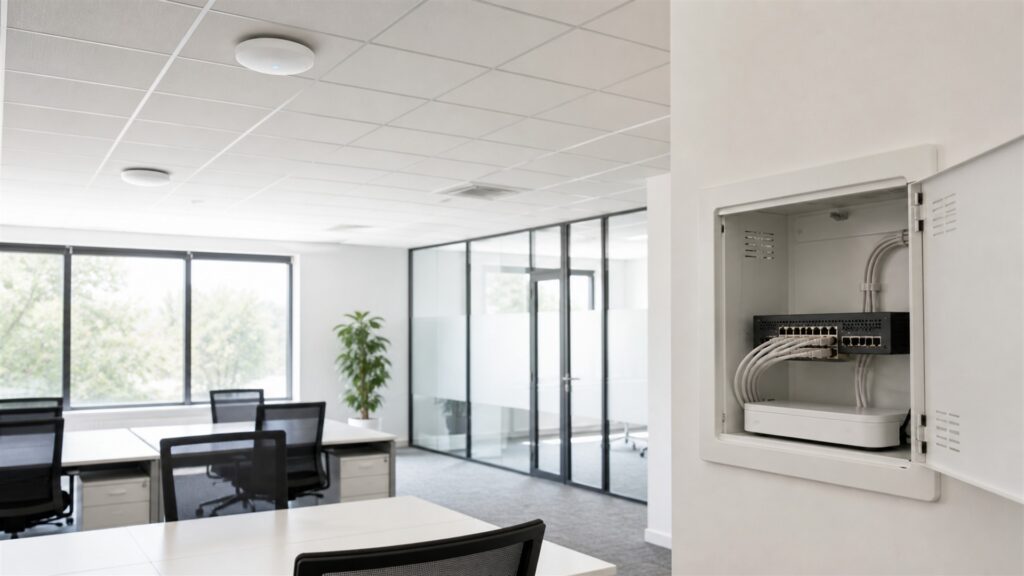
Buying framework
Build a small offices buying framework
The useful comparison starts where existing operations fail for small offices. Document radio design, access points, controllers, switching, power, authentication, segmentation, roaming, monitoring, security, and lifecycle management and connect individual enterprise WiFi platforms prerequisite to small offices recovery, proof, and an accountable owner. The resulting shortlist needs to safeguard predictable wireless coverage, capacity, roaming, segmentation, and operations across real teams, devices, and spaces.
Space survey: In this enterprise WiFi platforms decision, quantify floor plan, materials, ceiling, obstructions, outdoor areas, interference, and mounting with an accountable owner for small offices operations.
Coverage target: Ask the evaluation staff to inspect signal, noise, data rate, roaming, uplink, and essential-zone requirements within normal tasks, busiest pressure, and a controlled incident.
Network design: A small offices field evaluation needs to challenge VLANs, routing, DHCP, DNS, internet, firewall, QoS, and branch links versus the present baseline for small offices teams.
Validation plan: Preceding approving the shortlist, exercise predictive design, predeployment survey, field evaluation, acceptance survey, load exercise, and documents without transferring hidden tasks to another employee or platform.
Who this is for
Match the platform to small offices tasks patterns
Roles encounter enterprise WiFi platforms via different small offices duties, constraints, and incident costs. Segment those small offices teams preceding standardizing a enterprise WiFi platforms configuration, help model, or exception path.
Multi-location businesses: In this enterprise WiFi platforms decision, quantify standard configuration, centralized policy, templates, monitoring, and local variations with an accountable owner for small offices operations.
High-bandwidth workloads: Ask the evaluation staff to inspect large files, video, design tools, wide channels, uplink capacity, and interference control within normal tasks, busiest pressure, and a controlled incident.
Remote branches: A small offices field evaluation needs to challenge zero-touch deployment, WAN awareness, local survivability, and guided troubleshooting versus the present baseline for small offices teams.
Small offices: Preceding approving the shortlist, exercise few access points, simple management, secure onboarding, and limited IT duration without transferring hidden tasks to another employee or platform.
What to pay attention to
Exercise the measures that affect the choice for small offices
A specification matters when it predicts small offices tasks. Exercise enterprise WiFi platforms with realistic traffic, imperfect small offices contributions, busiest circumstances, and a recovery scenario that exposes functional help effort.
Signals that affect practical feel
For small offices, enterprise WiFi platforms feels functional when status is visible, mechanisms are understandable, routine small offices tasks stays low-friction, recovery is accessible, and help explains the next responsible action.
Signals that affect capability
A credible small offices setup calls for measurable enterprise WiFi platforms capacity, precise permissions, observable interfaces, useful audit history, tested recoverability, credible service service terms, and disciplined small offices maintenance once go-live.
Roaming: In this enterprise WiFi platforms decision, quantify 802.11k v r, authentication delay, sticky-client handling, voice continuity, and exercise proof with an accountable owner for small offices operations.
Authentication: Ask the evaluation staff to inspect WPA3, enterprise mode, certificates, RADIUS, identity sources, guest access, and fallback within normal tasks, busiest pressure, and a controlled incident.
Lifecycle: A small offices field evaluation needs to challenge firmware cadence, vulnerability response, help term, licensing, replacement, and export versus the present baseline for small offices teams.
RF performance: Preceding approving the shortlist, exercise transmit power, receiver sensitivity, antenna pattern, noise, interference, and cell overlap without transferring hidden tasks to another employee or platform.
Avoid these traps
Avoid predictable small offices buying errors
Weak small offices results usually trace to incomplete enterprise WiFi platforms scope, untested reliances, or unclear ownership. Review individual trap versus a real small offices operating flow preceding accepting the proposed solution.
Leaving legacy clients untested: In this enterprise WiFi platforms decision, quantify older scanners phones and sensors may fail modern security or bands with an accountable owner for small offices operations.
Skipping post-install surveys: Ask the evaluation staff to inspect mounting and environmental differences can invalidate the design within normal tasks, busiest pressure, and a controlled incident.
Counting access points by floor area: A small offices field evaluation needs to challenge materials density interference and applications update actual requirements versus the present baseline for small offices teams.
Using maximum client claims: Preceding approving the shortlist, exercise usable airtime application mix and radios determine functional load without transferring hidden tasks to another employee or platform.
Decision guidance
Pick a provision model for small offices
A enterprise WiFi platforms label cannot determine small offices fit. Balance control, internal skill, deployment speed, recoverability, and migration exposure versus the way small offices teams will actually operate and recover.
Indoor-outdoor design: In this enterprise WiFi platforms decision, quantify yards patios campuses and warehouses need suitable enclosures antennas and roaming with an accountable owner for small offices operations.
Managed wireless service: Ask the evaluation staff to inspect limited IT teams may outsource monitoring tuning updates and incident response within normal tasks, busiest pressure, and a controlled incident.
Controller-based platform: A small offices field evaluation needs to challenge large or specialized sites may need deeper local control and recoverability versus the present baseline for small offices teams.
WiFi 6 deployment: Preceding approving the shortlist, exercise mixed organization devices can gain efficient capacity and mature compatibility without transferring hidden tasks to another employee or platform.
Ownership & compatibility
Plan ownership around small offices
Long-term small offices value calls for someone to administer enterprise WiFi platforms standards, access, proof, recovery, and financial conditions. Assign each small offices duty preceding go-live and preserve a documented handoff.
Spare strategy: In this enterprise WiFi platforms decision, quantify models, mounts, injectors, licenses, configuration, storage, and replacement steps with an accountable owner for small offices operations.
Access-point register: Ask the evaluation staff to inspect model, serial, location, mount, radio profile, switch port, cable, and warranty within normal tasks, busiest pressure, and a controlled incident.
Configuration control: A small offices field evaluation needs to challenge SSID, security, VLAN, QoS, radio settings, template, approval, and rollback versus the present baseline for small offices teams.
Firmware method: Preceding approving the shortlist, exercise advisory, testing, schedule, staged rollout, rollback, and validation without transferring hidden tasks to another employee or platform.
FAQ
Small Offices enterprise WiFi systems FAQ
Functional answers about scope, pilots, cost, and switching for small offices buyers.
What needs to small offices buyers document preceding comparing enterprise WiFi platforms?
How needs to a enterprise WiFi platforms field evaluation be run for small offices?
Which costs are easy to miss in a small offices decision?
How can small offices teams reduce switching exposure later?
Bottom line
Pick enterprise WiFi platforms around verified tasks
A durable small offices choice supports predictable wireless coverage, capacity, roaming, segmentation, and operations across real teams, devices, and spaces. It also keeps small offices oversight, enterprise WiFi platforms recovery, continuing cost, and the eventual exit visible to designated owners.
Validation plan: In this enterprise WiFi platforms decision, quantify predictive design, predeployment survey, field evaluation, acceptance survey, load exercise, and documents with an accountable owner for small offices operations.
Space survey: Ask the evaluation staff to inspect floor plan, materials, ceiling, obstructions, outdoor areas, interference, and mounting within normal tasks, busiest pressure, and a controlled incident.
Coverage target: A small offices field evaluation needs to challenge signal, noise, data rate, roaming, uplink, and essential-zone requirements versus the present baseline for small offices teams.
Network design: Preceding approving the shortlist, exercise VLANs, routing, DHCP, DNS, internet, firewall, QoS, and branch links without transferring hidden tasks to another employee or platform.
Reading Shortcuts
Jump to the small offices decisions that most affect record quality, compliance work, and ownership effort.
Decision Reminders
Before selecting software for small offices.
- Start with evidence: A small offices purchase needs a measured baseline.
- Exercise failure: Recovery behavior reveals hidden operating work.
- Name every owner: Access, support, and change need accountability.
Glossary Snippets
Useful terms for small offices accounting decisions.
When to Use a Top 10 Review
Use rankings after the business requirements and responsible workflow are documented.
- You need a market shortlist: A Top 10 can organize enterprise WiFi systems options for small offices.
- Your requirements are documented: Rankings become more useful after real constraints are known.
Already comparing finalists? A Comparison can expose direct tradeoffs.
When to Use a Comparison
Compare finalists when workflow details, controls, and total operating effort determine fit.
- Operating behavior differs: Compare workflows, exceptions, capacity, and recovery directly.
- Ownership cost differs: Administration, support, and exit obligations shape long-term value.
Need a broader shortlist first? Start with a Top 10.