
Epilators Buying Guide for Quick Touch-Ups
A touch-up epilator is meant to remove scattered regrowth without turning the task into a full grooming session. Large heads and elaborate kits can slow that job if they hide the treatment edge, take time to assemble, or require lengthy cleanup.
This guide explains how to choose a device for short, targeted use by focusing on visibility, precision caps, immediate cordless readiness, simple controls, grip, noise, and storage. It also clarifies when a compact epilator is useful and when another grooming method may be faster.
Buying framework
Define what a quick touch-up actually covers
Choose around small areas and isolated regrowth rather than full-session capability.
Set the area boundary: A few missed hairs on legs require different control from facial or bikini-area work. Confirm the model is approved for every intended touch-up zone.
Prioritize immediate visibility: A built-in light, open head design, and narrow cap help target regrowth without repeatedly treating clear skin.
Reduce setup steps: Cordless readiness, an attached cap, and simple one-button controls make a device more likely to be used for a two-minute task.
Use profiles
Choose a touch-up tool for your specific gaps
Spot grooming is not one universal use case.
Between-session leg regrowth: Look for a light, comfortable dry operation, and a head edge you can place accurately around isolated hairs.
Small contoured areas: Use only a model and precision attachment approved for that body area. A narrower active surface can improve placement.
Routine maintenance user: A dedicated small device may be worthwhile if it stays charged, stores cleanly, and reduces the need to unpack a full kit.
Specifications
Focus on speed to readiness, not peak capability
Touch-up value depends on how quickly the device can be aimed, used, and cleaned.
Targeting speed
A narrow active area, unobstructed sight line, simple activation, and compact grip determine how quickly scattered hairs can be addressed.
Standby convenience
Charge retention, cap protection, brush access, and tidy storage determine whether the tool is genuinely ready for an unplanned brief session.
Precision cap: A cap that limits the active tweezer area can improve placement, provided it remains easy to see and is approved for the target area.
Built-in light: A well-placed light helps reveal fine or scattered regrowth. Check whether the head or your hand blocks illumination at normal angles.
Battery readiness: A device with low self-discharge behavior, a clear charge indicator, and enough reserve for short sessions is more dependable between uses.
Dry cleanup: A removable head and effective brush can be faster than rinsing when only a few hairs are removed, as long as the manual permits that method.
Common mistakes
Avoid turning touch-ups into repeated full passes
Targeted work needs restraint and accurate placement.
Treating clear skin repeatedly: Use good lighting and work only where regrowth is visible. More passes do not automatically produce a better result.
Using an unapproved area: Compact size does not make a body epilator suitable for the face or every intimate zone. Check the model instructions.
Storing it dirty for next time: Even brief use leaves hair in the head. Clean it immediately so the device is genuinely ready for the next touch-up.
Decision guidance
Decide whether you need a compact epilator or a precision accessory
Avoid buying a second device when the right cap solves the problem.
Choose a compact dedicated epilator if: You perform frequent small-area touch-ups and value separate, grab-and-go storage.
Choose a precision cap for your main model if: The full-size device is comfortable and only needs better targeting.
Choose another method if: The task involves one or two hairs, detailed eyebrow shaping, or an area the epilator manual excludes.
Ownership & compatibility
Keep a touch-up device ready between sessions
Storage and charge management determine convenience.
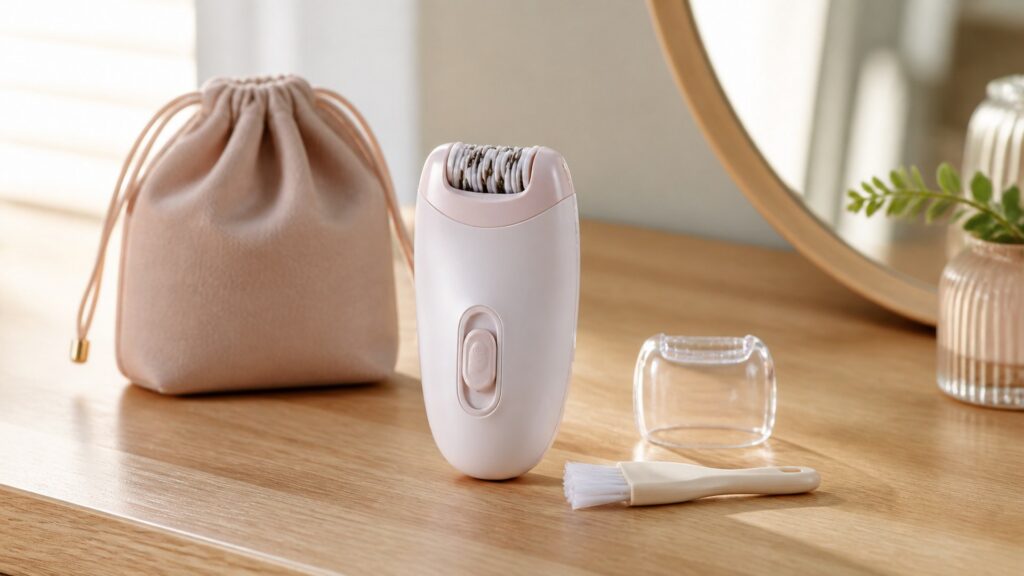
Dedicated storage: Keep the cap, brush, and device together in a clean dry pouch so short routines do not begin with searching for parts.
Charge checks: Review the indicator before important events or trips. Do not assume an infrequently used battery will always be ready.
Head hygiene: Remove hair after every use, disinfect only as allowed, and let washable parts dry before closing the pouch.
FAQ
Epilators Buying Guide for Quick Touch-Ups FAQ
Focused answers about small-area targeting, facial approval, and cleanup after brief use.
Is a mini epilator better for quick touch-ups?
Can I use a touch-up epilator on my face?
Should I rinse the head after every short use?
Bottom line
The best touch-up epilator is visible, precise, and ready
Convenience comes from fewer steps and accurate targeting.
Choose for placement: Favor a clear view of the head, useful lighting, and an approved precision cap.
Choose for readiness: Simple controls, dependable charge, and organized storage reduce setup time.
Keep the scope narrow: Use touch-ups for scattered regrowth instead of repeating a complete session unnecessarily.
Reading Shortcuts
Jump to the decisions that matter most when epilators buying guide for quick touch-ups.
Decision Reminders
A quick checklist before you commit to an epilator.
- Check the area: Use only where the specific device is approved.
- Keep it charged: A quick tool is useful only when it is ready.
- Clean immediately: Do not leave trapped hair for the next session.
Glossary Snippets
Plain-language definitions for common epilator terms.
When to Use a Top 10 Review
Use a ranked shortlist when you want to compare the strongest options by routine, comfort, and value.
- You are still defining your needs: A Top 10 can separate full-size, compact, wet/dry, and attachment-heavy models before you compare details.
- You want a manageable shortlist: Ranked picks help you focus on models that fit your body areas, routine, and preferred cleanup method.
Already down to 2-3 options? A Comparison is usually the faster decision tool.
When to Use a Comparison
Use a direct comparison after you have narrowed the field and need to judge practical tradeoffs.
- You have two or three finalists: Side-by-side coverage clarifies head width, speed control, attachments, runtime, cleaning, and warranty differences.
- The prices are close: A comparison shows whether the extra cost buys better control and useful accessories or merely a larger bundle.
Still exploring? Start with a Top 10 to identify the most suitable epilator type first.