
Exterior Accessories & Protection Buying Guide for Seasonal Vehicle Storage
Seasonal storage changes the threat from road debris to slow exposure. Dust settles indoors, UV and precipitation work outdoors, wind moves fabric against paint, and condensation can persist where air exchange is poor. A cover is useful only when its material and fit suit the actual storage site.
Begin with a clean, dry vehicle on a stable, drained surface, then choose indoor dust control or outdoor weather protection. Check panel contour, mirror pockets, seams, hem, straps, breathability, and access for inspection. The cover should remain still against paint and let moisture leave; it cannot replace the vehicle maker's separate battery, tire, fuel, fluid, security, or ventilation procedures.
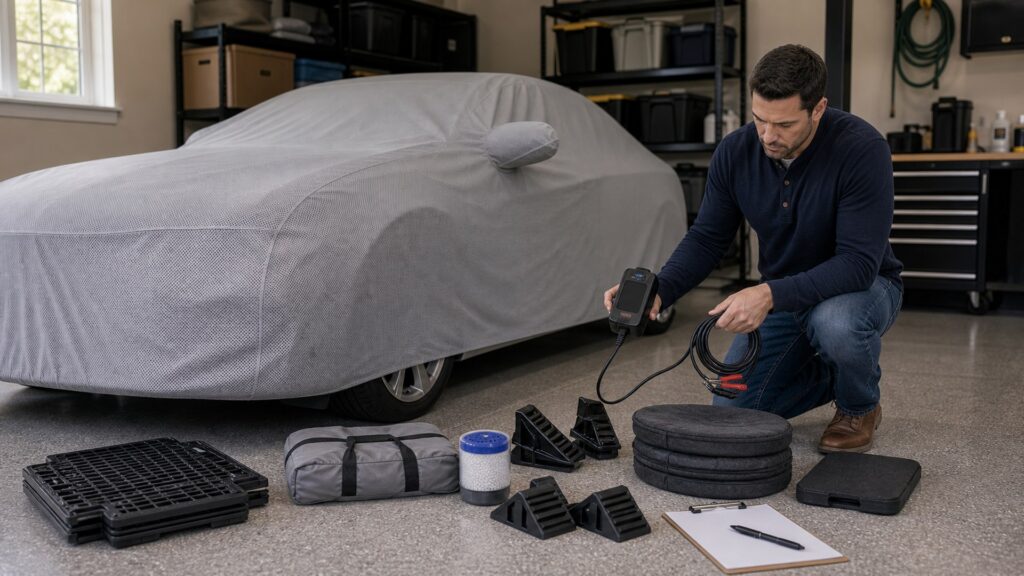
Buying framework
Choose the storage site before the cover
The environment decides which fabric and restraint make sense. Cover design cannot correct standing water, falling branches, or a contaminated surface.
Audit the site: Identify dust, wind, sun, precipitation, tree fallout, industrial contamination, drainage, pests, security, and access.
Prepare the vehicle: Wash and dry paint, remove abrasive debris, follow manufacturer storage procedures, and correct leaks before concealing the vehicle.
Choose indoor or outdoor duty: Use breathable soft dust control indoors and a fitted weather-rated system outdoors; neither label makes a loose cover paint-safe.
Plan inspections: Create access for checking moisture, cover movement, straps, pests, leaks, tires, and the storage area through the season.
Who this is for
Match protection to the storage exposure
Duration alone does not define the problem. An open carport and a clean garage need different solutions.
Clean indoor garages: A light breathable dust cover with soft seams and easy removal is usually sufficient. Avoid heavy waterproof fabrics that add bulk without solving the main exposure.
Carports and sheltered outdoor spaces: Wind-driven dust, side rain, and UV remain important. Use a fitted outdoor cover with dependable restraint and inspect edges after storms.
Open outdoor storage: Prioritize strong fit, UV and precipitation durability, protected straps, ventilation, and drainage. Avoid trees, vegetation, soft ground, and sites with persistent fallout when possible.
Collector and delicate-finish storage: Custom contour, clean lining, seam placement, climate control, and frequent inspection matter. Verify compatibility with soft, matte, repaired, or recently refinished surfaces.
What to pay attention to
Cover details that decide whether paint stays protected
Fabric claims matter only when fit and moisture management support them. Examine the complete cover in motion and at rest.
Fit & Contact
Pattern, mirror pockets, seams, hem, lining, straps, and movement on paint.
Weather & Moisture
Water resistance, vapor transport, vents, UV stability, drainage, and drying.
Pattern specificity: Custom contours reduce excess fabric and concentrate less tension around mirrors, spoilers, antennas, and bumpers.
Layer construction: Outer weather resistance, structural strength, vapor movement, and inner contact softness are different functions that may use several layers.
Seam and strap placement: Covered seams and restraints should avoid hard contact, flapping tails, sharp buckles, exhaust, and painted high points.
Vent design: Vents help pressure and vapor management only when wind-driven water and pests are controlled and the storage area can drain.
Removal and storage: A marked front, manageable weight, storage bag, and clean folding method reduce the chance that the cover's dirty exterior touches its lining.
Avoid these traps
Storage protection that creates hidden wear
The common failures are movement, contamination, and moisture concealed for too long. A cover needs a routine.
Covering a dirty or damp vehicle: Grit scratches as fabric moves, while trapped moisture slows drying. Clean and fully dry the vehicle and cover before long storage.
Choosing waterproof over breathable by default: Vapor can come from temperature changes and ground moisture. A nonbreathing layer may retain condensation even when rain never penetrates.
Leaving straps loose: Wind movement abrades paint and can tear seams or buckle hardware against panels. Use every specified restraint and inspect after storms.
Ignoring the stored vehicle: Covers hide leaks, pests, corrosion, and shifted fabric. Schedule inspections rather than treating concealment as protection.
Decision guidance
Select protection by site, not season length
The simplest cover that controls the real exposure is usually easier to keep clean and inspect. Escalate only as the environment demands.
If storage is clean and indoors: Choose a soft breathable dust cover with precise seams and easy handling. Focus on cleanliness and low-friction contact.
If storage is sheltered but open: Use a fitted outdoor-rated cover with UV resistance and full restraint, then monitor wind-facing edges and moisture.
If storage is fully exposed: Prioritize site improvement first, then a custom or close-fit weather cover, strong straps, drainage, and frequent storm checks.
If the finish is delicate or recently repaired: Consult the paint or repair guidance before covering. Climate-controlled indoor storage and noncontact shelter may be safer than adhesive or fabric contact.
Ownership & compatibility
Keep the cover as clean as the paint
A cover carries the contaminants it blocks. Cleaning and inspection preserve its paint-contact function.
Inspect after weather: Check straps, seams, hems, wet areas, abrasion marks, and trapped debris after wind or precipitation.
Clean by the stated method: Remove dust, sap, salt, mildew, and grit without damaging coatings or transferring the dirty outer face to the lining.
Dry before packing: Store the cover completely dry and isolated from chemicals, pests, sharp objects, and floor moisture.
FAQ
Seasonal storage protection questions
These answers clarify cover fit, moisture, and inspection decisions.
Should I cover a vehicle inside a garage?
Is a waterproof cover best for outdoor storage?
Can I put a cover on a wet vehicle?
How tight should a fitted vehicle cover be?
Do soft-lined covers prevent all scratches?
How often should a stored vehicle be inspected?
Should a cover have mirror pockets?
Can a locking cable keep the cover secure in wind?
What should I do with a cover when the vehicle is driven?
Bottom line
A storage cover needs a clean site and a check schedule
Protection comes from controlled contact and moisture movement, not concealment alone. Fit the cover to the environment and keep inspecting beneath it.
Fix the site first: Choose stable drainage, ventilation, security, and distance from falling or airborne contamination.
Control contact: Start clean and dry, use a close fit, protect seams, and secure every restraint.
Keep checking: Inspect after weather, clean the cover, and follow the vehicle's separate seasonal storage procedures.
Reading Shortcuts
Move from storage-site and cover selection priorities to a usable configuration.
Decision Reminders
Check the vehicle system, not one product claim.
- Site: Drainage, wind, sun, and fallout.
- Surface: Cover only clean, dry paint.
- Fit: Minimize movement and tension.
- Moisture: Balance rain resistance and vapor.
- Straps: Secure without hard paint contact.
- Inspection: Look beneath the cover regularly.
Glossary Snippets
Terms that clarify the important tradeoffs.
When to Use a Top 10 Review
Shortlist storage-site and cover selection products only after the governing vehicle limits and useful format are settled.
- Need defined: The recurring task is specific.
- Vehicle checked: Limits and interfaces are known.
- Format chosen: The product family is settled.
- Need options: Several valid designs remain.
Have finalists already? Open a Comparison for a closer tradeoff.
When to Use a Comparison
For storage-site and cover selection, rank competing designs against one defined vehicle and operating task.
- Fit: Both match the application.
- Duty: Both support the same load.
- Tradeoff: Convenience and protection differ.
- Upkeep: Inspection needs differ.
Need a broader field? Use a Top 10 to form a shortlist.