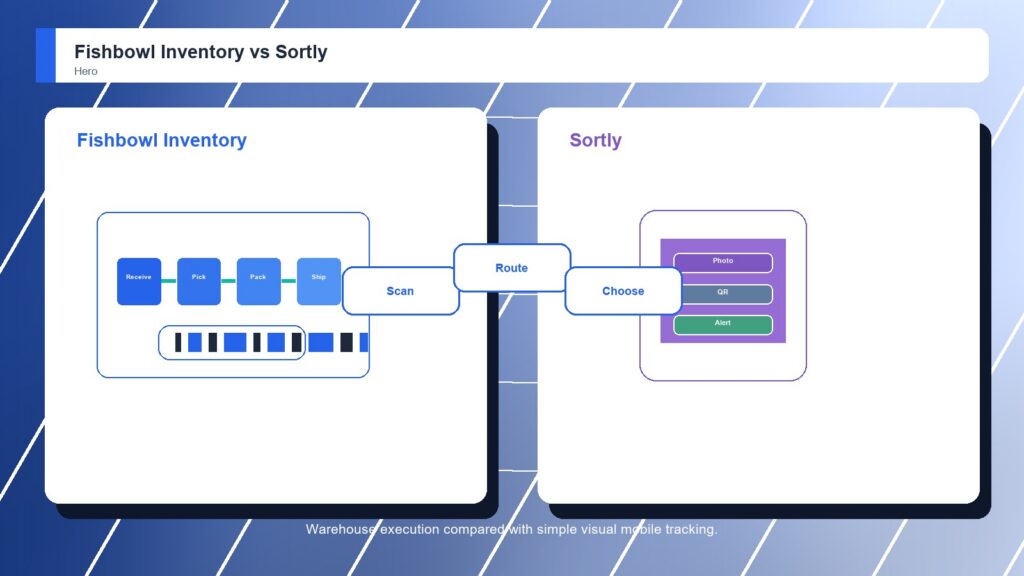
Start by asking what happens after the scan. If the scan triggers receiving, picking, packing, shipping, builds, or accounting work, Fishbowl has the stronger fit. If the scan mostly helps people find and update items, Sortly deserves the demo. That keeps the choice practical.
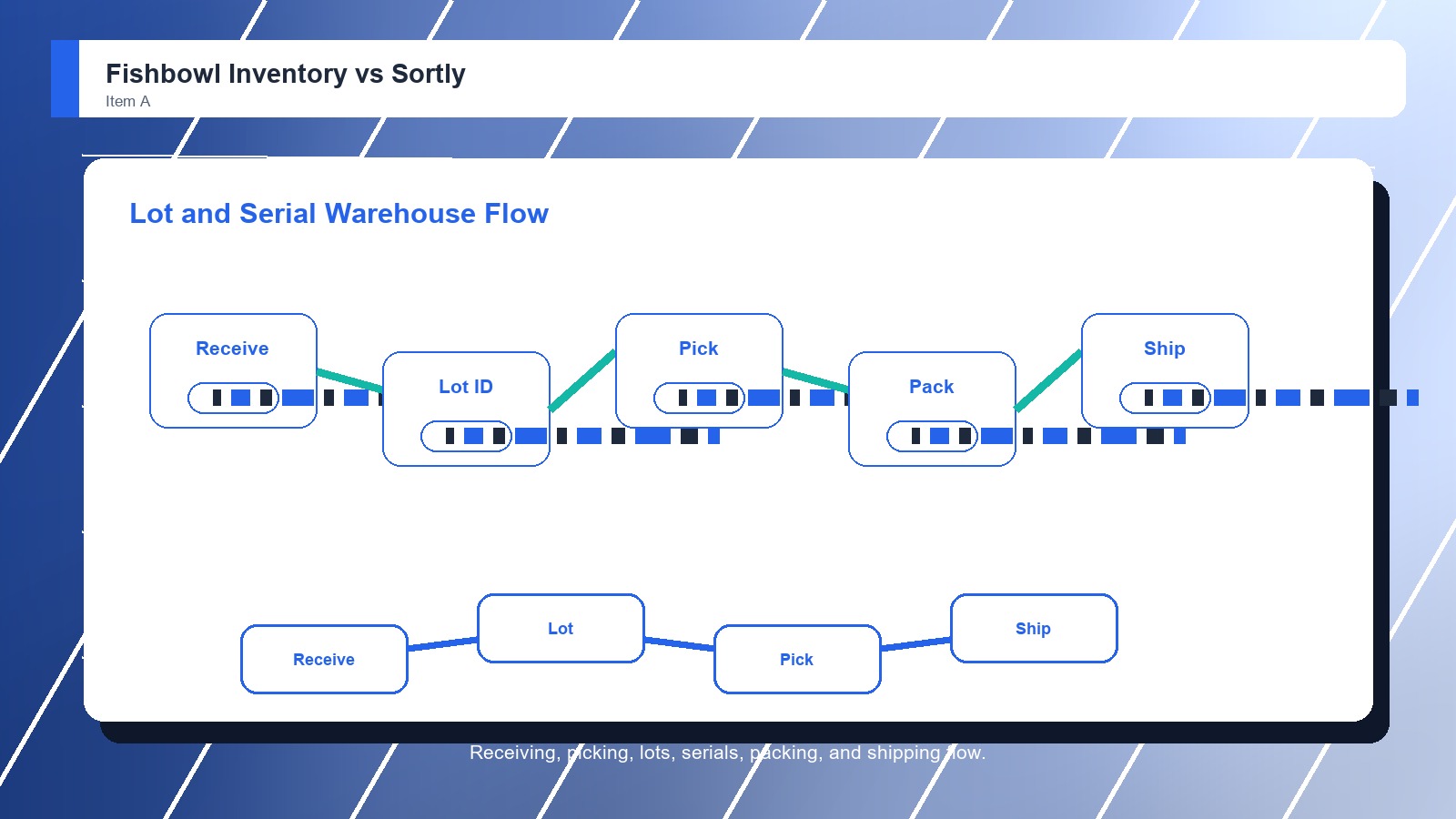
Warehouse Execution: Fishbowl Inventory is stronger when barcode activity feeds operational steps instead of simple item lookup. Receiving, picking, packing, shipping, manufacturing, lots, serials, and order workflows give it more value when inventory accuracy affects customers, production, and accounting. That keeps the choice practical.
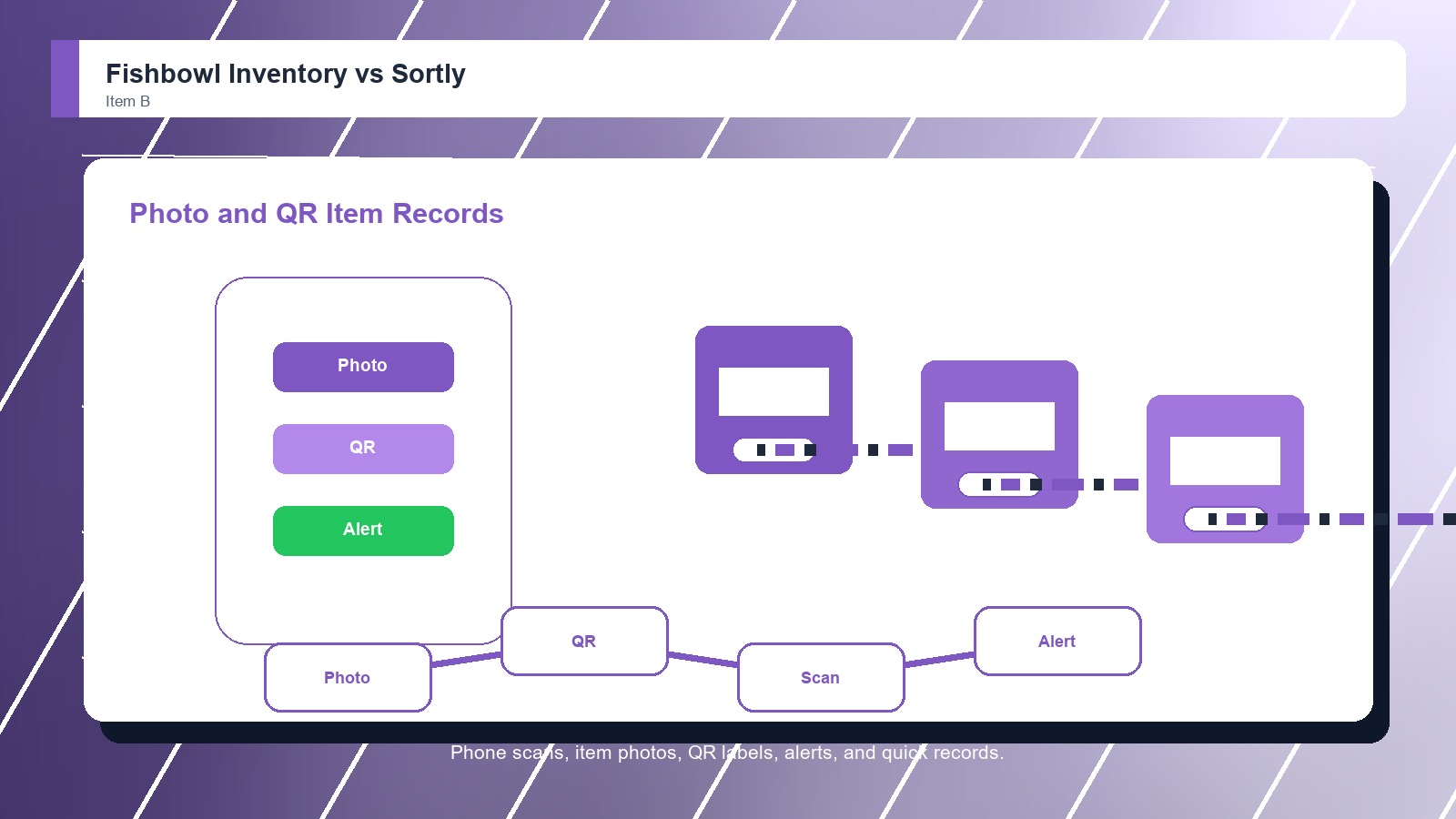
Mobile Visibility: Sortly is better when the team needs quick inventory visibility from phones. Photos, QR codes, barcode scanning, alerts, and simple item records help non-specialist users update counts without learning a warehouse system or changing every process at once. That keeps the choice practical.
Buying Signal: The decision turns on inventory consequences. Choose Fishbowl when bad counts delay orders or production. Choose Sortly when the business mainly needs people to identify equipment, supplies, tools, or stored items more consistently across locations. That keeps the choice practical.
Demo Evidence: Buyers should make Fishbowl Inventory and Sortly run the same inventory workflow with real items, labels, locations, and scanners. A good demo shows whether counts stay accurate when people receive, move, count, and adjust stock. That keeps the choice practical.
Control Check: The winning barcode inventory system should fit the team's control model. That means roles, locations, labels, exceptions, count approvals, reports, and support handoffs are clear enough that workers do not rebuild side spreadsheets. That keeps the choice practical. That matters during rollout.
Adoption Reality: Inventory systems only work when people scan consistently. Buyers should watch whether warehouse staff, field workers, managers, and accounting users can update records without slowing the job or creating cleanup work after each count. That keeps the choice practical. That matters during rollout.